This indoor wall sconces american homes guide covers the basics from start to finish. A wall sconce is a light fixture that mounts directly on the wall. It adds light where ceiling lamps cannot reach. Many American homes use sconces in halls, baths, and bedrooms. This guide explains why they matter, what types exist, where to place them, what they cost, and how to care for them.
Why Wall Sconces Matter in American Homes
Good light changes how a room feels. Overhead lights alone can feel flat and harsh. Wall sconces add a second layer of light at eye level. This soft layer warms a room and fills dark corners. The result feels calm and lived in.
Many American homes have long halls with no natural light. A few sconces along the wall solve that problem. Stairs also stay safer with sconces to mark the path. Bathrooms gain soft light for mirrors. Bedrooms gain reading light without a table lamp on the nightstand.
Sconces also save space. In a small hall, a floor lamp would block the walkway. A table lamp needs a table. A sconce needs only a few inches of wall. Small rooms and narrow halls benefit most. The fixtures also add style. A brass sconce warms a plain wall. A glass shade adds sparkle to a dining room.
Lighting guides from ENERGY STAR note that layered light lowers the need for one bright fixture. Two small lights at low power can beat one strong light in comfort. Wall sconces fit this idea well. You can find more lighting design ideas at Lumens. Pair them with table lamps, like the options in a bedroom table lamps buying guide, for full layered light.
What to Look for When You Choose: Indoor Wall Sconces American Homes Guide
Size and Scale
Size matters more than most buyers think. A small sconce on a large wall looks lost. A large sconce in a small hall feels heavy. Measure the wall first. For a single sconce, a height of 8 to 14 inches suits most halls. Wider rooms can take shades up to 16 inches tall.
Rule of thumb: the sconce should match its neighbor. In a pair, both fixtures should be the same model. The space between them should be equal. A common spacing is 8 to 10 feet in a long hall. On a bathroom mirror, place one sconce on each side of the mirror, not above it. Side light on the face cuts shadows. This Old House has clear advice on sconce height and mirror placement.
Light Direction
Sconces throw light up, down, or both ways. Up-light sconces bounce light off the ceiling. This gives soft general light. Down-light sconces push light toward the floor or a table. This suits reading and task work. Some models do both at once.
Think about the task. Hall lighting wants up-light for a gentle wash. A reading chair wants down-light on the page. A mirror wants forward light on the face. Match the direction to the job. Retailers like Lamps Plus show many direction options side by side.
Bulb Type and Brightness
Most new sconces take LED bulbs. LEDs use little power and last for years. A warm white bulb of 2700K feels cozy in living rooms and bedrooms. A slightly cooler 3000K to 3500K suits baths and work areas. Aim for 400 to 800 lumens per sconce in halls. For reading, 800 lumens or more helps.
Check the socket size before you buy. Common types are E26 medium and E12 candelabra. Buy bulbs that fit the socket. Dimmable sconces need dimmable bulbs and a matching dimmer switch. The U.S. Department of Energy explains bulb choices for home lighting. Philips also publishes guidance on LED color and brightness.
Finish and Style
The finish should fit the room. Polished brass and bronze warm a classic room. Matte black and brushed nickel fit a modern room. Painted finishes suit casual country homes. Look at the other metal in the room. Door handles, faucets, and frames should share a tone with the sconce. They do not need to match exactly. A shared tone is enough.
Style runs from simple to fancy. A plain linen shade fits almost any room. A crystal fixture suits a formal dining room. For dining rooms, also see a dining room chandeliers buying guide. Design sites like Houzz and HGTV show how finishes pair with paint colors and furniture.
Common Types of Indoor Wall Sconces
Up-Light Sconces
Up-light models sit below eye level and push light to the ceiling. The ceiling then spreads it softly. This works well in halls and living rooms. The look is calm with no glare. Torchiere style sconces are a common form.
Down-Light Sconces
Down-light models push light toward the floor or a surface. Use them over a reading chair, a desk, or a stair step. They give clear task light. Some have a small hood that blocks glare at eye level.
Swing Arm Sconces
Swing arms mount on a wall plate and reach out on an arm. The head moves and turns. This makes them ideal for bedsides and reading nooks. A swing arm puts light exactly where the book is. Many people find them more useful than table lamps in a tight space.
Candle Style Sconces
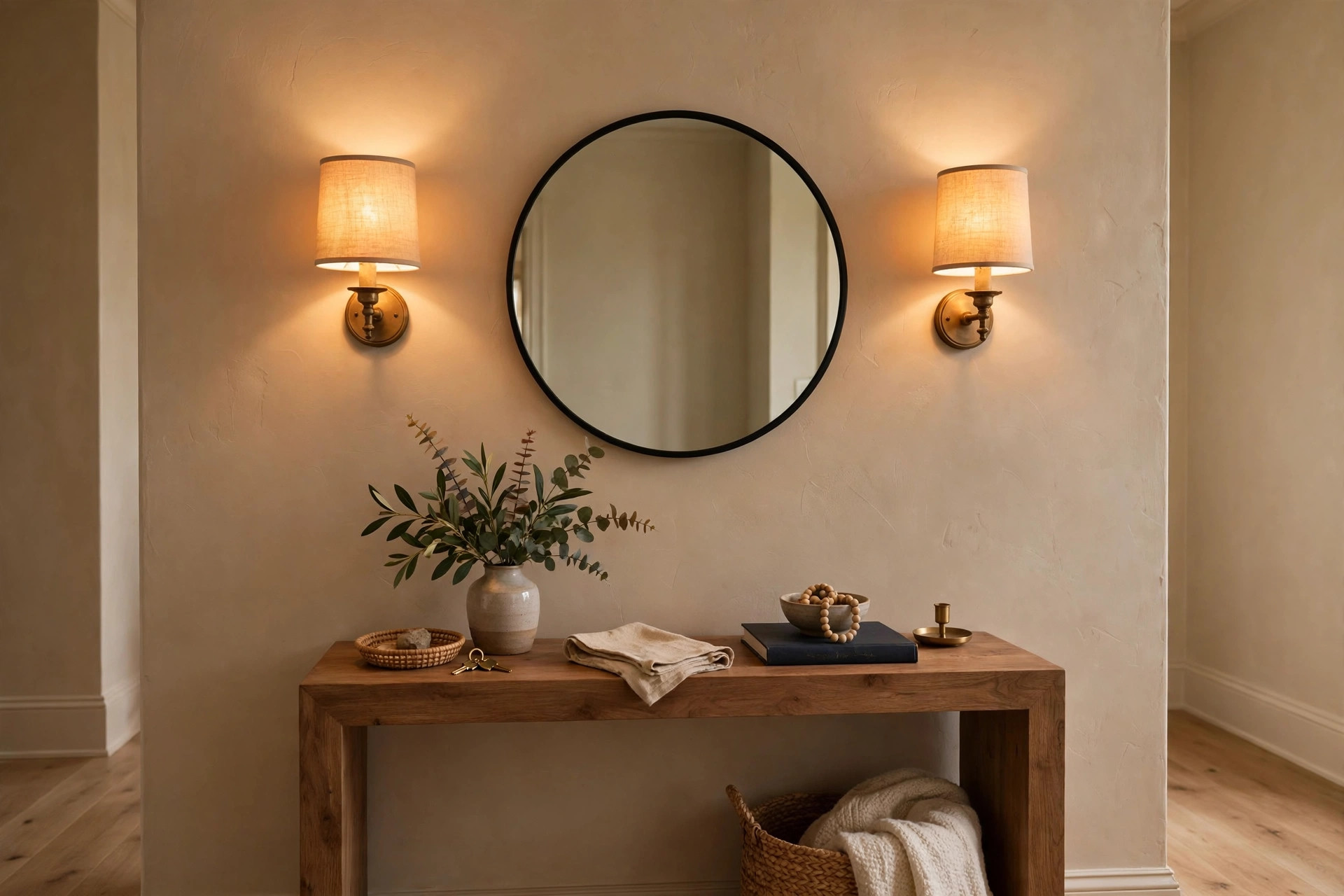
Candle sconces look like old wall candles. They hold a small flame shaped bulb, often with a clear cover. They fit farmhouse and colonial homes. They also suit dining rooms where a soft glow is the goal. Place them in pairs for balance.
Picture Lights
Picture lights mount above art or mirrors. They wash the wall with even light. They are narrow and long. They make framed art stand out. Some homes use them above bathroom mirrors, though dedicated vanity lights often work better. For bath mirrors, a vanity light bars buying guide can help you compare.
Where to Place Sconces Room by Room
Hallways. Mount sconces 60 to 66 inches from the floor to the center of the shade. Space them 8 to 10 feet apart. In a short hall, one pair is enough. Long halls need three or more. Keep them clear of doors that swing open.
Stairs. Place a sconce at each landing and one midway up a long run. Stair light should be low glare. Frosted shades work well. Never place a switch where someone must cross the dark stairs to reach it.
Bathrooms. Mount a sconce on each side of the mirror at eye level, about 60 to 65 inches from the floor. This gives even light on the face. Avoid a single fixture above the mirror. That casts shadows under the eyes. Check the damp rating of the fixture for bath use.
Bedrooms. Swing arm sconces at each side of the bed replace table lamps. Mount them 48 to 52 inches from the floor so the bulb sits just above shoulder height when you sit up. Add a dimmer for late night reading.
Living rooms. Use pairs to frame a fireplace, a window, or a large sofa. Sconces add warmth behind seating where table lamps cannot fit. Up-light models suit most living rooms.
Dining rooms. Candle style or shaded sconces on the long walls add glow during meals. Keep the light warm and dim. Bright dining light feels harsh. Bob Vila has room by room advice on layered home light.
Cost and Price
Sconce prices vary widely. Basic shaded sconces start near 25 dollars at home centers like Home Depot and Lowe’s. Mid range models with better metal and glass run 60 to 150 dollars each. Designer fixtures can cost 200 to 500 dollars or more.
Do not forget the hidden costs. If the wall has no wiring, an electrician may charge 100 to 250 dollars per fixture to add it. A new dimmer switch costs 20 to 40 dollars plus labor. LED bulbs cost a few dollars each and last for years. Plan for the full job, not just the fixture.
For a pair of mid range sconces with existing wiring, a realistic budget is 150 to 400 dollars for the fixtures and bulbs. With new wiring, add the electrician cost. Consumer Reports notes that good light does not need to cost much. Simple models often last as long as costly ones.
Care and Upkeep
Wall sconces need little care. Dust the shades each month with a dry cloth or a soft brush. Fabric shades hold dust fast. Glass shades can be wiped with a damp cloth. Turn the light off and let the bulb cool before you touch it.
Replace bulbs when they dim or flicker. LEDs last long but not forever. Buy a spare bulb when you buy the fixture. Then you will have it on hand. Keep the socket size noted on paper near your other home records.
Check the wall mount once a year. Screws can loosen with time. A wobbly fixture strains the wire joints. If a sconce buzzes, the bulb may not match the dimmer. Try a bulb listed as dimmable. If the buzz stays, call an electrician. The Spruce has step by step care tips for home light fixtures.
Safety and Wiring
Electricity demands respect. Turn off the breaker before you touch any fixture wiring. Test the wires with a voltage tester. Never trust the wall switch alone. A switched off light can still have power in the box.
Most sconces mount on a standard round electrical box. The box must be rated for the fixture weight. Heavy glass or metal fixtures need a firm box and strong screws. If you are unsure, hire a licensed electrician. Bad wiring causes fires. This is not the place to guess.
Bath sconces need the right rating. Fixtures near a shower or tub must be damp or wet rated. Read the label on the fixture box. Keep paper shades away from hot bulbs. LED bulbs run cooler than old incandescent bulbs, which adds safety.
Cords should never run behind or through walls. If you want a sconce where no wire exists, run new wire in the wall or call a pro. Plug in sconces with visible cords suit renters, but keep the cord neat and away from heat. Energy.gov offers home safety tips for lighting work.
Frequently Asked Questions
How high should indoor wall sconces hang?
Mount the center of the shade 60 to 66 inches from the floor in most rooms. In bedrooms, bedside sconces can sit lower, near 48 to 52 inches. Bath mirror sconces should sit at eye level, about 60 to 65 inches. These heights keep the bulb out of direct sight for most adults.
Do I need an electrician to install a wall sconce?
You need one if the wall has no wire in place. Adding new wire inside a wall calls for skill and code knowledge. If a wired box already exists, a handy owner can often swap a fixture after turning off the breaker. When in doubt, hire a licensed electrician. Electrical mistakes are costly and dangerous.
Can I use LED bulbs in any wall sconce?
Most sconces accept LED bulbs. Check the socket size and the max wattage on the fixture label. The bulb base must fit the socket. If the sconce has a dimmer, the bulb must be dimmable and the dimmer must suit LEDs. An old dimmer made for incandescent bulbs may cause flicker or buzz.
Are wall sconces good for small rooms?
Yes. They free up table and floor space. A sconce needs only a few inches of wall. This makes them ideal for small halls, tight bedrooms, and narrow stairs. They also add light without the bulk of a lamp.
Should sconces match the ceiling light?
They should share a style family but they need not match exactly. If the ceiling fixture is brushed nickel, a brushed nickel or satin metal sconce pairs well. Mixing warm and cool metals in one room can look busy. Keep finishes in the same tone for a calm look.
How many sconces does a hallway need?
A short hall needs one pair. A long hall needs a pair every 8 to 10 feet. Too few leaves dark gaps. Too many wastes money and adds clutter. Stand at one end of the hall at night. The light should feel even with no dark spots.
A Final Word
Wall sconces are a small change with a large effect. They add light at eye level where people live. They save space. They mark safe paths in the dark. They frame mirrors and art. Choose the right size, direction, and bulb. Mount them at the right height. Wire them safely. A good pair of sconces can serve a home for decades. Start with the rooms you use most. The hall, the bath, and the bedroom give the best return. Then expand to living and dining rooms. With this guide, you can shop with confidence and light your home well.
References
ENERGY STAR. (n.d.). Energy efficient products. https://www.energystar.gov Lamps Plus. (n.d.). Lighting and home decor. https://www.lampsplus.com Lowe’s. (n.d.). Home improvement products. https://www.lowes.com Lumens. (n.d.). Lighting and ceiling fans. https://www.lumens.com Philips. (n.d.). Lighting products. https://www.philips.com The Home Depot. (n.d.). Home improvement products. https://www.homedepot.com The Spruce. (n.d.). Home and garden advice. https://www.thespruce.com U.S. Department of Energy. (n.d.). Energy efficiency and renewable energy. https://www.energy.gov
Was this guide helpful?

About Sarah Mitchell
The My Garden US editorial team writes practical, in-depth home and garden guides for American homeowners — tested advice, no fluff.