The subject of kitchen track lighting texas homes usa comes up often in talks about home fixes. Texas kitchens tend to be wide and bright. Many have tall ceilings, big islands, and open plans. A single ceiling light leaves dark corners in such rooms. Track lighting answers this need. It places lamp heads on a rail. Each head turns and points a different way. One track can light the sink, the stove, and the counter at the same time. This guide explains the choice in plain terms. It covers types, cost, care, and safety. It also answers common questions.
Why It Matters in a Texas Kitchen
Texas homes face strong heat and long summers. Kitchens run hotter still when the oven works. Old track systems used halogen bulbs. Those bulbs gave off heavy heat. New systems use LED heads. They give strong light with far less heat. The U.S. Department of Energy notes that LED lighting uses much less energy than old bulbs and lasts far longer. That fact matters in a hot state. Less heat from bulbs means less work for the air conditioner.
Texas kitchens are also large. Builders in the state favor open plans. The kitchen often shares space with a dining or living area. One fixed light cannot serve all those zones. Track heads move along the rail. They also swivel. The cook can aim light at the cutting board. The family can aim light at the table. This flexibility suits the big rooms found in Texas homes. It also suits vaulted ceilings, which are common in the state. A track hangs at one level while heads tilt up or down.
What to Look for When You Choose: Kitchen Track Lighting Texas Homes Usa
Start with the track type. The three common standards are H, J, and L tracks. They are named after old brands: Halo, Juno, and Lightolier. The letters tell you the shape of the rail groove. Heads fit only the track of the same type. Most new kits sold today use the H type. Check the box before you buy heads from a second brand. A wrong head will not lock in place.
Next, pick the voltage. Line voltage tracks run on normal 120-volt house current. They are simple and cheap. Low voltage tracks run at 12 or 24 volts through a transformer. They use smaller, sleeker heads. Low voltage costs more and needs the transformer placed out of sight. For most Texas kitchens, line voltage does the job well.
Think about light color. Bulbs carry a Kelvin number. Warm white sits near 2700K to 3000K. It flatters wood cabinets and warm walls. Cool white near 4000K suits a modern white kitchen. Most families in Texas pick 3000K. It gives a clean look without the cold feel of daylight bulbs. Also check the CRI number, the color rendering index. A CRI of 90 or more shows food and skin tones in true color. ENERGY STAR certified fixtures often meet high marks for both efficiency and color quality.
Brightness matters too. Heads are rated in lumens. A small kitchen needs about 5,000 to 8,000 total lumens from its main light. A large Texas kitchen with an island may need 10,000 or more. Spread heads every 24 to 30 inches along the track. That spacing avoids dark gaps. Many buyers also pair tracks with under cabinet lighting strips so counters stay bright even under wall cabinets.
Dimmers add comfort. A dimmer lets the same track serve a busy morning and a quiet dinner. Not all LED heads dim well. Buy heads marked as dimmable. Pair them with a dimmer made for LEDs. Old dimmers can make LED heads buzz or flicker. The fix is cheap if you plan for it from the start.
Types and Options
Straight Line-Voltage Tracks
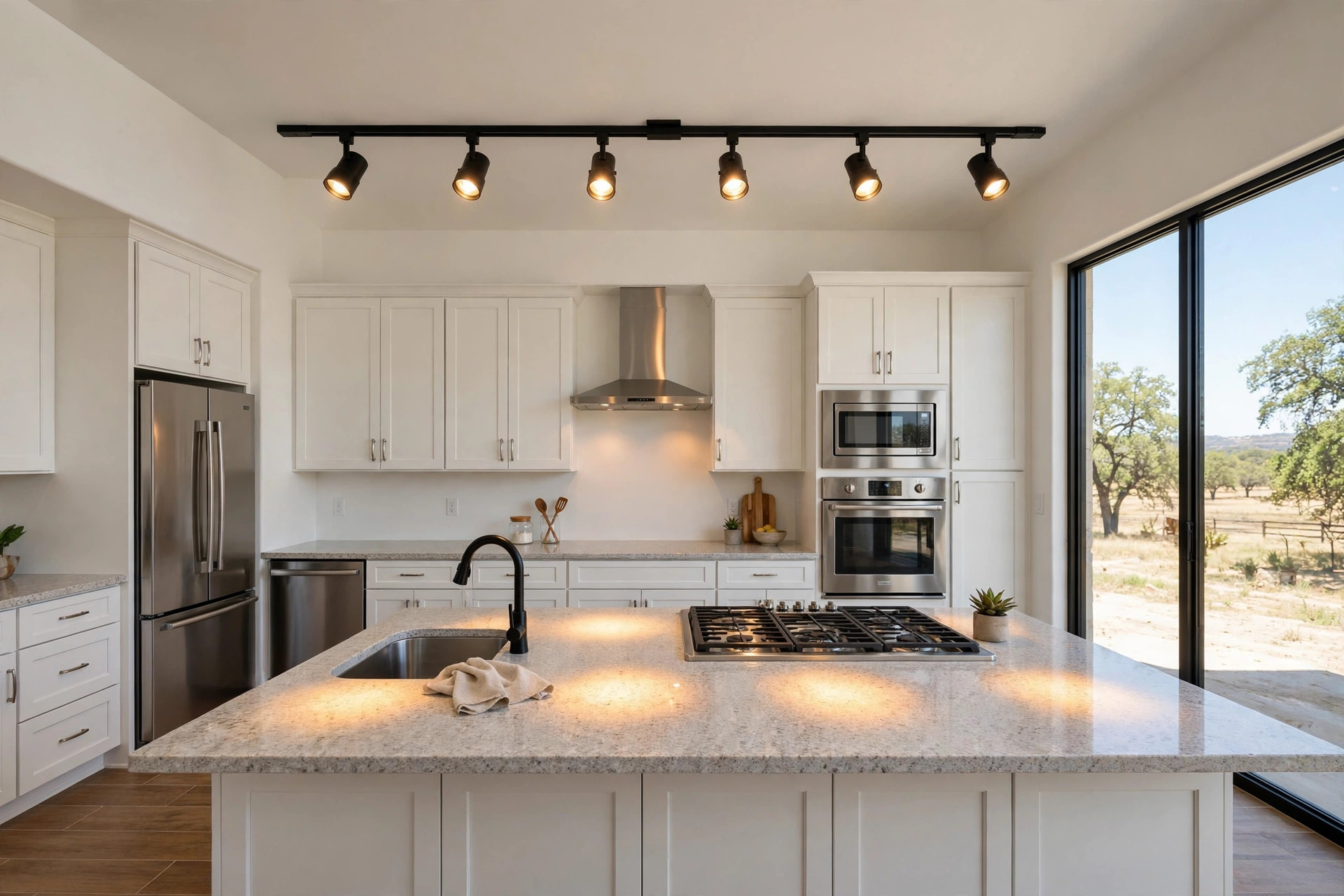
This is the classic choice. A metal rail, two to eight feet long, wires into the ceiling box. Heads clip on anywhere along the rail. The style fits most budgets. Track lengths can join together for long runs. Homeowners in Texas often run one track over the island and a second near the stove. Big-box stores such as Home Depot stock these kits in many finishes: white, black, brushed nickel, and bronze.
Low-Voltage Monorail and Cable Systems
Monorail tracks bend by hand. They curve around an island or follow a bay window. Cable systems use two thin wires instead of a rail. They look light and modern. Both need a transformer. They cost more than straight tracks. They suit new kitchens where the owner wants a custom shape.
Pendant Adapters
Some heads drop down as small pendants from the track. These adapters hang a shade below the rail. They work well over a kitchen island. The island gets a row of matching pendants, and the rail above can still carry spot heads aimed at the counters. For readers weighing other island choices, our kitchen island pendants guide covers fixed pendant fixtures in detail.
Smart and Dimmable Heads
New heads connect to phone apps. They change color temperature or brightness on a schedule. Some work with voice control. Smart heads cost two to three times more than basic ones. They appeal to owners who want morning light to be cool and evening light to be warm. Bulb makers such as Philips sell smart LED options that fit common track systems.
LED Integrated vs. Bulb Heads
Integrated heads have the LED built in. They run cool and last 25,000 to 50,000 hours. When they die, the whole head must be replaced. Bulb heads take screw-in or pin LED bulbs. The bulbs cost little to replace. Many Texas buyers pick bulb heads. Texas summers and dust are hard on gear, and a cheap bulb swap beats buying a new head.
Cost and Price
Track kits are modest in price. A four-foot line-voltage kit with three heads sells for about 60 to 120 dollars. A premium finish or a smart kit can reach 200 dollars or more. Extra heads run 20 to 80 dollars each, depending on style and brand. Lowe’s lighting aisle and similar retailers carry the full price range, from basic white kits to designer rails.
Labor is the larger cost. If the ceiling already has a light box where the track will go, the job is small. An electrician may charge 150 to 300 dollars for a simple swap. If new wiring must run through the attic, the cost rises. Attic work in Texas is common, since many Texas homes have accessible attics. Still, summer attic heat makes the job slow. Expect 300 to 500 dollars when new wire is needed.
Watch the total head count. A kitchen often needs five to eight heads. At 40 dollars each, that adds 200 to 320 dollars. Plan the layout on paper first. Mark where each head will aim. This step stops buyers from purchasing too few heads or too many. Specialty stores such as Lamps Plus sell heads one at a time, which helps when you need an odd number.
Operating cost is low with LEDs. A six-head LED track may draw 60 watts total. The old halogen version of the same track would draw 300 watts or more. Over a year of daily use, the savings show on the power bill. Texas electric rates make the math favor LEDs even more.
Care and Upkeep
Track lighting needs little care. Dust gathers on heads and rails. Wipe them with a dry cloth every few months. In Texas, dust storms and open windows add to the film. A damp cloth cuts through grease near the stove. Turn the power off at the breaker before any wet cleaning.
Check head aim once or twice a year. Bumps and cleaning can shift a head. Stand back and look at the counter. Each work zone should have even light. Twist heads back into place as needed.
Replace bulbs in groups. LEDs fade slowly over time. If you swap only one head in a row, it may look brighter than its old neighbors. Buy spare bulbs when you buy the track. Keep the box with the bulb type written on it. That note saves a trip later.
Look at the rail ends and joints each year. Loose joints cause flicker. Most rails have small screws at the joints. Tighten them gently. If flicker continues after tightening, call an electrician. The fault may sit in the house wiring, not the track.
Safety
Electricity demands respect. Turn off the breaker before any install or deep cleaning. Use a non-contact tester to confirm the wires are dead. This habit prevents shocks. Track systems hang from the ceiling. A rail full of heads has real weight. Anchor the track to a ceiling joist, not just to drywall. The kit box lists the weight limit. Stay under it.
Heat is the second concern. Old halogen heads ran hot enough to burn skin. They also posed a fire risk near wood or paper. LED heads run much cooler, but they still need air. Do not pack insulation tight around a track mounted in the ceiling. Keep curtains and stored items away from the heads. The U.S. Consumer Product Safety Commission guidance, mirrored by many home guides such as The Spruce, stresses the same point: give fixtures room to breathe.
Texas attics grow extremely hot in summer. If wiring must cross the attic, hire a licensed electrician. The heat is dangerous for a do-it-yourselfer. It is also hard on wire insulation. A pro knows the local code for attic runs. Many Texas cities require a permit for new lighting circuits. The permit costs little and confirms the work is safe.
Dimmers deserve a safety note too. Use only dimmers rated for the load and the bulb type. An overloaded dimmer runs hot. A wrong-type dimmer can ruin LED drivers. Match the parts at the store. When in doubt, ask the electrical counter staff. They handle this question daily.
FAQ
How many track heads does a Texas kitchen need? Count the work zones: sink, stove, island, and main counter. Give each zone at least one head. Most kitchens need five to eight heads. Large open kitchens may need two tracks with four heads each. Paper planning beats guessing.
Can track lighting replace recessed lights? It can, and in many remodels it does. Recessed lights are fixed. Track heads move and aim. Track install is also simpler when the ceiling has no room for cans. For a full comparison of fixed ceiling options, see our LED recessed lights installation guide. Many Texas owners run both: recessed lights for general glow and a track over the island for task light.
Do track lights work with tall or vaulted ceilings? Yes. The track mounts at ceiling level. Heads tilt down toward the counter. For very tall ceilings, use stem or pendant drop adapters. They bring the light source closer to the work surface. Brightness falls with distance, so the drop matters.
Are LED track heads worth the higher price? In Texas, yes. LED heads cost more up front. They use a fraction of the power. They last ten times longer than halogen. They also run cool, which helps in a hot climate. The payback often arrives within two years of normal kitchen use.
Can I install a track where a ceiling light now sits? Usually yes. The old light box often sits in the right spot. Remove the old fixture. Mount the track canopy over the same box. The wiring is already there. If the box is off-center from where you want the track, an electrician can add a box in the right place.
What finish suits a Texas-style kitchen? Bronze and black finishes suit rustic and farmhouse kitchens, which are popular in Texas. Brushed nickel and white suit modern kitchens. Match the track finish to the faucet and cabinet pulls. A matched set looks planned rather than patched.
A Short Final Word
Kitchen track lighting suits the way Texas homes are built. Rooms are big. Ceilings are high. Summers are hot. A good track system answers all three facts at once. It spreads light where cooks need it. It aims past the limits of fixed fixtures. With LED heads it runs cool and cheap. Shop the track type first, then the heads. Count zones, not just square feet. Check retailers and lighting guides such as Lumens for current styles and prices. When the wiring is new, hire a licensed electrician and pull any permit the city asks for. The result is a kitchen that works as hard as the family in it.
References
ENERGY STAR. (n.d.). Energy efficient products. https://www.energystar.gov Lamps Plus. (n.d.). Lighting and home decor. https://www.lampsplus.com Lowe’s. (n.d.). Home improvement products. https://www.lowes.com Lumens. (n.d.). Lighting and ceiling fans. https://www.lumens.com Philips. (n.d.). Lighting products. https://www.philips.com The Home Depot. (n.d.). Home improvement products. https://www.homedepot.com The Spruce. (n.d.). Home and garden advice. https://www.thespruce.com U.S. Department of Energy. (n.d.). Energy efficiency and renewable energy. https://www.energy.gov
Was this guide helpful?

About Jennifer Lee
The My Garden US editorial team writes practical, in-depth home and garden guides for American homeowners — tested advice, no fluff.