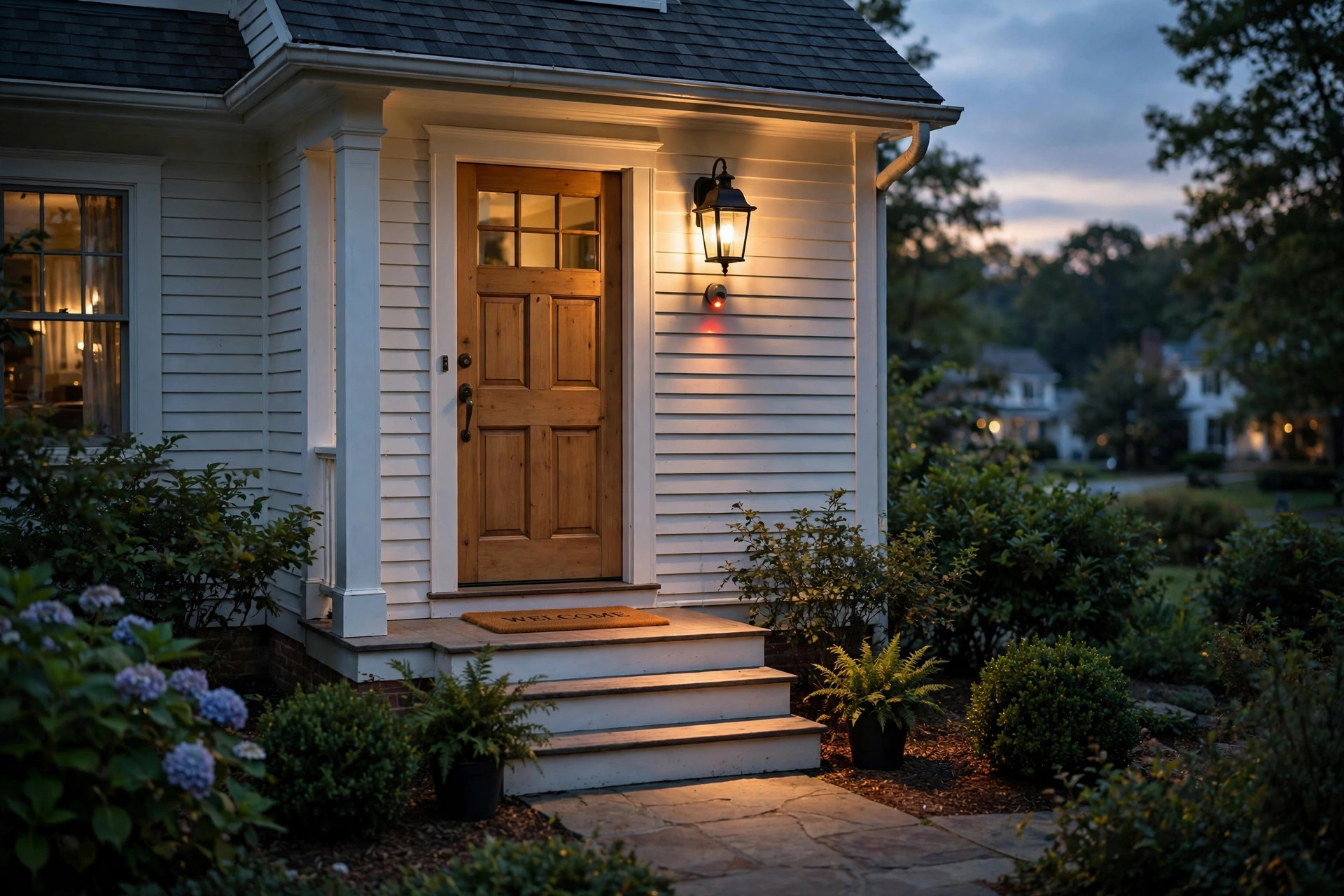

A good porch light is one of the simplest home upgrades a family can make. This sensor porch lights reviews buying guide usa will help you pick the right one. It covers motion sensor porch lights, dusk-to-dawn models, and smart lights. It also covers price, care, and safety. By the end you will know what to look for and what to avoid.
Why a Sensor Porch Light Matters
A porch light does more than welcome guests. It lights the steps. It shows the lock. It makes the walkway safe after dark. When the light has a sensor, it turns on by itself. You do not need to leave it burning all night. You do not need to fumble for a switch with full hands.
A motion sensor watches a zone near your door. When a person moves through that zone, the light comes on. After a set time with no motion, the light goes out. A dusk-to-dawn sensor works another way. It turns the light on when the sky grows dark. It turns the light off when morning comes. Many lights now use both sensors at once.
The savings are real. A bulb that runs only when needed uses far less power than one that burns from six in the evening until six in the morning. The Energy Department notes that outdoor lighting is a large part of home power use, so cutting waste here pays off. Many buyers start with a buying guide for outdoor wall lanterns before they learn that a sensor version can do the same job for less.
Security is the other reason. A sudden light surprises an intruder. It also helps neighbors see what is happening near your door. Reviews from buyers across the USA keep coming back to the same point. The best sensor porch lights give peace of mind at a fair price.
What to Look For When You Choose One: Sensor Porch Lights Reviews Buying Guide Usa
Buying guides only help if you know what matters. These are the points that separate a good light from a poor one.
Sensor Range and Angle
The sensor range tells you how far the light can see. Most porch models sense motion from twenty to forty feet away. A forty-foot range is generous for a small porch. It may be too much if your porch faces a busy sidewalk. In that case cars and passersby will trip the light all night.
The angle matters too. Most sensors watch a field about 180 degrees wide. Some reach 240 or even 270 degrees. A wider field covers the sides of the porch. A narrower field keeps the light from firing at every car in the street. Think about your layout before you buy. A corner house may need more angle than a house set far back.
Look for an adjustable sensor head. It lets you aim the field of view down the walkway and away from the street. This one feature cuts most false triggers.
Brightness and Bulb Type
Brightness is measured in lumens. A porch light of 800 to 1,600 lumens suits most doors. Below 800 the light may be too dim for safety. Above 1,600 it may blind visitors and annoy neighbors.
The LED is now the standard bulb type. LEDs use little power and last for years. Many are built into the fixture so you never change a bulb. The ENERGY STAR program certifies outdoor fixtures that meet its efficiency rules, and those models are worth a look. A warm white color, around 2700 to 3000 Kelvin, feels like the old porch lamps people grew up with. A cooler color shows detail better but feels harsher.
Color temperature matters more than most buyers expect. Read the reviews. Buyers complain more about harsh blue light than about almost anything else.
Dusk to Dawn vs Motion Only
Motion-only lights sit dark until movement trips them. They save the most power. Dusk-to-dawn lights glow softly all night at low power, then brighten when motion is sensed. The soft glow looks welcoming. It also marks the house for guests arriving in a car.
Many reviews praise the dual mode. You get a low glow all night for looks. You get full brightness when someone walks up. If your street is dark and the house is hard to find, the dusk-to-dawn glow is worth it. If you live on a lit street, motion-only may be all you need.
Smart Features
Some lights now link to a phone app. You can set the schedule, change the brightness, and get alerts when the sensor trips. A smart sensor porch light can join a wider home security setup. If you already use cameras or a doorbell from a maker such as Ring, a matching light keeps everything in one app.
Smart features add cost. They also add a step of setup. Weigh the gain against the price before you pay for extras you may never use.
Types of Sensor Porch Lights
Porch lights come in several forms. Each suits a different kind of home.
Wall-mount lanterns. These hang beside the door or above it. They fit the classic American entry. Reviews favor lantern styles with clear glass and a bronze or black finish. The sensor sits under the lantern or in the base. If you like this style, a guide to outdoor wall lanterns will show the full range of looks.
Flood lights with sensors. These mount under the eave or on a corner. They throw a wide beam across the porch and yard. Motion flood lights are the right choice when you need strong light over a long driveway or a deep porch. They use more power but cover far more ground.
Flush and semi-flush mounts. These sit tight against the porch ceiling. They suit low overhangs where a hanging lantern would bump a tall guest. The sensor looks downward and outward.
Solar models. Solar porch lights charge by day and shine by night. They need no wiring. They suit rentals and older homes where running wire is hard. Their light is weaker than wired models. Shady porches can leave them dim. Solar path lights use the same technology and work well as companions along the walk.
Hardwired vs battery vs plug-in. Hardwired lights tie into your house power. They are the most reliable and the brightest. Battery models install in minutes with no wires. They need fresh batteries every few months unless they are solar. Plug-in models need an outdoor outlet nearby. Pick the power source that fits your house and your skill.
Cost and Price
Prices for sensor porch lights in the USA fall into three bands. Budget models run from about twenty to forty dollars. Midrange models run from forty to ninety dollars. Premium and smart models run from ninety to two hundred dollars or more.
What does the extra money buy? Better sensors that trip less often. Brighter LEDs that last longer. Sturdier housings that resist rust and rain. A twenty-five dollar light may work fine for two years. A ninety dollar light from a known maker may work for ten. Retailers such as Home Depot and Lowe’s stock all three bands, and lighting shops like Lamps Plus and Lumens carry the higher end.
Installation costs vary. If a fixture already hangs by your door, swapping it takes most people under an hour. If you need new wiring, an electrician may charge one hundred to three hundred dollars for the visit. Solar and battery models skip this cost entirely.
Do not forget the bulb cost. Fixtures with built-in LEDs need no replacement bulbs. Fixtures that take standard bulbs are cheaper to fix if the light fails. Consumer Reports tests outdoor lighting and publishes ratings that can guide you toward models that last.
Watch for false economy. The cheapest light often costs the most over time. It dies early. It trips at every passing cat. It runs up your power bill. A fair price for a dependable light is money well spent.
Care and Upkeep
Sensor porch lights need little care. A few simple habits keep them working for years.
Clean the sensor lens. Dust, cobwebs, and pollen cloud the sensor. Wipe the small plastic window with a soft dry cloth twice a year. A dirty sensor fires late or not at all.
Keep plants trimmed. Bushes that wave in the wind will trip the motion sensor all night. Trim plants back from the sensor field in spring and again in late summer.
Check the aim. Sensors shift over time. Wind, vibration, and the odd knock from a ladder can move the head. Once a year, walk the path and watch where the light fires. Aim the sensor down the walkway and away from the street.
Replace parts before they fail. Bulbs dim with age. Rubber seals crack. If the light flickers or the sensor grows slow, replace the bulb or the whole fixture. Do not wait for a dark porch in winter.
Use the right finish. Coastal homes need fixtures rated for salt air. Wet-rated fixtures suit open porches with no roof. Damp-rated fixtures are fine under a full roof. The rating is printed on the box. Buy the rating that matches your porch.
Manufacturer pages from makers such as Philips often list spare parts and care steps for their fixtures. The Spruce keeps updated cleaning and maintenance guides for outdoor lighting.
Safety
A sensor porch light is an electrical device on the outside of your house. Treat it with care.
Shut off power at the breaker before you touch any wiring. Test with a non-contact tester to be sure the line is dead. Do not rely on the wall switch alone. Water and power do not mix. Never open a fixture in the rain.
Mount the light at the right height. Eight to ten feet above the ground suits most porches. Too low and the sensor watches too small an area. Too high and it may miss people close to the door. Follow the height shown in the instructions that come with your model.
Use bulbs that match the fixture rating. An LED that draws more watts than the fixture allows can overheat. This is rare with modern LEDs, but the rule stands.
Keep the light aimed at your own property. A beam that shines into a neighbor’s bedroom is not just rude. In some towns it breaks a local lighting code. Angle the fixture down and inward.
If the wiring is old or the box is damaged, call an electrician. A new fixture is cheap. A fire is not.
Frequently Asked Questions
How far can a motion sensor porch light detect? Most models sense motion from twenty to forty feet. Some reach sixty feet or more. The setting you choose should match the size of your porch and walkway. Too long a range causes false trips from the street.
Do sensor porch lights work in the daytime? A motion sensor will still fire in daylight on most models. But a built-in photocell can hold the light off until dusk. Look for a model with a daylight sensor if you want the light to stay off during the day. Many dual-mode lights include this feature as standard.
Will rain or snow set off the sensor? Heavy rain and falling snow can trip a cheap sensor. Good sensors filter out small, fast changes. Mounting the fixture under a roof overhang helps. If false trips bother you, lower the sensitivity dial or aim the sensor away from open sky.
Are dusk-to-dawn porch lights expensive to run? No. An LED dusk-to-dawn light at low glow may use only a few watts. Running all night often costs less than a dollar a month in power. The bigger cost is the fixture itself. Reviews show that buyers value the steady glow for safety and looks.
Can I put a sensor porch light on a timer too? Yes. Some models have a built-in timer that limits motion sensing to certain hours. Others work with a smart switch or a smart plug that sets the schedule. A timer plus a sensor gives you full control over when the light can fire.
What is the best sensor porch light for a dark rural road? A hardwired flood-style light with a wide sensor angle suits a rural home. You want strong light and long range because there is no street light to help. Reviews from rural buyers favor dual-bright models that hold a soft glow all night, so guests can find the door, then flare bright when they walk up.
A Final Word
The right sensor porch light is the one that fits your door, your budget, and your street. Start with the sensor range and the brightness. Pick a style that suits your house. Buy from a brand with solid reviews. Install it at the right height and aim it with care. Do these things and your porch will greet you with light every night, on its own, for years.
References
Consumer Reports. (n.d.). Product reviews and ratings. https://www.consumerreports.org ENERGY STAR. (n.d.). Energy efficient products. https://www.energystar.gov Lamps Plus. (n.d.). Lighting and home decor. https://www.lampsplus.com Lowe’s. (n.d.). Home improvement products. https://www.lowes.com Lumens. (n.d.). Lighting and ceiling fans. https://www.lumens.com Philips. (n.d.). Lighting products. https://www.philips.com Ring. (n.d.). Smart home security devices. https://www.ring.com The Home Depot. (n.d.). Home improvement products. https://www.homedepot.com The Spruce. (n.d.). Home and garden advice. https://www.thespruce.com U.S. Department of Energy. (n.d.). Energy efficiency and renewable energy. https://www.energy.gov
Was this guide helpful?

About Jennifer Lee
The My Garden US editorial team writes practical, in-depth home and garden guides for American homeowners — tested advice, no fluff.
You May Also Like
Sensor Porch Lights Florida Homes USA: A Practical Buying Guide
March 5, 2026 0 views
Indoor Grow Lights Deals Near Me: A Practical Shopper’s Guide
June 2, 2026 0 views
LED Recessed Lights USA Online Deals: How to Shop Smart
April 25, 2026 0 views