
A good fence gives a home privacy, safety, and a clean line along the lot. A bad fence leans by the second winter and costs twice what it should. The difference between the two is almost never the material. It is the contractor. Finding reliable fence installation contractors in california takes some care, but the work pays off for years.
California is a big state with many rules. Setbacks, height limits, and permits change from one city to the next. A licensed local contractor knows these rules. A traveling crew from out of town often does not. This guide shows what to look for, what to ask, and what to pay, so the fence you buy is the fence you get.
Why a Good Fence Contractor Matters
A fence looks simple. Posts go in the ground, boards go on the posts. But soil, wind, and water make the job hard. California soil ranges from soft beach sand to hard clay and rock. A post that stands firm in one yard will lean in another. A reliable contractor reads the soil and sets the post deep enough for that spot. Home Depot and Lowe’s both note that post depth is the main factor in a long-lasting fence.
A good contractor also knows the local code. Many California cities limit a front yard fence to three or four feet. Side and rear fences often top out at six feet. Some cities ask for a permit before any work starts. Others want a survey when the line is in doubt. If your contractor skips these steps, you may have to move the fence later at your own cost. Homeowners who search for best fence installation contractors near me often find that the best-reviewed crews are the ones who handle permits without being asked.
There is also the matter of the property line. A fence on your neighbor’s land can start a long dispute. A careful contractor asks about a survey when the line is not clear. Many will ask you to sign a line agreement with your neighbor before they dig. This is not red tape. It is protection for you.
How to Choose: What to Look For: Reliable Fence Installation Contractors in California
Check the License
California law says a fence contractor needs a license from the Contractors State License Board. Ask for the license number. Then check it online at the state board’s site or call them. Make sure the license is current and in the right class. Fence work usually falls under a C-13 fencing license or a B general building license. A current license means the contractor has passed a test and carries a bond.
Never hire a contractor who will not give a license number. This is the single clearest sign of trouble. The state license board keeps public records you can check by phone or online.
Ask for Insurance
The contractor should carry general liability insurance and workers’ compensation for the crew. Ask to see proof. If a worker is hurt on your land and the contractor has no insurance, you may be held liable. A reliable firm hands you a certificate of insurance before work starts, not after you ask twice.
Read Reviews and Check References
Online reviews help, but they are only a start. Ask the contractor for three recent jobs you can drive past. Then go look at them. A fence that is three years old tells you more than a review written on the day of the install. Look at the line of the top rail. It should run straight. Look at the base of the posts. There should be no rot where the wood meets the soil.
Many homeowners compare top rated fence installation contractors reviews before calling anyone. Reviews are useful for spotting patterns. One bad review means little. Ten reviews that mention late starts or messy yards mean a lot.
Get a Written Estimate
A serious contractor puts the bid in writing. The bid should list the fence type, the height, the total length, the material, the post spacing, and the gate count. It should give a start date and a finish date. It should state the payment schedule. Never pay the full price up front. A common schedule is one third down, one third at mid-job, and the rest when the work is done and you are satisfied.
Ask About the Crew
Ask who will actually do the work. Some firms sell the job and send a different crew they hired that week. Ask whether the crew works for the company or is hired by the day. Ask who the foreman is and whether he will be on site every day. A steady crew does steadier work.
Fence Types and Options
Pick the fence that fits your need and your street. A fence should match the style of the house and the siding on it. Makers of exterior products like James Hardie and CertainTeed publish color and style guides that help a fence sit well beside the home’s siding and trim.
Wood Fences
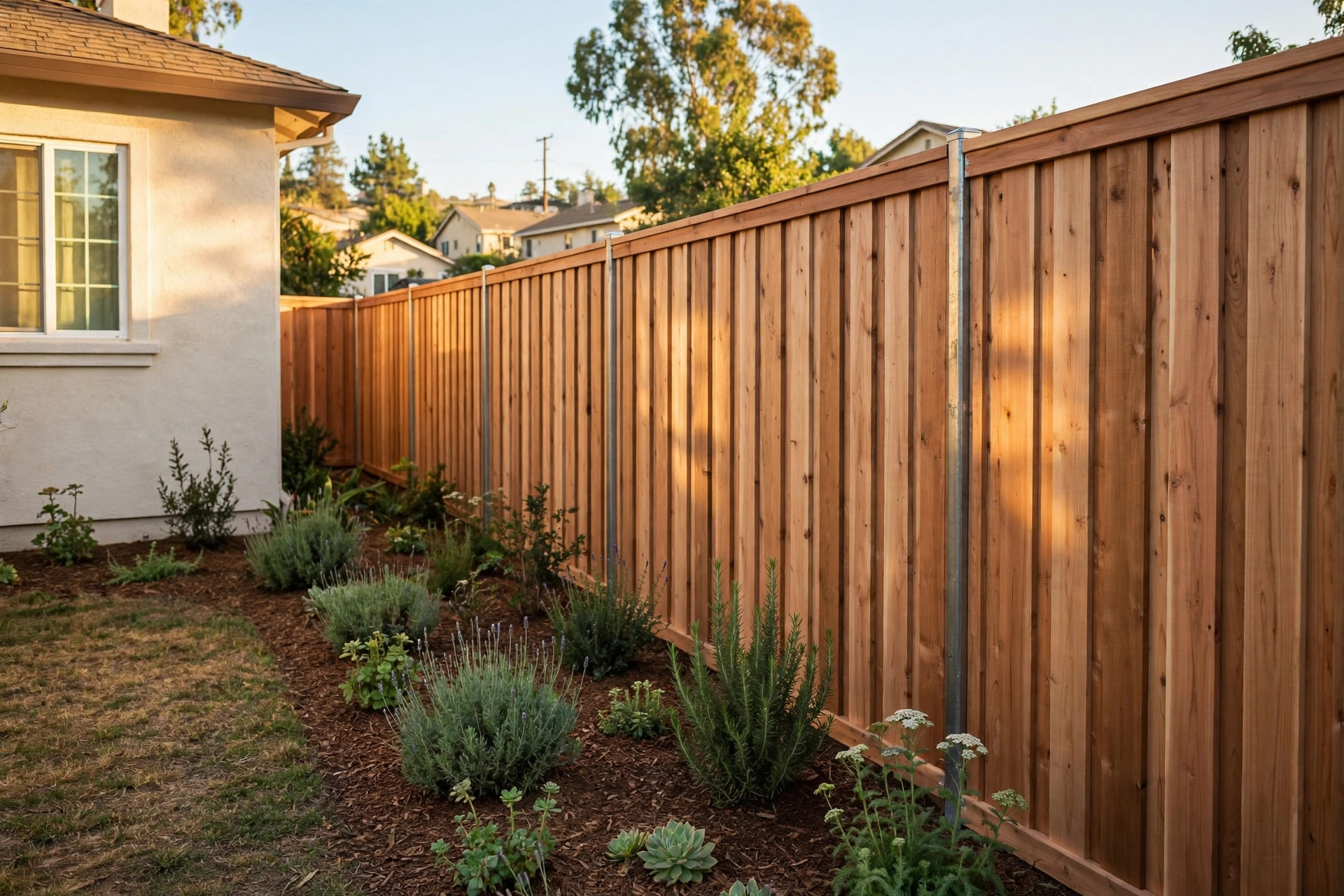
Wood is the most common choice in California. Cedar and redwood stand up well to sun and dry air. Redwood costs more but resists rot and insects. A wood fence gives full privacy and a warm look. It needs stain or sealant every two to three years. Guides at This Old House describe how proper sealing can double the life of a wood fence.
Vinyl Fences
Vinyl costs more up front but needs almost no care. It does not rot, and it never needs paint. In hot inland areas, pick a light color so the panels do not warp in the sun. Vinyl suits homeowners who want a clean look with no upkeep. When you compare reliable fence installation contractors in the usa, ask which of them have real experience with vinyl, since the posts and rails set differently than wood.
Chain Link Fences
Chain link is the low-cost workhorse. It keeps dogs in and marks the line clearly. It gives no privacy, but privacy slats can be woven through the mesh. Chain link suits side yards, dog runs, and rental homes where cost matters most.
Ornamental Metal Fences
Steel or aluminum picket fences look sharp in front yards. They give security without blocking the view of the house. Aluminum does not rust, which matters near the coast. These fences cost more than wood but last for decades with little care. Family Handyman has practical notes on setting metal posts in concrete so they stay plumb.
Cost and Price
Fence installation cost in California runs higher than the national average. Labor is dear, permits add fees, and material must often be hauled a long way. As a rough guide for 2026, expect these installed prices per linear foot:
– Chain link: 12 to 25 dollars – Wood privacy: 30 to 55 dollars – Vinyl privacy: 45 to 75 dollars – Ornamental metal: 50 to 90 dollars
Gates add cost. A single walk gate may add 250 to 500 dollars. A double drive gate can add 800 to 1,500 dollars or more. Rocky soil, slopes, and old fence removal also raise the price. A good bid breaks these items out so you can see where the money goes.
Be wary of a bid far below the rest. A very low bid often means shallow posts, thin boards, or no permit. The fence may look fine on day one and lean by year two. Bob Vila advises homeowners to get at least three written bids and to treat the middle bid with care.
Payment terms matter too. California law limits the down payment a contractor may ask for on home work. Know the limit and hold to it. Keep every receipt and every change order in writing. If the contractor asks for cash with no receipt, walk away.
Care and Upkeep
A fence lasts as long as its posts. Keep soil and mulch away from the base of wood posts. Water should drain away from the fence, not pool at its feet. Restain wood every two to three years, sooner on the sunny side. Check gates each spring. Hinges loosen and latches sag. A few turns of a wrench now saves a new gate later.
Trim plants back from the fence. Vines look charming but hold moisture against the boards and pull the fence out of plumb as they grow heavy. Keep sprinklers aimed at the lawn, not at the fence. Constant wetting rots wood and stains vinyl. The Spruce home guides give simple seasonal checklists that take less than an hour.
For vinyl, a yearly wash with soap and water is enough. For metal, touch up any chipped paint at once so rust cannot start. For chain link, check the ties each year and replace any that have worked loose.
Safety
Fence work has real risks. Post hole diggers hit gas lines and buried cable. A reliable contractor calls 811 before digging so the utility lines are marked. This call is free and it is the law in California. Do not let anyone dig on your lot until the lines are marked.
Concrete work brings its own care. Wet concrete burns skin. Crews should wear gloves and eye protection. Keep children and pets away from the work area until the job is done and the gates are hung. A half-built fence with open post holes is a hazard.
Coastal homes face one more safety point. A solid privacy fence near the ocean can act like a sail in a Santa Ana wind. In windy zones, ask about wind-rated designs or fences with small gaps that let air pass. Your contractor should know the local wind rules.
Frequently Asked Questions
How long does fence installation take?
A standard residential job of 100 to 150 feet takes two to four days once the crew starts. Permits can add one to four weeks before work begins. Rocky soil or steep slopes add time. Ask your contractor for a written schedule.
Do I need a permit for a fence in California?
It depends on your city and the fence height. Many cities want a permit for any fence over three or four feet in the front yard, and some want one for all fences. Your contractor should know the rule for your city and pull the permit for you.
Who pays for a fence between neighbors?
California law presumes neighbors share the cost of a boundary fence equally. In practice, talk to your neighbor early. Put the agreement in writing, with the cost split and the fence type spelled out. A written agreement stops most disputes.
How deep should fence posts be set?
A common rule is one third of the post length below ground, with a minimum of two feet for a six-foot fence. In soft or sandy soil, posts need to go deeper or be set in wider concrete footings. Ask your contractor what depth he plans for your soil.
What is the best fence for a California backyard?
For privacy, a cedar or redwood fence is hard to beat. For low upkeep, vinyl wins. For security on a budget, chain link does the job. The best fence is the one that fits your need, your budget, and your city’s rules.
How do I check a contractor’s license?
Ask for the license number, then check it with the California Contractors State License Board. Confirm the license is active, in the right class, and free of serious complaints. Also confirm the bond is current.
A Short Final Word
A fence is one of the few home projects you see every single day. It frames the yard, guards the pets, and keeps the street where it belongs. Take the time to hire well. Check the license. Read the reviews. Get the bid in writing. Call 811 before the first hole is dug. Do these simple things, and reliable fence installation contractors in california will give you a fence that stands straight for twenty years.
References
Bob Vila. (n.d.). Home improvement advice. https://www.bobvila.com CertainTeed. (n.d.). Building materials and exterior products. https://www.certainteed.com Family Handyman. (n.d.). DIY home repair and maintenance. https://www.familyhandyman.com James Hardie. (n.d.). Fiber cement siding and exterior products. https://www.jameshardie.com Lowe’s. (n.d.). Home improvement products. https://www.lowes.com The Home Depot. (n.d.). Home improvement products. https://www.homedepot.com The Spruce. (n.d.). Home and garden advice. https://www.thespruce.com This Old House. (n.d.). Home renovation guidance. https://www.thisoldhouse.com
Was this guide helpful?

About Michael Thompson
The My Garden US editorial team writes practical, in-depth home and garden guides for American homeowners — tested advice, no fluff.
You May Also Like
Energy Efficient Fiberglass Entry Doors Buying Guide
September 30, 2026 0 views
Best Sliding Patio Doors for Small Apartments: A Practical Guide
July 24, 2026 0 views
Best Exterior Stair Railings for Midwest Homes: A Plain Guide
April 23, 2026 0 views