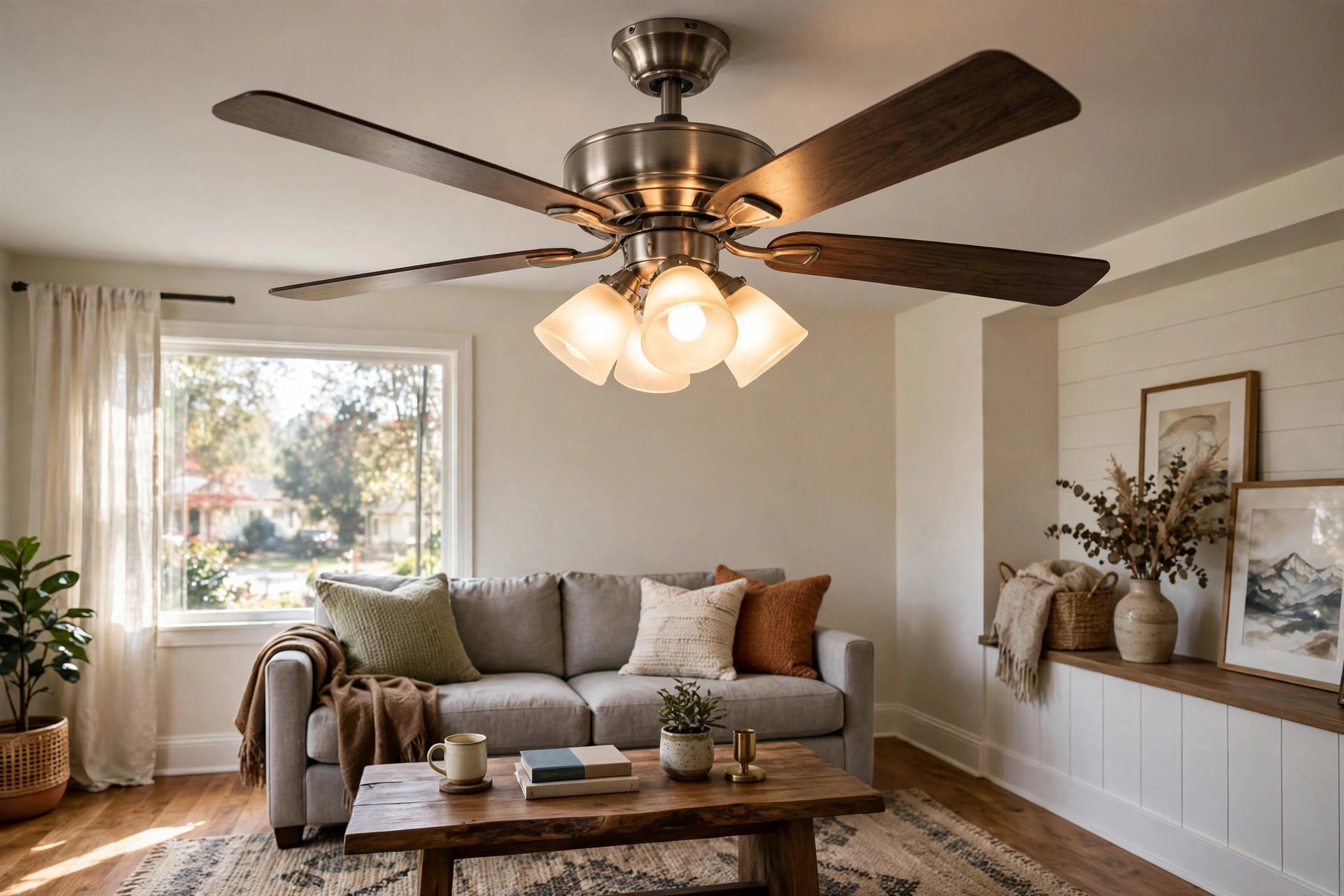
When a room feels hot and dark at the same time, one fix solves both problems. A ceiling fan with lights cools the air and brightens the room. But good fans cost money. That is why so many people search for ceiling fans lights deals near me before they buy. A little homework can save a lot. This guide will show you where to look, what to check, and how to get a fair price.
Why It Matters
A ceiling fan with lights does two jobs. It moves air, which makes a room feel cooler. It also gives light where you need it most. In a bedroom, it can replace a lamp. In a kitchen, it can brighten the whole space. In a living room, it can do both at once.
Buying two devices in one saves money and work. One trip up the ladder. One wiring job. One box to carry home.
Deals matter because prices vary widely. The same fan can cost forty dollars at one store and one hundred dollars at another. Sales change from week to week. Stores near you may cut prices to clear out last season’s styles, and many will match online coupons. When you know where ceiling fans lights deals near me can be found, you stop paying full price for no reason.
There is another reason to shop with care. A cheap fan that wobbles or hums is not a bargain. It is a waste of money. The goal is not the lowest price alone. The goal is a fair price for a fan that runs quiet and lasts for years.
What to Look For: Ceiling Fans Lights Deals near Me
Start with size. A fan that is too small will not move enough air. A fan that is too large will feel like a wind storm. Measure your room first. For a room up to 100 square feet, a fan between 29 and 36 inches is often right. For rooms up to 225 square feet, look at 42 to 48 inches. For larger rooms, look at 50 inches or more. The box should list the room size the fan fits. Read it before you buy.
Next, check the motor. The motor is the heart of the fan. A weak motor makes noise and moves little air. Look for fans that list their airflow in cubic feet per minute. Higher numbers mean more air moved. Independent testers such as Consumer Reports rate fans for airflow and noise, which can help you compare models before you buy. A quiet fan matters most in bedrooms. If the box says nothing about noise, ask the store clerk. Many shoppers learn about noise only after the fan is up, which is too late.
Light output matters too. Check the lumens, which tell how much light the fixture gives. A bedroom may need 1,000 to 2,000 lumens. A kitchen may need more. Bulb makers like Philips list lumens and color temperature on every pack, so you can match the light to the room.
Controls are worth a thought. Pull chains are simple and cost less. Remote controls cost more but are handy in bedrooms. Think about how you will use the fan each day, then pick the control that fits your habit.
A fan stays in your ceiling for many years, so pick a finish that fits the room. White fans fade into the ceiling. Wood tones fit warm rooms. Brushed metal fits modern rooms.
Energy Use
Ceiling fans use less power than air conditioners. A typical fan uses 50 to 100 watts. A window air conditioner can use 500 to 1,500 watts. In mild weather, a fan alone can keep a room fine. In hot weather, a fan lets you set the thermostat a few degrees higher, which cuts cooling bills.
Fans with LED light kits use even less power. An LED bulb can use 10 watts where an old bulb used 60. Many stores now carry fans that are rated for efficiency. The rating programs run by government energy offices list models that meet strict tests. Checking those lists before you shop is a smart step. You can read more about efficient lighting choices at ENERGY STAR.
Types and Options
Indoor fans are the most common type. They are made for dry rooms like bedrooms, living rooms, and dining rooms. They are not built to stand up to damp air. Do not put an indoor fan on a porch. The moisture will rust the motor and the warranty will not cover it.
Damp-rated fans are made for covered porches and bathrooms. They can take moisture in the air but not direct rain. Wet-rated fans can take rain and are made for open decks. The rating is stamped on the box. When you see ceiling fans lights deals near me in store ads, check the rating line. The cheapest fan in the ad may be indoor-only.
Low-profile fans, also called hugger fans, sit close to the ceiling. They fit rooms with low ceilings, under eight feet. Downrod fans hang from a rod and fit tall ceilings. The rod length can be swapped in many cases. Measure from floor to ceiling before you shop. You want the blades at least seven feet above the floor for safety.
Some fans come with the light kit built in. Others let you add a kit later. Built-in kits often look neater. Add-on kits give more choice of shade styles. Either way works. Just make sure the kit matches the fan brand or is made to fit it.
Smart fans are a newer option. They connect to home networks and can be run from a phone. They cost more. Specialty shops such as Lumens and Lamps Plus carry a wide range of both smart and simple models, which makes side-by-side comparison easy. For many buyers, a simple remote is enough.
Cost and Price
A basic ceiling fan with lights can cost as little as 40 dollars on sale. Mid-range fans run 80 to 200 dollars. High-end fans can cost 300 dollars or more. The light kit is often included in the price, but check the box. Some ads show a fan price and the light kit costs extra.
The best times to shop are worth knowing. Late summer is a strong season for deals. Stores clear out fans before fall. Holiday weekends often bring store-wide coupons. January can bring clearance prices on leftover stock. If you do not need the fan right away, wait for one of these windows.
Floor models can be a smart buy. Stores sell them at a cut price when new models arrive. Check that all parts are in the box and the light shades are not cracked. A missing screw can be replaced.
Open-box items are another path to savings. A buyer returns a fan, and the store marks it down. These fans often work fine, so ask if you can test it in the store before you pay.
Online prices can beat local prices, but watch the shipping cost. A heavy fan costs real money to ship. Add the shipping to the price before you compare. Many local stores will match an online price if you show it on your phone. That gives you the low price with no wait and easy returns.
Refurbished fans are worth a look too. They are tested and sold with a short warranty, but buy them only from sellers you trust.
When you search for ceiling fans lights deals near me, do not stop at the big chain stores. Local lighting shops, hardware stores, and discount outlets all carry fans, and each one sets its own prices. Calling two or three stores takes ten minutes and can save real money.
Care and Upkeep
A ceiling fan needs little care, but it needs some. Dust builds up on the blades, which causes wobble. Wipe the blades twice a year with a damp cloth. Turn the fan off first. A pillowcase slipped over each blade keeps dust off the floor. Step-by-step care guides from sites like The Spruce and Bob Vila show the same simple routine.
Check the screws once a year. Vibration can loosen them over time. If the fan wobbles, a balancing kit can fix it. These kits cost a few dollars and come with small weights that stick to the blades.
The light kit needs care too. Dust the shades so the light stays bright. Replace bulbs with the right type and wattage. The label inside the socket lists the maximum wattage, and going over it is a fire risk. LED bulbs run cooler and last longer.
If the fan makes a clicking sound, stop it and look for the cause. A loose shade or a wire touching a blade is common. Fix it before you run the fan again. Most good fans carry a warranty of several years on the motor. Keep your receipt.
Seasonal Use
Most fans have a switch on the motor housing that reverses the blade direction. In summer, the blades should push air down. This creates a breeze that cools the skin. In winter, reverse the blades so they pull air up. This pushes warm air near the ceiling back down along the walls. Using this switch right saves energy in both seasons.
Safety
Safety starts with the ceiling box. A fan is heavy and it moves. A normal light fixture box cannot hold it. The box must be rated for fan support. If you are not sure what is in your ceiling, have an electrician check it. This is the most important safety step in the whole job.
Turn off the power at the breaker before you touch any wires. Do not trust the wall switch alone. Test with a voltage tester. If the wiring looks odd or the box is old, call a professional.
Keep the blades at least seven feet above the floor. In rooms with low ceilings, use a hugger fan. Make sure the blades clear doors that swing open near the fan.
Children should not hang from fan blades or pull chains hard. A fan is not a toy.
For general home electrical safety guidance, the federal product safety agency publishes clear advice for homeowners. You can find it at the Consumer Product Safety Commission.
Frequently Asked Questions
Can I install a ceiling fan with lights myself? Many people can. If the ceiling box is rated for a fan and the wiring is already in place, the job takes an hour or two. You will need a ladder, a screwdriver, and a voltage tester. Follow the manual step by step. If the box is not rated for a fan, or if there is no wiring at all, hire an electrician.
Do ceiling fans with lights use a lot of electricity? No. A fan uses far less power than an air conditioner. With LED bulbs, the light part uses very little power too. Running a fan lets many people raise the thermostat setting, which lowers the cooling bill more than the fan costs to run. The federal energy office explains this cooling strategy in detail at energy.gov.
What size fan do I need for my room? Measure the room in square feet. Small rooms up to 100 square feet do well with 29 to 36 inch fans. Medium rooms up to 225 square feet suit 42 to 48 inch fans. Large rooms over 225 square feet need 50 inches or more. When in doubt, go one size up rather than down.
Are cheap ceiling fans worth buying? Some are. A cheap fan from a known brand on sale can be a fine buy. A no-name fan at a rock-bottom price is a risk. It may wobble, hum, or fail early. Read the warranty. A motor warranty of five years or more is a good sign. Check reviews from other buyers before you decide.
Where can I find ceiling fans lights deals near me? Check home centers, hardware stores, and lighting shops in your area. Big chains like Lowe’s and The Home Depot run weekly ads with fan coupons. Look at weekly ads and holiday sales. Ask about floor models and open-box items. Compare with online prices and ask local stores to match them. Late summer and January are strong months for clearance deals.
Can I use an indoor ceiling fan on my porch? No, not unless the porch is fully enclosed and dry. Moisture will damage an indoor fan and void the warranty. For a covered porch, buy a damp-rated fan. For an open deck, buy a wet-rated fan. The rating is printed on the box.
A Final Word
Finding ceiling fans lights deals near me takes a little time, but the savings are real. Measure your room. Pick the right size and rating. Compare prices at two or three stores. Check the warranty and the return policy. A fan bought on sale that runs quiet for ten years is one of the best deals in the home. Take your time, buy once, and enjoy the cool air and the light.
Shoppers who are also updating other rooms will find the same deal-hunting rules apply to other lighting. Readers looking at indoor grow lights for sale usa or a sensor porch lights reviews buying guide usa can use the same steps. Outdoor projects follow the same logic too, as shown in guides to landscape spot lights texas homes usa.
References
Bob Vila. (n.d.). Home improvement advice. https://www.bobvila.com Consumer Reports. (n.d.). Product reviews and ratings. https://www.consumerreports.org ENERGY STAR. (n.d.). Energy efficient products. https://www.energystar.gov Lamps Plus. (n.d.). Lighting and home decor. https://www.lampsplus.com Lowe’s. (n.d.). Home improvement products. https://www.lowes.com Lumens. (n.d.). Lighting and ceiling fans. https://www.lumens.com Philips. (n.d.). Lighting products. https://www.philips.com The Home Depot. (n.d.). Home improvement products. https://www.homedepot.com The Spruce. (n.d.). Home and garden advice. https://www.thespruce.com U.S. Consumer Product Safety Commission. (n.d.). Product safety information. https://www.cpsc.gov U.S. Department of Energy. (n.d.). Energy efficiency and renewable energy. https://www.energy.gov
Was this guide helpful?

About Michael Thompson
The My Garden US editorial team writes practical, in-depth home and garden guides for American homeowners — tested advice, no fluff.