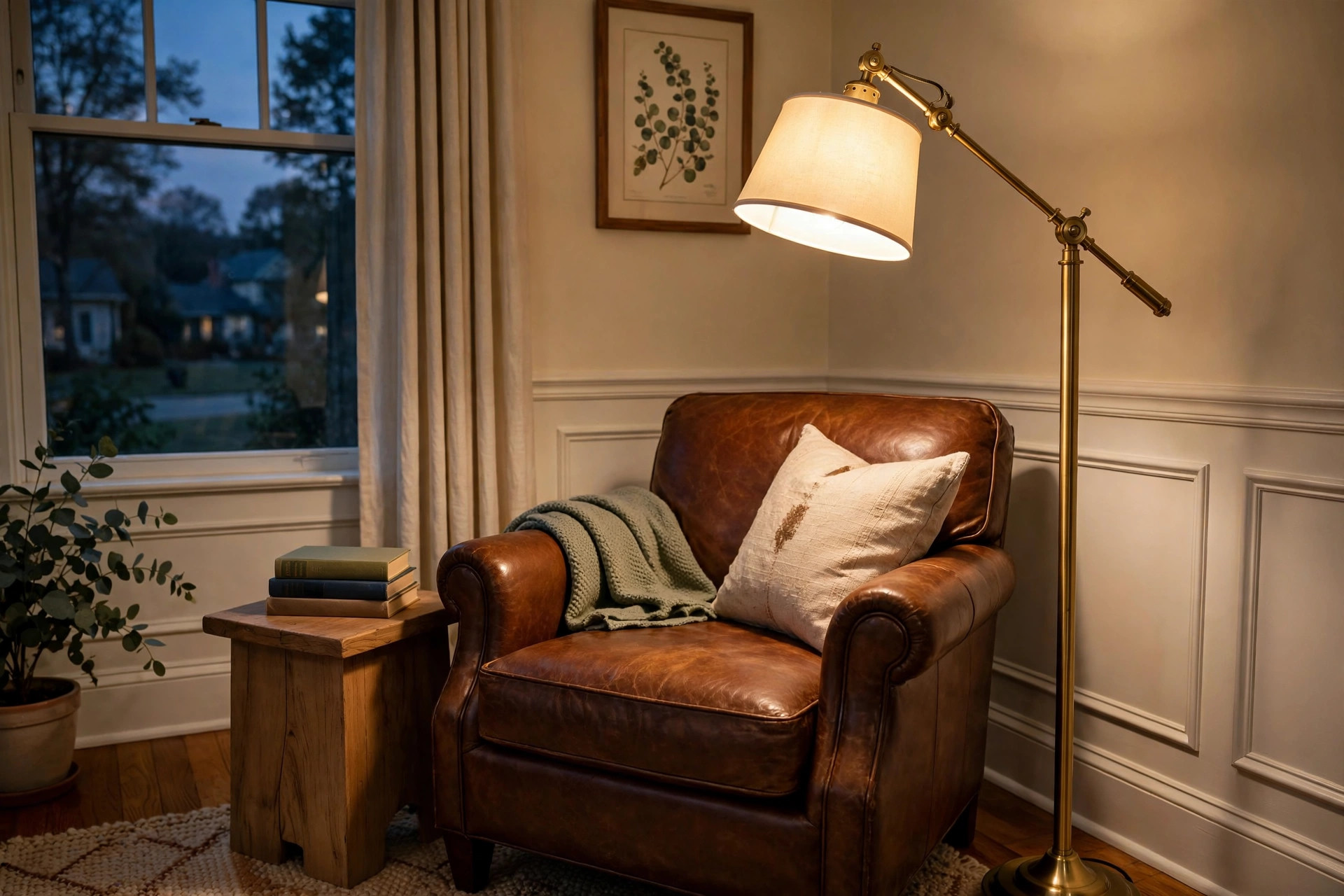

Many people read in the evening. A good book needs good light. A floor lamp can give that light without taking up table space. This reading floor lamps buying guide usa explains how to pick one. It covers brightness, shades, bulbs, styles, prices, and safety. It is written in plain words for any reader. With the right lamp, reading at night becomes easy on the eyes.
Why Good Reading Light Matters
Poor light makes reading hard. The eyes work too much. They grow tired. The head can start to hurt. Over time, bad light can take the joy out of books. A floor lamp solves this in a simple way. It stands beside a chair. It sends light down on the page. The rest of the room can stay dim and calm.
A floor lamp is also flexible. It moves from one corner to another. It needs no table. It works in small rooms. For people who rent a home, a floor lamp is easy to carry from one place to the next. It plugs into a normal wall outlet. No special wiring is needed.
Health guides often say that good task lighting cuts eye strain. The U.S. Department of Energy shares simple lighting tips for the home that explain why the right bulb and the right spot matter. When you shop for a lamp, think of your eyes first and the look of the room second. A lamp that lights the page well is worth more than a lamp that only looks fine.
What to Look For in a Reading Floor Lamp: Reading Floor Lamps Buying Guide Usa
A reading lamp is not the same as a mood lamp. It must light a page in a clear and steady way. These are the points to check.
Brightness and Bulb Type
Look at the lumens. Lumens tell how much light a bulb gives. For reading, a lamp that gives 800 to 1600 lumens works well. That equals an old 60 to 100 watt bulb. Many lamps now use LED bulbs. LEDs give strong light and use little power. They also stay cool.
Color temperature matters too. It is measured in kelvins. A warm light near 2700K feels soft. It suits evening reading. A cooler light near 4000K or 5000K looks like daylight. It can help during study work. Some lamps let you change the tone with a switch. The ENERGY STAR program explains energy-efficient lighting choices and how bulb labels help buyers compare options.
Adjustable Heads and Arms
The best reading lamps let you aim the light. An adjustable head or arm points the beam at the page. Without this, light can hit your eyes or miss the book. A swing arm lamp is a strong choice. It bends over the chair. A pharmacy-style lamp also works well. Its head tilts and turns.
Some lamps have a gooseneck. The neck bends to any shape. This is handy when two people share a chair at different times. Each can set the light to suit their seat.
Shade Shape and Direction
The shade shapes the light. A shade that points down sends light to the page. This is what a reader needs. A shade that points up washes light over the ceiling. That looks nice but reads poorly.
Drum shades spread light wide. They can work if the bulb is strong and the shade aims downward. Bell shades direct light down in a tight beam. A metal shade with an open bottom also gives a strong reading beam.
The inside of the shade matters as well. A white inner lining reflects more light. A dark lining soaks light up. For reading, a light lining is better.
Height and Reach
A floor lamp should stand 55 to 65 inches tall. The light should land a little above shoulder height when you sit. If the lamp is too short, light hits your face. If it is too tall, light spreads past the page. Check the reach of the arm too. The head should sit over the chair arm or just behind your shoulder.
Base Stability
A heavy base keeps the lamp steady. Look for a base that weighs at least ten pounds. Thin, light bases can tip when someone brushes past. This is risky in homes with children or pets. A wide round base is more stable than a narrow one.
Controls
A simple switch is fine. Many readers like a foot switch or a touch dimmer. A dimmer lets you set the mood after the book is closed. Some lamps have three-step touch controls on the pole. Tap once for low, twice for medium, and a third time for high light. Try the switch in the store if you can. It should feel firm and easy to use.
Retail guides at stores like Lowe’s home lighting department often list lamp specs side by side, which makes it easy to compare height, shade size, and wattage before you buy.
Types of Reading Floor Lamps
Shops sell many kinds of floor lamps. Each kind suits a different room and a different reader.
Arc Floor Lamps
An arc lamp has a long curved arm. It rises from a heavy base and bends over the chair. It can light a whole reading nook. Arc lamps look modern. They cost more than simple lamps. They also take more floor space. Measure your room before you buy one.
Pharmacy Floor Lamps
A pharmacy lamp has a tall thin pole and a small adjustable shade. The shade tilts and slides up and down. These lamps came from old drugstore counters. They give a strong reading beam. They suit desks and reading chairs alike. Their slim shape fits tight corners.
Torchiere Lamps
A torchiere points light up at the ceiling. The ceiling bounces soft light down. This is pleasant for a room but weak for reading. If you read a lot, pair a torchiere with a small task light. Do not rely on it alone for books.
Swing Arm Lamps
A swing arm lamp bends in two or three places. You can pull it close or push it back. This is the most flexible kind for readers. Many also have a reading shade that aims light down. Swing arm lamps work well in bedrooms where one lamp must serve both reading and general light.
Shelf Floor Lamps
A shelf lamp has small trays built into the pole. It holds books, glasses, or a cup of tea. It is handy but often less stable. The lamp part is small. Check the bulb strength before you buy. Some shelf lamps are made for looks, not for reading.
Multi-Head Lamps
A multi-head lamp has two or three heads on one pole. One head can light the page. Another can wash the wall with soft light. This kind gives both task light and mood light. It is a good pick for a reading corner that also hosts guests.
For a wide look at styles and finishes, Lumens lighting experts show how each lamp type changes the feel of a room. If you want to compare many brands at once, Lamps Plus buying resources list floor lamps by style, height, and price.
Cost and Price
Floor lamps sell at many price points. A simple metal pole lamp can cost 30 to 60 dollars. It lights a page well. It may lack a dimmer or a strong base. For many readers, this is enough.
A mid-range lamp costs 80 to 180 dollars. This is the sweet spot for most buyers. You get a stable base, an adjustable head, a dimmer, and a better shade. Many lamps in this range use LED bulbs that last for years.
A high-end lamp costs 200 dollars or more. Designer brands charge for form and finish. The light is not always better. Before you pay more, check the lumens, the shade, and the adjustability. Price often pays for looks.
Also think about running cost. An LED bulb costs a few dollars a year to run. An old halogen bulb costs much more and grows hot. The label on the box shows yearly energy cost. The ENERGY STAR lighting program explains how to read these labels. Over five years, a cheap lamp with a costly bulb can beat an expensive lamp with a cheap bulb. Look at the whole picture.
Bulb makers such as Philips lighting guides help you pick the right LED for reading, with notes on brightness and color tone. Many shoppers also read The Spruce home lighting advice for room-by-room tips on lamp placement.
If you are furnishing a whole room, you may also look at related lighting. Many buyers who pick a reading lamp also browse kitchen island pendants for sale usa for the kitchen, or under cabinet strips where to buy usa for task light over counters. Others search reading floor lamps for sale usa to compare current models and prices.
Care and Upkeep
A floor lamp needs little care. Dust the shade once a month. A dry cloth works for most shades. Fabric shades can be brushed with a soft brush. Do not wet a fabric shade. Water can stain it.
Check the bulb once in a while. An LED bulb can last 15,000 hours or more. That is many years of evening reading. When the light grows dim, change the bulb. Always match the new bulb to the lamp’s rating. Never put a stronger bulb than the lamp allows. The rating is printed near the socket.
Keep the cord in good shape. Do not run it under a rug. Do not pinch it under furniture. A damaged cord is a fire risk. If the cord feels hot or looks cracked, stop using the lamp. A repair shop can fit a new cord, or you can replace the lamp.
Clean the pole with a soft dry cloth. For brass or chrome parts, a dry cloth keeps the shine. Avoid strong cleaners. They can strip the finish. Home Depot lighting care guides often include simple cleaning steps for metal and fabric shades.
Safety
Lamps are safe when used with care. Still, a few rules matter.
Place the lamp where no one trips over the cord. Run the cord along a wall. A cord cover can hold it flat. Make sure the lamp stands on a flat surface. Do not set it on a thick rug edge where it can rock.
Keep the lamp away from curtains and bedding. A hot bulb near cloth is a risk. LED bulbs stay much cooler than old bulbs. This is one more reason to pick LED.
Check the weight limit if the lamp has a shelf or tray. Do not overload it. A lamp that tips can break a bulb and cut skin. In homes with small children, pick a lamp with a heavy base and no small loose parts.
Buy lamps that carry a safety mark. In the USA, look for a UL or ETL mark on the label. This mark means the lamp passed safety tests. Lamps sold by large chains like Lowe’s usually carry these marks, but always check the box.
Frequently Asked Questions
How bright should a reading floor lamp be?
Aim for 800 to 1600 lumens at the page. This equals a 60 to 100 watt old-style bulb. If you read small print, pick the higher end. A dimmer helps you tune the light for each book and each time of day.
What color light is best for reading?
Warm white near 2700K to 3000K suits evening reading. It feels calm. Cool white near 4000K to 5000K suits study and work. It looks like daylight. Many lamps now let you switch between tones. Pick the tone that feels easy on your eyes.
Are LED bulbs good for reading lamps?
Yes. LEDs give steady light with no flicker. They use little power. They stay cool. They last for years. Pick an LED bulb with high lumens and the color tone you like. The U.S. Department of Energy lighting pages note that LEDs are the best pick for most home lamps today.
Should the lamp light point up or down?
Point it down for reading. A downward shade sends light straight to the page. An upward shade spreads light over the ceiling. That looks soft but reads poorly. If you want both, pick a lamp with two heads.
How tall should a reading floor lamp be?
Most reading floor lamps stand 55 to 65 inches tall. The bottom of the shade should sit a little above your shoulder when you sit. This keeps glare out of your eyes and puts the beam on the page.
Can one lamp serve both reading and room lighting?
Yes, if it has a dimmer or two heads. Set it bright for reading. Turn it low for a calm evening. A swing arm lamp with a dimmer is a strong pick for both jobs.
A Short Final Word
A reading floor lamp is a simple tool. Pick one with good brightness, an adjustable head, a downward shade, and a stable base. Use an LED bulb. Keep the cord safe. With these points in mind, this reading floor lamps buying guide usa should help you find a lamp that makes every page easy to read.
References
ENERGY STAR. (n.d.). Energy efficient products. https://www.energystar.gov Lamps Plus. (n.d.). Lighting and home decor. https://www.lampsplus.com Lowe’s. (n.d.). Home improvement products. https://www.lowes.com Lumens. (n.d.). Lighting and ceiling fans. https://www.lumens.com Philips. (n.d.). Lighting products. https://www.philips.com The Home Depot. (n.d.). Home improvement products. https://www.homedepot.com The Spruce. (n.d.). Home and garden advice. https://www.thespruce.com U.S. Department of Energy. (n.d.). Energy efficiency and renewable energy. https://www.energy.gov
Was this guide helpful?

About David Wilson
The My Garden US editorial team writes practical, in-depth home and garden guides for American homeowners — tested advice, no fluff.
You May Also Like
WiFi Smart Bulbs: Where to Buy in the USA — A Plain Shopper’s Guide
June 1, 2026 0 views
Vanity Light Bars Texas Homes USA: A Complete Buying Guide
June 16, 2026 0 views
Landscape Spot Lights Reviews Buying Guide USA
April 22, 2026 0 views