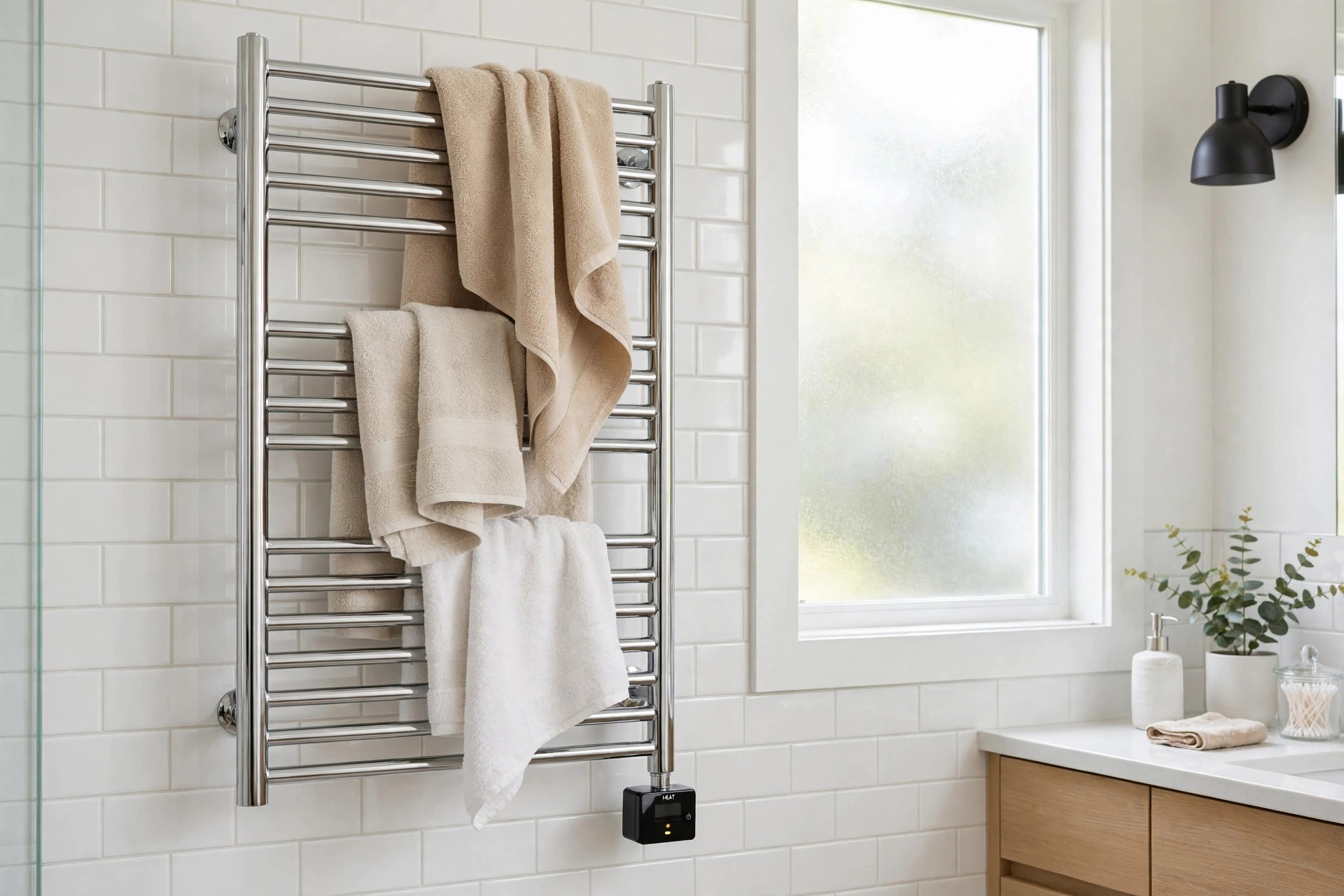

There is nothing quite like stepping out of a hot shower and reaching for a cold, damp towel. Shoppers who search for bathroom towel warmers USA online deals want to end that small daily discomfort, and they want to do it without paying full price. A towel warmer is a simple device. It is a heated rack, usually made of steel or aluminum, that warms towels and dries them between uses. This guide explains what these units do, how to choose one, what they cost, and how to shop for them on the internet with care.
Why a Towel Warmer Matters
A towel that stays damp is more than an annoyance. Damp fabric can hold a musty smell. It can also harbor germs. A warmer dries the towel faster, which keeps the bath linen fresher for longer. Many owners find they can use the same towel for several days instead of throwing it in the wash after one use. That saves water, soap, and time at the laundry machine.
There is also plain comfort. In a cold bathroom on a winter morning, a warm towel feels like a small luxury. For people with sore joints or stiff muscles, the warmth can feel soothing against the skin after a bath.
What to Look For When You Shop: Bathroom Towel Warmers Usa Online Deals
A towel warmer is not a hard device to judge. Still, a few points matter more than the rest. The sections below walk through them in plain terms.
Size and Heat Output
Warmers come in many sizes. A small unit may hold two folded towels. A tall unit can hold four or more, plus a bathrobe. Measure the wall where the unit will hang. Leave space around it so heat can move. A unit that is too large for a small bath will crowd the room and cost more to run. A unit that is too small will not hold the family towels.
Heat output is often given in BTUs or watts. Most electric warmers use between 60 and 200 watts. That is about as much as one bright light bulb. Larger hydronic units, which connect to the hot water system, give more heat. For a normal family bath, a mid-size electric unit is enough.
Electric, Hydronic, or Dual Fuel
Electric warmers plug into a wall outlet or wire straight into the home circuit. They are the easiest to install. Many plug-in models need no more skill than a drill and a screwdriver.
Hydronic warmers hook into the central heating system. Hot water runs through the rails. They cost more to install because a plumber must do the work. They are common in homes with hot water heat.
Dual fuel units can run on either power. They use the heating system in winter and an electric element in summer. They are the most flexible, and also the dearest.
Finish and Build
Most warmers are made of stainless steel, mild steel, or aluminum. Stainless steel resists rust and holds its looks for years. Mild steel is cheaper but needs a good coating to last in a damp room. Aluminum heats up fast and weighs little, which makes mounting easier.
Finishes include polished chrome, brushed nickel, matte black, and white. Chrome is the classic choice and matches most faucets. Matte black suits a modern bath. Check the warranty on the finish. A good unit carries a finish warranty of five years or more.
Timer, Thermostat, and Safety Marks
A timer lets the warmer run only when you need it. Two hours each morning, for example. A thermostat holds the heat at a safe level. Both features cut power use. When you look at electric towel warmer deals, check whether these features are built in or sold as add-ons.
Safety marks matter. Look for UL or ETL listing. These marks show the unit passed standard safety tests in the United States. Home advice writers, such as the editors at This Old House, often remind readers to check safety marks on any electric device that will live near water.
Types and Options on the Market
Wall mounted racks are the most common type. They fix to the wall with brackets. They come in ladder shapes, with horizontal bars, and in panel shapes, with wide flat plates. Ladder racks hold towels well. Panel styles give a sleek look.
Freestanding warmers stand on the floor like a small drying rack. They need no drilling. They plug in and work right away. They suit renters well. The trade is that they take floor space and can be tipped by a child or a pet.
Underfloor mats and drawer warmers are less common. A drawer warmer is a small cabinet that holds one towel at a time. Spas and high-end baths use them. They cost more and hold less, but they give the hottest towels.
When you compare a wall mounted towel warmer sale with a freestanding model, weigh the install work against the floor space you can spare. For most owners, the wall mounted ladder rack is the best middle ground.
How to Choose the Right One
Start with the wall. Find a spot near the shower or tub, at least a few inches from any water source, and near an outlet or a planned wire point. Measure the width and height you can give up. Write the numbers down.
Next, count the towels. A couple needs room for two large bath towels. A family of four needs a tall unit or two smaller ones. Add a robe if you like to warm one.
Then set the power type. If you rent, choose a plug-in freestanding or wall unit. If you own and plan a remodel, a hardwired electric unit looks cleaner. If your home has hot water heat, ask a plumber about a hydronic or dual fuel model. Guides at The Spruce walk through these choices in plain language.
Pick a finish that matches your faucet and shower trim. Chrome matches almost everything. Finally, read the reviews for rust complaints. A warmer lives in steam. Poor coating shows rust in a year or two.
Cost and Price: Finding Real Deals
Prices vary widely. A small freestanding warmer can cost under one hundred dollars. A mid-size wall mounted electric unit often runs from one hundred fifty to four hundred dollars. Large designer units, hydronic models, and dual fuel systems can pass one thousand dollars.
Cheap towel warmers online in the USA are easy to find, but not every low price is a true deal. Some tips help:
– Compare the same model across stores. Big home stores such as Home Depot and Lowe’s often list the same unit at different prices, and one may run a sale the other does not. – Check for open-box and clearance stock. A returned unit with a small scratch can sell for half price and work just as well. – Watch holiday sales. Labor Day, Black Friday, and spring remodel season bring some of the best bathroom fixture prices of the year. – Read the shipping terms. A heavy unit can carry a large freight charge. Free shipping is part of the deal. – Confirm the warranty. A five-year warranty on a mid-price unit beats a one-year warranty on a bargain unit.
Fixture makers such as Kohler and Moen sell through many dealers, so their prices move around. Bathroom product lines from Delta and American Standard are worth comparing as well, since dealers discount them at different times. A deal is real when the same model costs less than its usual street price, not when the list price is simply crossed out.
Running costs are small. A 100-watt warmer run two hours a day uses about six kilowatt-hours a month. At average United States power rates, that is well under one dollar a month. A timer keeps the cost this low.
Installation Basics
A plug-in unit is a weekend job. Mark the bracket spots with a level. Drill pilot holes. Set wall anchors if you miss the studs. Hang the unit. Plug it in. Keep the cord away from the tub.
A hardwired unit should be installed by a licensed electrician. Bath circuits need proper grounding and, in most codes, GFCI protection. Do not wire a unit yourself unless you know the local code and hold the needed skill.
Hydronic units need a plumber. The plumber ties the warmer into the heating loop and bleeds the air out. This is not a do-it-yourself job in most homes.
After install, let the unit run empty for an hour. Check that the heat is even across the bars. Then hang a dry towel and feel the result after thirty minutes.
Care and Upkeep
Care is simple. Wipe the bars with a soft cloth and mild soap once a week. Dry the unit after wiping. Do not use steel wool or harsh cleaners, which scratch the finish and invite rust.
Check the mounting brackets twice a year. Steam and vibration can loosen screws. Tighten them with a screwdriver. Look at the cord on plug-in models for wear. A frayed cord should be replaced at once, not taped.
Do not hang dripping wet towels on an electric warmer every day without letting them drip first. A quick shake over the tub keeps water off the floor and off the cord. Do not drape plastic or rubber items on the bars. They can melt or mark the finish.
With plain care, a stainless steel warmer can last fifteen years or more. Mild steel units last less long, often eight to ten years, depending on the coating and the dampness of the room.
Safety Points
Heat and water share the bathroom, so safety deserves care. Buy only units with a UL or ETL mark. Keep the unit at least a few inches from the tub edge and away from direct shower spray. Never cover the bars with thick blankets that block airflow for hours; the unit needs air to shed heat.
Teach children not to climb the warmer. A wall mounted unit is strong, but it is not a ladder. Keep paper and cloth piles away from freestanding units. Unplug a freestanding warmer when it will sit unused for weeks.
If a unit smells of burning plastic or trips a breaker, switch it off and unplug it. Do not use it again until an electrician checks it.
Where to Shop Online in the USA
The internet gives American shoppers a wide field. Large retailers carry many brands in one place. Specialty bath stores carry fewer brands but often know them better. Manufacturer sites show the full line and the real specifications.
When you shop, read the full listing. Check the dimensions, the wattage, the finish, and the install type. Read a spread of reviews, not just the top ones. Look for photos from buyers, which show the true color better than studio shots. Remodel photos on sites such as HGTV often show warmers in finished baths, which helps you picture the size in your own room.
Beware of deals that look too good. A no-name unit at a third of the normal price may lack safety marks or use thin steel. Check the seller rating. A seller with a short history and no address is a risk. Pay with a method that gives buyer protection, such as a credit card.
If you are planning a larger bath project, it helps to shop the whole room at once. Readers often pair a warmer with other upgrades. Our guides to heated floor kits, bidet toilet seats, and frameless shower doors cover three of the most common companions to a towel warmer in an American remodel.
FAQ
Do towel warmers use a lot of electricity? No. Most use 60 to 200 watts, about like a bright bulb. With a timer set for two hours a day, the monthly cost is usually under one dollar.
Can a towel warmer heat the whole bathroom? Not really. A large hydronic unit can take the chill off a small bath, but it is not a substitute for a heater. Think of it as a towel dryer first and a mild room warmer second.
Are plug-in models safe near the shower? Yes, if they carry a UL or ETL mark and sit a proper distance from water. Follow the maker instructions on placement. When in doubt, choose a hardwired unit installed by an electrician on a GFCI circuit.
How long does a towel take to warm up? Most units reach full heat in fifteen to thirty minutes. Hang the towel before your shower, and it will be warm when you step out.
Do warmers work with thick towels? Yes, but thick towels warm more slowly. Fold a thick towel in half over two bars so heat reaches more of the fabric. Thin towels warm fastest.
Is a cheap online unit a false economy? It can be. A very cheap unit may rust in a year or lack a safety mark. Spend enough to get stainless steel or a well-coated unit with a real warranty. The middle of the price range usually gives the best value.
A Final Word
A towel warmer is a modest buy that pays back every day. Choose the right size, pick a safe power type, and buy from a seller you trust. Shop the sales, compare the same model in more than one store, and read the warranty before you click buy. Do that, and the bathroom towel warmers USA online deals you find will be real savings on a fixture you will enjoy for years.
References
American Standard. (n.d.). Bathroom and kitchen products. https://www.americanstandard.com Delta Faucet. (n.d.). Kitchen and bathroom faucets. https://www.deltafaucet.com HGTV. (n.d.). Home and garden ideas. https://www.hgtv.com Kohler. (n.d.). Bathroom and kitchen fixtures. https://www.kohler.com Lowe’s. (n.d.). Home improvement products. https://www.lowes.com Moen. (n.d.). Faucets and plumbing fixtures. https://www.moen.com The Home Depot. (n.d.). Home improvement products. https://www.homedepot.com The Spruce. (n.d.). Home and garden advice. https://www.thespruce.com This Old House. (n.d.). Home renovation guidance. https://www.thisoldhouse.com
Was this guide helpful?

About James Carter
The My Garden US editorial team writes practical, in-depth home and garden guides for American homeowners — tested advice, no fluff.
You May Also Like

Mirrored Medicine Cabinets for Sale USA: A Plain Buyer’s Guide
August 4, 2026 0 views
Bathroom Towel Warmers for Sale USA: A Simple Buying Guide
March 12, 2026 0 views
Heated Floor Kits USA Online Deals: A Practical Buying Guide
February 9, 2026 0 views