A wet tile floor can be slick in a second. Many Florida homes have large walk-in showers with smooth tile and stone. A simple grab bar can give you a steady hold when you step in or out. This guide to shower grab bars for Florida homes explains the styles, the prices, and how to mount them right. It uses plain words. It gives you what you need to choose with care.
Why Grab Bars Matter in Florida Homes
Florida homes often have wide showers with polished tile. That tile looks fine when dry. When wet, it can be very slick. Older adults and people with weak knees feel this risk most. Even young adults slip when soap and shampoo mix with water on smooth stone.
A grab bar is a fixed metal bar you hold for balance. It is not a towel rack. A towel rack will pull out of the wall under body weight. A grab bar is built to hold a full adult. When it is mounted into studs or solid blocking, it can support 250 to 500 pounds. That is enough to catch you if you start to fall.
Many Florida bathrooms were built with fiberglass shower stalls. These stalls are common in homes from the 1980s and 1990s. Their thin walls need special mounting hardware. Newer tile showers are more common now. Tile over a cement backer board gives a strong base for screws. The state also has many retirees who plan ahead. They add grab bars during a remodel before they need them. That is wise. A remodel is the cheapest time to add them. You can read more in our shower grab bars buying guide usa for general tips on style and fit.
What to Look for When You Shop: Shower Grab Bars Florida Homes Usa
Not all grab bars are the same. Three points matter most: grip, material, and finish. The Kohler catalog shows many styles that meet ADA size rules. Those rules are a good guide even for a private home.
Grip and Diameter
The bar should fit your hand. A diameter of one inch to one and a half inches works for most adults. Bars with a knurled or peened surface give extra grip when hands are soapy. A smooth chrome bar can feel slick. If you choose smooth chrome, pick a thicker bar so your hand can wrap it well.
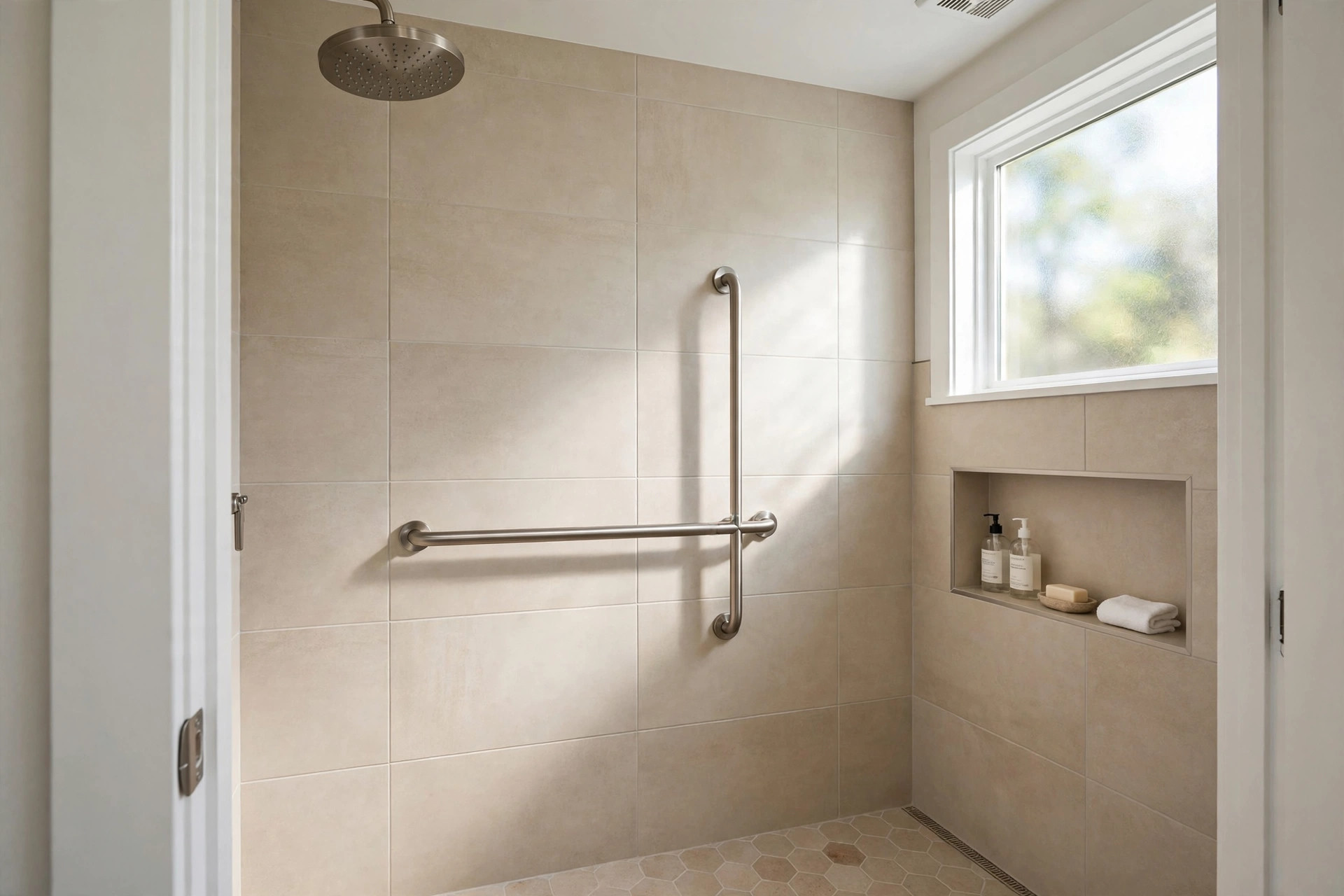
Length matters too. A 12-inch bar suits a small stall. It gives you one firm hand hold. A 24-inch or 36-inch bar suits a wide walk-in shower. It lets you hold on while you move across the space. Many people mount two bars: one vertical near the entry and one horizontal along the back wall.
Material and Finish
Stainless steel is the best choice for Florida. It resists rust in damp air. It also resists the salt air near the coast. Look for 304 grade stainless steel. This grade holds up in humid bathrooms. Chrome-plated brass is also good. It has a bright shine and resists rust well.
Avoid painted steel bars. The paint chips with time. The steel below it rusts fast in a steamy shower. Check the finish against your other fixtures. Brushed nickel is a calm, soft look. Polished chrome is bright and classic. Oil-rubbed bronze is warm and dark. Many makers sell bars in all these finishes so the bar blends with the Moen or Delta faucets you already own.
Types of Shower Grab Bars
Grab bars come in several shapes. Each shape serves a spot in the shower.
Straight Bars
The straight bar is the most common type. It runs in a line. Sizes range from 12 to 48 inches. Mount it horizontal on the back wall at waist height. Mount it vertical near the door for entry and exit. Straight bars are simple, strong, and easy to clean.
Angled and L-Shaped Bars
An L-shaped bar has two arms at a right angle. One arm runs vertical. One arm runs horizontal. This shape helps you sit down and stand up. It also helps you turn around in a small shower. Angled bars, with a bend of about 45 degrees, work well beside a shower seat. They give a natural hand path as you lower yourself.
Wave and Designer Bars
Wave bars have a gentle curve. The curve follows the shape of your hand. They look softer than plain straight bars. Many look like towel bars, so they blend into a modern bath. Designer bars cost more. They suit a high-end remodel where looks matter as much as safety. The American Standard line includes several curved models worth a look.
Suction Cup Bars
Suction cup bars stick to smooth tile with air pressure. They need no screws. They are easy to move. But they are NOT a safe grab bar. They can lose suction with no warning. Use them only as a light steadying aid, never as a fall stop. For real safety, use a screw-mounted bar.
Cost and Price
Prices vary with size, brand, and finish. A plain stainless steel bar of 24 inches costs about 20 to 40 dollars. A designer bar in brushed nickel can cost 60 to 120 dollars. L-shaped and wave bars run 50 to 100 dollars. These prices are for the bar alone. Big stores like Home Depot and Lowe’s stock many brands, so you can compare in person.
Mounting hardware adds to the cost. If your shower wall has tile over cement board and studs behind it, the included screws may be enough. If the wall is fiberglass, you need toggle bolts or wing anchors made for hollow walls. A set of good anchors costs 8 to 15 dollars.
Labor is the next cost. A handyman can mount one bar in about 30 to 60 minutes. Rates in Florida run 60 to 120 dollars per hour. If you add bars during a full remodel, the tile worker can set blocking in the wall. Blocking is a wood brace between studs. It gives the screws a solid grip. Adding blocking during a remodel costs little. Adding it after the tile is set costs much more, because the tile must come off.
Total cost for a single well-mounted bar is often 50 to 150 dollars with labor. Two or three bars run 150 to 400 dollars. That is a small price for safety.
Installing Bars in a Tile Shower
Good mounting is the heart of the job. A bar is only as strong as its anchors. The This Old House guides stress the same rule: hit a stud or solid blocking.
First, find the studs. Use a stud finder on the wall outside the shower, then map the lines into the shower. Studs are usually 16 inches apart. Mark them with tape. Plan the bar so each end lands on a stud. This gives the strongest hold.
Next, drill the tile with care. Use a carbide or diamond bit made for tile. Run the drill at low speed. Keep the bit wet with a sponge to cool it. Push lightly. Heavy force cracks tile. Drill a pilot hole, then drill to the full size.
Set the anchors, then screw the bar flanges to the wall. Use stainless steel screws. They will not rust and stain the grout. Seal the flange edge with a thin bead of silicone caulk. This keeps water from getting behind the tile. Wipe off the extra caulk before it sets.
Test the bar before you trust it. Pull hard. Lean on it. It should not move or flex. If it shifts, stop and re-anchor. A loose bar is worse than no bar, because it gives false trust.
If your shower has a fiberglass or acrylic shell, the job is different. You cannot hit a stud through a thin shell in most spots. Use stainless toggle bolts rated for hollow walls. Drill per the bolt maker’s guide. Tighten just enough to hold firm. Over-tightening can crack the shell. When in doubt, call a pro. A plumber or bath remodeler does this job often.
Care and Upkeep
Grab bars need little care. Wipe them once a week with a soft cloth and mild soap. Rinse and dry them. This stops soap scum and hard water spots. Florida water is often hard. It leaves white scale on chrome. A mix of white vinegar and water cuts scale well. Wipe, rinse, and dry.
Do not use bleach or harsh acids on the finish. They can dull chrome and etch nickel. Do not use steel wool or rough pads. They scratch the surface. Scratches hold grime and can start rust on cheap steel.
Check the mounting twice a year. Grab each bar and pull firmly. Look at the flanges for rust or loose screws. Check the caulk seal for gaps. Re-caulk if water can get behind the flange. Tighten screws if they have backed out. A five-minute check keeps the bar safe for years.
Safety Notes for Older Adults
Grab bars help, but they are one part of a safe bath. A non-slip mat or textured floor tile cuts slip risk. A shower seat lets tired legs rest. A hand-held shower wand lets you bathe while seated. The HGTV home guides show many bath designs that blend safety with style.
Place bars where hands reach in a natural way. A common plan is three bars: one vertical at the entry, one horizontal on the side wall, and one angled by the seat or control valve. Mount horizontal bars 33 to 36 inches above the shower floor. This is the ADA range. It suits most adults. Taller people may like 36 to 38 inches.
Teach everyone in the home to use the bars. Grip the bar before you step over the curb. Keep a hand on the bar while you turn. Do not hang wet towels on the bar. Wet towels block the grip and add weight. Do not use the bar as a shelf for shampoo bottles.
If balance is a real concern, talk to a doctor or an occupational therapist. They can plan bar spots for your exact needs. Some Medicare Advantage plans and home safety programs help pay for bath safety gear. Check before you buy.
Frequently Asked Questions
How many grab bars does a Florida shower need?
Most showers do well with two or three. One vertical bar near the entry helps you step in and out. One horizontal bar on the back or side wall helps you move and turn. A third angled bar helps if you use a shower seat. Small stalls may need only two.
Can I mount a grab bar on fiberglass walls?
Yes, with the right hardware. Use stainless toggle bolts or anchors rated for hollow walls. Do not use plain wood screws. They will not hold in thin fiberglass. Follow the anchor maker’s steps. If the shell feels weak or flexes, call a pro.
Will grab bars lower my home value?
No. In Florida they often help. Many buyers are retirees who want a safe bath. A clean, well-matched bar looks like a smart upgrade. Choose a finish that matches your faucets so it looks planned, not added on.
What is the best height for a shower grab bar?
Mount horizontal bars 33 to 36 inches above the shower floor. This range fits most adults. It matches ADA guidance. Mount vertical bars so the center sits near waist height, about 36 inches. Adjust up a few inches for tall users.
Are suction cup grab bars safe?
No. They are not safe as grab bars. They can pop off with no warning. Heat and steam weaken the suction. Use them only as a light touch point, never to catch a fall. For real safety, use screw-mounted bars anchored to studs or blocking.
Can I install grab bars myself?
Yes, if you are handy and the wall has studs or solid backing. You need a stud finder, a tile drill bit, and care. If the wall is fiberglass, stone, or you are unsure what is behind the tile, hire a pro. A bad mount can fail when you need it most. The Bob Vila and The Spruce sites both offer step-by-step mounting guides for reference.
A Final Word
Shower grab bars are small, plain, and cheap. They do a big job. In a Florida home with slick tile and steamy air, they give you a steady hold every day. Pick stainless steel. Match the finish to your bath. Mount into studs or solid blocking. If you are pairing the bars with a wider remodel, you may also like our guides to frameless shower doors buying guide usa and shower niche inserts buying guide usa. A safe shower is a calm shower. Plan it once, mount it well, and use it every day.
References
American Standard. (n.d.). Bathroom and kitchen products. https://www.americanstandard.com Bob Vila. (n.d.). Home improvement advice. https://www.bobvila.com Delta Faucet. (n.d.). Kitchen and bathroom faucets. https://www.deltafaucet.com HGTV. (n.d.). Home and garden ideas. https://www.hgtv.com Kohler. (n.d.). Bathroom and kitchen fixtures. https://www.kohler.com Lowe’s. (n.d.). Home improvement products. https://www.lowes.com Moen. (n.d.). Faucets and plumbing fixtures. https://www.moen.com The Home Depot. (n.d.). Home improvement products. https://www.homedepot.com The Spruce. (n.d.). Home and garden advice. https://www.thespruce.com This Old House. (n.d.). Home renovation guidance. https://www.thisoldhouse.com
Was this guide helpful?

About Robert Taylor
The My Garden US editorial team writes practical, in-depth home and garden guides for American homeowners — tested advice, no fluff.