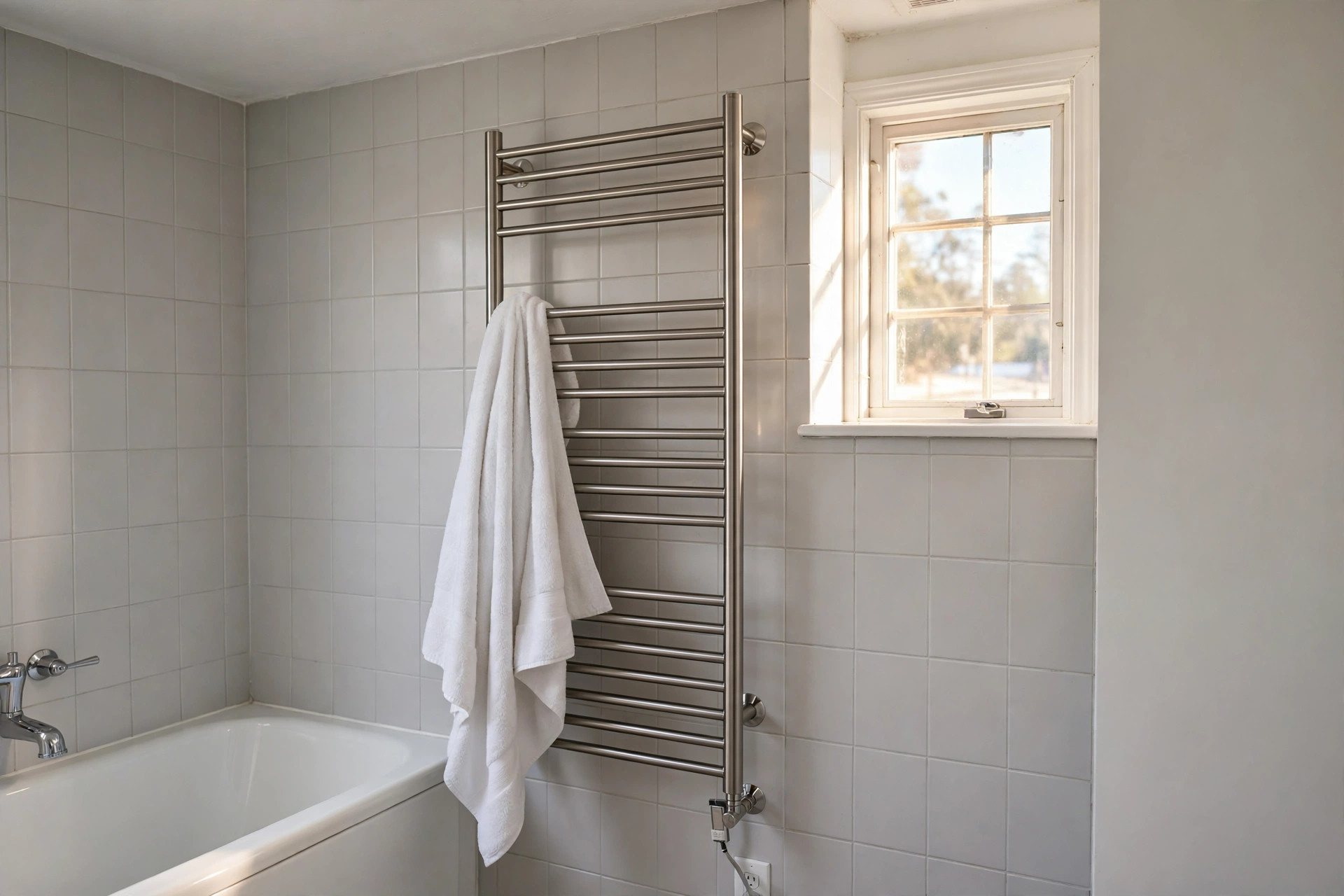

Finding bathroom towel warmers where to buy usa is not hard once you know what to look for. A heated towel rack is a simple device. It warms your towels before and after a bath or shower. It also dries damp towels faster, which cuts down on that musty smell wet towels get. Many American homes now include one as part of a bathroom remodel project.
This guide tells you where to buy bathroom towel warmers in the USA. It covers the types sold, the price range, and the features that matter. It lists the kinds of stores that carry them and what to check before you order. Everything here is written in plain words so you can decide with ease.
Why a Towel Warmer Matters
A towel warmer does more than warm a towel. It keeps the towel dry between uses. A dry towel stays fresh longer. A damp towel left in a warm bath can grow mildew in a day or two. The steady low heat of a warmer drives moisture out of the fabric.
It also helps the room. Bathrooms hold a lot of damp air. A heated rail adds gentle warmth to the space. In a small bath, this can make a real difference on a cold morning. Many owners pair a towel warmer with a quiet bath fan to move moist air out. If you are planning other upgrades, see our guide to quiet exhaust fans for the bath.
There is comfort too. A warm towel after a shower is a small luxury. Hotels use heated racks for this reason. Homeowners who try one often say they would not go back to a cold towel.
Types of Bathroom Towel Warmers: Bathroom Towel Warmers Where to Buy Usa
Towel warmers come in two main kinds: electric and hydronic. Each has its place.
Electric Towel Warmers
Electric models are the most common in American homes. They plug into a standard outlet or wire into the bath circuit. Hardwired units look cleaner because no cord shows. Plug-in units are easier to install.
Electric warmers fall into two groups. Dry electric models heat an element inside the rail. Wet electric models are filled with oil or water that the element heats. Wet models hold heat longer after they are switched off.
Many electric warmers have a timer or a switch. Some have both. A timer lets the rail heat up before your morning shower and switch off when you leave. This saves power and keeps costs low.
Hydronic Towel Warmers
Hydronic models connect to the home hot water system or boiler. Hot water flows through the rails and heats them. They work well in homes with forced hot water heat. They are less common in homes with forced air heat because the hot water lines may not run near the bath.
A plumber should install a hydronic unit. The work takes more time and costs more than plugging in an electric rail.
Freestanding and Wall-Mounted
Most warmers mount on the wall. Wall-mounted rails save floor space. They come in ladder shapes, curved shapes, and simple bar shapes. Some have shelves on top for folded towels.
Freestanding models stand on the floor. They need no screws in the wall. They suit renters who cannot drill into tile. They take up floor space, so they work best in larger baths.
What to Look for When You Buy
Not all towel warmers are equal. These points help you choose.
Size and capacity. A rail should fit the towels you use. A small rail holds one bath towel. A tall ladder rail holds two or three. Measure your wall space before you shop. Most baths can fit a rail 20 to 36 inches wide.
Heat output. Warmers list heat output in watts or BTUs. For a standard bath, 100 to 150 watts is plenty. Larger units go up to 200 watts or more. Higher wattage warms towels faster but costs more to run.
Material and finish. Stainless steel is the most common. It resists rust and looks clean. Polished chrome is bright and classic. Brushed nickel hides water spots and matches many bath faucets. Oil-rubbed bronze suits a traditional bath. Make sure the finish is real metal plating, not thin paint, so it lasts in damp air.
Heat time and settings. A good warmer reaches full heat in 20 to 40 minutes. Some have a low and high setting. A timer is a useful feature. It lets the unit warm up on a schedule.
Safety listing. Look for a UL or ETL listing on the label. This means an independent lab tested the unit for safe use. This is not the place to cut corners. The unit sits in a wet room and runs on power.
Voltage. Most American homes use 110 to 120 volts. Check that the unit matches. Some imported models run on 220 volts and need a special circuit. A 220-volt unit will not work on a standard bath outlet.
Warranty. A one-year warranty is common. Better brands offer two to five years. A longer warranty shows the maker trusts the heating element.
Where to Buy Bathroom Towel Warmers in the USA
You can buy a bathroom towel warmer from many kinds of stores. Here are the main choices.
Large Home Improvement Stores
The big home center chains carry heated towel racks in store and online. You can see a few models on the shelf and order more styles on the website. Prices run from under one hundred dollars for a small plug-in rail to several hundred for a large hardwired ladder. The staff at these stores can point you to the right mounting hardware. Big retail homepages such as Home Depot and Lowe’s list hundreds of models with buyer reviews.
Plumbing and Bath Fixture Brands
The well-known bath brands sell towel warmers through their own sites and through dealers. Brand sites show the full range of finishes and sizes. They often have design tools and care guides. For example, Kohler and Moen sell bath accessories that match their faucet lines. Delta Faucet and American Standard also carry heated racks and matching fixtures.
Specialty Bath Showrooms
Local bath and kitchen showrooms let you see and touch the units before you buy. The staff know plumbing and can answer wiring questions. Prices may be higher than online, but you get real advice. A showroom is a good choice if you want a hydronic model that ties into your heating system.
Online Marketplaces
Online sellers offer the widest choice. You can compare dozens of models in an hour. Read buyer reviews with care. Look for reviews that mention long-term use, not just the day the box arrived. Check the return policy before you order. A large rail is costly to ship back.
Warehouse Clubs and Discount Outlets
Some warehouse clubs sell towel warmers in the winter months. The choice is small but the price can be good. Outlet stores for bath brands also sell open-box or last-season models at a cut price.
Cost and Price Range
Prices for bathroom towel warmers in the USA fall into three bands.
Budget: 60 to 150 dollars. Small plug-in rails in chrome or white. Simple on-off switch. Good for a guest bath or a first try.
Midrange: 150 to 400 dollars. Hardwired ladder rails in stainless steel or brushed nickel. Timers or built-in switches. Most homeowners buy in this band.
High end: 400 to 1,200 dollars. Large hydronic units or designer rails with shelves. Multiple finishes. Longer warranties.
Install costs add to the price. A plug-in rail needs only wall anchors. A hardwired unit may need an electrician. Plan 100 to 300 dollars for an electrician to add a switched line if your bath has none. A hydronic install by a plumber can run 300 to 600 dollars.
Running costs are low. A 120-watt rail used two hours a day costs only a few dollars a month in most parts of the country. A timer keeps the cost down by heating the rail only when you need it.
Care and Upkeep
A towel warmer needs little care. Wipe the rails with a soft damp cloth once a week. This removes dust and soap film. Do not use harsh cleaners or steel wool. They scratch the finish and can break the protective plating.
Hang towels so air can move between the folds. A towel pressed flat against the rail dries slower. Shake the towel out and drape it loosely. Wash towels as usual. The warmer does not replace washing.
Check the cord or wiring once a year. Look for wear near the plug or the wall box. If the unit stops heating, check the breaker first. If the breaker is fine, the heating element may have failed. Most elements cannot be fixed at home. Call the maker about a warranty claim.
In a hydronic unit, watch for leaks at the valve fittings. A small drip can stain the wall. Tighten or replace a fitting at the first sign of moisture.
Safety Tips
A towel warmer is safe when used with care. Follow these rules.
– Keep the unit away from the shower spray and the tub splash zone. Water and live power do not mix. – Do not drape wet clothes or plastic bags over a hot rail. Use it for towels only. – Do not let children climb on a freestanding unit. Anchor wall models to studs or use the right anchors for tile. – Use a GFCI-protected outlet or circuit in the bath. This is the code in most of the USA. – Turn the unit off when you leave for a long trip. – Have a licensed electrician do any hardwired install. Have a licensed plumber connect a hydronic unit.
For general guidance on bath safety and home fixtures, the home guides at This Old House and the project advice at HGTV are useful reading. Product tests and buying advice also appear at The Spruce and Bob Vila.
Frequently Asked Questions
Do towel warmers use a lot of electricity? No. Most use 100 to 150 watts, about the same as a bright lamp. With a timer, the cost is only a few dollars a month.
Can I install a towel warmer myself? A plug-in model, yes. You need a drill, a level, and wall anchors. A hardwired model should be wired by an electrician. A hydronic model needs a plumber.
Will a towel warmer dry my towels fully? Yes, if you hang them loosely. A folded towel pressed tight will dry slower. Give the folds some air and the towel will be dry in a few hours.
Are towel warmers safe in a small bathroom? Yes, as long as the unit is listed by UL or ETL and is on a GFCI circuit. Keep it clear of the tub and shower spray.
Can I leave a towel warmer on all day? You can, but a timer is better. Constant heat wastes power and wears the element faster. Two to four hours a day is enough for most homes.
What finish matches my bath fixtures? Match the warmer to your faucet finish. Brushed nickel warmers go with brushed nickel faucets. Chrome warmers go with chrome. Mixed metals can work, but a match looks planned.
Final Word
A bathroom towel warmer is a small change that makes the bath feel better each day. You can buy one at a home center, a bath brand site, a local showroom, or online. Pick the right size, a safe listed unit, and a finish that matches your bath. With a timer and simple care, it will warm your towels for years.
References
American Standard. (n.d.). Bathroom and kitchen products. https://www.americanstandard.com Bob Vila. (n.d.). Home improvement advice. https://www.bobvila.com Delta Faucet. (n.d.). Kitchen and bathroom faucets. https://www.deltafaucet.com HGTV. (n.d.). Home and garden ideas. https://www.hgtv.com Kohler. (n.d.). Bathroom and kitchen fixtures. https://www.kohler.com Lowe’s. (n.d.). Home improvement products. https://www.lowes.com Moen. (n.d.). Faucets and plumbing fixtures. https://www.moen.com The Home Depot. (n.d.). Home improvement products. https://www.homedepot.com The Spruce. (n.d.). Home and garden advice. https://www.thespruce.com This Old House. (n.d.). Home renovation guidance. https://www.thisoldhouse.com
Was this guide helpful?

About Sarah Mitchell
The My Garden US editorial team writes practical, in-depth home and garden guides for American homeowners — tested advice, no fluff.
You May Also Like

Bathroom Vanity Light Bars: An American Homes Guide
May 11, 2026 0 views
Double Sink Vanities for Texas Homes USA: Sizes, Styles, and Buying Advice
October 2, 2026 0 views
Bathroom Sink Vanities for Sale USA: How to Choose the Right One
May 25, 2026 0 views