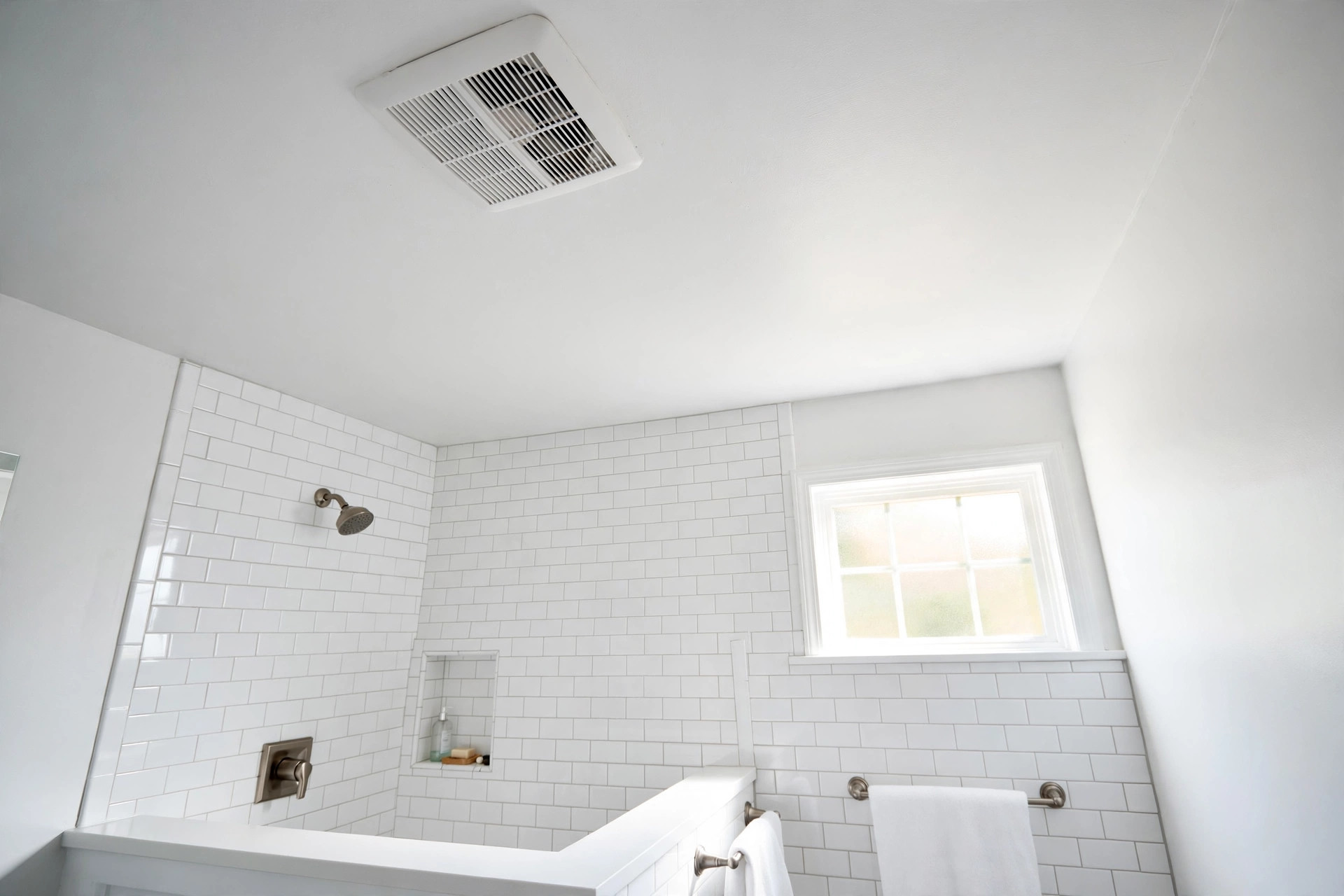

Shoppers who search for quiet exhaust fans reviews buying guide USA pages want one thing above all. They want a fan that clears stale air without a roar. A good bathroom fan does its work in the background. It pulls steam out after a shower. It cuts odor. And it does not wake the house.
This guide gathers the lessons from leading review sources in one place. You will learn how reviewers test noise. You will learn what the numbers on the box mean. And you will learn how to match a fan to your room. For a closer look at basic models, see our quiet exhaust fans buying guide. Large retailers such as Home Depot carry most of the top-rated models, which makes side-by-side shopping easy.
Why a Quiet Fan Matters
A bathroom is the wettest room in the house. Every hot shower fills the air with steam. That moisture settles on walls, paint, and wood trim. Over time it feeds mold and mildew. A working exhaust fan pulls the damp air out before damage starts. This is the main job of the fan, and it is more important than looks or brand.
Noise decides whether the fan gets used. An old builder-grade fan can howl at 4.0 sones or more. Nobody wants to hear that at six in the morning. So people switch it off. Or they skip it entirely. The steam then stays in the room. Reviewers note this pattern again and again. A quiet fan solves it. When the sound is low, the fan stays on for the full shower and for twenty minutes after. That is when it does the most good.
Health is another reason. Mold spores can trigger allergies and asthma. A dry bathroom grows far less mold. The fan will not fix a leak, but it will keep normal shower steam from becoming a mold problem.
Quiet fans also suit the way people live now. Bathrooms sit close to bedrooms in many American homes. A late-night shower should not wake a sleeping child. A fan rated under 1.0 sone is little more than a soft hum. You can hold a normal talk over it. Home design outlets such as HGTV point out that modern grilles sit nearly flush with the ceiling, so a quiet fan can also look better than the bulky boxes of the past.
How to Choose a Quiet Exhaust Fan: Quiet Exhaust Fans Reviews Buying Guide Usa
How Reviewers Rate Noise
Reviews of quiet bathroom fans start with sound. The unit of measure is the sone. One sone is about the sound of a quiet refrigerator. Two sones feel twice as loud. Four sones feel four times as loud.
Here is the scale reviewers use. Fans above 2.0 sones sound clearly loud. Fans near 1.0 sone sound soft. Fans at 0.5 sone or below sound almost silent. The quietest models on the market test at 0.3 sone. At that level you must strain to hear them.
Testers measure sound with a meter at a set distance from the fan. Good reviews also note the tone of the sound. A low hum bothers people less than a high whine, even at the same sone rating. When you read a review, look for both the number and the tester comment on tone. Step-by-step testing guides at Bob Vila explain how these home tests are set up.
Check the Air Flow
Air flow is rated in CFM, or cubic feet per minute. It tells you how much air the fan moves. A quiet fan that moves too little air is a poor buy.
The common rule is simple. Allow one CFM for each square foot of floor space. A fifty square foot bath needs at least a fifty CFM fan. Many codes set fifty CFM as the floor for any bath. For a large bathroom, add CFM for each fixture. Reviewers often suggest fifty CFM for each toilet, shower, and tub, then take the largest total.
Long duct runs cut real air flow. A fan rated at one hundred CFM may deliver far less through twenty feet of bent duct. Reviews that test installed air flow are worth more than box numbers alone. When in doubt, buy a little more CFM than the math says. A slightly larger fan run on low noise still beats a small fan that strains.
Size and Fit
Ceiling fans come in set housing sizes. Measure your ceiling opening before you shop. Also note your duct size. Most bath fans use four-inch or six-inch round duct. A six-inch duct moves air with less noise than a four-inch duct at the same CFM. If you are cutting a new hole, the larger duct is the better choice.
Retrofit fans fit the housing of older models. They suit a swap where you do not want to cut new drywall. New-construction fans need open joists. Read the box for the rough-in size. A fan that fits your hole saves an hour of work.
Think About Installation
Many handy owners swap a fan themselves. The job needs basic wiring skill and attic access. Turn off the breaker first. Then disconnect the old unit, set the new housing, wire it, and seal the duct joints with foil tape. Installation advice from This Old House walks through each step with clear photos.
Call an electrician if the circuit needs work or if the bath has no fan at all. New wiring through finished walls is a pro job. Also vent the duct to the outside. Never vent into the attic. Warm moist air in a cold attic grows mold on the roof deck. A proper roof cap or wall cap finishes the job right.
Types of Quiet Bathroom Exhaust Fans
Ceiling Mount Fans
The ceiling mount is the standard type. It sits between joists and vents through the attic or an outside wall. Most review winners are ceiling mounts. They come in every CFM class from fifty to one hundred fifty. Major bath brands such as American Standard and Kohler sell full lines in this style. Pick the CFM and sone rating first, then the brand.
Fans With Lights
Many quiet fans include a light. The combo saves a ceiling cut. It also suits small baths where one fixture must do two jobs. Light output is rated in lumens. Five hundred lumens suits a small bath. Some models add a night-light mode with a soft glow.
Match the trim finish to the rest of the room. White grilles suit most ceilings. If your faucets are brushed nickel, look for a fan trim in the same tone. Our brushed nickel faucets buying guide shows how small finish matches pull a room together. Above the mirror, pair the fan light with matching bathroom vanity light bars so the two light sources agree in color.
Humidity Sensing Fans
A humidity sensing fan runs itself. It starts when shower steam raises the moisture level. It stops when the air dries out. This suits busy homes where no one remembers to flip the switch. It also suits guest baths.
Reviewers test how fast the sensor reacts and how long the fan runs after. The best models let you set the trigger level. Expect to pay more for this feature. Bath fixture makers such as Moen and lines from Delta Faucet offer sensor models with clean trim designs.
Cost and Price Ranges
Quiet does not have to mean costly, but silence has a price. Basic quiet fans run from thirty to seventy dollars. These move fifty to eighty CFM at about one sone. They suit a small bath on a tight budget.
Mid-range models run from seventy to one hundred fifty dollars. This is the sweet spot in most reviews. You get under one sone, eighty to one hundred ten CFM, and often a light or a humidity sensor. Build quality steps up here too. Motors run smoother and last longer.
Premium models run from one hundred fifty to three hundred dollars. These test at 0.3 sone. Some add motion sensors, night lights, and DC motors that sip power. They suit large master baths and noise-sensitive homes.
Pro installation adds one hundred fifty to four hundred dollars, based on access and wiring. A straight swap costs the least. A new fan in a bath that never had one costs the most. Compare shelf prices at Lowe’s and other big stores before you buy, since sales move often.
Care and Upkeep
A quiet fan stays quiet only if it stays clean. Dust builds up on the grille and the fan wheel. The motor then works harder and grows louder. Clean the grille every six months. Most grilles pull down or unclip by hand. Wash them in warm soapy water and let them dry fully.
Vacuum inside the housing with a brush tool. Wipe the fan blades with a damp cloth. Check that the damper flap outside moves freely. A stuck damper rattles and cuts air flow. Cleaning advice from The Spruce adds seasonal checklists for the whole bath vent path.
Listen once a year. A new rattle or hum points to a loose screw or a worn bearing. Tighten the mounting screws. If the noise stays, the motor may be near the end of its life. Most bath fans last about ten years. A fan that still roars after cleaning has earned retirement.
Safety Points
Cut power at the breaker before you touch the fan. Test with a voltage pen. Wires in a ceiling box can feed more than one circuit.
Use a GFCI-protected circuit when the fan sits over a tub or shower. Water and power do not mix. Many codes call for this outright.
Vent every bath fan to the outdoors. An attic vent dumps gallons of water into the roof space over a year. That feeds mold and rots wood. A short insulated duct to a wall cap or roof cap is the safe path.
Do not oversize wildly. A huge fan in a tiny bath can pull conditioned air from the whole house. It can also backdraft a furnace or water heater in rare cases. Match CFM to the room and seal the duct well.
Frequently Asked Questions
What sone rating counts as truly quiet? Most reviewers call 1.0 sone and below quiet. At 1.0 sone the fan is a soft background hum. At 0.5 sone you notice it only if you listen. At 0.3 sone it is near silent. Anything above 2.0 sones will sound loud in a small bath.
How many CFM do I need for my bathroom? Use one CFM per square foot of floor, with fifty CFM as the floor. A sixty square foot bath needs a sixty CFM fan at least. For baths over one hundred square feet, add fifty CFM per fixture and use the larger number. Long ducts call for extra CFM.
Can I replace a bathroom fan myself? Yes, if you have basic wiring skill and the new fan fits the old opening. Retrofit kits make this simple. Turn off the breaker first. Hire an electrician for new circuits, finished-wall fishing, or any work over a tub that needs GFCI protection.
Do quiet fans cost more to run? No. Most use fifteen to thirty watts, about the same as one old bulb. DC-motor models use even less. Running a fan for thirty minutes after each shower costs only a few dollars per year. The moisture damage it stops costs far more.
How long does a bathroom exhaust fan last? About ten years with normal use and basic cleaning. Heat and dust wear the motor down. A fan that grows louder each year is telling you its time is near. Swap it before it fails in a damp season.
Is a humidity sensor worth the extra money? For many homes, yes. The fan runs exactly as long as needed. No one must remember the switch. Guest baths gain the most, since guests rarely run the fan long enough. Set the trigger right and the sensor pays for itself in drier walls.
Final Word
The best quiet exhaust fan is the one you never think about. It clears steam, holds mold back, and stays silent enough to leave on. Read the sone rating first. Match CFM to your room. Pick the features you will truly use. Do that, and the reviews will agree with your choice for years.
References
American Standard. (n.d.). Bathroom and kitchen products. https://www.americanstandard.com Bob Vila. (n.d.). Home improvement advice. https://www.bobvila.com Delta Faucet. (n.d.). Kitchen and bathroom faucets. https://www.deltafaucet.com HGTV. (n.d.). Home and garden ideas. https://www.hgtv.com Kohler. (n.d.). Bathroom and kitchen fixtures. https://www.kohler.com Lowe’s. (n.d.). Home improvement products. https://www.lowes.com Moen. (n.d.). Faucets and plumbing fixtures. https://www.moen.com The Home Depot. (n.d.). Home improvement products. https://www.homedepot.com The Spruce. (n.d.). Home and garden advice. https://www.thespruce.com This Old House. (n.d.). Home renovation guidance. https://www.thisoldhouse.com
Was this guide helpful?

About David Wilson
The My Garden US editorial team writes practical, in-depth home and garden guides for American homeowners — tested advice, no fluff.
You May Also Like

Bathroom Towel Warmers Deals Near Me: A Smart Buying Guide
June 10, 2026 0 views
Shower Grab Bars Buying Guide USA: Sizes, Finishes, and Safe Installation
February 4, 2026 0 views
Brushed Towel Holders Texas Homes USA: A Plain Buying Guide
February 1, 2026 0 views