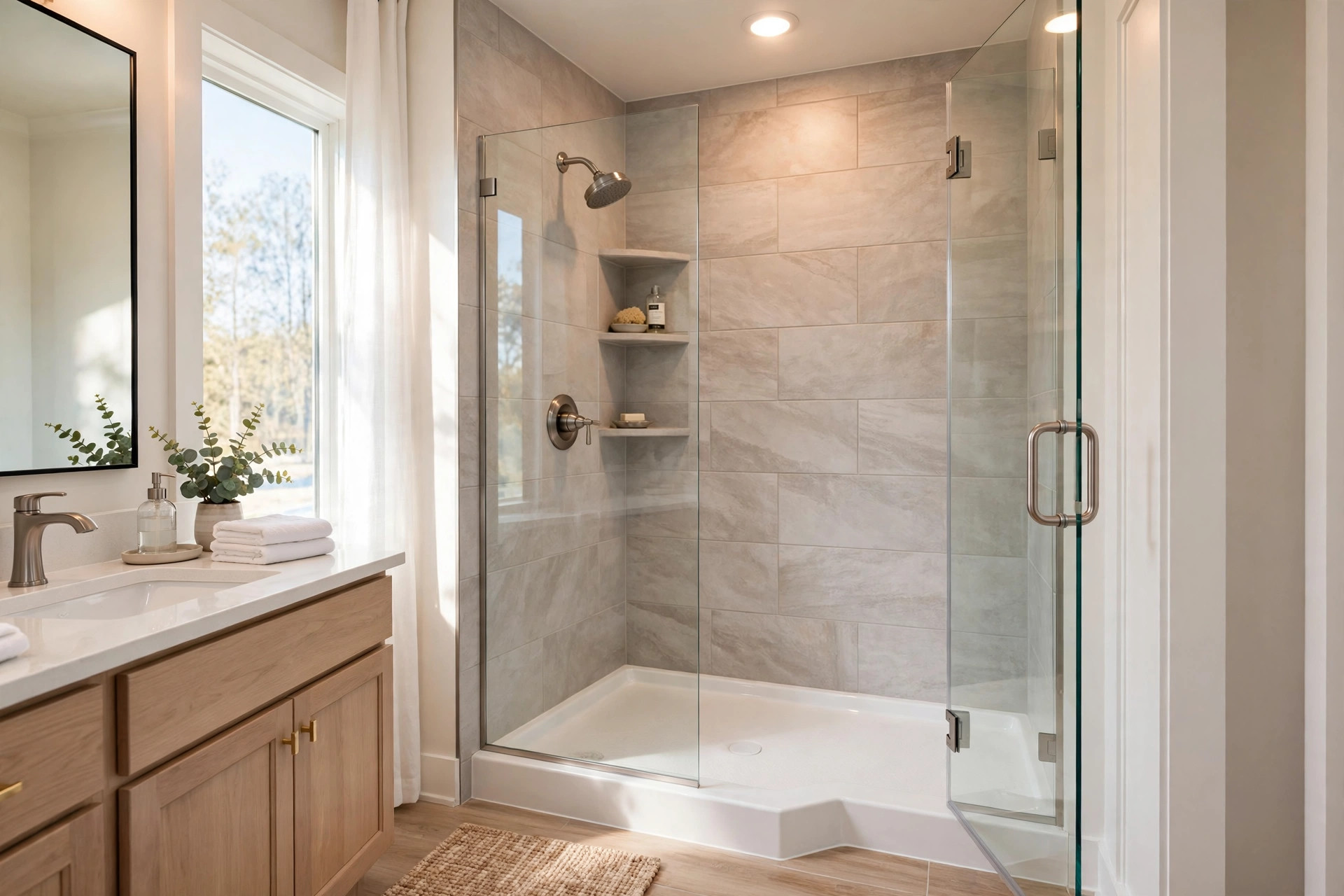

Many American homeowners are trading their old tub for a shower they can simply walk into. If you are one of them, this walk in shower kits reviews buying guide usa will help you choose with care. A walk in shower kit is a boxed set of matched parts: a shower pan or base, walls or panels, a drain, and often doors. The parts are made to fit each other. That removes much of the guesswork from a remodel.
Walk in showers have no raised curb or only a very low one. You step in without lifting your leg over a tall edge. That makes them safer and more pleasant for older people and for anyone with sore knees. They also make a small bathroom feel larger. The glass opens the sight line, and the eye travels across the whole room. Reviews from buyers often point to two things they love most: the clean look and the easy entry.
Why a Walk in Shower Kit Matters
A kit matters because it takes the risk out of matching parts. Buyers who try to buy a pan from one maker and walls from another often find that the seams do not line up. Water then finds its way behind the walls. A kit is designed as one system. The pan, walls, and doors are sized to meet.
Kits also save time. A contractor can set a kit in days rather than weeks. That lowers labor cost. For a do-it-yourself worker, the printed directions that come with a kit are worth a great deal. They show the order of the work and the tools needed.
There is also the matter of style. Walk in showers suit many tastes. A white acrylic kit looks fresh and simple. A kit with stone-look walls and brushed nickel trim looks rich. You can match the rest of your home. And if you ever sell the house, a walk in shower in the main bath is a strong selling point. Buyers of all ages ask for it.
How to Choose the Right Kit: Walk in Shower Kits Reviews Buying Guide Usa
Choosing well starts with your room, not with the catalog. Measure twice. Then look at the reviews with your numbers in hand.
Measure the Space First
Write down the width and depth of the spot where the shower will go. Most kits come in set sizes: 36 by 36 inches, 48 by 36 inches, and 60 by 30 inches. A 60-inch kit fits the space where a standard tub once stood. That is the most common swap in American homes.
Also measure the ceiling height. Some wall panels are 80 or 96 inches tall. Low ceilings need shorter panels. Note where the door swing will land. A hinged glass door needs room to open. In a tight room, a sliding door or an open walk in entry may serve better.
Check the Pan and Drain
The pan is the floor of the shower. It must slope toward the drain so water runs off and does not stand. Acrylic pans are light, warm to the touch, and easy to clean. Tile-ready pans let you set your own tile over a molded base. They look custom but cost more in labor.
Find out where the drain sits. Kits place the drain at the center, the side, or the corner. Your floor joists and the old drain line may limit the choice. If you move the drain, the plumber will cut the floor. That adds cost. Many reviewers advise choosing a kit whose drain matches your current plumbing.
Look at Walls and Panels
Walls come in acrylic, fiberglass, or solid surface. Acrylic walls are the most common in kits. They wipe clean and never need grout. Solid surface walls look like stone and feel solid, but the kit weighs much more. Fiberglass costs less but can flex and dull over time.
Think about seams. Fewer seams mean fewer places for mold. Some kits have walls that run full height in two or three large pieces. They look near seamless when set. Ask how the panels join. A good kit uses a tongue and groove joint or a sealant channel that hides the seam.
Choose Doors or an Open Entry
Many kits ship with doors. Frameless doors look light and open. They cost more and need careful setting so they do not leak at the edges. Semi-frameless doors cost less and still look neat. A sliding door saves swing space. To learn more about glass choices, see our guide on frameless shower doors.
Some walk in showers have no door at all. An open entry uses a longer pan and a splash guard. It is easy to enter and easy to clean. It can feel cold, though, since warm air escapes. If you pick an open entry, keep the room warm and use a fan on a timer.
Types of Walk in Shower Kits
Kits fall into a few plain groups. Knowing the groups helps you read reviews in the right light.
One-piece units. The pan and walls are molded as a single shell. They are the easiest to set and the most leak-proof. They are also large and hard to carry through doorways. Measure your hall and door openings before you order one.
Multi-piece units. The pan and two or three wall panels ship apart and join on site. They fit through narrow halls. Most do-it-yourself kits are multi-piece. They need careful sealing at the joints.
Tile-ready kits. These give you a waterproof pan and backer panels made for tile. You choose your own tile and grout. The result looks custom. The cost and labor run higher, and grout needs sealing every year or two.
Barrier-free kits. These have no curb at all. The pan sits flush with the floor. They are the best choice for wheelchairs and walkers. The floor must be built to take the pan depth, so plan this early with your contractor.
Pairing the right spray with the kit matters too. A good head turns a plain shower into a pleasant one. Our notes on rain shower heads can help you compare styles and flow rates.
Cost and Price
Prices in the United States run across a wide range. A basic acrylic multi-piece kit costs about 800 to 1,500 dollars. A mid-range kit with glass doors and solid surface walls runs 1,500 to 3,500 dollars. A high-end or barrier-free kit with custom glass can pass 4,000 dollars before labor.
Labor is often as much as the kit. A simple swap where the drain stays put may cost 1,500 to 3,000 dollars in labor. A job that moves plumbing or fixes a rotted subfloor costs more. Always get three written bids. Ask each bidder what the bid covers: the kit, the plumbing, the wall repair, and the finish trim.
Watch for hidden costs. You may need a new shower valve that meets current code. You may need a larger drain line. Tile-ready kits need tile, thinset, and grout on top of the kit price. Reviewers often say the kindest thing a buyer can do is add 20 percent to the budget for surprises.
Care and Upkeep
A walk in shower kit is easy to keep if you build small habits. Squeegee the glass after each shower. It takes one minute and stops water spots. Wipe the pan with a soft cloth and a mild cleaner each week. Never use scouring powder on acrylic. It leaves fine scratches that hold soap film.
Check the sealant once a year. Run your finger along the joints. If the caulk has pulled away or turned dark, cut it out and lay a fresh bead of silicone made for baths. Clean the drain cover each month. Hair builds up fast and slows the drain.
If your walls are tile over a tile-ready kit, seal the grout every year or two. Use a fan during the shower and for 20 minutes after. Moving air is the best guard against mold. These small steps keep the kit looking new for many years.
Safety
Safety is one of the main reasons people choose walk in showers. A low or no curb means fewer trips. Still, a wet floor is a wet floor. Choose a pan with a textured, slip-resistant surface. Ask the maker for the slip rating. A higher rating means a better grip underfoot.
Grab bars add real safety. Set them at a height that suits the people who will use the shower. Bars must anchor into studs or solid blocking, not just into the wall panel. For more on bar types and placement, read our guide to shower grab bars.
Think about water temperature too. A pressure-balancing or thermostatic valve stops sudden hot spikes when a toilet flushes. Set the water heater to 120 degrees. That is hot enough for comfort and cool enough to lower the risk of burns. Good light in the shower also helps. A bright, sealed fixture lets you see the floor clearly.
Frequently Asked Questions
Can I install a walk in shower kit myself? Many homeowners do. A multi-piece acrylic kit with clear directions is within reach of a careful do-it-yourselfer. You need basic plumbing skill and a level. One-piece units are harder because of their size and weight. If you must move the drain or open the floor, hire a licensed plumber.
How long does installation take? A pro can set a basic kit in two to three days when the plumbing stays in place. Tile-ready kits take longer because of the tile work. Add time if the subfloor needs repair or if walls need new backer board.
Will a walk in shower leak? A good kit, set to the directions, should not leak. Most leaks come from poor sealing at joints or from a pan that is not level. Take your time with the level and the sealant. Test with water before you close up the walls.
Do walk in showers raise home value? They often do. A walk in shower in the main bathroom appeals to a wide range of buyers. Real estate agents in many markets say it photographs well and draws interest. Keep the style neutral so it suits many tastes.
What size kit fits a standard tub space? A 60 by 30 inch kit fits the alcove where most American tubs sit. That is the most common retrofit. Measure your alcove at three points, top to bottom, since old walls are rarely square. Order the kit to the smallest reading.
Are walk in showers cold? They can feel cooler than a closed tub shower because warm air rises out of the open space. A door helps hold the heat. So does a warm bathroom and a good exhaust fan on a timer. Many owners say they adjust in a week and never look back.
A Short Final Word
A walk in shower kit is one of the soundest upgrades a homeowner can make. It is safer, it is easy to clean, and it makes the bath feel larger. Measure with care, read buyer reviews with your own numbers in mind, and pick a kit whose drain and size fit your room. Do that, and the shower will serve your household well for years.
For more background, see Moen, Delta Faucet, and American Standard. For more background, see The Home Depot, Lowe’s, and This Old House. Buying guides are also published by HGTV and Bob Vila.
References
American Standard. (n.d.). Bathroom and kitchen products. https://www.americanstandard.com Bob Vila. (n.d.). Home improvement advice. https://www.bobvila.com Delta Faucet. (n.d.). Kitchen and bathroom faucets. https://www.deltafaucet.com HGTV. (n.d.). Home and garden ideas. https://www.hgtv.com Lowe’s. (n.d.). Home improvement products. https://www.lowes.com Moen. (n.d.). Faucets and plumbing fixtures. https://www.moen.com The Home Depot. (n.d.). Home improvement products. https://www.homedepot.com This Old House. (n.d.). Home renovation guidance. https://www.thisoldhouse.com
Was this guide helpful?

About Jennifer Lee
The My Garden US editorial team writes practical, in-depth home and garden guides for American homeowners — tested advice, no fluff.
You May Also Like
Bathroom Towel Warmers USA Online Deals: A Plain Buyer Guide
March 2, 2026 0 views
Shower Grab Bars for Florida Homes: A Safe Buying Guide
March 27, 2026 0 views
Heated Floor Kits Deals Near Me: A Practical Buying Guide
March 18, 2026 0 views