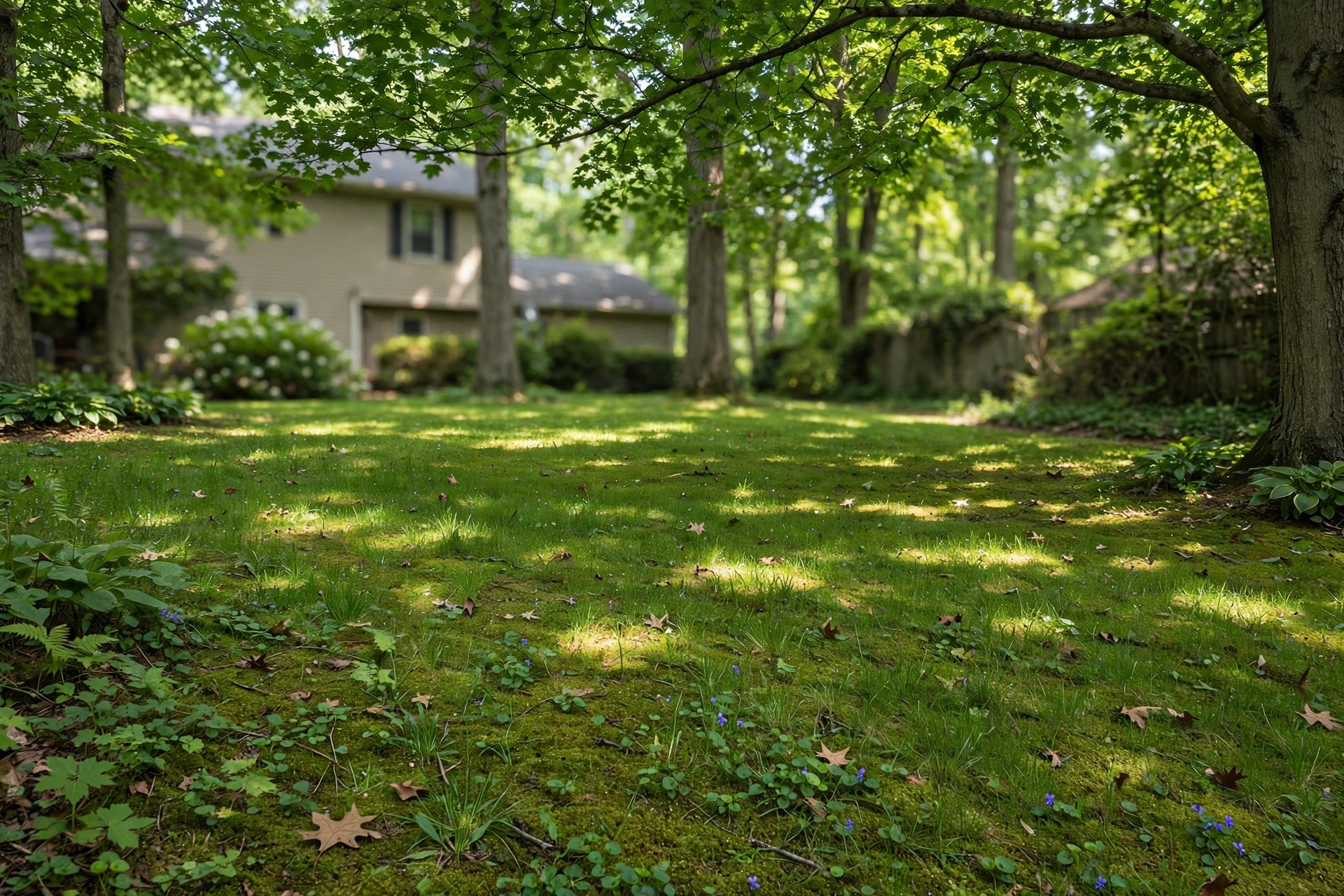

Many homes have a dark corner where grass will not grow. Under a big maple. Beside the garage. Along the north fence. If this sounds like your yard, you may need the best shade tolerant grass seed mix for your lawn. Most standard seed mixes love full sun. They fade and thin out in low light. Shade mixes use different grass types. These types need less light to stay green. They can fill bare spots under trees and near buildings. This guide explains how these mixes work. It shows what to look for on the label. It covers cost, planting, and care. With the right seed and the right method, even a shady yard can look thick and green.
Why Shade Makes Grass Hard to Grow
Grass is a plant. Like all green plants, it makes food from light. The process is called photosynthesis. Less light means less food. A lawn in deep shade is like a worker on half rations. It grows slow. It grows thin. Weeds and moss move in to take its place.
Trees make the problem worse in two ways. First, they block the sun. Second, their roots steal water and nutrients from the soil. Your grass must fight the tree for every drop. That is a hard fight to win.
Most lawn grass sold in stores is bred for open sun. Kentucky bluegrass and standard perennial ryegrass want six to eight hours of direct light each day. Put them under a maple and they starve. The lawn thins out. Bare soil shows through. Mud forms after rain.
Shade mixes solve this by using grasses that need less light. Fine fescues can do well on three to four hours of filtered light. Some types can handle even less. They grow slower than sun grasses. They also use less water and less fertilizer. That makes them a good fit for the hard spot in your yard.
Buying the best shade tolerant grass seed mix will not fix every dark corner. A spot that gets almost no light may need ground cover plants or mulch instead. But for partial shade and dappled light, the right mix can change a muddy patch into a green lawn.
What to Look For When You Choose a Mix: Best Shade Tolerant Grass Seed Mix
The bag holds the answers. Read the label before you buy. A good shade mix lists its grass types by name. It also lists the percent of each type. Avoid bags that say only “shade mix” with no detail. You need to know what is inside.
Read the Seed Label
Look for these numbers on the back of the bag:
– Seed types. Fine fescues are the backbone of most shade mixes. Look for creeping red fescue, chewings fescue, hard fescue, and sheep fescue. Tall fescue may also appear. It handles shade better than many sun grasses. – Germination rate. This tells you how many seeds will sprout. Good seed tests at 85 percent or higher. – Weed seed. This should be near zero. Cheap bags often carry weed seed. That weed seed will grow into new problems in your lawn. – Inert matter. A small amount is normal. It is often the coating on coated seed. – Test date. Seed stays fresh for about two to three years. A recent test date means strong germination.
Coated seed is common now. The coating holds water near the seed. It also adds weight to the bag. You get fewer real seeds per pound. Keep that in mind when you compare prices.
Know Your Type of Shade
Not all shade is the same. Match the seed to the light you have.
Partial shade gets three to six hours of direct sun each day. This is the easiest case. Most shade mixes do well here.
Dappled shade is light that falls through tree leaves. It moves and shifts during the day. Fine fescues love this kind of light.
Deep shade gets less than three hours of direct sun. It sits under dense trees or on the north side of a tall building. Even shade grasses struggle here. Thin the tree branches if you can. If not, think about mulch beds or shade ground covers for the darkest patch.
Walk your yard at different hours. Note which spots get sun and when. Buy seed for the darkest spot you plan to plant.
Match the Seed to Your Region
Grass falls into two big groups. Cool season grasses grow best in the north and in the middle states. They green up in spring and fall. Fine fescues and tall fescue are cool season grasses. Almost all shade seed mixes sold in stores are cool season blends.
Warm season grasses grow best in the south. They green up in summer and go brown in winter. Very few warm season grasses grow well from seed in shade. St. Augustine and zoysia handle some shade, but they are planted as sod or plugs, not seed. If you live in the deep south, talk to a local garden center before you buy. The best shade tolerant grass seed mix for Ohio may fail in Texas.
Types of Shade Grass Seed
Seed makers blend grasses to cover many conditions. Here are the common blends you will see on the shelf.
Fine fescue blends. These are the classic shade mixes. They mix creeping red fescue, chewings fescue, and hard fescue. Fine fescues have thin blades. They need little fertilizer and little water. They do well in dry shade under trees. Their weak point is heavy foot traffic. Keep kids and dogs off new fine fescue until it is well rooted.
Tall fescue shade blends. Tall fescue has wider blades and deeper roots. It stands up to heat and wear better than fine fescue. Many new tall fescue types handle moderate shade well. If your shady lawn also gets heavy use, a tall fescue blend may be the better pick. Shoppers often read tall fescue seed for shade reviews before they decide between the two.
Sun and shade mixes. These bags blend shade grasses with sun grasses. They suit yards that have both open lawn and shady edges. If most of your yard is sunny and only the tree line is dark, a sun and shade mix can work for the whole lawn.
Quick patch mixes. These add fast ryegrass to the blend. Ryegrass sprouts in a week. It gives quick green cover while the slower fescues get going. It may fade in deep shade after a year or two. Think of it as a nurse crop, not a long term answer.
For lawns that also fight moss, some owners pair seeding with treatment. A moss killer for shaded lawns can clear the moss first so the new seed has bare soil to grip.
Cost and Price
Shade seed costs more than plain sun seed. The grasses are grown on fewer acres. They also need more care to harvest. Expect to pay for quality.
A five pound bag of a good shade mix often sells for twenty to forty dollars. A ten pound bag runs thirty five to sixty dollars. A twenty five pound bag can reach seventy five to one hundred twenty dollars. Prices shift with the brand, the region, and the season.
Coated seed looks cheaper by the pound. It is not. Up to half the weight can be coating. Compare bags by the amount of pure live seed, not by bag weight alone.
Think in cost per thousand square feet. Most shade mixes call for six to eight pounds of seed per thousand square feet for new lawns. For overseeding thin lawns, three to four pounds per thousand square feet is common. A five pound bag covers a small shady bed. A twenty five pound bag covers a full tree line.
Buy a little extra. You will want seed for bare spots that show up later. Store the leftover bag in a cool dry place. A sealed bag in the garage keeps well for a year.
Planting and Care for Shady Lawns
Good seed still fails with bad planting. Shade lawns need more care at the start, not less.
Prepare the Soil
Rake away leaves, sticks, and dead grass. Loosen the top quarter inch of soil with a rake. Seed needs soil contact to sprout. Seed that sits on top of hard ground will dry out and die.
A soil test helps. Many county extension offices test soil for a small fee. Shade soil under trees often runs acidic from leaf litter. Lime can fix acid soil. The test report will tell you how much to add.
Spread the Seed
Use a spreader for even coverage. Hand tossing works for small spots, but it gives patchy results. Set the spreader to half the listed rate. Walk the area twice in crossing paths. This evens out the seed.
Rake lightly after spreading. You want the seed just under the surface. Then press it down with the back of the rake or a lawn roller. Firm contact keeps the seed moist.
Water With Care
Water is the key step. Keep the top inch of soil damp until the seed sprouts. In shade this may mean one light watering each day. On hot days you may need two. Do not flood the area. Standing water rots seed.
Fine fescue sprouts in ten to twenty one days. Tall fescue is a bit faster. Do not give up if nothing shows in the first week. Shade seed is slow by nature.
Mow High and Feed Light
Set your mower to three and a half to four inches. Taller blades catch more light. That matters in shade. Never cut more than one third of the blade at once.
Shade grass needs less fertilizer than sun grass. One light feeding in fall is often enough. Too much nitrogen in shade grows weak, floppy blades. A step by step overseeding guide for fall lawns can help you plan the feed and seed schedule together.
Trim low tree branches to let in more light. Even two extra hours of sun can save a struggling lawn. Rake leaves off the grass in fall. A thick leaf mat blocks light and breeds disease. Mower makers like Toro sell sharp replacement blades that fit most walk mowers.
Safety Notes
Grass seed itself is safe to handle. A few care steps keep the job safe for your family.
Store seed bags where children and pets cannot reach them. Keep bags dry and sealed. Wet seed can grow mold in the bag.
Wear gloves and a dust mask when you spread large amounts. Seed dust can bother eyes and lungs. Wash your hands after you finish.
Read the label on any fertilizer or lime you use with the seed. Keep pets and children off treated areas until the product is watered in and dry. Follow the waiting time printed on the bag.
Check power tools before use. A dull mower tears grass blades instead of cutting them. Torn blades lose water fast and invite disease. Sharp blades matter more in shade, where grass heals slowly. Engine maker Briggs & Stratton publishes free maintenance guides for small mower engines.
Frequently Asked Questions
How much shade is too much for grass?
Most shade grasses need at least three hours of direct sun or good filtered light each day. Below that, even the best shade tolerant grass seed mix will thin out. In near total darkness, use mulch, stone, or shade ground cover plants instead of grass.
Can I plant shade seed in spring?
Yes, but fall is better. Fall brings cool air, warm soil, and fewer weeds. Spring seedings face summer heat before the roots grow deep. If you must plant in spring, do it as early as the soil can be worked.
How long until shade grass seed grows?
Expect the first sprouts in ten to twenty one days. Full cover takes eight to twelve weeks. Fine fescue is slow. Keep watering and stay patient. The lawn will thicken with time.
Will tall fescue grow in full shade?
Tall fescue handles moderate shade well, but it is not a deep shade grass. In dark spots under dense trees, fine fescue blends do better. Many buyers compare both types in tall fescue seed for shade reviews to see which fits their light level.
Why does moss grow where grass will not?
Moss loves what grass hates: low light, wet soil, and acid ground. Moss is a sign that the spot is too dark or too wet for grass seed. Fix drainage, thin the tree canopy, and test the soil. Some owners clear moss first with a moss killer for shaded lawns before they seed.
Can I just overseed the bare spots?
Yes. Overseeding thin areas each fall keeps a shady lawn thick. Scratch the bare soil, spread seed at the overseed rate, and water daily until it sprouts. A clear step by step overseeding guide for fall lawns walks through the full process.
A Final Word
A shady yard is not a lost cause. The best shade tolerant grass seed mix gives you grasses that were bred for low light. Read the label. Match the seed to your shade and your region. Plant with care and water with patience. Mow high and feed light. Your dark corner can turn green again.
References
Briggs & Stratton. (n.d.). Outdoor power equipment. https://www.briggsandstratton.com Toro. (n.d.). Lawn and landscape equipment. https://www.toro.com
Was this guide helpful?

About Sarah Mitchell
The My Garden US editorial team writes practical, in-depth home and garden guides for American homeowners — tested advice, no fluff.
You May Also Like

Lawn Mower Repair Shops Near Me: A Plain Guide for Homeowners
February 15, 2026 0 views
Best Walk Behind String Mower Reviews: What the Tests Show
June 26, 2026 0 views
Cordless Edger vs Gas Edger: A Full Comparison Guide
September 29, 2026 0 views