
Every American kitchen needs a place for dry food. Cans, boxes, bags of rice, and jars of pasta all need a home. This kitchen pantry cabinets american homes guide explains how to choose pantry cabinets that fit your house, your family, and your budget.
Why a Pantry Cabinet Matters
A pantry cabinet keeps food in one place. It saves time in the morning. It saves money at the store. When you can see what you own, you do not buy the same box twice.
Many older American homes have small closets for food storage. New homes often have tall cabinets built into the kitchen. Both can work well if they are planned with care.
A good pantry cabinet also protects food. Dry goods need a cool, dark, dry space. A closed cabinet keeps light and heat away. It also keeps dust off the shelves. This helps food last longer and taste better.
Families with children benefit most of all. Kids can reach the lower shelves for snacks. Parents can keep baking goods on higher shelves. A clear system keeps the kitchen calm.
How to Choose the Right Pantry Cabinet: Kitchen Pantry Cabinets American Homes Guide
Start with your space. Measure the wall where the cabinet will stand. Write down the height, the width, and the depth. Leave room for the door to open all the way.
Next, list what you store. Count your cans, boxes, and bottles. A family of four may need more room than a single person. Large bags of flour and sugar need deep shelves. Tall bottles of oil need high clearance between shelves.
Think about how you use the kitchen. If you cook every day, you will want easy access. Pull-out shelves help here. They bring food out to you. No one has to reach deep into a dark corner.
Consider your home style. A country kitchen looks good with wood doors and simple trim. A modern kitchen looks good with flat doors and clean lines. Pantry cabinet doors for shaker cabinet doors match many American homes. They work in farmhouse kitchens and in city apartments alike.
Check the build quality. Solid wood costs more but lasts longer. Plywood boxes with wood doors are a good middle choice. Particle board costs less but can sag under heavy cans. Look at the hinges and the drawer slides. Metal slides with ball bearings hold more weight and run smooth.
Measurements That Work
A full-height pantry cabinet often stands 84 to 96 inches tall. It is usually 18 to 36 inches wide. The depth is often 12 to 24 inches. A depth of 24 inches holds a lot but can hide food in the back. Pull-out shelves solve this problem.
Walk-in pantries need at least 24 inches of clear aisle space. The shelves should be 12 to 16 inches deep. This depth holds cans and boxes without wasted space.
Types of Pantry Cabinets
Freestanding Pantries
A freestanding pantry is a tall cabinet that stands on its own. You can place it against any wall. It works well in kitchens with no built-in storage. Many models look like old-fashioned armoires. They cost less than custom work. They can move with you to a new home.
Freestanding pantries fit renters well. No one has to cut into a wall. When the lease ends, the cabinet goes with you.
Built-In Pantries
A built-in pantry is made to fit one spot in your kitchen. It matches the other cabinets. It looks clean and smooth. Builders often add these in new homes. Owners of older homes can add them during a remodel.
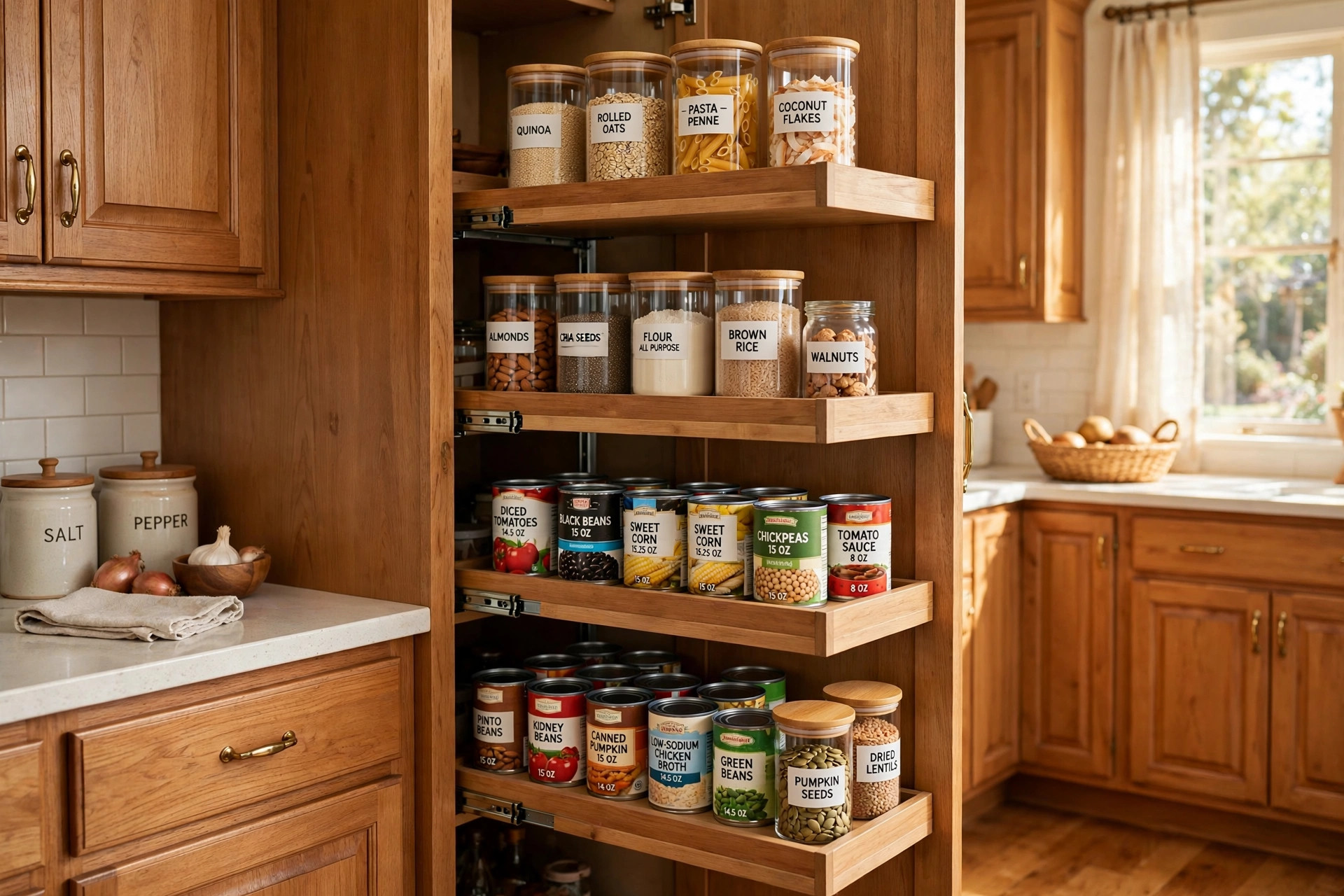
Built-in pantries give the most storage per square inch. They fill the space from floor to ceiling. They can include special racks for cans and doors with deep shelves.
Pull-Out Pantries
A pull-out pantry is a tall, narrow unit on full-extension slides. You pull the whole unit out like a drawer. Every shelf faces you at once. Nothing hides in the back.
These units fit narrow gaps between appliances. A six-inch-wide pull-out can hold spice jars and cans. A nine-inch-wide unit can hold boxes and bottles. They are a smart fix for small kitchens.
Walk-In Pantries
A walk-in pantry is a small room with shelves on the walls. Large American homes often have one near the kitchen. It holds bulk food, small appliances, and cleaning goods.
A walk-in pantry needs good light. It also needs air flow. A dark, damp room will not keep food well. Add a motion-sensor light so the room lights up when you enter.
How to Plan the Layout
A good layout starts with zones. Put daily-use items at eye level. This is the “prime zone,” from shoulder to knee height. Cereal, coffee, and snacks go here. They are used every day, so they should be easy to see and grab.
Put heavy goods low. Large cans of tomatoes, bags of sugar, and bottles of juice are heavy. A low shelf keeps them safe to lift. It also stops them from falling on anyone. Light goods go high. Paper plates, chips, and seasonal goods weigh little. They can sit on the top shelves with no risk.
Group like with like. Keep all baking goods on one shelf. Keep all canned goods on another. Keep snacks in one basket or bin. Groups make the pantry easy to use. Anyone in the family can find things and put them back.
Use baskets and bins. Clear bins hold loose packets and small items. Label each bin with a simple word like “SNACKS” or “PASTA.” Labels help kids and guests. They also help when you make the shopping list.
Leave some empty space. A full pantry is hard to use. You cannot see the back of a crowded shelf. You cannot add a new item without a shuffle. Aim to keep each shelf about eighty percent full. This gives you room to grow.
Map the layout on paper before you buy. Draw the shelves. Write the zones. List the bins you need. A paper plan stops you from buying parts that do not fit. It also stops the job from growing past your budget.
Cost and Price
Prices vary widely by size and material. A simple freestanding pantry from a big store may cost 200 to 600 dollars. Mid-range wood units cost 600 to 1,500 dollars. Custom built-in pantries cost 2,000 to 8,000 dollars or more.
Stock cabinets cost less than semi-custom cabinets. Semi-custom cabinets cost less than full custom work. Stock units come in set sizes. Semi-custom units allow some changes. Full custom units fit any space.
Labor adds to the cost of built-in work. A carpenter may charge 50 to 100 dollars per hour. A simple install takes four to eight hours. A complex walk-in with new walls and lights takes much longer.
Check the big home stores for price ranges and stock options. The Home Depot and Lowe’s carry pantry cabinets in many sizes and finishes. Compare prices on the same size before you buy.
Watch for extra costs. New shelves, lights, and organizers add up. Delivery and haul-away fees add up too. Ask for the full price in writing before work starts.
Care and Upkeep
Keep shelves clean with a damp cloth. Wipe up spills right away. Sugar and flour attract bugs if left on wood.
Check dates twice a year. Take everything out. Toss cans that are dented or past date. Wipe the shelves clean. Put back only what you will use. This habit keeps the pantry safe and fresh.
Store food in sealed jars where you can. Glass jars with tight lids keep flour, rice, and cereal fresh. They also stop bugs from moving from box to box. Clear jars let you see what is inside.
Watch for moisture. A damp pantry can grow mold. Leave a small gap behind the cabinet for air flow. Do not push shelves flat against an outside wall in cold months. A small fan or a moisture absorber can help in humid rooms.
Check the hardware once a year. Tighten loose screws on hinges. Oil drawer slides if they stick. Replace worn shelf pins before a shelf drops.
Safety
Anchor tall cabinets to the wall. A loaded pantry cabinet is very heavy. It can tip and hurt a child. Use anti-tip straps or brackets on every unit over 60 inches tall. This is the most important safety step in the whole kitchen.
Keep heavy items on low shelves. Cans and glass jars are heavy. If they fall from a high shelf, they can break bones or cut skin. Light items like chips and paper towels go up high.
Store cleaning goods apart from food. Never keep bleach or soap above food. A leak can drip down and spoil food. Use a separate cabinet for chemicals if you can.
Mind the door swing. A pantry door should not block the stove or the fridge. It should not hit a person in a walkway. Check the swing before you fix the cabinet in place.
Teach children the rules. They should not climb shelves. They should ask an adult for items stored high. A step stool is safer than climbing.
Frequently Asked Questions
How deep should a pantry cabinet be?
Twelve to sixteen inches is best for reach-in shelves. Deeper shelves hide food in the back. If your cabinet is 24 inches deep, add pull-out shelves so nothing gets lost.
Can I add a pantry to a small kitchen?
Yes. A narrow pull-out pantry can fit a six-inch gap between appliances. A freestanding unit can stand in a dining nook. You can also turn a shallow closet near the kitchen into a pantry with new shelves and a good door.
Wood or laminate for pantry cabinets?
Wood costs more and lasts longer. Plywood boxes with wood doors are a solid middle choice. High-pressure laminate resists stains and wipes clean. Particle board works on a tight budget but sags under heavy cans over time.
How do I stop bugs in the pantry?
Store dry goods in sealed glass or plastic jars. Clean up spills at once. Check dates often. Throw out any box with tiny holes or fine dust around it. That dust can be a sign of weevils. Wipe the shelves with hot soapy water before you put food back.
Should pantry cabinets match the kitchen cabinets?
Matching looks best in an open kitchen. The same door style and finish tie the room together. A contrast can work in a big kitchen with a separate walk-in pantry. In most American homes, a match is the safe choice.
How much food should I keep?
Keep a two to four week supply of the foods your family eats. More than that ties up money and space. It also risks waste from expired dates. Buy bulk only for foods you use fast, like rice or oats.
A Short Final Word
A pantry cabinet is one of the simplest upgrades in the home. It brings order to the kitchen. It cuts waste. It makes daily cooking easier. Measure your space. Choose a type that fits. Anchor it well. Keep it clean. These five steps give you a pantry that serves your family for years.
If you plan a larger kitchen project, read up on the other parts too. Pair your pantry with good seating and work space, such as kitchen island seating, and a sturdy work surface like butcher block countertops. A kitchen planned as a whole works better than a kitchen built piece by piece.
For more ideas on home storage and kitchen design, the trusted sources below offer guides worth a look. ENERGY STAR covers efficient appliances for the kitchen. This Old House and Bob Vila carry how-to guides for remodeling projects. Consumer Reports tests products for quality and value. GE Appliances and Whirlpool show current kitchen appliance lines. The Spruce offers plain-language home advice for everyday owners.
References
Bob Vila. (n.d.). Home improvement advice. https://www.bobvila.com Consumer Reports. (n.d.). Product reviews and ratings. https://www.consumerreports.org ENERGY STAR. (n.d.). Energy efficient products. https://www.energystar.gov GE Appliances. (n.d.). Kitchen and home appliances. https://www.geappliances.com Lowe’s. (n.d.). Home improvement products. https://www.lowes.com The Home Depot. (n.d.). Home improvement products. https://www.homedepot.com The Spruce. (n.d.). Home and garden advice. https://www.thespruce.com This Old House. (n.d.). Home renovation guidance. https://www.thisoldhouse.com Whirlpool. (n.d.). Home appliances. https://www.whirlpool.com
Was this guide helpful?

About David Wilson
The My Garden US editorial team writes practical, in-depth home and garden guides for American homeowners — tested advice, no fluff.
You May Also Like
Butcher Block Countertops USA Online Deals: How to Buy Smart
June 9, 2026 0 views
Stainless Range Hoods for California Homes
August 3, 2026 0 views
A Plain Guide to Under Sink Filters for Sale USA
June 28, 2026 0 views