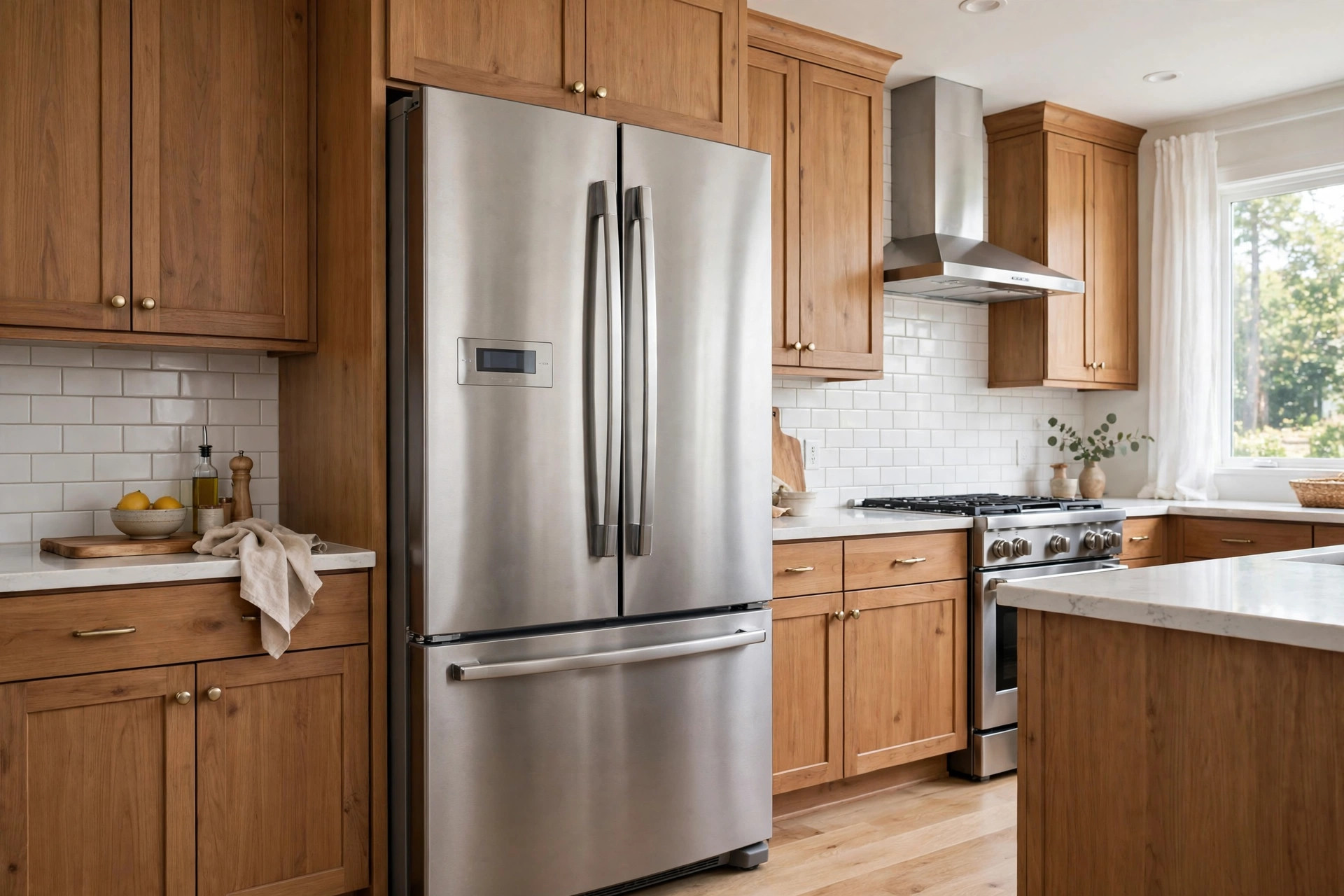

This french door refrigerators american homes guide explains the layout, the sizes, the features, the costs, and the care that go with this popular kitchen appliance. A french door refrigerator has two doors on top for the fresh food section and a pull-out drawer at the bottom for the freezer. This design gives a wide, clear view of shelves, bins, and drawers. Many American families now choose it over the older single-door or side-by-side styles. The wide top doors make it easy to load large platters, sheet pans, and trays. The lower freezer holds frozen food in a deep drawer with baskets for sorting. The style looks modern and fits well with other stainless appliances. But it is not right for every kitchen or every budget. This guide walks through the facts so a buyer can decide with care.
Why the French Door Design Matters
The french door design solves a common problem. Older single-door refrigerators have one wide door that swings open fully. In a small kitchen, that wide swing can hit a wall, a counter, or a person. The french door style splits the fresh food section into two narrow doors. Each door needs only half the room to swing. This helps in tight kitchens and in open-plan rooms where people walk near the fridge. The wide shelf area also helps. A single-door fridge has shelves that are hard to see all at once. With two doors open, a french door fridge shows the full width of the fresh food section. Items are easy to find and hard to forget. The lower freezer drawer adds more ease. The drawer pulls out toward the user. Baskets slide within the drawer. Frozen items stack in view. Many owners find the freezer drawer easier to use than a side-by-side freezer, where deep shelves can hide food at the back.
The design also saves energy in daily use. Most people open the fresh food section far more often than the freezer. With a french door fridge, a person can open only one narrow door to grab milk or juice. Less cold air leaves the box. The freezer drawer stays shut below. Over months of use, this small saving adds up. The Energy Star program tracks this point, and many french door models now carry the Energy Star label for meeting set efficiency goals (https://www.energystar.gov). A family that cooks at home every day gains real value from the layout. Parents of young children gain too. The narrow doors are easier for small hands to open. The layout keeps fresh food at eye level. For these reasons, the french door style has become a top seller in the United States. A short look at a french door refrigerators buying guide shows how many brands now offer it.
What to Look for Before You Buy: French Door Refrigerators American Homes Guide
A buyer should check five points before choosing a model. First, the size of the kitchen opening. Second, the storage space inside. Third, the cooling features. Fourth, the ice and water options. Fifth, the look and finish.
Measure Your Space
The first step is to measure. Take a tape measure and record the height, width, and depth of the opening where the fridge will stand. Then measure the path from the front door to the kitchen. Note narrow halls, tight corners, and doorways. A french door refrigerator is wide, often 33 to 36 inches. It may need the doors removed to pass through a tight front door. Check the swing of nearby cabinets and the dishwasher. The two top doors need clear space to open past 90 degrees. If an island stands in front of the fridge, allow at least 36 inches of clearance. This Old House offers clear advice on measuring for new appliances, which applies to a fridge as much as to a range (https://www.thisoldhouse.com).
Also check the water line. Many french door models include a water and ice dispenser in one door. That feature needs a cold water line behind the fridge. If the kitchen has none, a plumber must add one. That adds cost and time. Ask before buying, not after.
Check the Features
Inside the box, look at the shelves. Adjustable glass shelves help. They slide or fold to make room for tall items. Look at the crisper drawers. Good drawers hold humidity for fruits and greens. Look at the door bins. Deep bins hold gallon jugs. Look at the temperature controls. Digital controls are easy to set. Some models let the user set the fresh food section and the freezer to exact degrees. Dual cooling systems keep freezer air separate from fresh food air. This keeps produce fresher and stops odor transfer. Makers such as Whirlpool offer models with these features in a range of prices (https://www.whirlpool.com).
Types of French Door Refrigerators
French door refrigerators come in several forms. The standard counter-depth model is about 24 to 25 inches deep. It sits nearly flush with kitchen counters. The look is clean and built-in. But the box holds less food than a full-depth model. The standard-depth model is about 30 inches deep. It holds more but sticks out past the counter. In a large kitchen, this is fine. In a small kitchen, it can block the walkway.
Some models add a fourth door. A four-door french door fridge has two top doors, a middle drawer, and a bottom freezer drawer. The middle drawer often has its own temperature setting. A family can set it for drinks, snacks, or party trays. This adds flexibility at a higher price.
Other models add smart features. A smart fridge connects to a home Wi-Fi network. It can show a screen with a calendar, notes, or recipes. Some screens show the inside of the fridge without opening the door. These features add cost. They also add parts that can break. A buyer should weigh the value. GE Appliances lists several smart french door models with door-in-door designs and built-in screens (https://www.geappliances.com).
There are also models in many finishes. Stainless steel is the most common. Black stainless, white, and slate are also sold. Bosch sells french door models with clean European styling and quiet motors (https://www.bosch-home.com).
For homes with a bar area, a second small fridge helps. An under counter wine fridges buying guide covers models that fit under a counter and keep bottles cool. Some families add one next to the main french door fridge.
Cost and Price
Prices for french door refrigerators vary widely. A basic model with 25 cubic feet, no water dispenser, and simple controls may cost about 1,500 to 2,000 dollars. A mid-range model with a water and ice dispenser, adjustable shelves, and dual cooling often costs 2,000 to 3,000 dollars. A high-end model with four doors, smart features, or a special finish can cost 3,500 to 6,000 dollars or more. Prices shift with sales. Holiday weekends often bring lower prices. The Home Depot, one of the largest appliance sellers in the country, runs sales around major holidays and lists delivery and haul-away options (https://www.homedepot.com).
The buyer should also count the running cost. A fridge runs every day for ten to fifteen years. Energy use matters. An Energy Star model uses less power than a standard model. The yellow Energy Guide label on the front shows the yearly cost to run. Compare two models side by side before buying. Consumer Reports publishes test data on cooling, noise, and energy use, which helps buyers compare brands on facts (https://www.consumerreports.org). A cheaper fridge with high energy use can cost more over time than a slightly dearer model with low energy use.
Delivery and setup add cost too. Many stores charge for delivery. Some charge to haul away the old fridge. Ask about these fees. Ask if the delivery crew will remove the doors to fit a tight hall. Ask if they will connect the water line. Clear answers avoid surprise bills. Bob Vila, the home improvement writer, notes that buyers should count these extra costs when they set a budget (https://www.bobvila.com).
Care and Upkeep
A french door refrigerator needs simple care to last. Clean the inside every three months. Take out the food. Remove the shelves and bins. Wash them with warm water and mild soap. Wipe the walls of the box with a damp cloth. Dry all parts before putting them back. This stops odors and mold. Set the fresh food section to 37 degrees and the freezer to 0 degrees. These are safe settings for most homes.
Cleaning the Coils
The coils on the back or below the fridge give off heat. Dust on the coils makes the fridge work harder. Clean them twice a year. Pull the fridge away from the wall. Unplug it. Use a brush or a vacuum with a brush tool. Clean gently. Push the fridge back and plug it in. This simple task can cut energy use and extend the life of the motor. The Spruce gives clear step-by-step notes on coil cleaning and other fridge care (https://www.thespruce.com).
Change the water filter on time. Most models with a dispenser use a filter inside the fridge or behind the base grille. The manual says how often to change it. A common period is every six months. A dirty filter slows the water flow and can change the taste. Keep a spare filter on hand. Write the change date on a small note on the fridge door.
Check the door seals. The rubber gasket around each door should be clean and flexible. A torn or dirty seal lets cold air escape. Clean the seals with warm soapy water. If a seal is torn, order a replacement from the maker. A new seal is cheap and easy to fit.
Safety in the Kitchen
A large fridge is heavy. It can tip during delivery or if a child climbs on the freezer drawer. Use the anti-tip bracket or strap that comes with the unit. Anchor it to the wall as the manual shows. Keep small children from hanging on the doors or the open drawer.
Food safety matters too. Keep the fresh food section at 40 degrees or below. Keep the freezer at 0 degrees. Throw out food that sat out at room temperature for more than two hours. Raw meat should sit on the lowest shelf so drips cannot fall on other food. Clean spills right away.
Water line safety is a small but real point. A loose water line can leak behind the fridge and ruin the floor. Check the connection each year. Look for damp spots on the floor near the back. A small drip can grow into a big repair.
Frequently Asked Questions
How long does a french door refrigerator last? Most models last ten to fifteen years with good care. Cheap models with few features may fail sooner. High-use homes may see shorter life. Clean coils, steady temperatures, and timely filter changes extend the life.
Do french door refrigerators use more energy than side-by-side models? It depends on the model. In general, french door models are close in energy use to side-by-side models of the same size. The Energy Guide label gives the best answer for each unit. An Energy Star model will use less than a non-rated model.
Can the doors be removed for delivery? Yes. Most french door models have doors that the delivery crew can remove and rehang. This helps when the front door or hall is narrow. Ask the store if door removal is part of the delivery service or an extra charge.
Is the water dispenser worth the extra cost? For many families, yes. A dispenser gives cold filtered water and ice at the touch of a pad. It cuts the need for bottled water. It does add to the price and needs a water line and filter changes. Homes without a water line face extra plumbing cost.
How much clearance does a french door fridge need around it? Allow one inch on each side and at the top. Allow one to two inches behind for the coils and the water line. Allow at least 36 inches in front for the doors and the freezer drawer to open fully.
What size fits an average American kitchen? A 36-inch wide, counter-depth model with 22 to 28 cubic feet fits many homes. It holds enough for a family of four. Larger homes or big cooks may want 30 cubic feet or more. Measure the opening before buying any size. Good kitchen lighting also helps a fridge look its best, and a kitchen island hanging lights buying guide can help with that part of the room.
A Final Word
A french door refrigerator is a sound choice for many American homes. The wide shelves, narrow doors, and lower freezer fit the way families cook and store food today. The buyer who measures the space, checks the features, compares the energy labels, and counts the full cost will choose well. Good care keeps the unit running for years. For most families, the extra cost over a basic top-freezer model is worth the daily ease.
References
Bob Vila. (n.d.). Home improvement advice. https://www.bobvila.com Bosch. (n.d.). Home appliances. https://www.bosch-home.com Consumer Reports. (n.d.). Product reviews and ratings. https://www.consumerreports.org ENERGY STAR. (n.d.). Energy efficient products. https://www.energystar.gov GE Appliances. (n.d.). Kitchen and home appliances. https://www.geappliances.com The Spruce. (n.d.). Home and garden advice. https://www.thespruce.com This Old House. (n.d.). Home renovation guidance. https://www.thisoldhouse.com Whirlpool. (n.d.). Home appliances. https://www.whirlpool.com
Was this guide helpful?

About Robert Taylor
The My Garden US editorial team writes practical, in-depth home and garden guides for American homeowners — tested advice, no fluff.
You May Also Like

Shaker Cabinet Doors: Where to Buy Them in the USA
September 17, 2026 0 views
Quartz Countertop Installation USA Online Deals: A Plain Guide for Homeowners
June 15, 2026 0 views
Kitchen Backsplash Tiles for California Homes: A Plain Guide
January 25, 2026 0 views