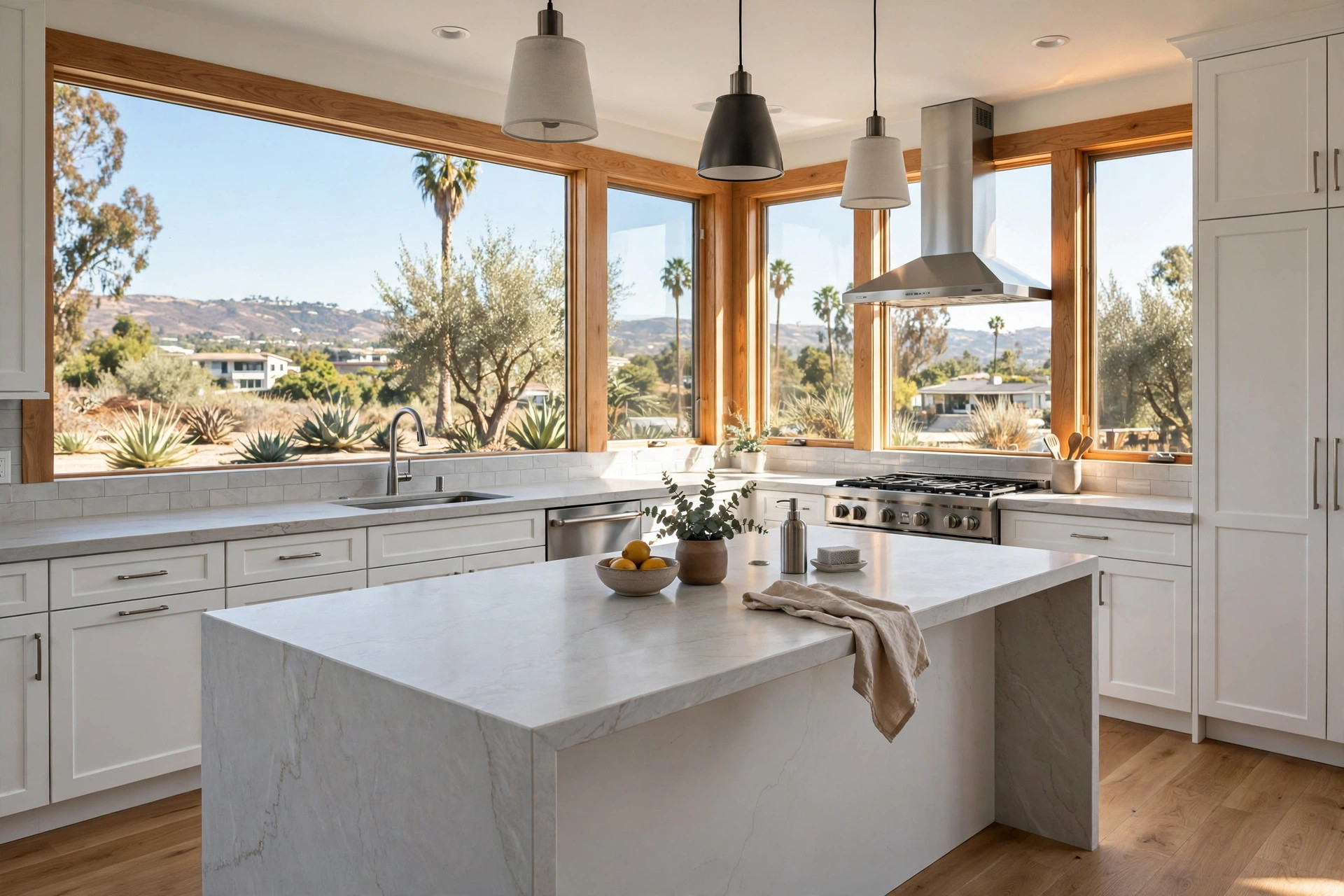

A kitchen feels finished when the counters are set. In California homes, quartz countertop installation has become one of the most common upgrades. Homeowners want a surface that stands up to daily cooking, bright sun, and the test of time. Quartz answers that need. This guide walks through what the material is, how the work is done, what it costs in California, and how to keep the counters in good shape for years. Whether you live in a Los Angeles bungalow, a Bay Area townhouse, or a Sacramento ranch house, the same basic facts apply.
Why Quartz Suits California Homes
California kitchens work hard. Families cook daily. Guests gather around the island. Sunlight pours through large windows for most of the year. A countertop must take heat, spills, and heavy use without losing its looks.
Quartz is an engineered stone. It is made from about ninety percent crushed natural quartz crystal mixed with resin and color pigment. The mix is pressed into slabs in a factory. The result is a hard, even surface with little to no pores. That low porosity matters. It means coffee, wine, and oil do not sink in the way they can with natural stone.
For California homes, there are practical reasons to choose quartz. The material resists stains from the bright produce and rich sauces of local cooking. It does not need sealing each year the way granite or marble does. It handles the range of climates in the state, from coastal fog to inland heat. And it holds its color under strong sunlight better than many wood or laminate counters.
There is also a value argument. Real estate writers often note that kitchens sell homes. A clean, current kitchen helps a listing. Quartz reads as modern and low upkeep to buyers. In many California markets, that can matter when a home changes hands. Readers comparing surfaces may also want to look at our guides on butcher block countertops and kitchen backsplash tiles to plan the full look.
What to Look for Before You Choose: Quartz Countertop Installation California Homes Usa
Before any slab is cut, the homeowner should settle on the details. A good installer will measure twice and ask about sink type, faucet holes, and edge style. Here are the points to nail down early.
Thickness and Slab Size
Quartz slabs usually come in two common thicknesses: two centimeters and three centimeters. The thicker slab costs more but feels more solid at the edge. Most California installers recommend the three-centimeter thickness for kitchen work.
Slab size matters when a kitchen has long runs or a large island. Standard slabs run about 120 by 55 inches. Larger “jumbo” slabs are available from some brands. A large island without a seam needs a jumbo slab or a careful seam plan. Talk to the fabricator about where seams will fall before the cutting starts.
Color and Pattern
Quartz comes in a wide range of colors. Some slabs copy the veining of marble. Others are plain white, gray, or black. Some use warm tones that fit Spanish and Mediterranean style homes common in California.
Color choice affects price. Plain slabs often cost less than slabs with deep veining. Light colors show crumbs less but can show stains sooner if not wiped. Dark colors show dust and water spots. There is no wrong answer. Pick what fits the cabinets and the floor.
Finish
Most quartz is sold in a polished finish. Some lines offer a honed or matte finish. Polished reflects light and looks classic. Honed looks soft and modern but can show marks more readily. Ask to see a sample in daylight before you decide.
Types and Options
Quartz countertops are not one single product. Brands and lines differ. The options below shape both the look and the price.
Edge profiles. The edge is the most visible detail. Common choices include the eased edge, a slightly softened square edge; the bullnose, a fully rounded edge; and the ogee, a curved S-shape with a classic feel. More complex edges cost more because they take longer to cut and polish. For a clean modern kitchen, the eased edge is the common pick.
Backsplash style. Some owners run the quartz up the wall as a full-height backsplash. This gives a seamless look and wipes clean. Others stop the counter at a short four-inch splash and tile the rest. The full slab look costs more in material but saves on tile labor.
Sink mounting. Undermount sinks are the standard pair for quartz. The sink hangs below the counter and the edge is polished. This makes wiping crumbs into the sink easy. The cutout for the sink must be exact, so the sink model should be on site before the template is made.
Waterfall ends. A waterfall island extends the quartz down the sides of the island to the floor. It is a striking look and a common request in California remodels. It uses more slab and raises the cost, but many owners feel it is worth the money.
How the Installation Works
A quartz countertop installation follows a clear order. Knowing the steps helps the homeowner plan around the work.
Step one: the consult. The homeowner picks a fabricator or works through a kitchen dealer. Samples are viewed. The sink, faucet, and cooktop models are chosen. A deposit is often due at this point.
Step two: the template. After the cabinets are set and level, the installer comes out to measure. Many shops now use digital laser templates. Others use strips of wood laid on the cabinets. This visit sets the exact sizes, the sink cutout, and the faucet holes.
Step three: fabrication. The slab is cut in the shop. Edges are shaped and polished. Cutouts are made. This takes one to three weeks depending on the shop’s load.
Step four: the install day. The crew removes the old counters if that was agreed. They set the quartz pieces on the cabinets with adhesive and shims. Seams are joined with color-matched epoxy. The sink is mounted. Faucet holes are checked.
Step five: the finish. The crew caulks the joint at the wall and cleans the surface. The homeowner should wait the time the installer advises, often a full day, before heavy use. Plumbing can be reconnected once the adhesive has set.
Most kitchens are done in one day once the slabs are ready. A large or complex job can run to two days. Good planning guidance can be found through resources such as This Old House, which covers kitchen projects in plain detail.
Cost and Price in California
Cost is the first question for most owners. In California, quartz countertop installation usually runs higher than the national average. Labor rates, permit costs, and the price of housing all push numbers up.
For a typical kitchen of 40 to 60 square feet of counter, installed prices in 2026 often land between 3,500 and 9,000 dollars. The spread comes from the slab grade, the edge choice, the number of cutouts, and the region. Work in the Bay Area and coastal Southern California tends to cost more than work in the Central Valley.
Price is quoted by the square foot, installed. Expect 75 to 200 dollars per square foot for the full job in most California markets. Basic white slabs with a simple edge sit at the low end. Deeply veined slabs, waterfall ends, and complex cutouts sit at the high end.
Extras add up. Old countertop removal can add 200 to 500 dollars. Plumbing disconnect and reconnect can add 150 to 400 dollars. A new undermount sink runs 200 to 800 dollars plus the cutout charge. Always get the bid in writing with each line item shown.
To keep costs in check, some owners do their own demolition and leave the slab work to the pros. That can work if the cabinets are in good shape. But the cutting and setting of quartz is not a do-it-yourself job. The slabs are heavy and the seams demand skill. Price comparison research is easier with reviews and ratings from Consumer Reports.
Care and Upkeep
One of the main selling points of quartz is easy care. There is no sealing schedule. Daily upkeep takes little time.
Wipe the surface with a soft cloth, warm water, and a mild dish soap. That is enough for most days. Dry the surface after to avoid water spots, especially on dark colors. For stuck-on food, a plastic scraper works well. Avoid steel wool and harsh scouring pads, which can dull the finish.
Heat is the one thing to respect. Quartz handles warm dishes, but a very hot pot straight from the burner can damage the resin. Use trivets or hot pads under hot cookware. This is simple habit and it protects the surface.
Avoid strong chemicals. Bleach in high concentration, oven cleaner, and paint stripper can harm the resin binder. If a spill of something harsh happens, rinse with water at once. For general cleaning advice across the kitchen, The Spruce offers clear, tested guidance.
Sunlight deserves a note in California homes. Quartz is colorfast under normal indoor light. But a slab that sits in direct, intense sun through a window for years can fade or yellow slightly. Window film or shades on the sunniest windows are cheap insurance.
Safety During the Project
A countertop job is short, but it has real hazards. The homeowner should know them.
Dust. Cutting quartz in the shop makes fine silica dust. Reputable shops cut wet or use dust capture. If any cutting happens on site, the crew should use water-fed tools and masks. The homeowner and pets should stay out of the work area while cutting is underway. Background on silica safety is available from Energy Star resources on healthy home practices and from federal guidance.
Weight. A single slab can weigh several hundred pounds. Only trained crews should lift and carry. Keep children and pets clear on install day.
Sharp edges. Fresh-cut edges are sharp before polishing. The crew handles this, but the homeowner should not touch cut pieces during the install.
Old counters. Removal can release dust from old adhesives. In older California homes, the area behind the counters may hold old wiring or plumbing. A good installer checks before cutting into anything. Planning help for the wider remodel is available at Lowe’s project guides and The Home Depot how-to sections.
Frequently Asked Questions
How long does quartz countertop installation take from order to finish? From the day you approve the template, most California jobs finish in two to four weeks. The shop needs one to three weeks for fabrication. The install itself is usually one day.
Is quartz better than granite for a California kitchen? Both are fine choices. Quartz needs no sealing and resists stains well. Granite is natural stone and each slab is one of a kind, but it needs periodic sealing. Many busy households pick quartz for the lower upkeep. Readers weighing the full kitchen plan may also like our quartz countertop installation buying guide.
Can quartz go outside on a patio kitchen? Most makers do not recommend it. Direct sun and weather can fade the color and stress the resin over time. For outdoor kitchens, other materials are a safer pick.
Does quartz add value to a California home? A new quartz counter is often seen as a plus by buyers. It will not return every dollar spent, but in a dated kitchen it can lift the whole room and help a sale. The return depends on the market and the rest of the home.
What should I ask the installer before I sign? Ask how the price is figured per square foot, what the slab brand and color code are, where the seams will fall, how long the job takes, and what the warranty covers. Get it all in writing. Advice on choosing pros appears in guides from Bob Vila and GE Appliances kitchen planning pages.
Can I put hot pans directly on quartz? It is not advised. Short contact with a warm plate is fine. A scorching pan can mark or crack the resin. Use a trivet every time.
A Short Final Word
Quartz countertop installation gives California homes a kitchen surface that is tough, clean, and calm in daily use. The material asks little in return: mild soap, a soft cloth, and a trivet under hot pans. Pick the color with care, pin down the seams and edges in writing, and hire a crew with good local reviews. Do that, and the counters will serve the household well for decades. For brand background and product lines, readers can browse Whirlpool and Bosch kitchen resources as they plan the rest of the room.
References
Bob Vila. (n.d.). Home improvement advice. https://www.bobvila.com Bosch. (n.d.). Home appliances. https://www.bosch-home.com Consumer Reports. (n.d.). Product reviews and ratings. https://www.consumerreports.org ENERGY STAR. (n.d.). Energy efficient products. https://www.energystar.gov GE Appliances. (n.d.). Kitchen and home appliances. https://www.geappliances.com Lowe’s. (n.d.). Home improvement products. https://www.lowes.com The Home Depot. (n.d.). Home improvement products. https://www.homedepot.com The Spruce. (n.d.). Home and garden advice. https://www.thespruce.com This Old House. (n.d.). Home renovation guidance. https://www.thisoldhouse.com Whirlpool. (n.d.). Home appliances. https://www.whirlpool.com
Was this guide helpful?

About Robert Taylor
The My Garden US editorial team writes practical, in-depth home and garden guides for American homeowners — tested advice, no fluff.
You May Also Like
Pot Filler Faucets Reviews and Buying Guide for USA Kitchens
August 31, 2026 0 views
Vinyl Plank Flooring USA Online Deals: A Practical Guide
June 20, 2026 0 views
A Guide to Shaker Cabinet Doors for Sale in the USA
July 9, 2026 0 views