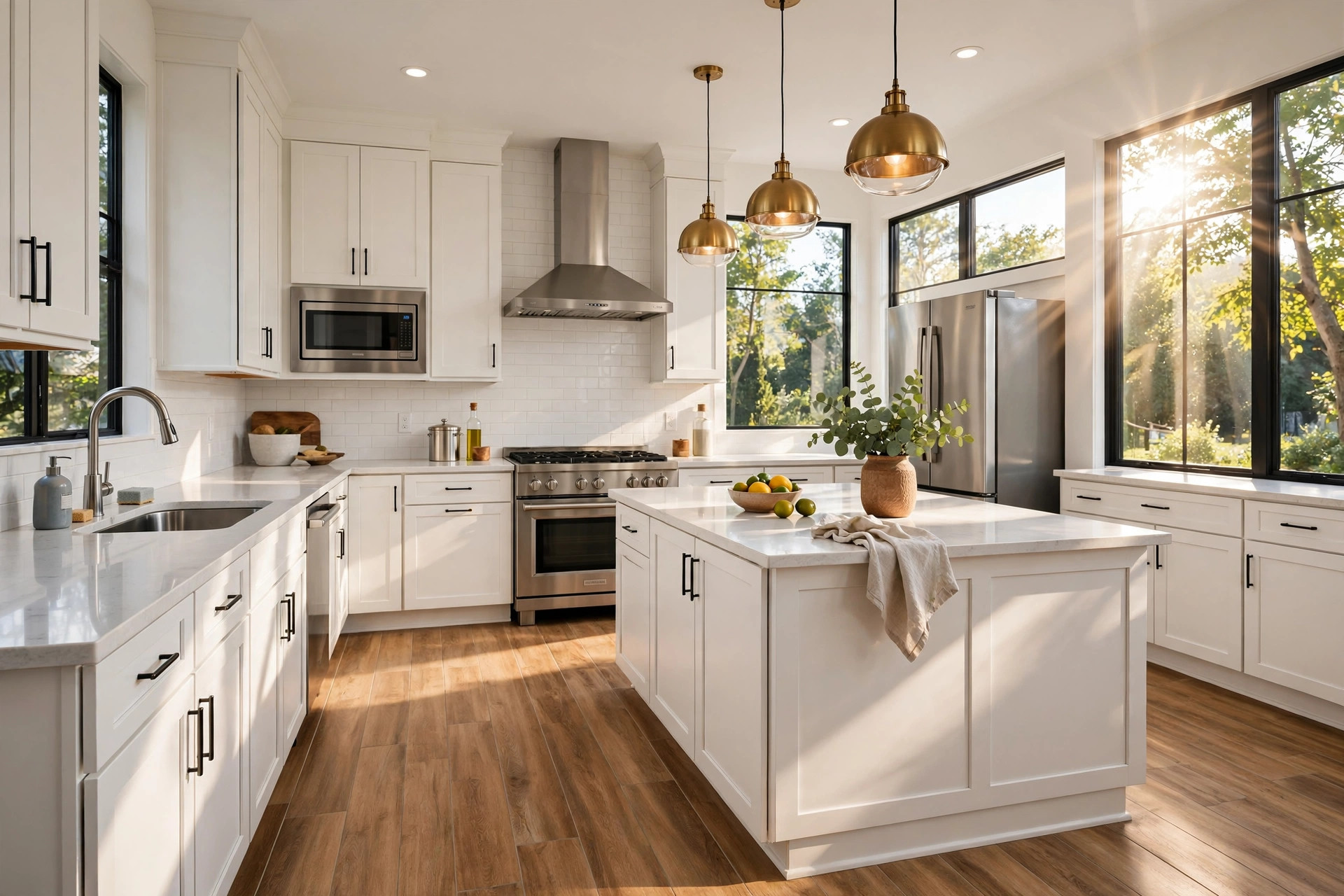
Many homeowners type vinyl plank flooring texas homes usa into a search bar before a remodel. The reason is simple. Texas is hot, bright, and full of life. Floors take a beating here. Boots drag in sand. Dogs run through the kitchen. Drinks spill at parties. Vinyl plank flooring has grown popular because it looks like real wood, feels steady underfoot, and costs far less than hardwood. It also stands up to water, which matters a great deal in a kitchen. This guide explains what vinyl plank is, which types suit Texas homes, what it costs, how to install it, and how to keep it clean. Every fact is plain. Every tip is practical.
Why Vinyl Plank Flooring Fits Texas Homes
Texas weather is hard on floors. Summer heat pushes indoor temperatures up. Bright sun pours through windows for most of the year. Sand and dust blow in from yards and driveways. A floor that works in a mild climate may fail here. Vinyl plank was built for this kind of life. The wear layer on top resists scratches from grit and pet claws. The core resists moisture from spills and mopping. Many products carry a UV coating that slows fading from strong sunlight.
Size matters too. Texas homes are often large. Ranches and suburban houses may run two thousand square feet or more. Flooring that much space in solid hardwood can cost a fortune. Vinyl plank gives the warm look of oak or hickory at a fraction of the price. That saving leaves room in the budget for other parts of a remodel, such as new kitchen backsplash tiles or butcher block countertops.
Families like the comfort underfoot. Vinyl plank has a slight give that tile and stone lack. It is easier on knees during long cooking sessions. It is quieter than laminate when children run across it. For busy households, these small comforts add up day after day. Guides at The Spruce and Bob Vila often rank vinyl plank among the most family friendly floors on the market.
Water is another Texas concern. The Gulf Coast brings humidity. Pipes sweat in summer. Dishwashers leak. A kitchen floor must survive all of it. Most vinyl plank products are waterproof on the surface. Rigid core types are waterproof through the full plank. That does not mean a flood is harmless, but daily splashes and spills are no threat. For kitchens and laundry rooms, this is a clear win over wood.
What to Look for When You Shop: Vinyl Plank Flooring Texas Homes Usa
Not all vinyl plank is equal. A cheap thin plank may dent and fade in a year. A quality plank can look fine for fifteen years. Three features decide the difference: the wear layer, the core, and the thickness.
Wear Layer
The wear layer is the clear top coat that takes the abuse. It is measured in mils, where one mil equals one thousandth of an inch. For a Texas home, look for twelve mil at the least. Twenty mil is better for entryways, kitchens, and homes with large dogs. A thicker wear layer means more years before the pattern dulls. Product tests summarized by Consumer Reports show that wear layer depth tracks closely with real world durability.
Core Type
The core is the middle of the plank. Three kinds are common. WPC, or wood plastic composite, has a softer core that feels warm and quiet. SPC, or stone plastic composite, has a denser core that resists dents and handles temperature swings well. Dry back, also called glue down, is thin vinyl that glues straight to the subfloor. For Texas heat, SPC is a strong choice because it moves less when rooms warm and cool. For upstairs bedrooms, WPC feels nicer under bare feet. Retailers such as Lowe’s and The Home Depot stock all three types side by side, which makes comparison easy in the store.
Plank Thickness
Total thickness usually runs from four and a half to eight millimeters. Thicker planks hide small bumps in the subfloor. They also feel more solid. Many click lock planks now include an attached pad, which saves the cost of separate underlayment. Flooring makers like Mohawk Flooring and LL Flooring publish full thickness and wear layer numbers on their product pages, so shoppers can compare with confidence.
Types and Styles of Vinyl Plank
Vinyl plank comes in several forms. Each has a place.
Click lock planks float over the subfloor. The edges snap together like a puzzle. No glue is needed. This is the most popular choice for do it yourself projects. Repairs are simple. A damaged plank can be lifted out and replaced.
Glue down planks stick flat to the subfloor. They sit low and feel firm, much like sheet vinyl of old. They suit large open rooms where a floating floor might shift. Professional installers often prefer glue down for commercial style spaces.
Loose lay planks are heavy and thick. They grip the floor by weight and friction. They are easy to lift for subfloor access. They cost more, but they suit renters and anyone who may change the floor later.
Styles have grown far beyond fake wood. Planks now copy oak, walnut, hickory, and pine in wide boards. Some copy stone and concrete. Embossed grain gives a texture you can feel. Beveled edges make each plank stand out, like real boards. Matte finishes hide dust better than high gloss in sunny Texas rooms. A full vinyl plank flooring buying guide can help you compare looks before you order samples.
Cost and Price for Texas Homes
Price is where vinyl plank shines. Material costs typically run two to six dollars per square foot. Premium lines with thick wear layers may reach seven or eight dollars. That is still well below solid hardwood, which often runs eight to fifteen dollars for material alone.
Installation adds more. Professional installation in Texas cities such as Dallas, Houston, and San Antonio usually costs between one fifty and three fifty per square foot. The final bill depends on the shape of the rooms, the state of the subfloor, and whether old flooring must come out. A simple rectangle is cheap to floor. A kitchen full of cabinets and angles takes longer.
Do the math for a common case. A thousand square feet of mid range plank at four dollars per square foot is four thousand dollars in material. Professional installation at two fifty per square foot adds two thousand five hundred. The total lands near six thousand five hundred dollars. The same space in hardwood could easily pass twelve thousand.
Shoppers can trim the bill. Ordering during seasonal sales at big retailers saves real money. Doing the tear out of old carpet yourself cuts labor hours. Some homeowners install the planks themselves and hire a pro only for tricky rooms. Wherever you buy, compare the full installed price, not just the sticker on the box. Cooling costs matter in Texas too, and an energy efficient home keeps floors and bills in better shape, a point raised often by ENERGY STAR.
Installation: Do It Yourself or Hire a Pro
Vinyl plank is among the friendliest floors for do it yourself work. Still, Texas conditions add a few rules.
First, acclimate the boxes. Bring the planks into the house and leave them flat for at least forty eight hours. Let them adjust to your indoor temperature. Texas garages can swing from hot to cool overnight, so store the boxes inside the air conditioned rooms where they will be laid.
Second, prepare the subfloor. It must be clean, dry, and level. High spots telegraph through thin planks. Fill low spots with leveling compound. Over concrete, test for moisture. A simple plastic sheet taped down overnight will show dampness by morning. If the slab sweats, fix drainage before you lay any floor.
Third, mind the temperature. Vinyl expands and contracts with heat. Leave an expansion gap around walls and cabinets, usually a quarter inch, hidden by baseboards. In rooms with tall sun facing windows, keep blinds closed during the hottest hours of install day. Many makers list a safe indoor range, often between fifty five and eighty five degrees. Appliance makers such as Whirlpool and Bosch Home give similar acclimation advice for kitchen remodels, since floors, cabinets, and appliances all settle in the same room.
Fourth, plan the layout. Start along the longest straight wall. Stagger the end joints so no two rows line up. Random joints look natural and add strength. Keep cuts away from doorways where eyes fall first.
A skilled homeowner can floor a bedroom in a weekend. A full house may take a week of evenings. If that sounds like too much, hire a local installer with vinyl experience. Ask for references and photos of past jobs. A good pro finishes faster and the seams look tighter.
Care and Upkeep
Vinyl plank asks little, but it rewards routine care. Sweep or vacuum weekly to lift sand and grit. Grit is the main enemy. It acts like sandpaper under shoes. Use a vacuum without a beater bar, or set the bar high.
Damp mop as needed with a cleaner made for vinyl floors. Wring the mop well. The surface is waterproof, but standing water can seep into seams over time. Never use a steam mop. Steam forces moisture into joints and can loosen click locks. Never apply wax or polish made for wood. Vinyl needs no wax, and wax builds up into a dull film.
Protect the floor from furniture. Stick felt pads under chair and table legs. Lift heavy pieces instead of dragging them. Place mats at entry doors to catch sand. In kitchens, a mat in front of the sink catches most splashes.
Sun care helps in Texas. Strong light can fade any floor over years. Sheer curtains or blinds in south facing rooms slow the change. Rotate rugs now and then so the floor ages evenly.
Safety
A kitchen floor must be safe as well as pretty. Choose planks with a textured surface for better grip. Skip glossy finishes in kitchens and baths. Clean spills quickly. Even a grippy floor is slick when wet.
Check the product label for indoor air quality. Look for FloorScore certification or a clear statement of low VOC emissions. Many modern lines are phthalate free. Open windows during installation for fresh air, and let the room air out for a day before heavy use.
Homes with children or older adults should avoid extra slick cleaners. Use only products labeled safe for vinyl. Keep a non slip mat by the stove and sink. These small steps prevent most falls.
Frequently Asked Questions
Does Texas heat damage vinyl plank flooring? Heat alone is rarely a problem indoors. Keep the home below about eighty five degrees, which most Texas air conditioners do with ease. The real risk is direct sun on a dark floor through a bare window. Blinds or curtains solve it. In a garage or sunroom without cooling, choose a product rated for wider temperature swings.
Is vinyl plank flooring truly waterproof? The surface of every plank resists water. Planks with SPC or WPC cores are waterproof through the body too. Water can still seep through open seams if it sits for hours. Wipe up large spills the same day. Caulk the edges where the floor meets a tub or an exterior door.
Can I install vinyl plank over old tile? Yes, in most cases. The tile must be solid, level, and clean. Fill grout lines that are deep or wide so they do not show through. Floating click lock planks work best over tile. Glue down vinyl needs a smoother base.
How long does vinyl plank flooring last? A quality residential plank with a twenty mil wear layer often lasts fifteen to twenty years. A budget twelve mil plank may show wear in seven to ten years in a busy home. Sun, sand, and pets shorten life. Regular sweeping lengthens it.
Will vinyl plank raise my Texas home value? It usually helps. Buyers prefer fresh vinyl plank over worn carpet or tired sheet vinyl. It will not add as much value as real hardwood, but the lower cost means the return on money spent is often strong. Clean, modern floors photograph well for listings.
A Final Word
Vinyl plank flooring earns its place in Texas homes. It handles heat, sun, sand, pets, and spills. It looks like wood without the price of wood. Choose a thick wear layer, a core that suits your rooms, and a style you will love for years. Install it with care or hire a careful pro. Sweep it often and mop it gently. Do those things and your floors will serve your family well through many Texas summers.
References
Bob Vila. (n.d.). Home improvement advice. https://www.bobvila.com Bosch. (n.d.). Home appliances. https://www.bosch-home.com Consumer Reports. (n.d.). Product reviews and ratings. https://www.consumerreports.org ENERGY STAR. (n.d.). Energy efficient products. https://www.energystar.gov LL Flooring. (n.d.). Hardwood, vinyl, and tile flooring. https://www.llflooring.com Lowe’s. (n.d.). Home improvement products. https://www.lowes.com Mohawk Flooring. (n.d.). Flooring products. https://www.mohawkflooring.com The Home Depot. (n.d.). Home improvement products. https://www.homedepot.com The Spruce. (n.d.). Home and garden advice. https://www.thespruce.com Whirlpool. (n.d.). Home appliances. https://www.whirlpool.com
Was this guide helpful?

About Emily Rodriguez
The My Garden US editorial team writes practical, in-depth home and garden guides for American homeowners — tested advice, no fluff.