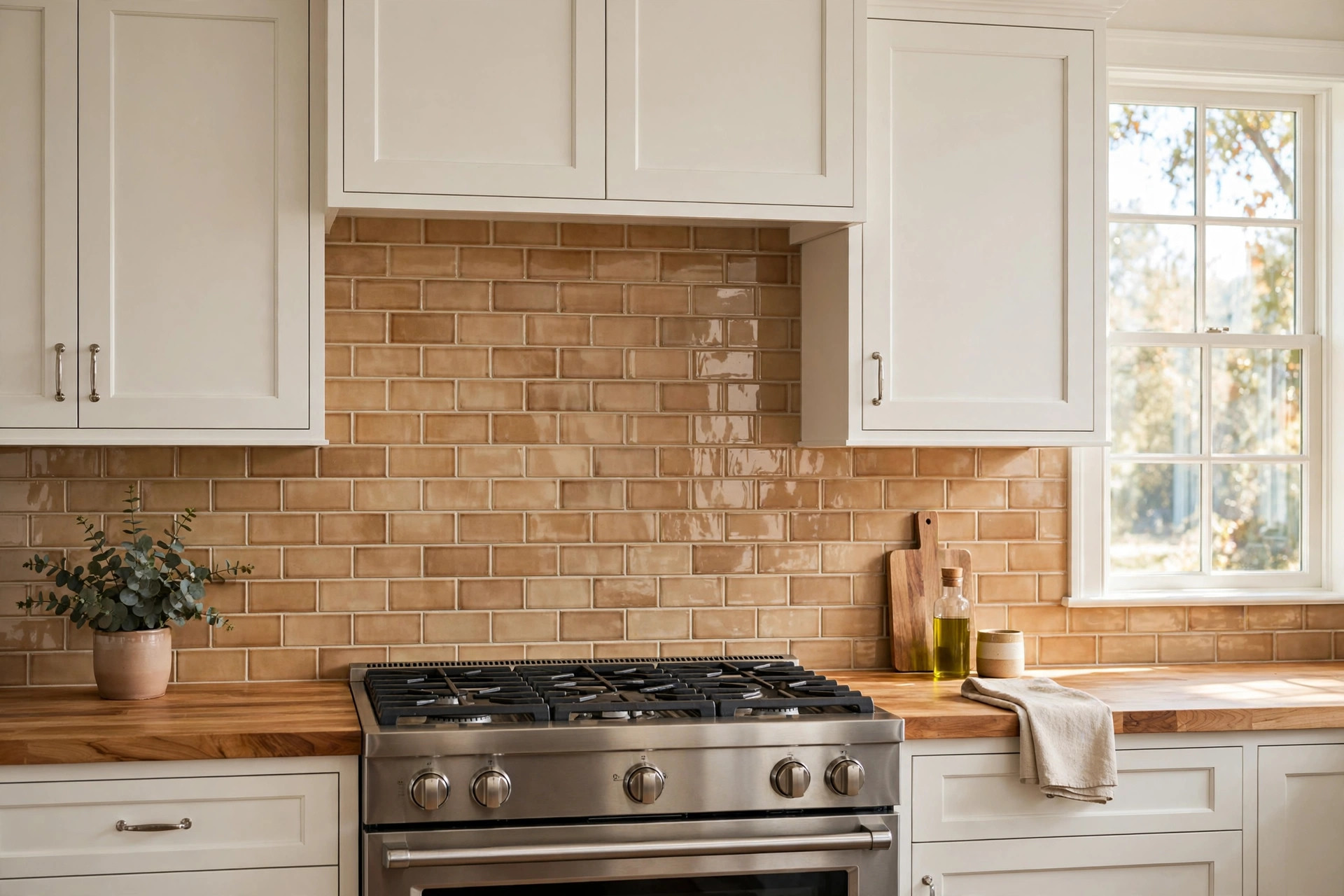

Many owners of kitchen backsplash tiles texas homes usa projects begin with the same simple wish. They want a kitchen wall that stands up to heat, grease, and daily cooking. The backsplash is the strip of wall between the countertop and the upper cabinets. It takes the worst of kitchen life. A good tile backsplash protects that wall. It also changes the whole look of the room for less money than most other kitchen work.
This guide explains what matters in a tile backsplash for a Texas home. It covers types, prices, installation, care, and safety. It also answers common questions. The advice fits new builds and older homes alike, from Dallas to Houston to San Antonio to El Paso.
Why a Tile Backsplash Matters
The backsplash is a work surface. Every meal leaves its mark on the wall behind the range and the sink. Hot oil spatters. Water splashes. Sauces boil over. Paint alone soaks up this damage. Over time it stains and peels. Tile forms a hard, sealed skin over the wall. A quick wipe returns it to clean.
In Texas, heat and humidity add pressure. Kitchens run hot for much of the year. Cooking steam carries grease into every crack. A glazed ceramic or porcelain tile resists that grime far better than plain drywall. Grout lines need sealing, but the tile face sheds mess with little effort.
A backsplash also shapes the style of the kitchen. It is often the first thing a visitor sees. White subway tile gives a clean, classic feel. Handmade-look tile adds warmth. Bold patterned tile can turn a plain kitchen into a room with character. Real estate agents in Texas often note that an updated backsplash helps a home show well. Buyers read it as a sign of a cared-for kitchen.
Finally, a backsplash is a friendly project. It covers a small area. Materials cost less than a countertop or floor job. Many handy owners install it themselves over a weekend. Those who hire out still pay far less than for a full remodel.
What to Look For When You Choose Backsplash Tile: Kitchen Backsplash Tiles Texas Homes Usa
Choice starts with how you cook. If you fry often, pick tile that wipes clean in one pass. Glazed ceramic and porcelain are the easiest. If you love slow-cooked stews, the wall near the range needs heat-proof tile. Most tile types handle normal range heat with no trouble.
Color matters in a practical way too. Dark tile hides grease spatters between cleanings. Light tile shows every mark, but it also brightens a small kitchen. Many Texas owners pick mid-tone grout rather than pure white. It hides stains better over the years.
Size changes the look more than most people expect. Large-format tile means fewer grout lines and a calm, modern wall. Small mosaics give texture and pattern. Subway tile, at three by six inches, remains the most common pick in American kitchens. It suits both old farmhouses and new builds.
Finish affects both looks and upkeep. Glossy tile bounces light and wipes clean with ease. Matte tile hides fingerprints but can hold grease a bit more. Crackle-glazed tile looks handmade and charming, though it needs gentle care.
Measure your wall before you shop. Sketch the area between the counters and the cabinets. Note outlets, windows, and the range hood. Bring the measurements to the store. Buy ten percent more tile than the math says. Cuts at edges and corners waste pieces, and having extras lets you replace a cracked tile later.
When you plan the whole kitchen at once, the backsplash should match the counters. Read our quartz countertop installation guide to see how owners pair stone counters with tile walls. If you are shopping tile and counters together, our page on kitchen backsplash tiles for sale lists current options and price bands. Lighting matters too: our kitchen island hanging lights guide shows how good light makes tile colors read true.
Texas Homes and Their Walls
Many Texas houses have walls that are not perfectly flat. Slab foundations can shift slightly over the years. Older drywall may have waves. A tile setter can flatten small humps with thinset mortar, but large waves need the wall fixed first. Check the wall with a long level before you buy. This step saves real trouble later.
Texas kitchens also tend to run warm. Choose adhesives and grout rated for heat near the range. A setting-bed that softens in heat will fail. Standard thinset mortar handles kitchen heat well. Ask the store staff to point you to the heat-rated line.
Types and Options for Kitchen Backsplash Tiles
Ceramic Tile
Ceramic is the most common backsplash tile in Texas homes. It is made from clay fired at high heat, then coated with glaze. It comes in nearly every color and size. Prices run low. It cuts easily with a simple wet saw. For most owners, ceramic is the safe, smart choice.
Porcelain Tile
Porcelain is denser and harder than standard ceramic. It resists water better and chips less. It costs more, but the extra strength pays off near sinks and ranges. Many porcelain tiles mimic stone or wood grain. If you like the look of marble without its upkeep, porcelain is the answer.
Glass Tile
Glass tile gives a bright, clean wall. It suits modern kitchens. Glass tile needs care during install: the wrong thinset shows through and tints the color. Use white thinset made for glass.
Natural Stone Tile
Marble, travertine, and slate bring a rich, natural feel. No two pieces look alike. Stone needs sealing, and resealing every year or two. In a busy Texas family kitchen, stone is beautiful but high maintenance.
Metal Tile
Metal tiles often cost more per square foot than ceramic. They work best as an accent row mixed with a cheaper field tile.
Mosaic Sheets
Mosaics are small tiles glued to mesh sheets. They form patterns with little extra work. They use more grout per square foot, which means more sealing and scrubbing. Many owners use mosaic as a feature strip above the range and plain tile elsewhere.
Major retailers carry a wide range of these types. You can compare styles and prices at Home Depot and Lowe’s before you visit a local tile shop. For brand background, the appliance makers GE Appliances and Whirlpool publish kitchen planning guides that show how tile walls sit beside ranges and hoods. The kitchen design team at Bosch offers similar planning help with an eye on European style.
Cost and Price
A backsplash is one of the cheapest kitchen upgrades. Total cost depends on tile price, wall size, and whether you hire labor.
Material prices per square foot run roughly as follows. Basic ceramic tile sells for one to eight dollars. Porcelain runs three to fifteen dollars. Glass runs seven to thirty dollars. Natural stone runs ten to forty dollars. Metal accent tiles can run higher still. Grout, thinset, sealers, and trim pieces add roughly one to three dollars per square foot on top.
A typical Texas kitchen backsplash covers thirty to fifty square feet. So tile and supplies for a ceramic job often total two hundred to six hundred dollars. A stone or glass job can run one to two thousand dollars in materials alone.
Labor changes the math. Professional tile setters in Texas cities commonly charge eight to twenty dollars per square foot for backsplash work. Complex patterns, natural stone, and glass tile cost more to set.
Do-it-yourself owners pay mainly for materials plus tool rental. A wet saw rents for about fifty dollars a day. Many first-time installers finish a simple subway tile backsplash over a long weekend. The savings are real, but the work demands patience. Crooked lines show forever.
Independent testing groups publish tile ratings that help you judge value. Consumer Reports tests building materials for durability and stain resistance. Home project sites such as This Old House, Bob Vila, and The Spruce post cost breakdowns and installer tips that line up well with Texas prices.
How Installation Works
The basic steps are the same for most tile types. The wall gets cleaned and checked for flatness. The installer marks level lines. Thinset mortar spreads on a small section of wall. Tiles press in, spaced with small plastic spacers. After the mortar sets, grout fills the gaps. A damp sponge shapes the grout lines. Once the grout cures, sealer goes on if the tile or grout needs it.
A few points matter more than the rest. First, the wall behind a range sees real heat. Keep the tile at least a few inches from an open flame edge, and check your range manual for clearances. Second, outlets need box extenders so the outlet face sits flush with the new tile surface. Third, cut tiles near windows and corners should look planned, not patched. Lay out a dry run before you spread mortar.
If you hire a setter, ask three questions. How many backsplash jobs have you done this year? Do you seal the grout, and is that in the price? What do you do if the wall is not flat? Get the price in writing with a start date.
For energy and venting questions around the range area, the federal Energy Star site covers efficient kitchen ventilation. It is worth a read before you tile around a new hood.
Care and Upkeep
A tile backsplash asks little of you. Wipe it weekly with a soft cloth and mild dish soap. Rinse the cloth well so soap does not build up. Dry the tile near the faucet to slow water spots.
Avoid harsh scrub pads on glossy tile. Steel wool scratches glaze. Avoid bleach on colored grout. For greasy buildup behind the range, baking soda paste works well. Let it sit for ten minutes, then wipe.
Reseal grout and natural stone as the product label says. A simple test tells you when the time has come. Flick a few drops of water on the grout. If the water beads, the seal holds. If it soaks in and darkens the grout, reseal soon.
Check caulk where the tile meets the countertop once a year. Caulk cracks with house movement, and Texas slabs move. Pull loose caulk and lay a fresh bead of kitchen-grade silicone. This small job stops water from getting behind the tile.
Safety
Tile work is safe when you respect a few rules. Wear a dust mask when you cut tile. Tile dust is fine and sharp. Wear safety glasses too. A wet saw keeps dust down, but glasses still matter.
Keep the area behind the range clear during install. Do not run the gas range while mortar and grout cure near it. Let everything set fully before you cook. Read the thinset bag for cure times. Most need a full day, and some need more.
Electrical safety matters at outlets. Turn off the breaker for the kitchen circuit before you remove outlet covers. Keep mortar and grout out of the outlet boxes. Use box extenders so wiring stays safely inside.
Heavy tile boxes strain backs and knees. Lift with your legs. Keep a clear path from the truck to the kitchen. If you hire help, ask the setter about their plan for dust control and cleanup. A professional should protect your counters and floors.
Frequently Asked Questions
How long does a tile backsplash last in a Texas home?
A well-set tile backsplash lasts twenty years or more. Tile itself does not wear out. Grout may need resealing every one to three years. Caulk at the counter line may need replacement sooner. If the wall stays dry behind the tile, the job lasts as long as the kitchen.
Can I tile over my old backsplash?
Sometimes. If the old tile is flat, solid, and well bonded, a setter can tile over it with the right primer. But the new tile sits farther from the wall, which can crowd outlets and trim. Many setters prefer to remove the old tile. Removal takes a day but gives a cleaner base.
What tile is best for a busy family kitchen?
Glazed ceramic or porcelain in a mid-tone color. Both wipe clean fast. Larger tiles mean fewer grout lines to scrub. A stain-resistant grout, or grout with a sealer mixed in, cuts upkeep. Keep a spare box of tile for future repairs.
Does a new backsplash raise home value?
It helps the kitchen look updated, which buyers like. Appraisers rarely add a line for a backsplash alone. But in a competitive Texas market, a fresh, neutral backsplash can make a listing show better and sell faster. Pair it with clean paint and working fixtures for the best effect.
How do I pick grout color?
Match the grout to the tile for a calm wall. Pick a darker grout for contrast and easy care. White grout looks crisp but shows stains fast. Many Texas owners choose light gray. It hides wear and suits almost any tile color.
Should I seal the tile itself?
Glazed ceramic, porcelain, and glass do not need tile sealer. The glaze is the seal. Natural stone always needs sealer. Crackle-glazed tile often needs it too, since the fine cracks can take in stains. Grout usually needs sealer unless it is an epoxy or pre-sealed type.
A Short Final Word
A tile backsplash is a small project with a large payoff. It guards the wall, eases cleanup, and lifts the look of the whole kitchen. Texas owners have more choices than ever, from simple white ceramic to rich stone to bright glass. Pick a tile that fits your cooking habits and your budget. Measure well, buy a little extra, and take your time with the layout. Whether you set the tile yourself or hire a pro, a finished backsplash brings daily satisfaction every time you cook.
References
Bob Vila. (n.d.). Home improvement advice. https://www.bobvila.com Bosch. (n.d.). Home appliances. https://www.bosch-home.com Consumer Reports. (n.d.). Product reviews and ratings. https://www.consumerreports.org ENERGY STAR. (n.d.). Energy efficient products. https://www.energystar.gov GE Appliances. (n.d.). Kitchen and home appliances. https://www.geappliances.com Lowe’s. (n.d.). Home improvement products. https://www.lowes.com The Home Depot. (n.d.). Home improvement products. https://www.homedepot.com The Spruce. (n.d.). Home and garden advice. https://www.thespruce.com This Old House. (n.d.). Home renovation guidance. https://www.thisoldhouse.com Whirlpool. (n.d.). Home appliances. https://www.whirlpool.com
Was this guide helpful?

About Sarah Mitchell
The My Garden US editorial team writes practical, in-depth home and garden guides for American homeowners — tested advice, no fluff.
You May Also Like

Vinyl Plank Flooring American Homes Guide
January 12, 2026 0 views
Gas Kitchen Ranges Deals Near Me: A Plain Guide to Buying
August 17, 2026 0 views
Quartz Countertop Installation Reviews Buying Guide USA
July 15, 2026 0 views