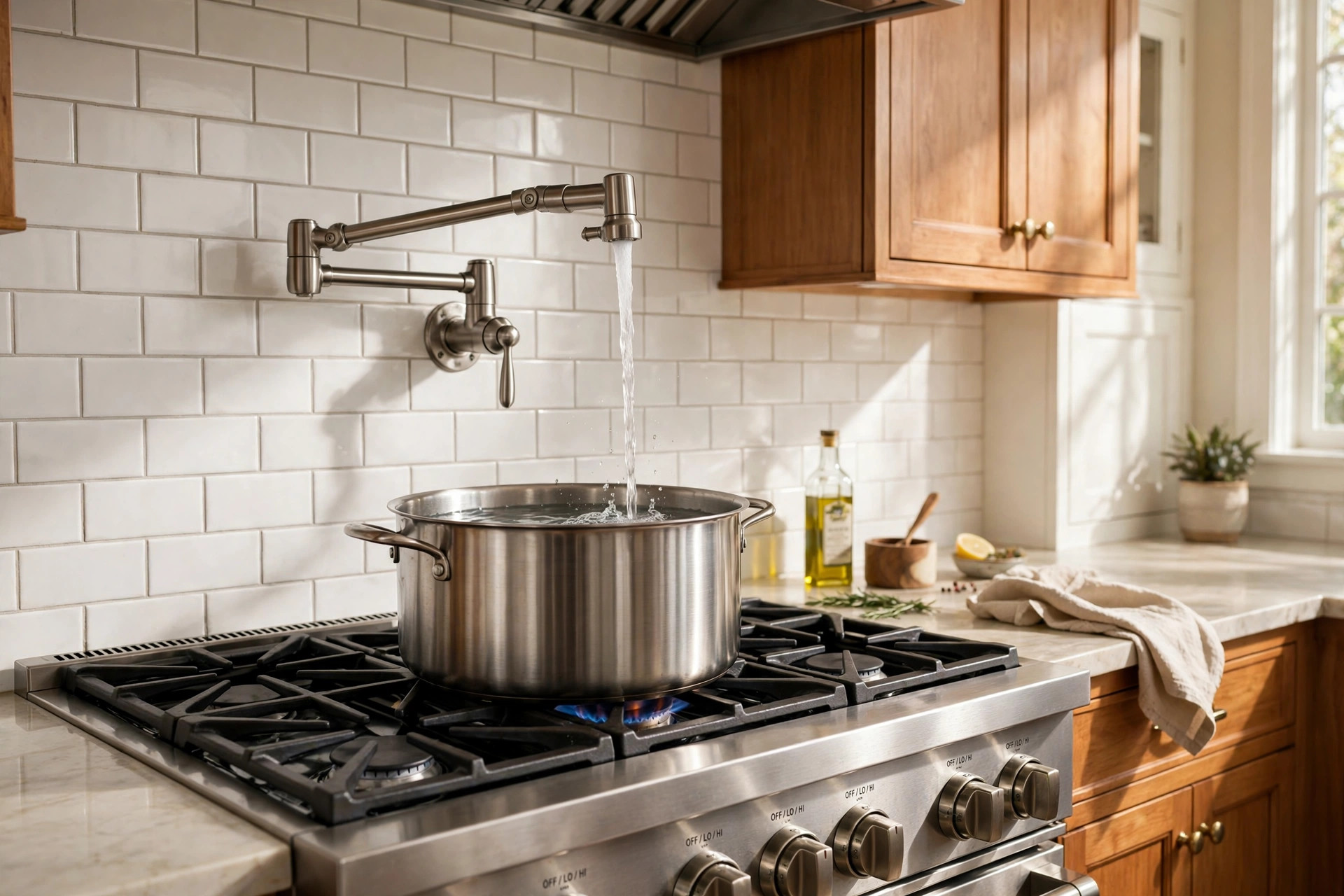

A pot filler is a small faucet that mounts on the wall above the stove. It fills pots with water right where they stand. No more trips to the sink with a heavy stockpot. If you are looking for pot filler faucets where to buy usa options, you have many good choices. Home centers, plumbing supply shops, and online stores all carry them. This guide will walk you through each one. It will help you pick the right model and pay a fair price.
Why a Pot Filler Matters in the Kitchen
A large pot of water is heavy. A gallon weighs more than eight pounds. A stockpot for pasta or soup can hold four gallons or more. Carrying that much weight from sink to stove is hard on the back and arms. It is also a spill risk. Hot water is not the danger here. The full pot must be lifted over the stove grate. One slip can hurt.
A pot filler solves this plain problem. The faucet arm swings out over the burner. You set the pot on the stove first. Then you fill it. The arm folds back against the wall when done. Many cooks who make pasta, stock, and canning batches say this one fixture changed their kitchen routine. For more detail on how they work, see our pot filler faucets buying guide.
Pot fillers also suit small kitchens. Some homes lack counter space near the sink. A second water source at the range adds real function without taking counter room. Older cooks and cooks with back pain find them a true help.
What to Look for Before You Buy: Pot Filler Faucets Where to Buy Usa
Mount Type
Most pot fillers mount on the wall above the stove. A few models mount on the deck behind the cooktop. Wall mount is the common style. It needs a cold water line inside the wall. Deck mount needs the line under the counter instead. Check your stove hood and backguard height before you shop. The spout must clear your tallest pot with room to swing.
Arm Length and Reach
Pot filler arms fold in two joints. Single-joint arms are short. Double-joint arms reach farther. Measure from the wall to the center of your largest burner. Most arms reach 20 to 24 inches. If your range is wide, choose the longer reach. The guide to pot filler faucets for sale lists typical reach numbers by model.
Finish
Finishes range from chrome and brushed nickel to matte black and oil-rubbed bronze. Pick a finish that matches your other fixtures. Brushed finishes hide water spots better than polished chrome. Solid brass bodies with a strong plated finish last the longest in daily use.
Valve and Shutoff
A pot filler should have two shutoff points. One valve sits on the arm itself. A second shutoff valve sits in the wall or under the cabinet. The second valve is for service. It lets a plumber work on the faucet without draining the whole house. Ask for quarter-turn ceramic valves. They close fast and drip less than old washer valves.
Water Pressure and Flow
Most pot fillers flow at two gallons per minute or less. That rate fills a stockpot in a few minutes. Local codes may limit flow rates. A plumber can check your home pressure before install. High pressure can make the arm kick when the valve opens. A small pressure check avoids this.
Types of Pot Filler Faucets
Single-joint pot fillers have one fold point. They are compact and cost less. They suit small ranges and galley kitchens. Double-joint models have two fold points. They reach more burners and fold flatter against the wall. They are the most popular type sold today.
Some models add a hose or pull-out spray. These are less common. The hose adds reach but adds a leak point. Many plumbers favor the plain double-joint design for long service life.
Cold-water-only models are the standard. A few rare models mix hot and cold. Most codes and most cooks see no need for hot water at the stove. The pot will be heated on the burner in a moment.
Spring-style pot fillers look like a coiled commercial faucet. They suit farmhouse and industrial kitchens. They cost more and need more wall space. If your kitchen style is plain and classic, a standard articulated arm is the safer pick.
Where to Buy Pot Filler Faucets in the USA
You can buy pot filler faucets in stores and online across the country. Each source has its own strengths. Here is where to look.
Big-Box Home Centers
Home Depot and Lowe’s stock pot fillers in most regions. They carry entry-level and mid-range models. You can see finishes in person and compare arm reach on the shelf. Staff can order models not in stock. Store brands cost less than designer brands. Prices at these stores often run from one hundred to four hundred dollars.
Plumbing Supply Houses
Local plumbing supply houses sell to plumbers and to the public. Their stock runs deeper than a big-box store. They carry brands like Moen, Delta, and Kohler. Staff know the parts and can match finishes to your other fixtures. They can also sell you the in-wall shutoff valve and fittings at the same visit. This is the best source when you want expert advice.
Online Retailers
Online shops give you the widest range. You can read consumer reports and reviews before you buy. Online prices can be lower than store prices. But you cannot touch the finish or test the arm swing. Read return policies with care. A faucet that looks wrong in your kitchen must go back easy.
Brand and Appliance Makers
Some appliance brands sell kitchen fixtures too. Whirlpool and GE Appliances focus on ranges and fridges, but their kitchen design guides show how pot fillers fit full remodel plans. Bosch offers kitchen planning help for buyers pairing a filler with a new cooktop. These sites help when a pot filler is part of a larger kitchen project.
Showrooms and Design Centers
Kitchen and bath showrooms display working models. You can swing the arm and turn the valve. Staff help match the filler to your stove and hood. Showroom prices run higher. But the hands-on test can be worth it for a fixture you will use for years.
Energy and Efficiency Resources
A pot filler is a plumbing fixture, not an appliance. But kitchen remodels often touch both. The ENERGY STAR site lists water-saving fixtures and rules that may apply in your state. The Department of Energy publishes home guides that cover efficient kitchen planning. Check these before a full remodel.
How-To and Review Sites
If you want to learn before you shop, This Old House shows how a pot filler is roughed in during a remodel. The Spruce publishes plain buying advice for kitchen fixtures. For a full roundup of models, read our pot filler faucet reviews and buying guide.
Cost and Price
Pot filler faucets span a wide price range. Basic chrome models sell for about one hundred dollars. Mid-range models in brushed nickel or matte black run from two hundred to five hundred dollars. Designer brands in special finishes can cost eight hundred dollars or more.
Install cost is separate. A plumber charges for the rough-in and the final mount. If the wall is open during a remodel, the rough-in may cost a few hundred dollars. If the wall is closed, the plumber must open drywall, run the line, and patch. That can add several hundred more. Get two quotes before work starts.
Total project cost for a simple install often lands between four hundred and one thousand dollars. A remodel-stage install with a mid-range faucet lands near the low end. A retrofit into a finished wall lands near the high end. Ask the plumber to include the in-wall shutoff valve in the quote.
Care and Upkeep
A pot filler needs little care. Wipe the arm and spout with a soft cloth after use. Hard water leaves spots on chrome. A mix of mild soap and water removes them. Do not use harsh cleaners or steel wool. They scratch the finish.
Check the joints twice a year. The arm should swing smooth and hold its place. If a joint drips, the valve cartridge may need a swap. Most makers sell replacement cartridges. A plumber can change one in under an hour.
In cold climates, protect the line. The supply line sits in an exterior wall in some homes. Insulate it well. A frozen line can burst and flood the kitchen. Ask your plumber about the wall location during install.
Drain and cap the filler if you leave home for a long winter trip. This is standard practice for any wall faucet on an outside wall.
Safety and Installation Notes
Hire a licensed plumber for the install. The work ties into your home water supply. A bad joint behind the wall can leak for months unseen. A pro will pressure-test the line before the wall is closed.
Make sure the in-wall shutoff valve is easy to reach. Some installers hide it behind the stove. That is a mistake. If the faucet ever fails, you need to cut the water fast. The shutoff should sit in a nearby cabinet or an access panel.
Keep the spout clear of open flame. The arm should not rest over a lit burner when folded. Measure twice. A filler mounted too low can scorch. Follow the maker height guide, often 12 to 18 inches above the cooktop.
Check local code. Some towns require a vacuum breaker or backflow device on a pot filler. Your plumber will know the rule. Permits are common for new water lines. The cost is small and the paper trail protects you at resale.
Never hang pots or towels from the arm. The joints are built for the water line, not for weight. Hanging weight bends the arm and starts leaks.
Frequently Asked Questions
Do I need a plumber to install a pot filler?
Yes. The job needs a new cold water line run inside the wall. That means cutting pipe, soldering or pressing joints, and pressure testing. A licensed plumber does this work fast and to code. The final faucet mount is simple, but the rough-in is not a do-it-yourself task in most homes.
Can a pot filler be added to a finished kitchen?
It can, but it costs more. The plumber must open the wall behind the stove, run the line, and patch the drywall. If your stove sits on an interior wall with a basement or crawl space below, the job is easier. An exterior wall or a slab floor adds labor. Get a quote before you buy the faucet.
Are pot fillers worth the money?
For cooks who boil large pots often, yes. Pasta nights, stock making, and home canning all get easier. The fixture also adds a high-end look that buyers notice at resale. If you rarely fill pots larger than a quart, the gain is small. Match the buy to your cooking habits.
What is the best height for a pot filler?
Most makers suggest 12 to 18 inches above the cooktop. The spout must clear your tallest stockpot. It must also stay clear of the range hood. Measure your tallest pot with its lid off. Add two inches. That is your minimum spout height.
Do pot fillers leak?
Any faucet can leak, but pot fillers are simple inside. With two shutoff points and ceramic valves, leaks are rare. Most service calls are for a worn cartridge at a joint. That part is cheap and quick to swap. Annual checks catch wear early.
Can I buy a pot filler online and have a local plumber install it?
Yes. Many buyers order the faucet online for a lower price, then hire a local plumber for the rough-in and mount. Show the plumber the model before rough-in day. Arm reach and mount depth vary by brand. The plumber needs the spec sheet to place the water line right.
A Final Word
A pot filler is a small luxury with a plain job. It puts water where the pots are. Shoppers across the country can find one at home centers, supply houses, showrooms, and online. Compare finish, reach, and valve quality before you buy. Hire a pro for the install. Then enjoy the simple ease of filling the stockpot without the heavy carry.
References
Bosch. (n.d.). Home appliances. https://www.bosch-home.com Consumer Reports. (n.d.). Product reviews and ratings. https://www.consumerreports.org ENERGY STAR. (n.d.). Energy efficient products. https://www.energystar.gov GE Appliances. (n.d.). Kitchen and home appliances. https://www.geappliances.com Lowe’s. (n.d.). Home improvement products. https://www.lowes.com The Home Depot. (n.d.). Home improvement products. https://www.homedepot.com The Spruce. (n.d.). Home and garden advice. https://www.thespruce.com This Old House. (n.d.). Home renovation guidance. https://www.thisoldhouse.com U.S. Department of Energy. (n.d.). Energy efficiency and renewable energy. https://www.energy.gov Whirlpool. (n.d.). Home appliances. https://www.whirlpool.com
Was this guide helpful?

About David Wilson
The My Garden US editorial team writes practical, in-depth home and garden guides for American homeowners — tested advice, no fluff.
You May Also Like
Dishwasher Third Rack Florida Homes USA: A Practical Guide
April 4, 2026 0 views
French Door Refrigerators Reviews Buying Guide USA
May 2, 2026 0 views
Kitchen Pantry Cabinets for Sale USA: A Practical Buying Guide
June 22, 2026 0 views