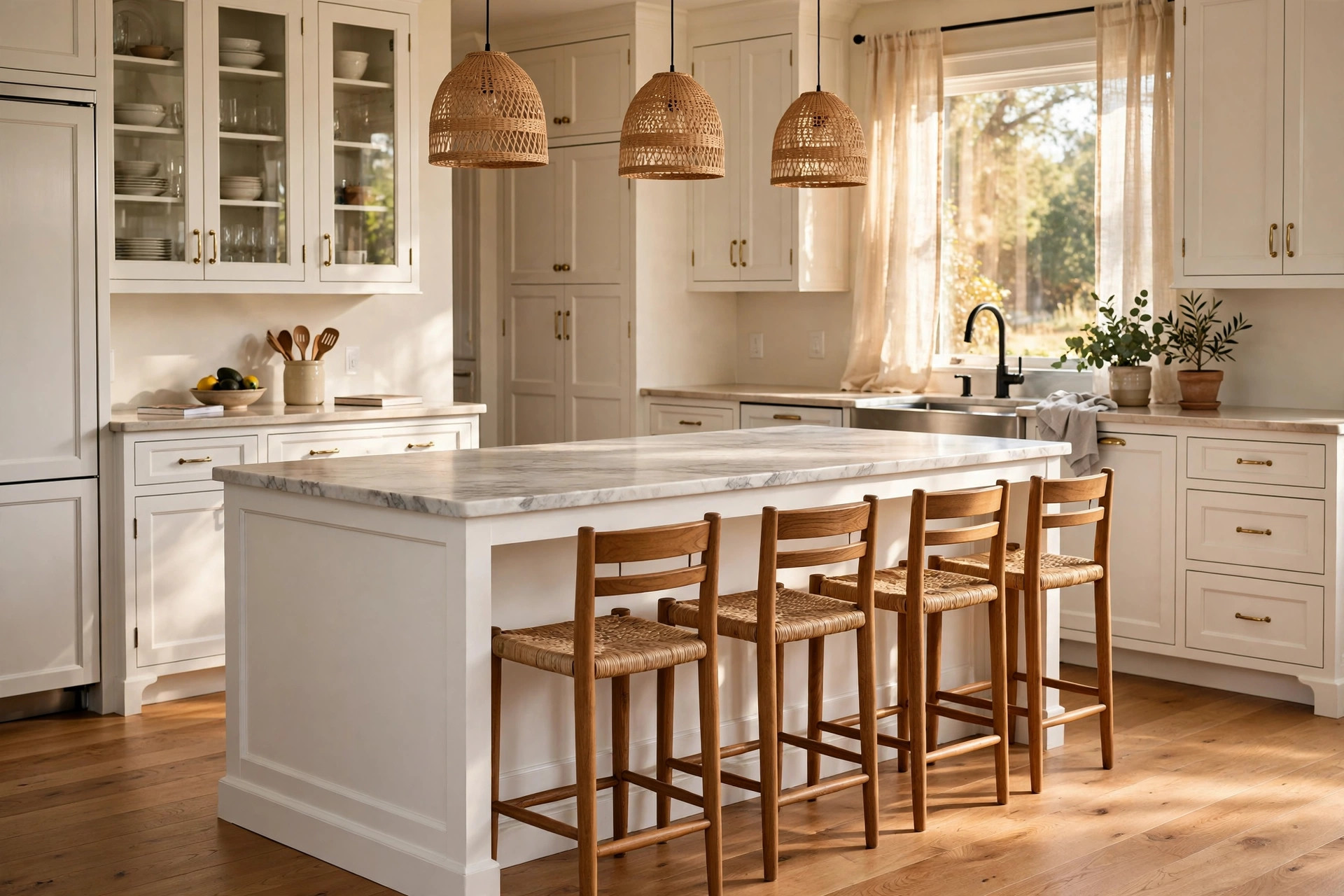

This kitchen island seating reviews buying guide for the USA is written for the plain buyer. The buyer who wants chairs that fit the island, feel good to sit on, and last for years. Kitchen islands have become the heart of the American home. Children eat breakfast there. Guests gather there. Homework gets done there. The seating you choose will be used every day, so it pays to choose with care.
This guide walks through the whole subject step by step. You will learn why island seating matters, how to measure for the right fit, which types suit which homes, what prices to expect, and how to keep the seats safe and in good shape.
Why Island Seating Matters
The kitchen island has replaced the dining table in many homes. Mornings start there. Coffee is poured, school lunches are packed, and news is read at the island. In the evening the same seats serve for a quick supper or a chat with the cook. Because the island works so hard, its seating gets more use than almost any other chair in the house.
Comfort matters because people sit longer than they plan. A stool that feels fine for five minutes can turn hard and cold after thirty. Back support matters for the same reason.
Style matters too. The eye travels to the island the moment anyone enters the kitchen. Seats that clash with the cabinets or the floor can make a fine kitchen look thrown together. Seats that match the room pull the whole space into one picture.
Fit is the quiet part that most buyers miss. Seats that are too tall push knees into the counter edge. Seats that are too low leave a long reach to the plate. Seats set too close together force elbows into ribs. A careful buyer measures first and buys once.
How to Choose: Measure First: Kitchen Island Seating Reviews Buying Guide Usa
Every good choice starts with the tape measure. Take these steps before you shop.
Seat Height
Measure from the floor to the underside of the island counter. Standard islands are 36 inches high, and they pair with counter stools of about 24 to 26 inches in seat height. Raised bar tops are 42 inches high, and they pair with bar stools of about 30 inches in seat height. Leave 10 to 12 inches of space between the seat and the counter underside so legs slide in with ease. When in doubt, sit on the floor model in the store before you order.
Seat Width and Spacing
Allow about 24 inches of width for each seat. Some wide armed chairs need 28 to 30 inches. For length, divide the usable island edge by two feet to count how many seats fit. A six-foot island edge holds three seats with comfort. Leave a few inches of breathing room between seats rather than packing them edge to edge.
Depth and Foot Room
Check that the seat depth suits your household. A shallow seat of 15 inches feels firm and upright. A deep seat of 18 inches feels relaxed but may push small children too far from the counter. Footrests should land where feet rest naturally. Many metal stools have a foot ring, and many wooden stools have stretchers between the legs.
Weight and Stability
Lift the stool in the store. A stool that feels solid and does not rock is built to last. Tip it gently to test balance. Four-legged stools are steady on flat floors. Pedestal stools with a single post suit small kitchens but need a heavy base to stay upright. Families with small children often prefer the sure footing of four legs.
Floor Protection
Look at the feet. Felt pads, plastic glides, or rubber caps keep floors free of scratches. If the stool does not come with pads, plan to buy them. On tile or wood floors, pads are not a luxury. They are part of the job. Many retail buying guides show which glides suit which floor type.
Types of Kitchen Island Seating
Wooden Stools
Wood stools are the old standby. Oak, maple, and ash hold up well to daily use. A well-made wooden stool can serve a family for twenty years or more. Wood suits farmhouse kitchens, country kitchens, and any room with warm cabinets. Look for smooth joints and a finish that seals the grain.
Metal Stools
Metal stools bring a clean, modern look. Steel and aluminum frames are strong and light. Many have a molded seat with a foot ring. Metal wipes clean with a damp cloth, which suits busy kitchens. Check the welds where the legs meet the seat. Clean, even welds signal careful work.
Upholstered Stools
Upholstered seats offer the most comfort. Fabric or leather over foam padding turns a quick breakfast into a long, easy sit. Leather wipes clean and ages well. Fabric comes in many colors but stains more easily. Performance fabrics resist spills and hold their color. If you choose fabric, ask whether the covers come off for washing. Many owners of appliance and kitchen planning resources note that washable covers matter most in homes with children.
Backless Stools
Backless stools tuck fully under the counter. They keep walkways clear and suit small kitchens. They also work well when the island faces a living room, since nothing blocks the view. The trade is comfort. Without a back, long sits tire the body. Backless stools suit short meals and quick tasks best.
Low-Back and High-Back Stools
A low back gives light support and keeps the open look of the island. A high back gives full support and suits long evening meals. High backs read more formal and take more visual space. Low backs suit modern kitchens where clean lines matter. Try both in the store and see which your back prefers.
Swivel Stools
Swivel seats turn to face the cook or the room. Children love them. Many swivel stools return to center on their own, which keeps the row tidy. Check the swivel plate for smooth motion and quiet action. A good swivel glides. A cheap one grinds. Families who gather at the island often rate swivel stools highest in independent review sources.
Adjustable-Height Stools
Adjustable stools use a gas lift or screw post to change height. They suit homes where the island has two levels, or where children and adults share the same seats. The moving parts add wear, so choose a brand with a solid warranty.
Benches and Banquettes
A long bench on one side of the island seats three people in the space of two stools. Benches suit large families and open plans. A built-in banquette, fixed to the island or the wall, saves the most space of all. Both options cost more to build but give a finished, custom look. Kitchen design guides often show bench layouts for narrow islands.
Cost and Price
Island seating spans a wide price range. Knowing the bands helps you set a budget.
Budget stools run 40 to 90 dollars each. They suit rentals and short-term needs. Mid-range stools run 100 to 250 dollars each. This is where most American families buy, and the value is strong. Well-made wood and metal stools in this band last a decade or more. Premium stools run 300 to 600 dollars each. These bring solid hardwood, fine leather, and careful joinery. Designer and custom pieces can pass 800 dollars each.
Buy in sets when you can. Sets of two, three, or four often cost less per seat than singles. Watch shipping charges, since stools are bulky. Some stores ship free to the store and charge for home delivery. Assembly matters too. Stools that need an hour of assembly with small parts test the patience. Look for reviews that mention easy assembly.
Plan the whole row, not one seat. Four mid-range stools at 150 dollars each come to 600 dollars. Add felt pads, cushions, and perhaps a bench, and the total nears 750. This is normal for a working kitchen. Spending a little more on the seats you use daily is money well placed. Many home improvement planners suggest budgeting seating as part of the island project, not as an afterthought. If your island sits near new appliances, you may also want to read our guide to under-counter wine fridges for sale in the USA while you plan the layout.
Care and Upkeep
Good seats stay good with small, steady care.
Dust wood stools weekly with a soft cloth. Once a month, wipe them with a damp cloth and dry at once. Every year or two, renew the finish with oil or wax made for furniture. Tighten screws and bolts twice a year. Wood moves with the seasons, and joints loosen. A quarter turn of a screwdriver keeps the stool tight and silent.
Metal stools need less care. Wipe them with a damp cloth and mild soap. Dry them well to stop rust at the joints. Check the foot glides and replace worn ones. A stool that wobbles often needs only a new glide.
Upholstered seats need prompt spill care. Blot, do not rub. Use a cleaner made for the fabric or leather. Vacuum fabric seats monthly to lift dust from the weave. Leather benefits from a conditioner once or twice a year. Keep seats out of strong direct sun, which fades fabric and dries leather.
Swivel and adjustable stools need a drop of oil on moving parts once a year. If a swivel grows stiff, the plate may need cleaning. Do not force it. A little care keeps the motion smooth. For general kitchen upkeep advice, the maintenance guides cover seating alongside other household care.
Safety
Safety deserves its own section, because island seating is used by the young and the old.
Choose stools that cannot tip easily. A wide base and low center of gravity keep the seat steady. Teach children not to rock back on two legs and not to stand on the seat. Stools with backs give children something to hold when they climb up.
Watch the gap between the seat and the counter. Little fingers get pinched where a swivel seat meets the frame. Keep the floor dry around the island. Wet tile under a stool is a fall waiting to happen.
Check weight ratings. Most stools carry 250 to 300 pounds. Heavy-duty models carry 400 pounds or more. Buy for the largest person who will sit, not the average. The product safety guidance is worth a look for any household with small children, though the main safety rules for stools are common sense: steady base, no standing, dry floors.
Anchor any freestanding bench that sits near a step or a drop. In homes with toddlers, a bench against the island edge can slide. Felt pads help, and rubber cups help more. When hanging kitchen island hanging lights above the island, keep cords and chains clear of tall seat backs so nothing catches.
Frequently Asked Questions
How many stools fit on a kitchen island?
Count two feet of edge for each stool. A four-foot edge holds two stools. A six-foot edge holds three. An eight-foot edge holds four. Measure the usable edge only, not the whole island, since corners and overhangs eat space. Leave a few inches between seats for comfort.
What height stool do I need for a 36-inch island?
A standard 36-inch island takes a counter stool with a seat height of 24 to 26 inches. This leaves 10 to 12 inches between the seat and the counter underside, which is the comfortable range for most adults. Measure your own island before you buy, since custom islands vary.
Are backless stools comfortable for daily use?
Backless stools suit short sits and small kitchens. They tuck under the counter and keep the room open. For long meals they tire the back. If your family eats most meals at the island, choose low-back or full-back stools. Many buyers keep backless stools for a second island or a bar area.
Wood or metal: which lasts longer?
Both last long when well made. Solid wood stools can be refinished and tightened for decades. Powder-coated metal stools resist stains and wipe clean, but a deep scratch can rust if left bare. In a busy family kitchen, metal often wins on easy care. In a show kitchen, wood often wins on warmth. Decorating guides show both styles in real homes.
How do I stop stools from scratching my floors?
Fit felt pads or rubber glides to every foot. Replace them when they wear thin. On wood floors, check the pads twice a year. On tile, use thicker glides. Lift stools to move them rather than dragging. A small felt pad costs pennies and saves a floor worth thousands. Shoppers comparing undermount stainless sinks and other kitchen deals often pick up floor pads in the same order.
Should I buy stools online or in a store?
Both work. Stores let you sit and test, which is the best review of all. Online shops offer wider choice and lower prices. Check return policies either way. Seats must be sat in to be judged, and a fair return policy is part of the price.
A Final Word
Kitchen island seating is a daily comfort, not a decoration. Measure your island, test the seat, and buy for the way your family truly lives. A good stool disappears under you. You forget it is there, and the meal, the talk, and the morning go on without a thought. That is the mark of a wise buy. Use this guide, read reviews with a sharp eye, and choose seats that will serve your home for years. For wider kitchen planning, the energy efficiency resources and brand guides from makers like Whirlpool and Bosch can help you plan the whole room around the island.
References
Bob Vila. (n.d.). Home improvement advice. https://www.bobvila.com Bosch. (n.d.). Home appliances. https://www.bosch-home.com Consumer Reports. (n.d.). Product reviews and ratings. https://www.consumerreports.org ENERGY STAR. (n.d.). Energy efficient products. https://www.energystar.gov GE Appliances. (n.d.). Kitchen and home appliances. https://www.geappliances.com Lowe’s. (n.d.). Home improvement products. https://www.lowes.com The Home Depot. (n.d.). Home improvement products. https://www.homedepot.com The Spruce. (n.d.). Home and garden advice. https://www.thespruce.com This Old House. (n.d.). Home renovation guidance. https://www.thisoldhouse.com U.S. Consumer Product Safety Commission. (n.d.). Product safety information. https://www.cpsc.gov Whirlpool. (n.d.). Home appliances. https://www.whirlpool.com
Was this guide helpful?

About Emily Rodriguez
The My Garden US editorial team writes practical, in-depth home and garden guides for American homeowners — tested advice, no fluff.
You May Also Like

Shaker Cabinet Doors: Where to Buy Them in the USA
September 17, 2026 0 views
Kitchen Island Hanging Lights for Florida Homes USA: A Plain Guide
March 30, 2026 0 views
Vinyl Plank Flooring for Florida Homes USA
February 11, 2026 0 views