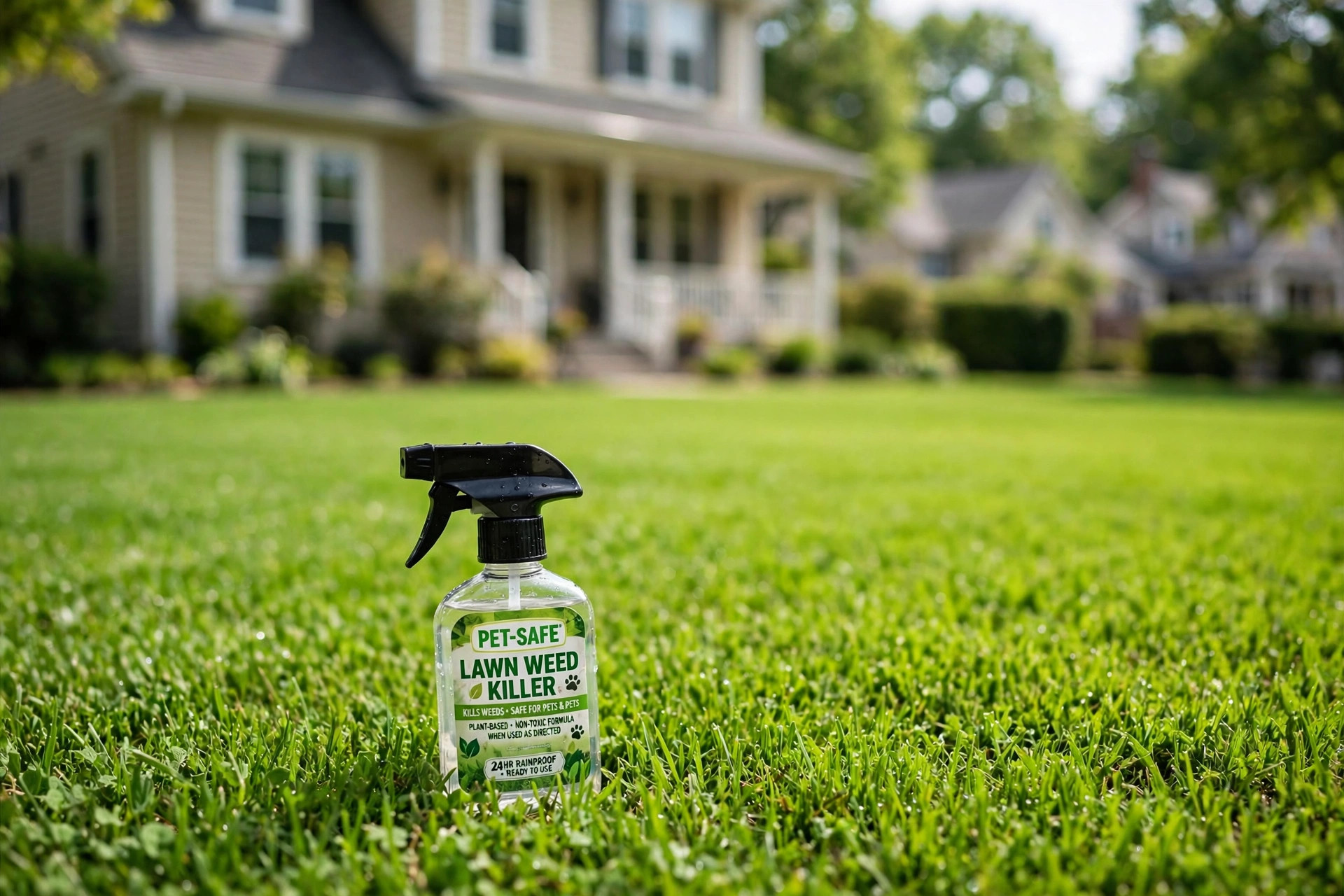

Every year, millions of American homeowners read pet safe lawn weed killer reviews and ask the same simple question. Can I kill the weeds without harming my dog or my cat? The answer is yes. But not every bottle that calls itself pet friendly deserves your trust. Some work slowly. Some work only on certain weeds. And some are marked safe only after the lawn has fully dried.
This guide walks through what matters. It explains how these products work, what to look for on the label, what they cost, and how to use them with care. The goal is simple. A lawn you can be proud of, and a yard your pets can enjoy without worry.
Why Pet Safe Weed Control Matters
Most older weed killers used strong chemicals. Products built on 2,4-D and dicamba killed weeds well. But they also raised real worry for pet owners. Dogs chew grass. Cats roll in it. Pets walk through a treated yard and then lick their paws. That path from lawn to mouth is why many families now look for pet safe weed control options.
A pet safe product is not magic. It is a weed killer that uses gentler active parts. Many use plant oils, such as clove oil or lemongrass oil. Some use iron based compounds that attack broadleaf weeds but leave grass alone. Others use simple acids like citric acid. These parts break down faster in soil. They do not linger for days the way some older chemicals did.
Still, the words on the label need care. “Natural” is not a promise. “Organic” is not a promise. “Pet safe” is often a claim that the product is safe once dry. That small phrase matters. A wet lawn is never safe for paws, no matter what the front of the bottle says. Our survey of pet safe lawn weed killer reviews shows the same lesson again and again. Read the label. Follow the dry time. Keep pets off until the waiting period ends.
How to Choose the Right Product: Pet Safe Lawn Weed Killer Reviews
Read the Label First
The label is the law. It tells you which weeds the product kills. It tells you how much to use per square foot. It tells you how long to keep pets off the grass. A good label gives a clear re-entry time. Two hours is common. Some products ask for a full day. If a label is vague about pets, treat that as a warning sign.
Look for the active ingredients list. The Environmental Protection Agency requires this list on every registered weed killer. Simple plant based parts are easy to understand. Long chemical names are not a reason to panic, but they are a reason to learn what they mean before you spray.
Match the Product to Your Weeds
Not all weeds respond to the same treatment. Crabgrass in July needs a different answer than dandelions in April. Many pet safe products work best as contact killers. They burn down the top of the weed they touch. That means they shine on young, small weeds and struggle with deep rooted ones. If your yard is full of mature thistle or dock, expect to spray more than once.
Before you buy, walk your yard. Note the weeds you see. Take a photo if you are not sure what they are. Garden guides at trusted garden advice sites can help you name them. Then buy a product that lists your weeds on its label.
Think About Your Grass Type
Some weed killers harm certain grasses. Iron based products can stain concrete and may darken some turf. Oil based sprays can burn grass in hot sun. The label will tell you which grasses are safe. If you are unsure of your grass type, local extension offices can tell you for free. Many reviewers in pet safe lawn weed killer reviews forgot this step and blamed the product for a problem that came from a poor match.
Types of Pet Safe Weed Killers
Plant Oil Based Sprays
These are the most common pet friendly choice. They use oils from clove, cinnamon, or lemongrass mixed with other plant acids. They work by stripping the waxy coating from weed leaves. The weed dries out and dies within hours. You can see results the same day. That speed is satisfying.
The drawback is reach. These sprays kill what they touch. They rarely kill roots. Perennial weeds often grow back and need a second round. They also work best on warm, sunny days. Cold rain washes them off before they can act.
Iron Based Products
Iron based weed killers use chelated iron. The iron overloads the broadleaf weed and the plant dies. Grass takes up the iron and often turns a deeper green. These products are popular for dandelion and clover control. They are slower than oil sprays. You may wait a week to see full results.
They have a real downside. The iron can stain sidewalks, driveways, and stone. Spray with care near hard surfaces. Rinse overspray off at once. Many homeowners use them only on the open lawn, away from patios and walks.
Vinegar and Acid Based Products
High strength vinegar products use acetic acid at levels far above kitchen vinegar. They burn weed tops fast. Citric acid products work in a similar way. These are cheap and simple. But they are non selective. They will burn any leaf they touch, including grass. Use them as spot treatments only, aimed at single weeds in driveways, beds, or lawn edges.
Corn Gluten and Pre Emergent Options
Corn gluten meal is a natural pre emergent. It does not kill weeds that already grow. It stops weed seeds from forming roots. Timing is everything. It must go down before weeds sprout in spring. Our related pre emergent weed killer timing guide explains the season by season schedule in full. Used right, corn gluten cuts next year weed counts. Used late, it does nothing at all.
Mechanical and Hand Tools
Sometimes the safest weed killer is no spray at all. A stand up weeder, a sharp hoe, or a string trimmer removes weeds with zero chemicals. For small yards, hand pulling after rain is fast and free. Power tools from makers like Greenworks and ECHO make edging and trimming easy for one person. Reviews on Ryobi tools show that battery trimmers now run long enough for most home yards. Mechanical control pairs well with pet safe sprays. Pull the big weeds. Spray the small ones.
Cost and Price
Pet safe weed killers cost a bit more than old style chemical sprays. Expect to pay between 12 and 35 dollars for a ready to use gallon. Concentrates that you mix yourself run 25 to 60 dollars per bottle. A concentrate makes many gallons, so the cost per treatment is often lower.
How much you spend depends on yard size. A small city lot of 3,000 square feet needs far less than a full acre. Read the coverage rate on the label. Most ready to use gallons cover 400 to 1,000 square feet. Many pet owners treat in sections. They spray the front yard one weekend and the back the next. That way the dog always has a safe zone.
If the job feels too large, a local lawn service can help. Service listings at LawnStarter let you ask for pet friendly plans by name. Professional plans cost more, often 50 to 100 dollars per visit, but they take the mixing and timing off your plate.
Compare value by cost per treatment, not by bottle price. A 40 dollar concentrate that treats your yard four times beats a 15 dollar spray that lasts once. Consumer testing groups like Consumer Reports remind buyers to weigh repeat use when they judge price.
Care and Upkeep for a Weed Resistant Lawn
The best weed killer is a thick lawn. Weeds move into thin, bare spots. They lose the fight against dense grass. If you want fewer weeds next year, feed your lawn well and mow it right.
Mow high. Three to three and a half inches is right for most grasses. Tall grass shades the soil. Weed seeds need sun to sprout. Shade stops them. Sharp mower blades matter too. A dull blade tears grass and leaves it open to stress. Mower makers like Toro and Briggs and Stratton publish blade care tips that any owner can follow at home.
Water deep and seldom. One inch of water once a week trains roots to grow down. Shallow daily watering trains them to stay near the surface. Deep roots survive heat. Shallow roots do not. A healthy root system crowds out weeds on its own.
Feed on schedule. Grass seed and soil care brands like Pennington and Scotts sell simple seasonal feeding plans. Follow the bag rate. More is not better. Too much fertilizer burns grass and feeds the very weeds you want gone. Our full pre emergent weed killer timing guide pairs feeding dates with weed prevention dates.
Overseed thin spots in fall. Fresh seed fills the gaps where weeds would settle. Keep pets off new seed until it is well rooted. Two to three weeks is the safe rule.
Safety Around Dogs and Cats
Pet safety has two parts. The product must be gentle. Your use of it must be careful. Even the kindest spray needs dry time.
Keep pets inside while you spray. Keep them inside until the lawn is fully dry. Most labels say two to four hours. Give it longer if the day is cool or damp. A good rule is to spray in the morning and let pets out after lunch. Store bottles in a locked shed or high cabinet. Dogs chew through thin plastic. Cats knock bottles off shelves.
Watch your pets after the first treatment. Some animals have skin that reacts to plant oils. Red paws, heavy licking, or drooling after yard time means a vet call. This is rare, but it happens. Keep the product label when you call. The vet will want to see the active ingredients.
Remember that “pet safe” usually means dogs and cats. It may not mean rabbits, chickens, or pond fish. If your yard holds a fish pond or a chicken run, read the label for those animals too. Or fence those areas off during treatment.
Pet owners who also fight grubs should read our grub killer guide for dog owners. And if your yard needs insect control, our natural mosquito yard treatment guide covers pet safe options for bugs as well.
Frequently Asked Questions
Are pet safe weed killers truly safe for dogs?
They are far safer than old style chemical sprays when used as labeled. The key words are “as labeled.” Keep the dog off until the lawn dries. Store the bottle where the dog cannot reach it. If you do those two things, risk drops to very low.
How long must pets stay off a treated lawn?
Follow the label. Most pet safe products ask for two to four hours of dry time. Many reviewers wait a full half day to be sure. Never let pets walk on a wet treated lawn, no matter what the front of the bottle claims.
Do natural weed killers work as well as chemical ones?
They work well on young annual weeds. They work less well on deep rooted perennials. Expect to treat more often. Two or three rounds in a season is normal. The trade is time for safety. Most pet owners find the trade fair.
Will pet safe weed killers kill my grass too?
Some will. Oil and acid sprays burn any leaf they touch. Iron based products are kinder to grass but can stain hard surfaces. Spot treat near flower beds. Read the grass safety list on the label before a full yard spray.
Can I make my own pet safe weed killer?
Home mixes of vinegar, salt, and dish soap are common. They burn weed tops. They also harm soil and nearby plants if used often. Salt stays in soil and can stop anything from growing there. Commercial pet safe products are tested and measured. Home mixes are not. For a lawn you want to keep, a tested product is the safer bet.
What should I do if my pet walks on a treated lawn?
Move the pet inside. Wash its paws with plain water. Watch for drooling, vomiting, or paw chewing over the next few hours. Call your vet if any of these appear. Bring the product label with you or have it ready when you call.
A Final Word
Pet safe lawn weed killer reviews all point to the same truth. No single bottle solves every weed problem. The products that win are the ones matched to the right weed, used on the right day, with pets kept off until the lawn is dry.
Start small. Treat one section. Watch how your weeds and your grass respond. Keep a thick lawn, mow high, and feed on schedule, and you will spray less each year. Your yard can be green, your weeds can be gone, and your dog can roll in the grass with nothing to fear. That is the whole point of doing it this way.
References
Pennington. (n.d.). Lawn care and garden products. https://www.pennington.com The Spruce. (n.d.). Home and garden advice. https://www.thespruce.com Greenworks. (n.d.). Battery powered outdoor tools. https://www.greenworkstools.com ECHO. (n.d.). Outdoor power equipment. https://www.echo-usa.com Consumer Reports. (n.d.). Product testing and reviews. https://www.consumerreports.org Scotts. (n.d.). Lawn care products. https://www.scotts.com LawnStarter. (n.d.). Lawn care services. https://www.lawnstarter.com Toro. (n.d.). Lawn mowers and yard equipment. https://www.toro.com Briggs and Stratton. (n.d.). Engines and outdoor power. https://www.briggsandstratton.com Ryobi. (n.d.). Power tools and outdoor products. https://www.ryobitools.com
Was this guide helpful?

About Jennifer Lee
The My Garden US editorial team writes practical, in-depth home and garden guides for American homeowners — tested advice, no fluff.
You May Also Like
How to Level Bumpy Lawn With Topsoil: A Plain Guide for Homeowners
September 9, 2026 0 views
Lawn Fertilizer for Sandy Soil Florida: A Plain Guide for Homeowners
June 8, 2026 0 views
Affordable Mulch Installation Service Near Me: A Practical Guide
January 31, 2026 0 views