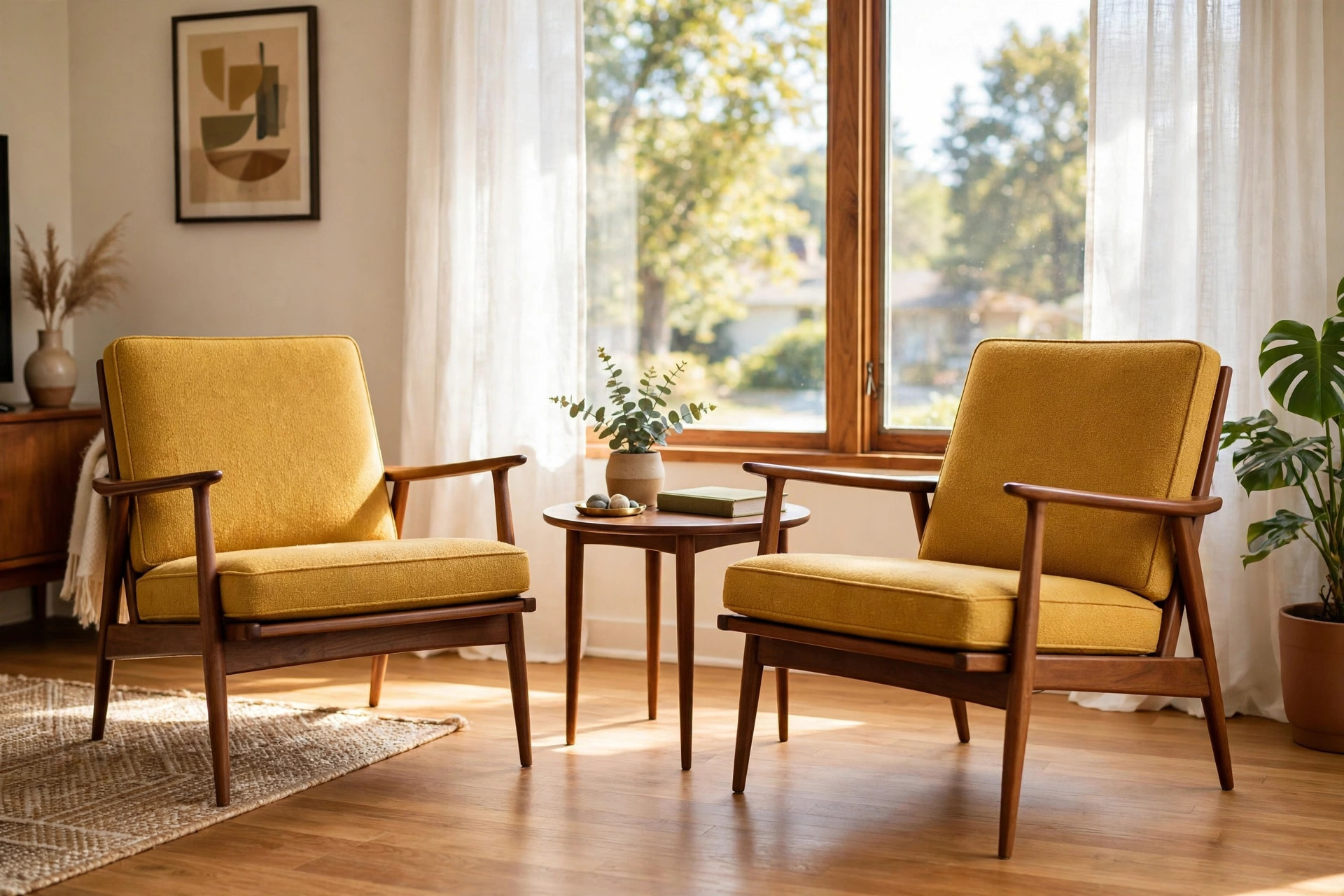

Mid century chairs have lived in American homes for more than seventy years, and they show no sign of leaving. This mid century chairs American homes guide will help you understand what makes these chairs special, how to choose one that fits your room, and how to care for it so it lasts for decades. Whether you live in a small city apartment or a large suburban house, a mid century chair can add warmth, shape, and character to any room.
Why Mid Century Chairs Still Matter
Mid century chairs were born in the years after the Second World War, roughly from 1945 to 1969. Designers in America and Europe wanted furniture that was light, useful, and made with new tools and materials. They bent wood into soft curves. They molded plastic into smooth shells. They gave chairs long thin legs that lifted them off the floor.
American homes of the 1950s and 1960s were full of these designs. Ranch houses in California, split-level homes in Ohio, and small flats in New York all shared the same clean lines. The chairs looked modern, but they were also built to be used every day.
Why do these chairs still sell well today? There are three good reasons.
First, they fit modern American homes. Many homes now have open floors, where the kitchen, dining area, and living room share one space. A mid century chair has a small footprint and an open back. It does not block the view across a room. That makes a space feel larger.
Second, they match almost any style. You can place a mid century chair next to a farmhouse table or a modern sofa, and it still looks right. Its simple shape does not fight with other pieces.
Third, quality pieces hold their value. A well-made mid century chair from a known maker can be sold for a good price years later. Few styles of furniture keep their worth as well.
What to Look For When You Choose One: Mid Century Chairs American Homes Guide
Frame and Shape
The frame is the skeleton of the chair. In true mid century design, the frame often shows the maker skill. Look for solid wood legs, usually in walnut, teak, or oak. The legs often taper to a narrow point. This was a mark of the style, and it also made chairs lighter.
Check the joints where the legs meet the seat. They should be tight and firm. Sit in the chair and rock gently. There should be no wobble and no creak. A chair that moves at the joints may need repair, which can be costly.
Fabric and Finish
Original mid century chairs often came in wool, leather, or bold printed cloth. Today you can find them in many fabrics. For a family home, choose a fabric that is easy to clean. Leather is a fine choice if it is kept with care. Many stores, such as Article, offer chairs in fabrics rated for daily use.
If you buy a vintage chair, look at the fabric closely. Sun damage often shows on one side. Small stains may come out, but a full re-cover can cost more than the chair. Ask the seller if the foam under the fabric is still firm. Old foam breaks down and feels soft and lumpy.
Size and Fit
Measure before you buy. A mid century lounge chair is often wider and lower than a modern chair. It may be 28 to 32 inches wide and sit only 14 to 16 inches off the floor. That is fine in a large living room, but it can crowd a small den.
Also think about who will use the chair. Older family members may find very low chairs hard to rise from. In that case, look for a mid century dining chair or a smaller accent chair with a higher seat.
New or Vintage
Buyers often ask whether they should buy a new chair or a vintage one. Each choice has clear benefits.
A new chair made in the mid century style is easy to return if it does not fit. It comes with a warranty. The fabric is fresh, the foam is firm, and the frame is strong. You also know exactly what you are getting, because the store lists the materials. For a busy family, a new chair is often the safer and simpler choice.
A vintage chair has a history that no new piece can copy. The wood has aged to a deep color. The lines are true to the period. Some buyers love the hunt, visiting flea markets and estate sales to find a rare piece. But vintage buying takes time and care. You must check for damage, smell for smoke or mold, and test every joint. Repairs can add up fast. If you buy vintage online, read the return policy before you pay, and ask the seller for close photos of the frame and fabric.
For most American homes, a good plan is to mix the two: buy new for daily-use seats like dining chairs, and hunt vintage for one special accent piece that gives the room its character.
The Main Types of Mid Century Chairs
Lounge Chairs
The lounge chair is the most famous of all mid century chairs. It is wide, low, and made for reading or resting. The best-known models have a matching footstool. A lounge chair fits well in a living room corner or beside a window.
For ideas on how others style these chairs in real homes, browse the photo galleries at Houzz, where thousands of American living rooms show mid century pieces in use.
Dining Chairs
Mid century dining chairs are light and easy to move. Many have molded shells on wood or metal legs. They stack well, which helps in a small dining room. Sets of four or six are common in American stores.
These chairs pair well with both wood and glass tables. If you want a full guide to matching tables to your chairs, see our guide on modern farmhouse tables for simple tips that work with mid century seats too.
Accent and Desk Chairs
An accent chair can be placed in a bedroom, a hallway, or a home office. Mid century accent chairs often have bold colors like mustard, teal, or rust. They draw the eye and give the room a clear center of interest.
Desk chairs from the mid century period are less common, but new models made in the old style are easy to find. Look for one with good back support if you plan to sit in it for hours.
Cost and Price in American Stores
Prices for mid century chairs vary widely. New chairs made in the mid century style can cost as little as 150 dollars at large stores. These are good for buyers who want the look without a large bill. Stores like IKEA and Wayfair carry many models in this range.
Mid-range chairs from design-focused makers cost between 400 and 900 dollars. These often use better wood and stronger fabric. West Elm and CB2 both offer chairs in this price range, and their sites show clear photos of the wood grain and joinery.
True vintage chairs from famous makers can cost several thousand dollars. If you buy at this level, ask for proof of the maker and the age of the piece. Crate and Barrel also sells new pieces inspired by classic mid century lines, which can be a safer buy for new collectors.
For more on what drives chair prices across styles, our leather recliner chairs guide breaks down frame, fabric, and labor costs in plain terms.
Care and Upkeep
A mid century chair can last a lifetime if you care for it well.
– Dust wood frames once a week with a soft dry cloth. Do not use strong cleaners on vintage wood, since they can harm the old finish. – Keep chairs out of direct sun. Sunlight fades fabric and dries out wood over many years. – For leather seats, wipe them with a damp cloth once a month. Use a leather cream twice a year to keep the surface soft. – For fabric seats, vacuum with a soft brush each month. Clean spills at once with a damp cloth. Do not rub hard, which can spread the stain. – Tighten screws and bolts twice a year. Wood moves with the seasons, and joints can loosen over time.
If you want more room-by-room care advice, The Spruce has clear guides on keeping wood and fabric furniture in good shape.
Safety for Families and Pets
Mid century chairs are light, which is part of their charm, but it can be a risk in a home with small children. A very light chair can tip if a child climbs on it. Place lounge chairs against a wall or in a corner where they cannot be pushed easily.
Check older chairs for sharp edges. Some vintage models have metal legs with worn plastic tips. Replace the tips if they are gone, so the legs do not scratch floors or snag skin.
If your chair has small wooden buttons or trim, make sure they are fixed tight. A loose piece can be a choking hazard for a toddler. For general home safety tips with vintage furniture, Apartment Therapy covers childproofing in older-style rooms.
Pet owners should know that cat claws can mark wood legs quickly. Wrap the lower legs with clear guards, or choose a chair with metal legs if your cat likes to scratch.
Frequently Asked Questions
How can I tell if a mid century chair is real or a copy?
Look for maker marks under the seat or on the frame. Many famous makers stamped or tagged their pieces. Study the wood and the joints. Real vintage chairs often show hand work, while cheap copies use plain screws and thin wood. When in doubt, ask a local antique dealer for an opinion.
Do mid century chairs work in small apartments?
Yes. They are one of the best choices for small spaces. Their slim legs let light pass under them, which makes a room feel open. A single accent chair can define a reading corner without taking up much floor space.
What colors work best with mid century chairs?
Warm woods like walnut and teak pair well with soft whites, warm grays, and deep greens. For fabric, mustard, burnt orange, and teal are classic mid century colors. If you prefer a calm look, choose gray or beige fabric and let the wood be the star.
Can I mix mid century chairs with other furniture styles?
Yes, and many American homes do this well. A mid century dining chair can sit at a rustic table. A mid century lounge chair can sit next to a modern sofa. Keep the color tones close, and the mix will look planned rather than random.
Where should I place a mid century chair for the best effect?
Place it where the light is good and the chair can be seen. Near a window, beside a bookshelf, or facing a fireplace all work well. Avoid pushing it deep into a dark corner, since the clean lines deserve to be seen. For styling ideas, HGTV often shows mid century chairs placed to catch natural light.
Are mid century chairs comfortable for long sitting?
Lounge chairs are built for comfort and can be used for hours. Dining chairs are made for shorter sits, as with most dining seats. If you plan to work from a mid century chair, add a small cushion for back support, or pair it with one of our living room ottomans for better leg rest.
A Final Word
Mid century chairs earned their place in American homes by being simple, strong, and good to look at. They suit small flats and large houses alike. Choose a chair with a sound frame, a fabric that fits your life, and a size that fits your room. Care for it with a light touch, and it will serve your home for many years to come.
References
Apartment Therapy. (n.d.). Home design ideas and inspiration. https://www.apartmenttherapy.com Article. (n.d.). Modern furniture. https://www.article.com CB2. (n.d.). Modern furniture and decor. https://www.cb2.com Crate and Barrel. (n.d.). Furniture and home decor. https://www.crateandbarrel.com HGTV. (n.d.). Home and garden ideas. https://www.hgtv.com Houzz. (n.d.). Home design and remodeling. https://www.houzz.com IKEA. (n.d.). Home furnishings. https://www.ikea.com The Spruce. (n.d.). Home and garden advice. https://www.thespruce.com Wayfair. (n.d.). Furniture and home goods. https://www.wayfair.com West Elm. (n.d.). Modern furniture and home decor. https://www.westelm.com
Was this guide helpful?

About Robert Taylor
The My Garden US editorial team writes practical, in-depth home and garden guides for American homeowners — tested advice, no fluff.
You May Also Like

Kitchen Island Stools Buying Guide USA: How to Choose the Right Stools
February 25, 2026 0 views
Dining Room Sets Buying Guide USA: How to Choose the Right Table and Chairs
September 20, 2026 0 views
Living Room Wall Art Deals Near Me: A Practical Guide to Beautiful Walls on a Budget
February 20, 2026 0 views