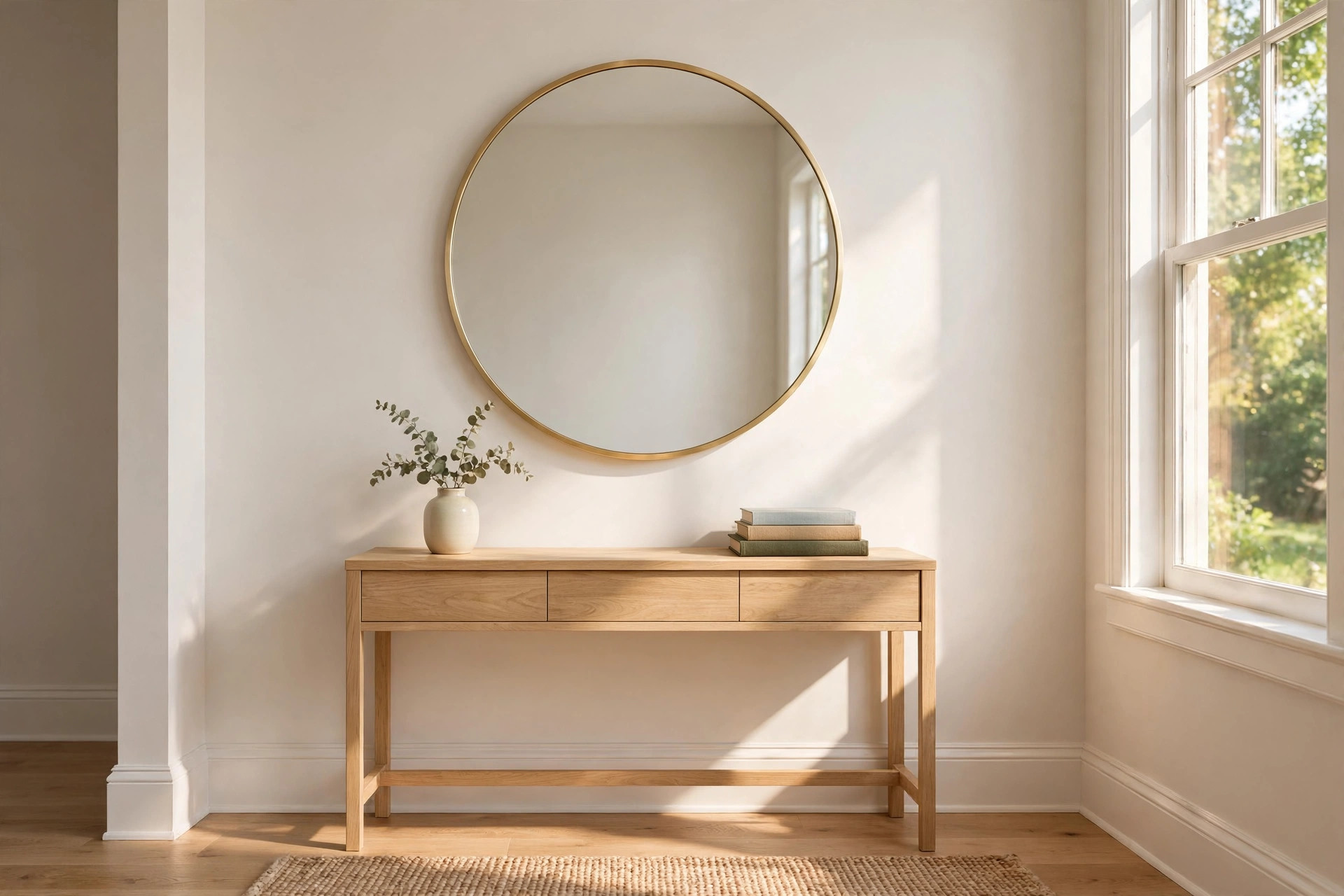

Every home tells its story at the front door. Guests step inside, and the first few seconds shape how they see the rest of the house. That is why so many American families give real thought to the wall just inside the door. The entryway decorative mirrors reviews buying guide USA on this page walks you through the process step by step. You will learn which sizes work best, which frames last longest, what prices are fair, and how to hang a mirror safely.
A mirror does more than show your face. It brings light into a dark hall. It makes a narrow space feel twice as wide. And it gives the entry a finished look that paint alone cannot provide. If you read this guide to the end, you will know exactly what to buy and how to place it.
Why Entryway Mirrors Matter
The entryway is the one room every visitor sees. A bare wall there can feel cold. A well chosen mirror fills the space with warmth and light without the need for a large piece of furniture. That is a real advantage in small homes, apartments, and narrow foyers.
Mirrors also serve a daily purpose. They let you check your coat, your hair, or your tie before you walk out the door. Many families place a small tray or hook under the mirror for keys and mail. The mirror then becomes the center of a useful landing zone.
In real estate terms, a bright entry adds to the feel of a home. Buyers and appraisers notice light and space. A mirror that doubles the sense of light can make a modest hall feel like a grand foyer. You do not need a big budget for this effect. Even a mid priced mirror changes the whole look of the room.
What to Look for When You Buy: Entryway Decorative Mirrors Reviews Buying Guide Usa
Shopping for a mirror is simple once you know the basics. The glass itself is nearly the same from brand to brand. What sets mirrors apart is the frame, the finish, the weight, and the way the back is sealed. Pay attention to these points and you will avoid the common mistakes.
Glass Quality
Look for a clear reflection with no wavy lines. Cheap glass can bend your image at the edges. Hold the mirror flat and look at it from the side in the store. If the reflection bends or looks cloudy, choose another one. A good mirror shows true color. Silvered glass gives the cleanest look. Older or low cost mirrors sometimes carry a green tint at the edge. That is normal in very thick glass, but it should not show across the face.
Frame Material
Solid wood frames age the best. Oak, maple, and walnut hold stain well and take knocks without breaking. Metal frames in black or brushed gold are light and modern, but thin metal can bend if the mirror falls. Resin and composite frames cost less and copy the look of carved wood. They suit a budget, though they chip more easily than wood. Leather wrapped frames have grown popular in recent years. They add a soft feel, but keep them out of direct sun so the leather does not fade.
Size and Shape
The rule is simple. The mirror should fill about two thirds of the wall space above your console table or bench. A mirror that is too small looks lost. One that is too large crowds the wall. Round mirrors soften a square hall. Rectangular mirrors with a clean frame suit long narrow entries. Arched mirrors add height to low ceilings. If your entry is very small, a single oval mirror often works best.
Backing and Hardware
A good mirror has a sealed back that keeps out damp air. Damp air eats the silver coating and causes dark spots at the edges. This is called desilvering. Check that the back is covered with paper or board and that the hangers are set for the weight of the mirror. Heavy mirrors need two hangers or a French cleat. Never trust a single wire hook on a mirror that weighs more than fifteen pounds.
Types of Entryway Decorative Mirrors
Stores across the United States carry several main styles. Each one fits a different kind of home.
Round and Oval Mirrors
Round mirrors are the most popular choice for entries today. They hang above a console without sharp corners that catch the eye. Sizes from twenty four to thirty six inches across fit most halls. A thin gold or black frame gives a classic look. A thick wood frame gives a farmhouse look.
Rectangular and Square Mirrors
Long rectangular mirrors make a short wall look taller when hung upright. Hung sideways over a wide console, they widen the room. Square mirrors work best in pairs on a large wall. Many buyers choose these for modern and mid century homes.
Arched Mirrors
Arched tops copy the shape of old doorways and windows. They add a soft curve that plain rectangles lack. An arched mirror over a bench or table gives the entry a quiet elegance. These tend to cost a bit more because the frame must be bent to shape.
Sunburst and Starburst Mirrors
These mirrors have rays or petals spreading from a small center. They are more decoration than tool. You will not use one for a full check of your coat, but as art it is strong. They suit rooms that already have a plain flat mirror elsewhere, or entries that need a single bold piece.
Frameless and Beveled Mirrors
A frameless mirror with a beveled edge gives a clean modern line. There is no frame to clash with the paint or the furniture. These are easy to clean and light to hang. The cut edge catches light and adds a thin bright border.
If you are also styling the rest of your hall, see our guide to entryway storage benches for seating that pairs well with a mirror above it.
How to Choose the Right Size
Measure before you shop. Start with the width of the console table, bench, or shelf that will sit under the mirror. The mirror should be narrower than the furniture by at least four to six inches on each side. This keeps the grouping balanced.
For height, hang the center of the mirror about sixty inches from the floor. That is eye level for most adults. If the household is short or tall, adjust a few inches either way. Leave six to eight inches of space between the top of the console and the bottom of the mirror frame. This gap lets you set keys or a small plant on the console without touching the glass.
In a double height entry, one large mirror may leave the wall bare above. Two stacked mirrors or one tall arched piece fills the space better. In a tight apartment hall, choose a mirror no wider than thirty inches. Anything larger can feel like it presses in on you.
Cost and Price Ranges
Entryway mirrors fall into clear price bands across the United States.
Budget mirrors run from twenty five to eighty dollars. These are usually resin frames or thin metal frames over standard glass. They look fine on the wall and suit renters or first apartments. The finish may wear sooner, so treat them gently.
Mid range mirrors cost eighty to two hundred fifty dollars. This is the sweet spot for most buyers. You get solid wood or sturdy metal frames, clear glass, and good hangers. Many of the best reviewed mirrors in our entryway decorative mirrors reviews buying guide USA research sit in this band.
High end mirrors run from two hundred fifty to eight hundred dollars and more. You pay for hand finished frames, beveled edges, thick glass, and designer names. These pieces last for decades and often move from house to house with the family.
Watch for seasonal sales. January and July bring deep cuts on home goods at large stores. Floor models can save thirty percent if the frame is sound and the glass is clean.
Read full product details before you order. Major retailers such as Wayfair publish wide selections with customer reviews and clear dimensions. Design references such as The Spruce offer independent buying advice on mirror styles and sizes.
Care and Upkeep
A mirror needs little care, but a few habits keep it bright for years.
Clean the glass with a soft cloth and plain water mixed with a drop of dish soap. Spray the cloth, not the mirror. Spray on the glass can run behind the frame and rot the backing. Dry at once with a clean dry cloth. Never use scouring pads. They scratch the glass beyond repair.
Dust the frame with a dry cloth. For wood frames, a light coat of furniture wax once a year keeps the finish rich. For metal frames, wipe with a damp cloth and dry at once to stop rust at the joints.
Check the hanging hardware once a year. Lift the mirror slightly and look at the hooks or wire. If the wire has stretched or a hook has pulled loose, replace it before the mirror falls. In homes with small children, anchor heavy mirrors to a wall stud.
Keep mirrors away from constant direct sun. Heat and light can fade frames and, over many years, harm the silver backing. A mirror that faces a window brings in fine light, but one baked by noon sun all day will age faster.
Safety Tips
A falling mirror is a real danger. Glass shards can cut deeply. Take these steps.
Hang every mirror on a stud or a proper wall anchor rated for the weight. Drywall alone will not hold a heavy frame. Use two fixing points for any mirror wider than twenty four inches. This keeps it level and gives a backup if one point fails.
In homes with toddlers, keep the bottom of the mirror above their reach or choose a light frame. Anchor any leaning floor mirror to the wall with a strap. Earthquakes and slammed doors shake walls more than you think.
When you carry a mirror, hold it by the sides, never by the top frame alone. Lay it flat in the car with a blanket over the glass. Wear gloves if you must move a very large piece.
The Consumer Product Safety Commission publishes general home safety guidance that covers heavy wall items and tip over risks.
Frequently Asked Questions
What is the best size mirror for a small entryway?
A round mirror between twenty four and thirty inches across suits most small halls. It reflects light without crowding the wall. Pair it with a narrow console or a slim bench so the floor stays open.
Should the mirror match the other furniture in the entry?
It should share a mood, not match exactly. A black metal mirror works with many bench styles. A wood mirror looks best when its tone is close to the console beneath it. Mixed finishes feel fresh as long as the colors do not fight.
How high should I hang an entryway mirror?
Hang the center of the mirror about sixty inches from the floor. Leave six to eight inches between the top of the console and the bottom of the frame. Step back and look from the front door. The mirror should sit in your natural line of sight.
Are heavy framed mirrors worth the extra cost?
They are, if the frame is solid wood or quality metal. Heavy frames hang straighter and age better than thin resin. They also allow better hardware. Just be sure your wall can take the weight.
Can I hang a mirror with adhesive strips?
Only for very light mirrors under five pounds on a clean flat wall. For anything heavier, use hooks or anchors. Adhesive fails in heat and damp air, and a mirror that falls at night is a hazard.
Do mirrors really make an entry look bigger?
Yes. A mirror doubles the light it catches and tricks the eye into seeing more depth. Place it across from a window or a lamp for the best effect. Even a modest mirror lifts a dark narrow hall.
A Short Final Word
Choosing an entryway mirror comes down to three things. Measure your wall and your furniture first. Pick a frame that fits the style of your home. Hang it with care on hardware that can hold its weight. Do these three things and the mirror will serve you well for many years.
This entryway decorative mirrors reviews buying guide USA drew on common buyer reviews and long standing home guides. Take your time, compare two or three finalists side by side, and trust your eye. The right mirror will make your front hall feel like a warm welcome every time the door opens.
For the full hall look, pair your new mirror with a console from our sofa console tables guide, or browse our main entryway decorative mirrors buying guide for more style picks.
For more background, see Article, West Elm, and CB2. For more background, see Crate and Barrel, Houzz, and Apartment Therapy.
References
Apartment Therapy. (n.d.). Home design ideas and inspiration. https://www.apartmenttherapy.com Article. (n.d.). Modern furniture. https://www.article.com CB2. (n.d.). Modern furniture and decor. https://www.cb2.com Crate and Barrel. (n.d.). Furniture and home decor. https://www.crateandbarrel.com Houzz. (n.d.). Home design and remodeling. https://www.houzz.com The Spruce. (n.d.). Home and garden advice. https://www.thespruce.com Wayfair. (n.d.). Furniture and home goods. https://www.wayfair.com West Elm. (n.d.). Modern furniture and home decor. https://www.westelm.com
Was this guide helpful?

About James Carter
The My Garden US editorial team writes practical, in-depth home and garden guides for American homeowners — tested advice, no fluff.
You May Also Like

Luxury Area Rugs for Texas Homes: A Complete Guide
June 11, 2026 0 views
Sofa Console Tables Reviews Buying Guide USA: What to Know Before You Buy
April 29, 2026 0 views
Dining Room Sets: Where to Buy in the USA
September 16, 2026 0 views