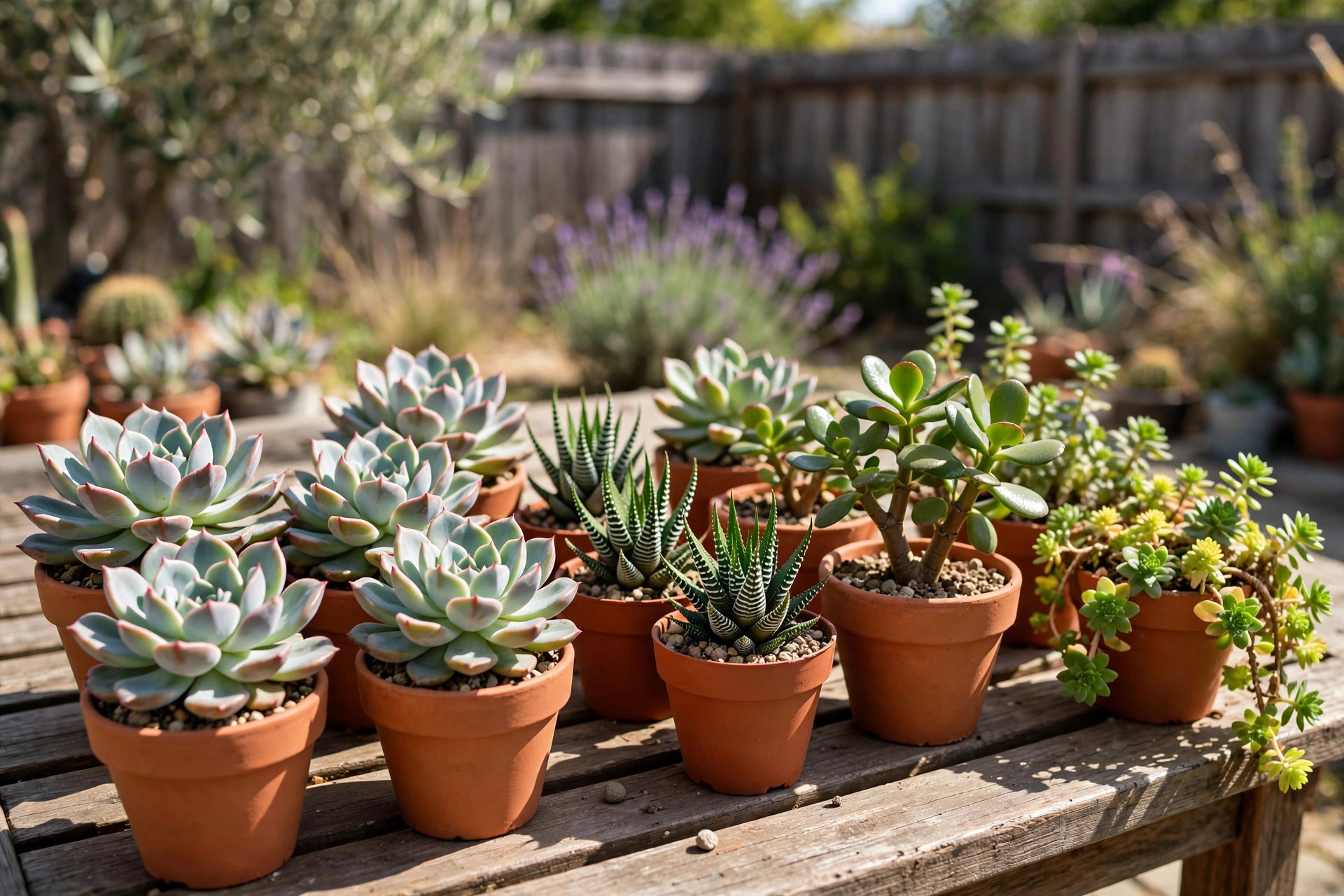

Homeowners across the state are choosing succulent variety packs california homes usa sellers offer, and the reason is simple. Succulents ask for little and give back a great deal. They fit on a windowsill in San Francisco and spread across a patio wall in San Diego. They ask for water only now and then, and they look alive through the whole year. A variety pack gives you many kinds at once, so a beginner can learn what each plant likes without buying a whole nursery.
This guide walks through everything a California homeowner should know. It covers why variety packs suit this state, how to pick a good pack, which kinds you will likely find inside, what they cost, how to care for them, and how to keep children and pets safe around them. At the end you will find answers to common questions.
Why Variety Packs Suit California Homes
California is the natural home of the succulent. The climate does most of the work. Most of the state has dry air, mild winters, and long bright summers. Plants from South Africa, Mexico, and the Mediterranean feel at home here. A variety pack puts several of these plants in one box, so you can test which ones thrive in your exact spot.
Water rules also favor succulents. Many California cities limit outdoor watering. A succulent bed uses far less water than a lawn or a flower border. Some counties even offer rebates to homeowners who remove grass and plant drought tolerant species. A tray of assorted succulents is the easiest first step toward a water wise yard.
Variety packs also save money and time. Buying plants one by one costs more and takes longer. A pack of twelve or twenty small plants arrives together and fills a planter in one afternoon. If one plant fails, you still have many others. That built in margin makes variety packs a forgiving choice for new gardeners.
How to Choose a Good Pack: Succulent Variety Packs California Homes Usa
Check the plant list
A good seller names the plants in the pack. Look for a list that includes genus and species, not just “assorted succulents.” Common names like echeveria, haworthia, crassula, sedum, and kalanchoe are fine when paired with the Latin name. A clear list tells you the seller knows the stock and did not throw in leftovers.
Look at the root size
The best packs use two inch or three inch pots. These plants have real roots and settle fast. Tiny cuttings without roots take longer and fail more often. Check the listing for pot size or root status before you order.
Read the growing notes
Honest sellers tell you about light needs, water needs, and cold limits. Plants that survive zone 9b may not survive a mountain winter. Match the pack to your area. The Farmer’s Almanac frost date charts help you learn your first and last frost, which matters for plants kept outside all year (https://www.almanac.com).
Buy from known growers
Seed and plant companies that have served gardeners for years usually pack plants with care. Burpee has supplied home gardeners with plants and seeds for generations (https://www.burpee.com). Park Seed is another long standing source of garden plants (https://www.parkseed.com). Gurney’s also ships live plants with growing guidance (https://www.gurneys.com).
Types of Succulents You May Find in a Pack
Echeveria
Echeveria forms a tight rosette that looks like a flower carved from wax. Leaves come in blue green, dusty pink, and purple gray. These plants want bright light and very fast draining soil. They are the show piece of most variety packs.
Haworthia and Haworthiopsis
Haworthia stays small and does well on a bright windowsill. Its thick pointed leaves often carry white stripes or dots. It tolerates less light than most succulents, which makes it a good pick for offices and north facing rooms.
Crassula
Crassula includes the classic jade plant. These are sturdy, slow growing, and easy to shape. A jade plant can live for decades and become a small tree in a pot. Crassula likes bright sun and only occasional water.
Sedum and Stonecrop
Sedum spreads fast and fills gaps. It works as ground cover, in rock gardens, and trailing from hanging baskets. Many sedums handle light frost. They root from a single leaf, so one pack can become many plants.
Kalanchoe
Kalanchoe blooms. Most succulents flower rarely, but kalanchoe sends up clusters of small red, pink, or yellow blooms in winter. It needs the same dry treatment as the rest of the pack, with a little less water while it blooms.
Aloe and Gasteria
Small aloes and gasteria bring bold shapes. Their thick leaves store water for long dry spells. They suit sunny patios and do well in clay pots that wick away extra moisture.
Potting and Soil
Use a pot with a drain hole. This rule matters more than any other. Succulents rot when their roots sit in water. Clay pots dry faster than plastic and suit wet winters. Choose a pot only a little wider than the plant so the soil does not stay wet.
Soil must drain fast. Regular garden soil holds too much water. Buy a bag of cactus and succulent mix, or make your own from equal parts potting soil, coarse sand, and perlite. Plant so the base of the leaves sits above the soil line. Leaves that rest on wet soil rot.
Wait two or three days before watering a newly potted plant. This pause lets small root wounds heal. After that, water deeply, then let the soil dry fully before the next watering. Monrovia growers note that most succulent trouble comes from too much water, not too little (https://www.monrovia.com).
Water, Light, and Feeding
Water
The rule is simple: soak, then dry. Water until it runs from the drain hole, then wait until the soil is dry an inch down before watering again. In summer this may mean once a week. In winter it may mean once a month. Rain often covers the need outdoors. When in doubt, wait another day.
Light
Most succulents want four to six hours of direct sun. Morning sun with afternoon shade suits hot inland areas. A south or west facing window works indoors. If a rosette stretches tall and pale, the plant is asking for more light. Move it closer to the sun in small steps so the leaves do not burn.
Feeding
Succulents need little food. A weak dose of balanced liquid fertilizer once in spring is enough for most. Too much food causes soft, weak growth. Skip fertilizer in winter when plants rest.
For more detailed care steps by plant type, Gardening Know How keeps plant specific guides that cover watering, soil, and common problems (https://www.gardeningknowhow.com). The Spruce also carries clear beginner care articles for indoor succulents (https://www.thespruce.com).
Cost and Price
Variety packs are one of the cheapest ways to build a succulent collection. Small packs of six to ten two inch plants often sell for about fifteen to thirty dollars. Larger packs of twenty or more plants run thirty to sixty dollars. Premium packs with named rare kinds cost more, sometimes over one hundred dollars for a set.
Shipping adds cost. Live plants travel in boxes with heat packs in winter. Some sellers add five to ten dollars for shipping, while others include it in the price. Local nurseries let you skip shipping and pick each plant by hand.
Compare the cost per plant, not the total. A thirty dollar pack of twenty plants is cheaper per plant than a twenty dollar pack of six. But a larger pack may include kinds you do not want. Choose the pack whose plant list matches your plan, not just the lowest price.
Where to Place Them in a California Home
Indoor spots with the most light win. A bright windowsill, a sunroom, or a shelf under a grow light all work. Keep plants away from cold drafts and heating vents. Dry indoor air does not bother succulents, but cold glass at night can damage leaves pressed against it.
Outdoor placement depends on your zone. In coastal and southern California, most pack plants live outside all year. In the Central Valley, move tender kinds under cover during frost nights. In the mountains and high desert, treat succulents as indoor plants and carry them outside only in summer.
A sheltered patio is the ideal home. It gives bright light, blocks the worst rain, and keeps temperatures mild. Proven Winners growers point out that container plants in sheltered spots face fewer disease and weather problems (https://www.provenwinners.com).
Care Through the Seasons
Spring is planting time. Repot, divide crowded clusters, and start new plants from leaves. Summer brings fast growth and the highest water need. Shade cloth helps during heat waves above one hundred degrees.
Fall is the time to prepare. Stop feeding. Bring tender plants inside before the first frost. Clean dead leaves from rosettes so pests have nowhere to hide. Winter is the rest season. Water little. Keep indoor plants in the brightest spot you have.
The USDA supported extension services offer regional growing calendars that help you time these tasks for your county. The National Institute of Food and Agriculture supports research and outreach on plant care across the country (https://www.nifa.usda.gov).
Pests and Problems
Mealybugs are the most common pest. They look like tiny white cotton balls in leaf joints. Dab them with a cotton swab dipped in rubbing alcohol. Check new plants for two weeks before placing them near your collection.
Root rot comes from wet soil. A soft, black stem means rot. Cut away the dark part, let the cutting dry for several days, then replant in fresh dry soil. Sunburn shows as brown patches after a sudden move into strong sun. Move plants into bright light in stages.
Fungus gnats hover around wet pots. Let the soil dry longer between waterings and the gnats leave. Good air flow also helps. Space pots so leaves do not touch, and avoid misting the leaves.
Safety for Children and Pets
Most common succulents are safe to touch, but a few need care. Euphorbia types bleed a white sap that burns skin and eyes. Keep these out of reach of children. Some kalanchoe and jade plants can upset a pet’s stomach if chewed. Check with your veterinarian if a pet eats a plant.
Thorns and sharp leaf tips are the other risk. Some agaves and aloes end in stiff points. Place these where small hands will not grab them. Teach children to look with their eyes first. When a plant must go, wear gloves and wrap it in newspaper before handling.
Companion Plants and Garden Plans
Succulent packs mix well with other garden projects. If you are starting seeds this spring, an morning glory seeds buying guide from the same planting season can help you plan the whole bed. Wait, that link covers morning glory seeds, which suit fences and trellises beside a succulent border. For a dry sunny strip, consider wildflower seed mixes for Texas style plantings adapted to your California zone, or pair spring color with daffodil bulb packs for California homes that bloom before the succulents wake up.
Keep a simple garden journal. Note which kinds thrived, which stretched for light, and which hated winter rain. Next year, order a pack weighted toward your winners. Many growers repeat the same core kinds, so you can plan around echeveria, haworthia, and sedum with confidence.
FAQ
How often should I water a new variety pack?
Water once right after potting, but only after two or three dry days. Then water only when the soil is fully dry. New plants need time to root. Too much water in the first weeks is the most common cause of failure.
Can succulent variety packs live outside year round in California?
In coastal and southern areas, yes for most common kinds. In the Central Valley, cover tender plants on frost nights. In mountain and high desert zones, bring them inside for winter. Know your USDA zone and match plants to it.
Do I need special soil?
Fast draining soil is essential. A bagged cactus mix works well. You can also mix equal parts potting soil, coarse sand, and perlite. Plain garden soil stays too wet and rots the roots.
Will the plants stay small?
Some do. Haworthia and small echeveria stay compact for years. Jade plants and some aloes grow large over time. Check the mature size on the plant list and give big growers their own pots.
How do I grow more plants from a pack?
Pull a healthy leaf from a sedum or echeveria, let the broken end dry for two days, then lay it on dry soil. Roots and a new rosette appear in a few weeks. This free method can turn one pack into dozens of plants.
Are variety packs a good gift?
Yes. A pack with a care card makes a kind gift for a new homeowner. Choose hardy, common kinds and include a short note on watering. Avoid gifting tender or rare plants to beginners.
A Final Word
A succulent variety pack is a small box with a large promise. For the price of one nursery visit, a California homeowner gets a whole lesson in dry gardening. Pick a pack with a clear plant list, pot each plant in fast draining soil, and water only when dry. The plants will do the rest, and your home will carry a little of the California landscape indoors and out.
References
Burpee. (n.d.). Seeds, plants, and gardening supplies. https://www.burpee.com Gardening Know How. (n.d.). Gardening guides and plant care. https://www.gardeningknowhow.com Gurney’s Seed & Nursery Co. (n.d.). Seeds, plants, and garden supplies. https://www.gurneys.com Monrovia. (n.d.). Plants for home gardens. https://www.monrovia.com National Institute of Food and Agriculture. (n.d.). Agricultural research and extension. https://www.nifa.usda.gov Park Seed. (n.d.). Seeds, plants, and gardening supplies. https://www.parkseed.com Proven Winners. (n.d.). Plants and gardening inspiration. https://www.provenwinners.com The Spruce. (n.d.). Home and garden advice. https://www.thespruce.com
Was this guide helpful?

About Emily Rodriguez
The My Garden US editorial team writes practical, in-depth home and garden guides for American homeowners — tested advice, no fluff.
You May Also Like

How to Grow Bell Peppers: USA Gardener’s Guide
October 6, 2026 1 views
Native Grass Seed Buying Guide USA: A Plain Guide for Homeowners
June 23, 2026 0 views
Peat Pots for Seedlings: A Plain Guide to Buying in the USA
January 8, 2026 0 views