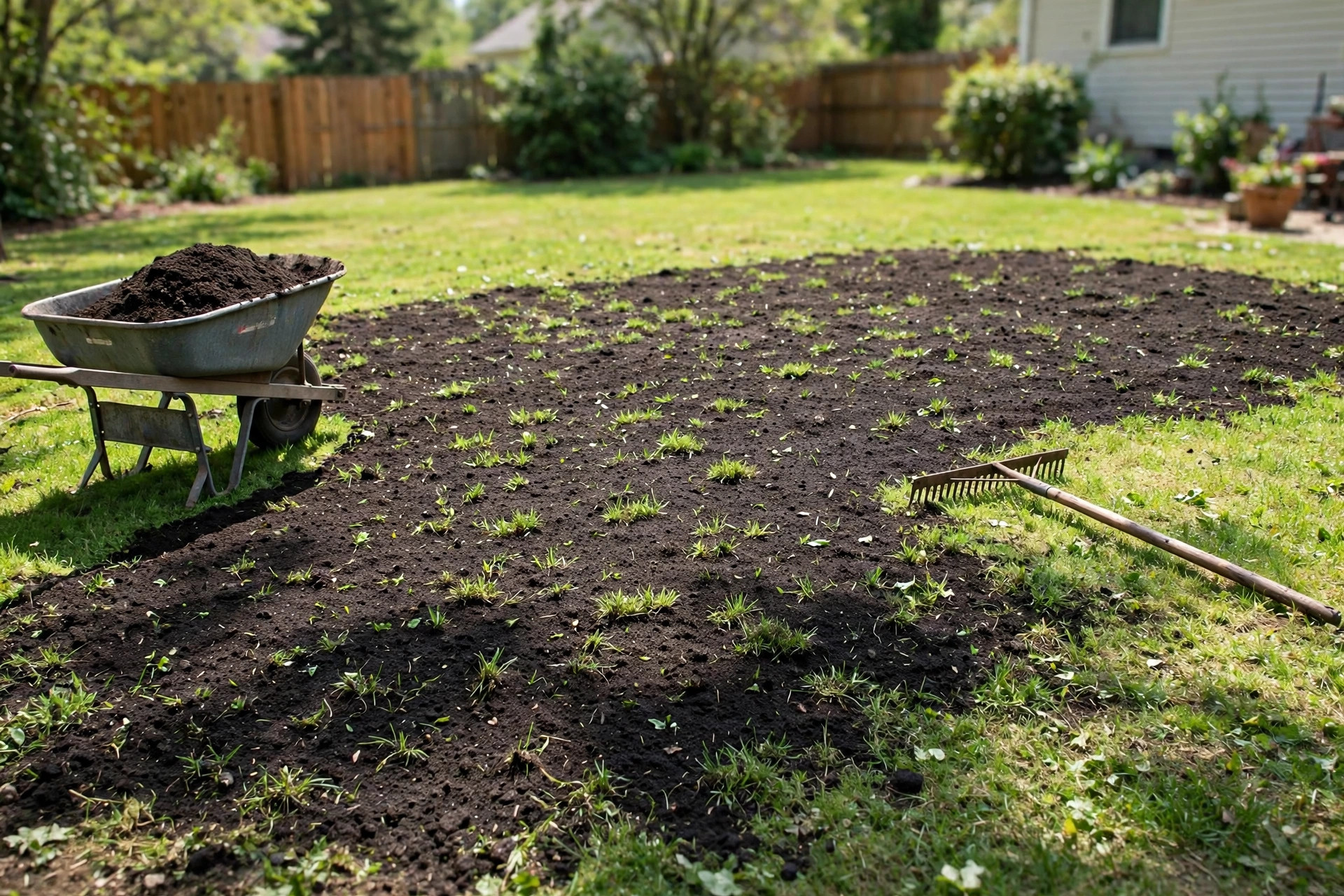
Topdressing is one of the oldest tricks in lawn care, and for good reason. A thin layer of good soil spread over your grass can level low spots, feed the soil, and help roots grow deeper. Many homeowners searching for the best soil for topdressing lawn reviews want one simple answer: which product should I buy? The honest answer is that the best choice depends on your soil, your grass, and your budget. This guide walks through the main options, what to look for on the label, what each type costs, and how to apply it right. It also answers common questions so you can start with confidence.
Why Topdressing Matters
Grass grows in the top few inches of soil. Over time, that layer compacts under foot traffic, mower wheels, and rain. Compacted soil lets water run off instead of soaking in. Roots stay shallow, and the lawn thins out. Topdressing adds fresh material right where the plant needs it. The new layer mixes with the old over time through worm activity, rain, and growth.
Topdressing also helps level a bumpy yard. Low spots hold water and invite disease. High spots get scalped by the mower. A thin coat of soil, applied once or twice a year, fills in the dips a little at a time. It is slower than bringing in a truckload of dirt, but it is safer for the grass.
Another benefit is thatch control. Thatch is the layer of dead stems between the green grass and the soil. A thin layer of rich soil feeds the microbes that break thatch down. Over one or two seasons, the thatch layer shrinks and the soil beneath it grows richer.
Many lawn experts pair topdressing with other fall tasks. If you plan to overseed, for example, a topdressing layer gives seed a perfect bed. Readers looking for more detail on that pairing can see our guide to best time to aerate lawn in midwest and plan the full sequence.
What to Look for When You Choose Soil: Best Soil for Topdressing Lawn Reviews
Not every bag marked “topsoil” deserves to go on your lawn. Read the label before you buy.
Texture and Screening
The soil should be screened, meaning it has passed through a mesh that removes rocks, sticks, and clumps. Unscreened soil leaves lumps that smother grass and make mowing hard. A fine, even texture spreads easily and settles into the turf canopy without burying it.
Organic Matter
Good topdressing soil has visible organic matter mixed in. This might be composted bark, aged manure, or leaf compost. Organic matter feeds soil life and helps the new layer hold water. Avoid soil that looks like plain construction fill. It may be cheap, but it adds little value.
pH and Salt Level
Most lawn grasses do best in soil with a pH between 6.0 and 7.0. Some bagged soils list pH on the label. Municipal compost can run high in salts, which can burn young grass. If you are unsure, ask the supplier for a test sheet or spread a small trial patch first.
Weed Seeds
Cheap fill dirt often carries weed seeds. Compost that reached high heat during the composting process is usually weed-free. Ask whether the product is certified or tested for weed seeds. A yard full of new weeds will wipe out any savings.
Related Long-Tail Phrases to Keep in Mind
When you compare products, you will see terms like screened topsoil for lawn leveling, compost blend topdressing for turf, and organic lawn topdressing soil mix. These describe real differences. “Screened” tells you about texture. “Compost blend” tells you about organic matter. Learn the terms so you can compare bags and bulk piles fairly.
Types of Soil Used for Topdressing
There are four main choices. Each has strengths and limits.
Screened Topsoil
This is plain soil that has been sifted to remove debris. It is the cheapest option and works well for leveling. Its weakness is low organic content. Many brands sell a “garden” mix that is richer than plain fill. For lawn use, look for a mix with at least some compost added.
Compost and Compost Blends
Straight compost is the top pick of many lawn pros. It is rich in organic matter and microbes, and it feeds the soil food web. A popular middle ground is a half-and-half blend of compost and sand or compost and screened soil. Readers comparing options often check our best compost topdressing for lawns reviews page, which looks closely at bagged compost products.
Sand-Based Mixes
Golf courses topdress with sand because it drains fast and levels well. For home lawns, pure sand is risky. It drains too fast on sandy soils and can layer badly over clay. A common home mix is 70 percent screened soil with 30 percent coarse sand. This blend levels well and still holds water and nutrients.
Custom Bulk Blends
Many landscape yards sell their own mixes, often called “turf blend” or “lawn dressing.” These are usually a mix of screened soil, compost, and sand. Buying in bulk by the cubic yard is the best value for larger lawns. Ask what is in the mix before you order. A good supplier will tell you the recipe.
Which One Is Best?
For most American home lawns, a screened topsoil and compost blend wins the best soil for topdressing lawn reviews test in real yards. It levels, feeds, and improves soil structure all at once. Pure compost is best when your main goal is soil health rather than leveling. Sand-heavy mixes suit level, sandy lawns but should be used with care on clay.
Cost and Price
Prices vary by region and by bag versus bulk.
Bagged products at garden centers usually cost between 3 and 8 dollars per cubic foot. A 1-cubic-foot bag covers about 100 square feet at a quarter-inch depth. A typical 5,000-square-foot lawn needs about 50 bags for a quarter-inch coat. That adds up fast, which is why bags suit small yards and spot repairs.
Bulk soil from a landscape yard usually costs between 30 and 70 dollars per cubic yard, plus delivery. One cubic yard covers about 1,000 square feet at a quarter-inch depth. A 5,000-square-foot lawn needs about 5 yards. Even with a 50-dollar delivery fee, bulk is far cheaper for big lawns.
Delivery trucks need access to your driveway or yard. Check how far the truck can dump from the street. You will still need a wheelbarrow and a shovel to move the pile, plus a rake or leveling tool to spread it.
One money-saving tip: topdress in fall when many yards run end-of-season prices on bulk soil. Prices also drop if you buy with a neighbor and split one delivery.
How to Apply It Right
Timing matters. The best window is early fall for cool-season grasses and late spring for warm-season grasses. The grass should be growing strongly so it recovers fast.
Start by mowing a little lower than normal and raking up the clippings. If the soil is compacted, aerate first. Holes from a core aerator give the new soil a place to go. Equipment guides from makers like Toro and John Deere can help you choose the right aerator for your yard size.
Spread the soil with a shovel and a stiff rake, working in a thin layer of about one quarter inch. You should still see grass tips poking through. A thicker layer smothers the lawn. For leveling deep dips, do one quarter inch per season rather than dumping it all at once. More on this slow approach is covered in our guide on how to level bumpy lawn with topsoil.
After spreading, work the soil down into the canopy with the back of the rake or a drag mat. Water lightly to settle it. If you are overseeding, spread seed before or right after the topdressing so the seed makes good contact. Mower makers such as Briggs & Stratton also publish seasonal yard-care tips worth a look before you start.
Plan on topdressing once a year. Lawns with heavy clay or heavy use may benefit from twice a year, in spring and fall. Keep records of what you used and how much. Small notes help you see what worked.
Care and Upkeep After Topdressing
The first two weeks are the key window. Water the lawn lightly every day or two so the new layer stays moist and settles. Do not flood it. Heavy watering washes the fine soil away.
Hold off on mowing for a few days, then mow high. Tall grass shades the new soil and keeps it from drying out. Return to your normal schedule after about two weeks.
Skip heavy fertilizer for the first month if you used a compost-rich mix. Compost already feeds the lawn. Too much nitrogen on top of compost can push weak, fast growth. A simple soil test in the fall will tell you what the lawn still needs.
Watch for weeds in the new layer for the first month. Pull them by hand while they are small. If you used clean, screened material, weeds should be few. A thick new crop of weeds is a sign the supplier’s compost was not fully finished.
Safety
Topdressing is simple work, but take basic care.
Bagged products can be dusty. Wear a dust mask when you open and pour bags, and wear gloves to protect your hands. Bulk piles can hide sharp debris, so check the pile before you dig in.
Manure-based composts may carry bacteria. Wash your hands after handling, and keep pets and small children off the fresh layer until after a good rain or watering. Store open bags away from play areas.
Lifting is the biggest injury risk. A cubic foot of damp soil weighs about 75 pounds. Lift with your legs, take breaks, and split the work over two days for large lawns. A wheelbarrow with two wheels is steadier than a single-wheel model for heavy loads.
Check local rules before you order bulk delivery. Some towns limit truck size on residential streets, and some require the pile to be off the sidewalk within a day or two.
Frequently Asked Questions
How deep should topdressing soil be?
One quarter inch is the standard. At that depth, grass tips stay above the layer and grow through it in a week or two. For leveling, repeat each season rather than going deeper in one pass.
Can I use regular garden soil from the store?
Plain garden soil can work if it is screened and mixed with compost. Avoid heavy, unamended fill dirt. It compacts fast and may carry weed seeds.
How much soil do I need for my lawn?
Measure your lawn in square feet. One cubic yard covers about 1,000 square feet at one quarter inch. A 5,000-square-foot lawn needs about 5 cubic yards, or about 50 one-cubic-foot bags.
Should I topdress before or after overseeding?
Do both at once. Spread the seed first, then the thin soil layer on top, or spread soil first and seed into it. Either way, the soil helps the seed stay moist.
Will topdressing fix drainage problems?
It helps with small low spots, but not with serious drainage trouble. Standing water after rain usually needs grading work or a drain, not just topdressing.
Is fall or spring better for topdressing?
Fall suits cool-season grasses like fescue and bluegrass, since they grow strongly in cool weather. Late spring suits warm-season grasses like bermuda and zoysia. Match the season to your grass type.
A Short Final Word
There is no single bag that wins every yard. The best soil for topdressing lawn reviews in your neighborhood is the one that matches your soil type, spreads fine and even, and comes from a supplier you trust. Start with a screened topsoil and compost blend, apply a thin quarter-inch layer, and give it one full season. Most lawns answer with thicker growth, fewer bare spots, and soil that feels alive underfoot. That is the real test, and it beats any label claim.
References
Toro. (n.d.). Lawn mowers and yard care equipment. https://www.toro.com Deere & Company. (n.d.). Lawn and garden equipment. https://www.deere.com Briggs & Stratton. (n.d.). Outdoor power equipment engines. https://www.briggsandstratton.com
Was this guide helpful?

About James Carter
The My Garden US editorial team writes practical, in-depth home and garden guides for American homeowners — tested advice, no fluff.