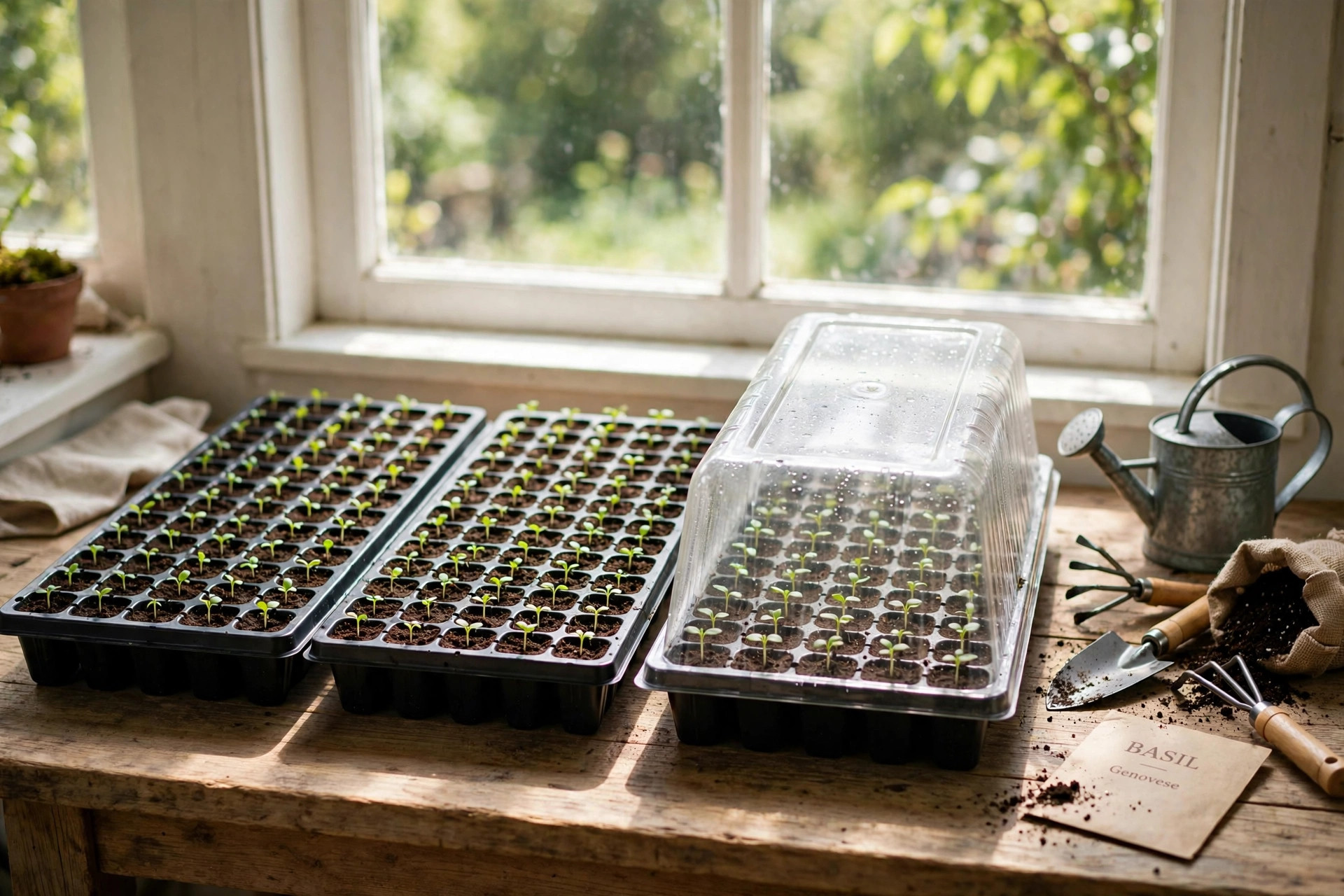

If you are looking at seed starting trays for sale usa shops and garden centers now stock, you are in good company. Every spring, millions of American gardeners start their plants indoors. A good tray gives young seeds a safe home. It holds the soil in place. It keeps water where roots need it. And it lets you move baby plants outside when the weather warms up. This guide will help you pick the right trays with confidence.
Why Seed Starting Trays Matter
Seeds are small, but they are not weak. They need warmth, water, and light to wake up. A tray gives them all three in one neat package. Each cell holds just the right amount of soil mix. That means roots grow straight and strong instead of tangling with each other.
Starting indoors also buys you time. Many vegetables need a long, warm season. Tomatoes, peppers, and eggplants do poorly if you sow them straight in cold spring soil. A tray on a sunny windowsill lets them grow for six to eight weeks before they ever see the garden. When you set them out, they are already sturdy plants, not fragile seeds.
Trays save money too. A packet of seeds costs a few dollars and can fill a whole flat. Nursery plants cost much more. If you grow heirloom vegetable seeds from seed, the savings are even greater. One tray of tomatoes started from seed can feed a family all summer.
What to Look for When You Choose a Tray: Seed Starting Trays for Sale Usa
Not all trays are alike. Keep these points in mind when you shop.
Cell size. Small cells suit tiny seeds like lettuce and herbs. Large cells suit big plants like tomatoes and peppers. A tray with 72 small cells works well for most home gardens. A tray with 36 or 48 larger cells gives roots more room.
Drainage holes. Every cell must let extra water drain out. Wet feet rot young roots fast. If a tray has no holes, skip it.
Sturdiness. Cheap, thin trays crack after one season. Thicker plastic lasts for years. You pay a little more, but you buy once. The National Institute of Food and Agriculture funds research on plant production methods across the country, and its extension programs at nifa.usda.gov offer sound advice on seed starting basics.
Humidity dome. A clear plastic lid holds warmth and moisture over the tray. Seeds sprout faster under a dome. Look for a tray set that includes one, or buy the dome to match the tray size.
Bottom tray. A solid tray with no holes goes under the cell tray. It catches water. It also lets you water from below, which is gentler on seeds. A standard 1020 flat, about ten by twenty inches, is the most common size in the United States.
Buying online. When you shop for seed starting trays for sale usa sellers ship by mail, check the package count and the cell size in the listing. Photos can be misleading. Read the dimensions. Trays sold as full-size usually fit a 1020 flat. Check the return rules before you order a large pack, in case the plastic arrives warped.
Types of Seed Starting Trays
When you search for seed starting trays for sale usa garden supply stores carry, you will meet several kinds.
Standard Plastic Cell Trays
These are the classic choice. Black plastic cells sit inside a flat. They come in many sizes: 32, 48, 72, 98, or even 128 cells. They last for years if you wash them between seasons. Many growers at gardeningknowhow.com point new gardeners toward these sturdy trays first.
Biodegradable Trays
Some trays are made from peat, coconut fiber, or pressed paper. You plant the whole cell in the ground. Roots grow right through the walls. There is no shock when you transplant. Peat pots for seedlings are a popular choice in this group, and you can find peat pots seedlings deals near me with a quick local search. Downside: these trays dry out faster and cannot be reused.
Soil Blockers
A soil blocker presses damp seed mix into firm cubes. There is no plastic at all. Roots air-prune at the cube edges, which builds a dense, healthy root ball. It takes practice, but many organic growers swear by it.
Self-Watering Trays
These trays have a water reservoir under the cells. Capillary mats pull water up as the soil dries. They are a good fit if you travel or tend to forget watering. White Flower Farm sells fine gardening gear and plants, and its guides at whiteflowerfarm.com discuss watering tools for indoor starts.
Trays with Grow Lights
Some kits pair trays with small LED light stands. A windowsill is fine for a few trays, but lights give even growth for larger setups. Seeds grown under weak light turn tall and leggy. Good light keeps them short and stocky.
Cost and Price
Seed starting trays are cheap gear. Here is what American shoppers usually pay.
– Basic 72-cell plastic tray with flat: 4 to 10 dollars. – Tray with humidity dome: 10 to 18 dollars. – Ten-pack of trays for a big garden: 25 to 40 dollars. – Biodegradable peat tray, 12 cells: 3 to 6 dollars. – Self-watering kit: 20 to 35 dollars. – Full kit with lights and heat mat: 40 to 80 dollars.
Watch for sales at the end of winter. Many stores cut prices on seed starting gear in March. Buying a multi-pack lowers the cost per tray a lot. A set of cheap seed starting trays for a vegetable garden can pay for itself with one tomato harvest.
How to Use Your Trays Well
Fill with seed starting mix, not garden soil. Garden soil is heavy and may carry disease. Seed starting mix is light and clean. It holds water but lets air reach the roots. Proven Winners offers culture tips for young plants at provenwinners.com, and their advice on light, airy mixes applies to seed trays as well.
Sow at the right depth. A rule of thumb: cover seeds with soil twice as deep as the seed is wide. Tiny seeds like lettuce go on the surface and get pressed in gently.
Label everything. Seedlings all look alike. Write the plant name and date on a plant marker or on the tray edge. You will thank yourself later.
Give warmth first, light second. Most seeds sprout best at 65 to 75 degrees. A heat mat under the tray speeds things up. Once seeds pop up, remove the dome and move them into bright light. Fourteen to sixteen hours of light a day works well.
Water from below. Pour water into the bottom flat. Let the cells soak it up for twenty minutes. Then pour off the rest. This keeps the soil surface dry and cuts down on mold.
Thin ruthlessly. If two seeds sprout in one cell, snip the weaker one at the base. One strong plant beats two weak ones.
Feed lightly once true leaves appear. The first pair of leaves are seed leaves. The next set are true leaves. After true leaves show, mix liquid fertilizer at half strength and feed every two weeks. Full strength burns young roots. A weak feed keeps growth steady without stress.
Harden off before transplanting. For a week, set trays outside in shade for a few hours a day. Increase the time daily. This toughens the plants so the garden sun does not shock them.
Care and Upkeep of the Trays Themselves
Wash plastic trays between seasons. A rinse with warm water and a mild bleach mix, one part bleach to nine parts water, kills lingering germs. Dry them fully before you stack them. Stored dry in a garage or shed, good trays last five years or more.
Biodegradable trays go in the compost when they fall apart. Do not reuse them. Old peat cells can harbor mold that harms the next batch of seeds.
Check domes and flats for cracks each spring. A cracked flat leaks water onto the windowsill. Small cracks can be patched with tape, but deep ones mean it is time for a new flat.
Store flats flat on a level shelf. Warped trays do not sit right in the bottom flat and spill water. Tuck the domes inside the top flat so they do not get crushed. Keep everything dry and out of strong sun, since harsh light turns plastic brittle over time.
Safety
Seed starting is safe work, but a few habits keep it that way.
– Wear gloves when you mix large bags of starting mix. Dust from dry mix can irritate lungs. – Keep heat mats away from water puddles. Plug them into a grounded outlet. – Keep grow lights secure above the trays. Do not let cords dangle where children or pets can pull them. – Store fertilizer and seed packets out of reach of small children and pets. – Wash your hands after handling soil mix. The Old Farmer’s Almanac publishes planting calendars by zip code, and its safety notes on indoor seed work are worth a read.
Frequently Asked Questions
When should I start seeds indoors? Count back from your last frost date. Tomatoes need six to eight weeks indoors. Peppers need eight to ten. Cool crops like broccoli need four to six. Your local extension service can tell you the exact dates for your town.
Can I reuse plastic seed starting trays? Yes. Wash them well between uses. Good thick trays last for many seasons. Throw away any that are cracked or warped.
Do I need a heat mat? Not always. Warm-room crops like peppers and eggplants sprout much faster with one. Cool crops like lettuce sprout fine at room temperature. A heat mat is a nice upgrade, not a must.
What is damping off? Damping off is a fungus that kills young seedlings at the soil line. They fall over and die. Clean trays, fresh mix, and watering from below stop most cases. Good air flow helps too.
Should I buy a tray with a humidity dome? A dome helps seeds sprout faster by holding in warmth and moisture. Take it off once most seeds are up, or mold can grow. Domes are cheap and handy, but not required.
Can I start seeds in egg cartons or cups instead of trays? You can. Paper cups and egg cartons work for a few seeds. But trays are cleaner, stackable, and give every plant the same soil depth. For more than a dozen plants, trays are far easier to manage.
Where can I find seed starting trays for sale usa wide with good reviews? Garden centers, farm supply stores, and large home stores all stock them in late winter. Online seed houses like Monrovia carry nursery supplies, and review sites such as The Spruce compare popular tray kits each season.
A Short Final Word
A seed starting tray is a small tool with a big job. It turns a windowsill into a nursery. It turns a cheap seed packet into months of food and flowers. Pick a tray with good drainage and sturdy walls. Fill it with clean mix. Give your seeds warmth and light. Then watch them grow.
If you plan a full spring garden, pair your trays with good seed. Many gardeners order heirloom vegetable seeds where to buy usa listings point to, and start onion sets for planting indoors for an early harvest. With the right tray under them, those seeds will be ready for the garden long before the last frost is gone.
References
Burpee. (n.d.). Seeds, plants, and gardening supplies. https://www.burpee.com Gardening Know How. (n.d.). Gardening guides and plant care. https://www.gardeningknowhow.com Gurney’s Seed & Nursery Co. (n.d.). Seeds, plants, and garden supplies. https://www.gurneys.com Monrovia. (n.d.). Plants for home gardens. https://www.monrovia.com National Institute of Food and Agriculture. (n.d.). Agricultural research and extension. https://www.nifa.usda.gov Park Seed. (n.d.). Seeds, plants, and gardening supplies. https://www.parkseed.com Proven Winners. (n.d.). Plants and gardening inspiration. https://www.provenwinners.com The Old Farmer’s Almanac. (n.d.). Gardening calendars and advice. https://www.almanac.com The Spruce. (n.d.). Home and garden advice. https://www.thespruce.com White Flower Farm. (n.d.). Plants, bulbs, and garden supplies. https://www.whiteflowerfarm.com
Was this guide helpful?

About Emily Rodriguez
The My Garden US editorial team writes practical, in-depth home and garden guides for American homeowners — tested advice, no fluff.
You May Also Like

Lavender Seed Packets Florida Homes USA: A Plain Guide to Growing Lavender from Seed in the Sunshine State
February 11, 2026 0 views
How to Grow Raspberries: USA Berry Guide
October 6, 2026 14 views
Morning Glory Seeds for Texas Homes: A Complete Growing Guide
May 14, 2026 0 views