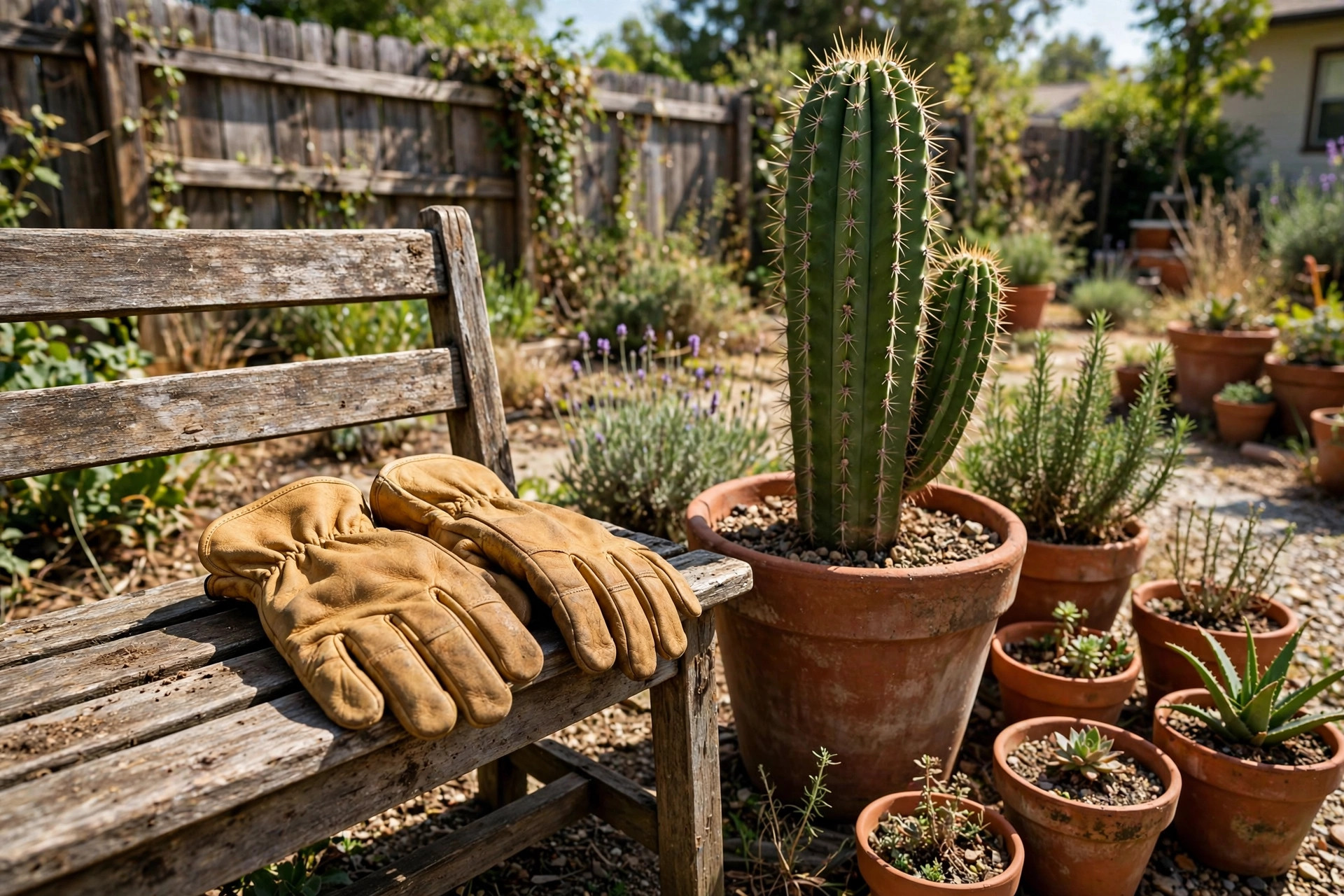

Cactus plants are beautiful, and they are also full of spines. Every grower must move them at some time. A pot must be changed. A small pup must be taken off the mother plant. A tall column must be tied to a stake. Bare hands are not fit for this work. The best garden gloves for cactus handling protect the skin without taking away all feeling in the fingers. This guide tells what to look for, what kinds are sold, what they cost, and how to keep a pair in good shape. It also gives plain safety advice for work around spines.
Why Cactus Handling Calls for the Right Gloves
Cactus spines are not like rose thorns. A rose thorn is stiff and easy to see. Many cactus spines are thin, small, and hard to spot. Some are barbed and catch in the skin. Others are tiny glochids, fine as dust, that stick in the fingers by the hundred. Ordinary cloth gloves do not stop them. A spine goes straight through thin cotton.
A good glove does two jobs at once. It stops the spines from reaching the skin. It also lets the hand grip a heavy pot without slipping. This second job is easy to forget. A dropped cactus breaks its own crown and can stab the feet of anyone nearby. Grip matters as much as thickness.
People who keep cactus as a hobby often learn this the hard way. They move a small plant with bare hands. They spend the evening pulling fine spines out with tweezers. A proper pair of gloves ends that trouble. For those who also grow thorny roses, a set of garden gloves for thorn protection covers similar needs, but cactus work asks for more care around the very fine spines.
How to Choose: What to Look For: Best Garden Gloves for Cactus Handling
Material
Leather is the classic choice. Goatskin is soft and bends with the hand. Makers such as Fiskars sell goatskin garden gloves in several weights. Pigskin is thicker and resists wet soil. Cowhide is the toughest and the least easy to move in. For cactus work, goatskin with a reinforced palm is a common pick. The leather stops spines, and the thin feel keeps control.
Synthetic fabrics have a place too. Many work gloves use a tough nylon shell with a rubber or foam coating on the palm. Buyers can compare coating types through Consumer Reports, which tests work gloves for grip and wear. These stop most spines. They cost less than leather. They wear out faster, but a new pair is cheap. For hobby work, a coated synthetic pair is often enough.
Avoid loose knit or thin jersey. They feel kind at first, but a cactus spine pushes through them with ease.
Fit
Fit matters more than most buyers think. A glove that is too big slips on the hand. It folds and lets spines find the loose spots. A glove that is too small pulls the seams and tires the hand. The right size lets the fingertips reach the ends without pressure. The palm should sit flat, with no folds at the knuckles.
Sizes are marked like work boots, from small to extra large. Hands are not all alike. It is worth trying a size up or down before settling on a pair.
Cuff and Closure
A cactus pricks the wrist as well as the hand. Long gauntlet cuffs cover the wrist and lower arm. This is useful when reaching into a dense bed of barrel cactus. A short cuff is fine for moving pots on a bench.
A snug wrist closure keeps soil and small spines out of the glove. Elastic cuffs are simple. Strap cuffs close tighter and keep the glove on during heavy lifts. Open cuffs let debris fall in, which is worth avoiding.
Types of Gloves for Cactus Work
Leather Work Gloves
These are the old standby. They come in goatskin, pigskin, and cowhide. The best garden gloves for cactus handling in this class have double palms. The double layer stops the long spines of columnar cactus. Some brands, including Corona Tools, add padding on the knuckles. These gloves last for years with care. They cost more at the start but wear well.
Coated Synthetic Gloves
These are the gloves most gardeners buy in packs. The back is breathable fabric. The palm and fingers carry a layer of rubber, latex, or foam. They grip pots well, even when damp. They stop all but the finest glochids. For light work, such as moving small nursery pots, they are a fine choice. They are easy to wash and quick to dry.
Gauntlet Gloves
Gauntlet gloves run long past the wrist. Some reach the elbow. They are often made for welding, and welding gloves sold at stores such as The Home Depot and Lowe’s have found a second life among cactus growers. The thick leather stops long spines. The long cuff keeps the forearm clear. They are hot in summer, and they give less finger control. For moving a large, armed plant, they are the safest pick.
Tongs and Kitchen Tools
Gloves are not the only answer. Many growers move cactus with tongs made for the purpose. Flat barbecue tongs work for small plants. Special cactus tongs have soft tips and a long reach. Folded newspaper or a strip of old carpet also works. The plant sits in the folded paper, and the hands stay far from the spines. Gloves and tongs together make a safe pair.
For heavy bench work, a pruning saw for thick branches handles the woody old stems that gloves alone cannot manage.
Cost and Price: What You Pay
Prices for the best garden gloves for cactus handling run from a few dollars to more than fifty. The range is wide because the jobs are wide.
A pack of coated synthetic gloves often costs under ten dollars at Gardener’s Supply Company or a local garden center. These are fine for light, short jobs. They wear through in a season of hard use.
A single pair of quality leather garden gloves runs from about fifteen to thirty dollars. Goatskin sits in the middle of this range. These gloves last one to three years for a hobby grower.
Long gauntlet gloves, sold for welding or for heavy garden work, run from twenty to fifty dollars. The thick leather and long cuff explain the price. One good pair can last many years.
The cheapest gloves are false economy for cactus work. A thin pair that lets spines through costs more in pain than a better pair costs in cash. Buy the pair that fits the job. Replace cheap packs often if you use them for rough work.
Care and Upkeep of Your Gloves
Gloves last longer when they are kept dry and clean. Leather stiffens when it soaks and dries without care. After work in wet soil, let leather gloves dry in the air, away from heat. A radiator or a hot stove ruins them. When they are dry, a little leather oil or saddle soap keeps them soft.
Synthetic gloves are easier. Wash them with soap and water. Hang them to dry, as the care guides on The Spruce also suggest. Do not put them in a hot dryer, or the coating may crack.
Pick spines out of the gloves before storing them. A spine left in a glove finds its way into the hand on the next use. Run a strip of tape over the glove surface to catch the fine ones. A lint roller works well for glochids.
Store gloves where they can breathe. A sealed plastic bag traps damp and makes leather smell. A shelf in the shed or a hook by the potting bench is fine. Keep a spare pair, since gloves fail at the worst moment, often in the middle of a move.
Worn gloves show their age in plain ways. The palm thins. Seams split at the fingers. The coating flakes off the synthetic shell. When the palm is thin, the glove no longer stops spines. Retire it to rough jobs, such as pulling weeds, and buy a fresh pair for cactus work.
A second pair in reserve is good sense. If one pair is drying after a wash, the spare keeps the work moving. Some growers keep one pair for soil work and one for clean potting work. This keeps the clean pair free of fine spines. Mark the pairs so they do not get mixed. A dab of paint on the cuff of one pair is enough. Small habits like this save time and pain.
Safety Tips for Working with Cactus
Good gloves are the start, not the whole answer. Work slowly. Plan the move before touching the plant. Know where the plant will go before lifting it.
Lift from the pot, not the plant. Most moves can be done by tilting the pot and sliding the plant out on a folded strip of newspaper. The hands never touch the body at all.
Wear eye protection when working over a large plant. A fallen arm or a broken crown can flick spines upward. Simple safety glasses cost little.
Keep children and pets clear of the work area. A tipped cactus is a hazard on the ground. Clean the area after the job. Pick up fallen pads and spines. A pad left on a path finds a bare foot at dusk.
If a spine goes in, remove it with care. Pull straight out with clean tweezers. Wash the spot with soap and water. Fine glochids come out best with tape pressed on the skin and lifted. Watch for redness over the next day. Deep spines or signs of infection deserve a visit to the doctor.
Work low to the bench when possible. If the work is long, kneel on a pad or a garden kneeler with handles to take the strain off the knees. Tired hands make mistakes, and mistakes find spines.
Frequently Asked Questions
Will ordinary gardening gloves stop cactus spines?
Most will not. Thin cotton and loose knit gloves let spines through. The best garden gloves for cactus handling use leather or a coated synthetic palm. These stop nearly all spines except the very finest glochids on the most delicate plants.
Can I use welding gloves for cactus work?
Yes. Welding gloves are thick, long, and cheap for their toughness. They stop long spines well. They give less finger control than a fitted garden glove. They are best for moving large, heavily spined plants.
How do I remove tiny glochids from my skin?
Press a strip of sticky tape on the spot and lift it off. Repeat with fresh tape. A lint roller does the same job over a wide area. Then wash with soap and water. Do not rub hard, or the fine spines drive deeper.
How often should I replace my cactus gloves?
A hobby grower can get one to three years from leather gloves. Coated synthetic gloves wear out in one season of hard use. Replace any pair with a thin palm or split seams. A worn glove is no longer safe for cactus work.
What is the cheapest safe option?
A pair of long leather work gloves from a hardware store is often the cheapest safe pick. They cost less than garden-branded gloves and work as well. Guides on Bob Vila give plain advice on work glove choices. For very light work, folded newspaper with cheap coated gloves behind it is enough.
Do I need gloves for spineless cactus?
Even so-called spineless types have areoles that catch the skin. Some bear fine glochids. Gloves make the work cleaner and safer. They also grip the pots better, which prevents drops.
A Short Final Word
Cactus keeping should be a pleasure, not a pain. The best garden gloves for cactus handling take the sting out of the work. Choose leather or a coated palm, fit them well, and mind the wrist. Pair them with tongs and folded newspaper for the tricky moves. Keep them clean and dry, and they will serve for years. The plants are worth the care. With the right gloves, the hands are safe too.
References
Bob Vila. (n.d.). Home improvement advice. https://www.bobvila.com Consumer Reports. (n.d.). Product reviews and ratings. https://www.consumerreports.org Corona Tools. (n.d.). Garden and landscape tools. https://www.corona-tools.com Fiskars. (n.d.). Garden and cutting tools. https://www.fiskars.com Gardener’s Supply Company. (n.d.). Gardening tools and supplies. https://www.gardeners.com Lowe’s. (n.d.). Home improvement products. https://www.lowes.com The Home Depot. (n.d.). Home improvement products. https://www.homedepot.com The Spruce. (n.d.). Home and garden advice. https://www.thespruce.com
Was this guide helpful?

About Jennifer Lee
The My Garden US editorial team writes practical, in-depth home and garden guides for American homeowners — tested advice, no fluff.
You May Also Like

How to Build a Keyhole Garden Bed in Your Own Yard
July 16, 2026 0 views
Best Potting Soil for Container Gardens: What to Know Before You Buy
February 1, 2026 0 views
How Much Soil Do You Need? A Raised Bed Soil Calculator Guide
March 11, 2026 0 views