---
Table of Contents
Table of Contents
- Bathe a Large Dog Outdoors: Why Outdoors Beats the Bathroom
- Gathering Your Supplies First
- Step 1: Brush Before Water Touches the Dog
- Step 2: Set Up the Bathing Area
- Step 3: Check the Water Temperature
- Step 4: Wet the Dog From Neck to Tail
- Step 5: Shampoo and Lather
- Step 6: Rinse, Then Rinse Again
- Step 7: Dry Thoroughly
- Handling the Reluctant Bather
- How Often Should You Bathe?
- After the Bath: The Fun Part
- The Bottom Line
- References
Bathing a large dog indoors is a contact sport. The dog does not fit in the tub. Water goes everywhere. Your back gives out. Your bathroom looks like a swamp. There is a better way: take the whole operation outside, where the mess does not matter and the dog has room to move. This article explains bathe a large dog outdoors in simple terms.
Learning how to bathe a large dog outdoors easily comes down to setup, water temperature, and a calm routine. Do it right and the whole job takes twenty minutes, with no mop-up afterward.
Bathe a Large Dog Outdoors: Why Outdoors Beats the Bathroom
When it comes to bathe a large dog outdoors, getting the details right makes all the difference.
Many homeowners find that bathe a large dog outdoors is easier than they expected once they know the basics.
Big dogs and small tubs do not mix. Lifting an 80-pound dog into a tub risks your back and scares the dog. Even walk-in showers get crowded when a large dog starts shaking.
Outside, you have space. The dog can stand naturally. Water drains into the grass. The inevitable shake-off soaks the lawn instead of your walls. And many dogs are calmer outdoors, where they do not feel trapped in a small wet room.
The one requirement is weather. Bathe outdoors on a warm, calm day. Cold plus wet is a fast track to shivering and misery, and the AKC specifically warns against bathing dogs outdoors in cool or cold temperatures because of dangerous drops in body temperature (AKC home grooming guide). If it is chilly, windy, or the dog will not dry quickly, wait for a better day or bathe indoors.
Gathering Your Supplies First
Many homeowners find that bathe a large dog outdoors is easier than they expected once they know the basics.
The key to bathe a large dog outdoors is choosing the right approach for your space and budget.
The golden rule of dog bathing: set up everything before the dog gets wet. A wet, soapy dog left standing while you hunt for towels will not wait patiently.
You will need:
- Dog shampoo (never human shampoo)
- A garden hose with an adjustable spray nozzle, or a large pitcher
- Two or three big absorbent towels
- A non-slip mat, rubber mat, or old bath mat
- A leash, and something sturdy to attach it to
- A brush or comb for the dog's coat type
- Cotton balls (optional, for the ears)
- Treats, lots of them
A raised dog bath or a large washtub is a nice upgrade if you bathe often, but it is not required. A flat, grassy spot works fine for most big dogs. One outdoor bathing guide recommends a spot that will not turn to mud when wet, and notes that a washtub with a few inches of water works well for dogs that tolerate standing in water (Dogica dog bath guide).
Step 1: Brush Before Water Touches the Dog
The key to bathe a large dog outdoors is choosing the right approach for your space and budget.
With a little planning, bathe a large dog outdoors can fit even a busy schedule.
This step is easy to skip and important not to. Brush the dry coat thoroughly, working out tangles and mats. Water tightens mats into felted clumps that are miserable to remove later. Brushing first also pulls out loose undercoat, which means less hair everywhere afterward.
For double-coated breeds, an undercoat rake before the bath makes a dramatic difference. For long coats, work through tangles gently. The few minutes of brushing pay for themselves in a faster, easier bath.
Step 2: Set Up the Bathing Area
With a little planning, bathe a large dog outdoors can fit even a busy schedule.
Before you start, it helps to understand how bathe a large dog outdoors works in real homes.
Pick a spot with good drainage and no mud risk. A patch of lawn, a patio with a drain, or a gravel area all work. Avoid spots near gardens you care about, since shampoo runoff is not great for plants.
Lay down the non-slip mat. Wet grass and wet paws are slippery, and a big dog that loses its footing panics. Secure the leash to something solid: a fence post, a tree, or a heavy piece of furniture. Keep the leash short enough that the dog stays on the mat but long enough that they can stand comfortably.
Set your supplies within arm's reach. Shampoo open and ready. Towels stacked nearby. Treats in your pocket. Now bring the dog out.
Step 3: Check the Water Temperature
Before you start, it helps to understand how bathe a large dog outdoors works in real homes.
A good plan for bathe a large dog outdoors saves time, money, and frustration.
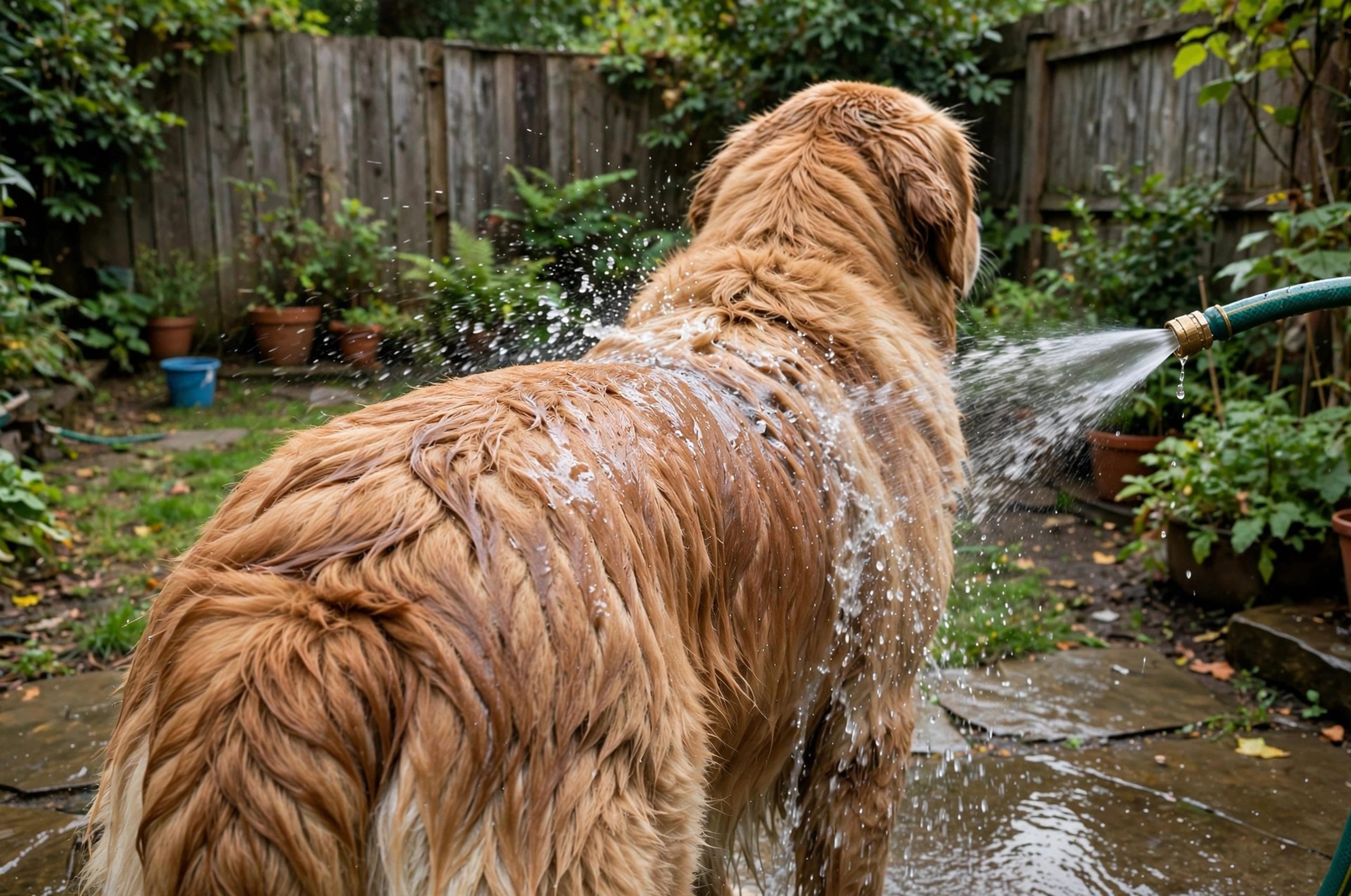
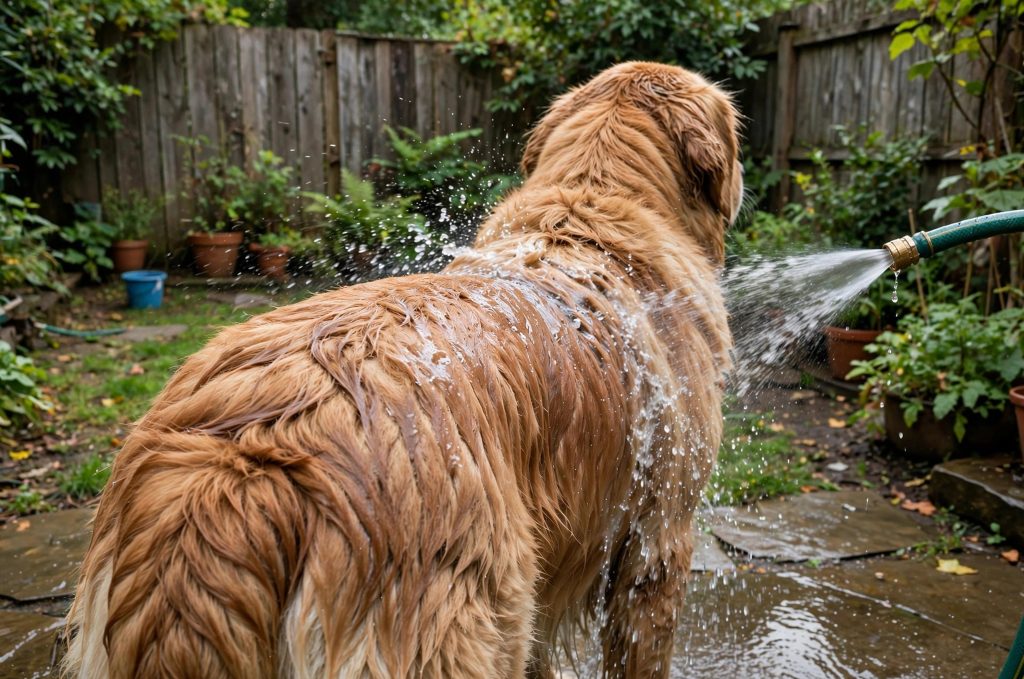
This is the step people get wrong. A garden hose sitting in the sun holds surprisingly hot water in its first burst, hot enough to burn skin. Always run the hose for a good while until the water coming out is consistently lukewarm, and test it on the inside of your wrist the way you would test a baby's bath.
Veterinary bathing guides stress lukewarm water as the target. Too hot risks burns and too cold causes shivering and stress, so test on your own skin before the first spray hits the dog (Vetnique how to bathe your dog guide).
Use a gentle spray setting, not a jet. High pressure hurts and frightens dogs. A soft shower-like spray gets the coat wet without drama.
Step 4: Wet the Dog From Neck to Tail
A good plan for bathe a large dog outdoors saves time, money, and frustration.
For most people, bathe a large dog outdoors comes down to a few smart choices.
Start at the neck and work back toward the tail, wetting the whole body before any shampoo goes on. Save the head for last. Most dogs hate water on their faces, and once the head is wet the shaking starts, which slows everything down.
Get the coat truly soaked, down to the skin. On thick-coated dogs this takes longer than you expect. Part the fur with your fingers and make sure water is reaching the undercoat. Shampoo cannot clean what water has not reached.
Keep water out of the ears as much as you can. A cotton ball placed gently in each ear helps. And avoid spraying directly into the eyes.
Step 5: Shampoo and Lather
For most people, bathe a large dog outdoors comes down to a few smart choices.
If you are new to bathe a large dog outdoors, start with the simplest option and build from there.
Use a shampoo made for dogs. Human shampoo has the wrong pH for dog skin and strips the coat's natural oils. If your vet has recommended a medicated shampoo, follow their instructions on contact time. Otherwise, a gentle dog shampoo does the job.
Work in sections. Start at the neck, lather down the back, then do each side, the belly, the legs, and the tail. Use your fingertips, not your nails, in gentle circles. Pay extra attention to the dirty zones: paws, belly, and rear end.
A VCA bathing guide notes the right order of operations: wet the coat fully first, work the shampoo down to the skin, give it time to work, and then rinse completely, since leftover residue irritates skin (VCA how to bathe dogs).
For the face, skip the shampoo. Use a damp washcloth to wipe around the eyes, muzzle, and ears. It is gentler and avoids the soap-in-eyes panic that ruins many baths.
Step 6: Rinse, Then Rinse Again
If you are new to bathe a large dog outdoors, start with the simplest option and build from there.
When it comes to bathe a large dog outdoors, getting the details right makes all the difference.
This is where most home baths fail. Shampoo left in the coat causes itching, flaking, and a dull coat. Rinse until the water runs completely clear, then rinse some more.
Work systematically: neck to tail, top to bottom, one section at a time. Push your fingers through the coat as you rinse so water reaches the skin. Check the hidden spots: armpits, groin, under the collar area, and between the toes. These are where residue hides.
If you think the dog is fully rinsed, do one more full pass. Thick coats hide soap remarkably well, and the extra two minutes prevent a week of scratching.
Step 7: Dry Thoroughly
When it comes to bathe a large dog outdoors, getting the details right makes all the difference.
Let the dog do the first part. Step back and let them shake. It is their favorite part of the whole process.
Then towel dry. Use a blotting and squeezing motion rather than vigorous rubbing, which tangles long coats. Work from head to tail. Pay special attention to the ears, paws, and belly, where moisture lingers.
On a warm day, the dog can finish drying in the sun while you clean up. Keep them in the yard until mostly dry, since a damp dog will find the nearest dirt patch to roll in. That is not ingratitude. It is just dog logic.
A blow dryer on a low, cool setting speeds things up for thick coats, but introduce it gradually. The noise scares many dogs. Never use high heat, which can burn skin before you realize it.
Handling the Reluctant Bather
Many homeowners find that bathe a large dog outdoors is easier than they expected once they know the basics.
Some big dogs treat bath time like a trip to the vet. If yours is one of them, a few tricks help.
Treats throughout. Reward calm standing at every stage. The bath becomes a treat dispenser that happens to involve water.
Keep it short. A fast, efficient bath beats a long, thorough one for a scared dog. You can always do a touch-up wash later.
Stay calm yourself. Dogs read your tension. If you are frustrated, the dog gets anxious. Talk in a relaxed voice, move smoothly, and take a break if either of you gets stressed.
Practice dry runs. On non-bath days, bring the dog to the bathing spot, treat them, and leave. The spot stops predicting doom.
Consider a helper. One person handles the dog with treats and calm words while the other handles water and shampoo. Two calm people beat one frazzled person every time.
A guide to bathing dogs that hate baths suggests tethering the dog securely in an enclosed area and keeping everything within reach so the routine stays smooth and predictable (PetShun bathing guide).
How Often Should You Bathe?
The key to bathe a large dog outdoors is choosing the right approach for your space and budget.
Most dogs need a bath every month or two, not every week. Over-bathing strips natural oils and dries the skin. But lifestyle matters more than the calendar.
Bathe when the dog is dirty or smelly, not on a schedule. Dogs that swim, hike, or roll in interesting smells need more baths. Indoor couch potatoes need fewer. Dogs with skin conditions should follow their vet's plan, which may mean more frequent medicated baths.
Between baths, maintenance keeps the dog fresh: regular brushing, paw wipes after walks, and a damp cloth for spot cleaning. A UK pet-care guide lays out a sensible routine of brushing, lukewarm water, and thorough rinsing that applies just as well outdoors (Vital Pet Club dog washing guide).
A large-dog bathing guide adds practical outdoor specifics, from choosing a secure area to letting the dog shake freely afterward (tips for bathing large dogs). And a step-by-step outdoor bath walkthrough covers the full routine from setup to drying (how to give a large dog a bath outside).
After the Bath: The Fun Part
With a little planning, bathe a large dog outdoors can fit even a busy schedule.
A clean dog in a yard is a happy dog, but channel the post-bath energy wisely. The zoomies are coming. Let the dog run in a clean, dry part of the yard, not the muddy corner. A backyard dog pool gives them a clean place to splash after the bath without undoing your work.
This is also a good moment for the rest of the grooming routine. Nails are softer after a bath and easier to trim. Ears are easy to check while the dog is calm and standing still. And a pet vacuum for dog hair handles the fur storm that brushing and bathing shake loose around the house.
For muddy-paw maintenance between full baths, a quick paw rinse at the door plus a hardwood floor cleaner made for pet homes keeps the floors clean without another full wash.
The Bottom Line
Bathing a large dog outdoors is easier on your back, your bathroom, and often the dog. Pick a warm day, set up everything in advance, check the hose water temperature, work neck to tail, rinse twice, and dry well. With treats and a calm routine, even reluctant bathers learn that the outdoor wash is just another part of a good day. That is all it takes to handle bathe a large dog outdoors with confidence.
References
American Kennel Club. (n.d.). How to groom a muddy, stinky dog. https://www.akc.org/expert-advice/health/grooming-muddy-stinky-dog/
BikeHike. (n.d.). How to give a large dog a bath outside. https://bikehike.org/how-to-give-a-large-dog-a-bath-outside/
Dogica. (n.d.). Dog bath guide: Tips, techniques, tricks. http://www.dogica.com/dogbath.html
PetShun. (n.d.). Bathing your dog: Strategies for when Fido can't stand. https://petshun.com/article/how-to-bathe-a-dog-that-cant-stand
Pets and Fins. (n.d.). 10 special tips to bathe large dogs. https://petsandfins.com/10-special-tips-to-bathe-large-dogs/
VCA Canada. (n.d.). How to bathe dogs with medicated shampoo. https://vcacanada.com/know-your-pet/how-to-bathe-dogs-with-medicated-shampoo
Vetnique. (n.d.). How to bathe your dog: A step-by-step guide. https://vetnique.com/blogs/vets-corner/how-to-bathe-your-dog
WikiHow Pet. (n.d.). How to give your large dog a bath. https://www.wikihow.pet/Give-Your-Large-Dog-a-Bath
Vital Pet Club. (n.d.). How often should you wash your dog? https://www.vitalpetclub.co.uk/how-often-should-you-wash-your-dog/
Was this guide helpful?

About My Garden US
The My Garden US editorial team writes practical, in-depth home and garden guides for American homeowners — tested advice, no fluff.
You May Also Like
Pet First Aid Kit for Dogs and Cats: What Every Home Should Keep Close
June 22, 2026 16 views
Cat Window Perch for Sunny Window Lounging
August 7, 2026 19 views
Pet Grooming Vacuum Kit for Shedding Dogs: A Plain Guide for Tired Owners
August 8, 2026 21 views