---
Table of Contents
Table of Contents
When the sun goes down, your dog turns invisible. A dark-coated dog on a dark street is nearly impossible for a driver to see until the headlights are right on top of them. The best reflective leash for night walks fixes that with one simple trick: it bounces light straight back at its source, turning your dog into a bright, moving outline. Here is what to know about reflective leash for night walks before you start.
This guide explains how reflective gear works, what to look for in a leash, when to add LED lights, and the night-walking habits that keep both of you safe.
Reflective Leash for Night Walks: Why Night Visibility Matters So Much
When it comes to reflective leash for night walks, getting the details right makes all the difference.
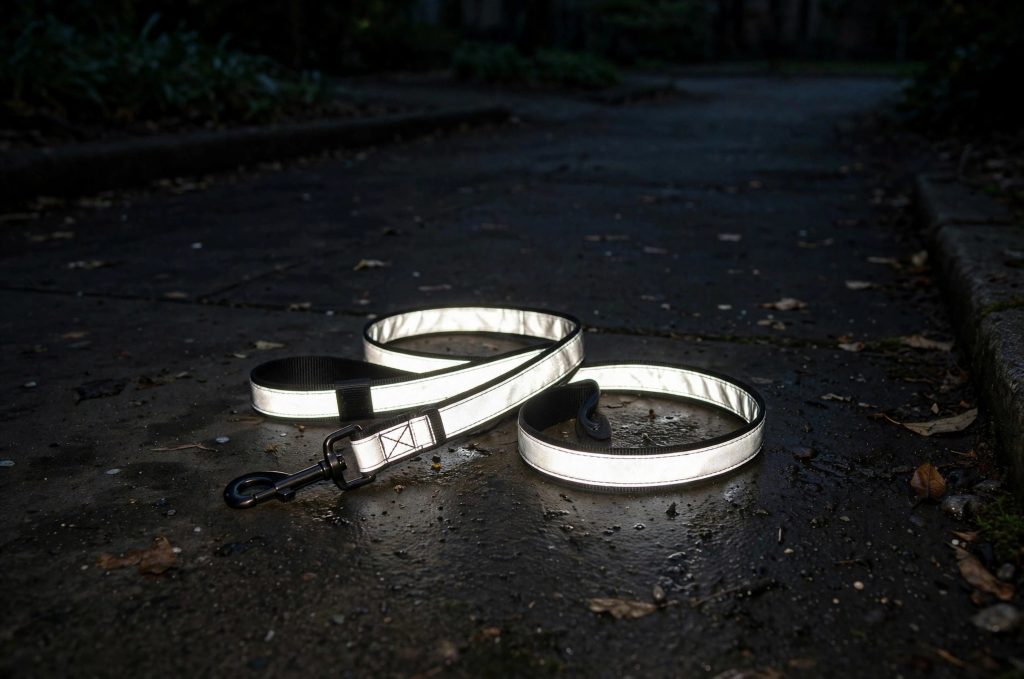

Many homeowners find that reflective leash for night walks is easier than they expected once they know the basics.
Most pedestrian accidents happen after dark. Drivers need time to see, react, and stop, and at night that time shrinks fast. A dog walking at knee height is below a driver's normal line of sight, which makes dogs even harder to spot than people.
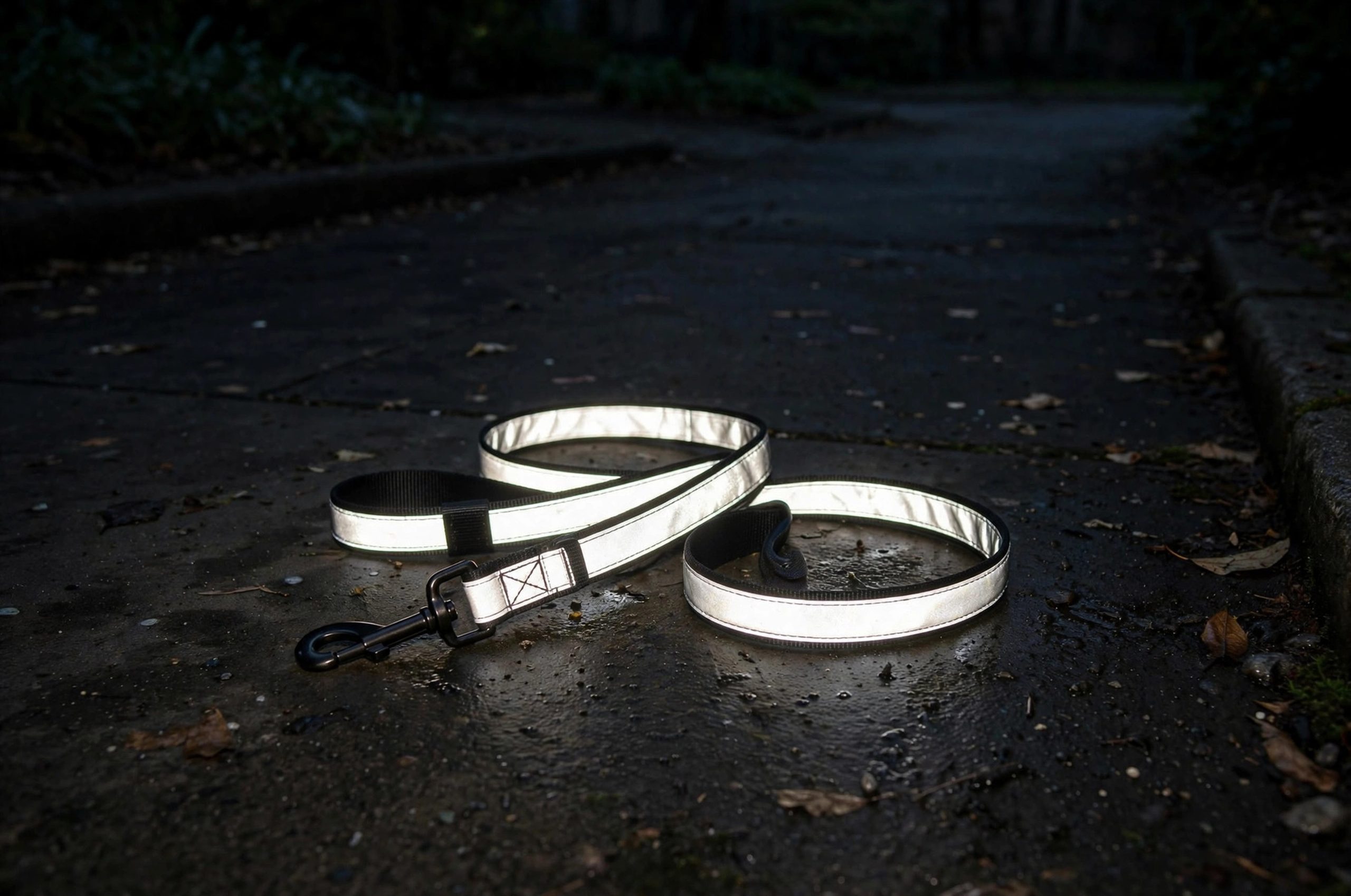
Reflective material works by returning light to its source. When headlights hit a reflective strip, the light bounces straight back toward the car. The driver sees a bright line where the leash is. It does not need batteries. It does not need charging. It just works, every time light hits it.
A pet-care guide to night walking puts it plainly: both you and your dog should wear reflective gear visible from all sides, and a reflective leash and collar are the starting point for every evening walk (Zoetis night walking safety tips).
But reflective gear has one limit: it needs a light source. On a pitch-black trail with no cars, no streetlights, and no houses, there is nothing to reflect. That is where LED gear comes in, which we will cover below.
Reflective vs. LED: Which Do You Need?
Many homeowners find that reflective leash for night walks is easier than they expected once they know the basics.
The key to reflective leash for night walks is choosing the right approach for your space and budget.
Reflective leashes shine when light hits them. They are best for neighborhood walks with streetlights and traffic. They are cheap, light, and maintenance-free. The downside is the one just mentioned: no incoming light, no reflection.
LED leashes and collar lights make their own light. They glow or flash on their own, so they work on dark trails and in parks with no lighting. The downside is batteries. They need charging or new cells, and they can fail mid-walk.
The smart answer is both. Reflective gear for the car-headlight scenario, LED for the dark-trail scenario. Many owners clip a small LED light to a reflective collar and walk with a reflective leash, covering every situation.
One detailed night-safety guide recommends exactly this layered approach, noting that reflective gear returns headlight beams to drivers while LED lights add visibility from angles where no headlights reach (night walk visibility guide).
What to Look for in a Reflective Leash
The key to reflective leash for night walks is choosing the right approach for your space and budget.
With a little planning, reflective leash for night walks can fit even a busy schedule.
Not all reflective leashes are equal. Here is what separates the good ones.
Reflective coverage. Look for reflective threading woven through the whole leash, not just a small logo patch. Full-length reflective stitching or trim gives drivers a long, unbroken line to see. Rope leashes with reflective flecks and webbing leashes with reflective stripes both work well.
Width and material. For night walks, a standard flat nylon or rope leash in the 3/4-inch to 1-inch range is ideal. It is easy to grip, strong enough for lunges, and holds reflective material well. Biothane and other waterproof materials are great for rainy climates since they wipe clean and do not hold smell.
Length. Six feet is the standard for a reason. It gives the dog room to sniff while keeping them close enough to control. Avoid retractable leashes at night. They are hard to manage in the dark, the thin cord is nearly invisible, and a sudden lunge can pay out yards of line before you react. Multiple night-walking guides specifically warn against retractables after dark (nighttime dog walking safety).
Hardware. A sturdy swivel clasp that will not freeze or jam matters more at night, when you are clipping and unclipping by feel. Aluminum or stainless clips resist rust from rain and snow.
Handle comfort. You will hold this leash every evening. A padded or rope handle that does not chafe makes the walk better. Some leashes add a traffic handle, a second loop near the clasp, for close control when passing people or crossing streets.
A review of the Ruffwear Slackline leash shows what good design looks like: adjustable length, a reflective strip running the full length, and hardware built for real-world use (Ruffwear Slackline leash review).
Types of Night-Walking Gear Worth Knowing
With a little planning, reflective leash for night walks can fit even a busy schedule.
Before you start, it helps to understand how reflective leash for night walks works in real homes.
The leash is the core, but a full visibility setup includes a few more pieces.
Reflective collars. A collar with reflective stitching marks the dog's neck and head position. On thick-coated dogs, fur can hide a collar, which is why many owners prefer a harness for visibility.
Reflective harnesses. A harness puts reflective material across the dog's chest, sides, and back, visible from every angle. For night walks, a well-fitted harness beats a collar for both visibility and control. Pair it with a no-pull harness design and you get visibility plus better manners in one piece of gear.
LED collar lights. Small clip-on lights like the Nite Ize SpotLit attach to a collar or harness and glow steadily or flash. They are light, cheap, and make the dog visible from hundreds of feet. A hands-on review found them reliable for nightly walks and potty breaks, while recommending a backup form of visibility for very active dogs that might knock a clip-on loose (Nite Ize dog visibility review).
LED leashes. Some leashes build the lights into the strap itself, usually as a glowing fiber-optic core. They are eye-catching and effective, but check battery life and weather sealing before buying.
Your own gear. Do not forget yourself. A reflective vest, reflective ankle bands, or simply light-colored clothing makes you visible too. You are the taller, more visible part of the team. Act like it.
Night-Walk Safety Habits
Before you start, it helps to understand how reflective leash for night walks works in real homes.
A good plan for reflective leash for night walks saves time, money, and frustration.
Gear helps, but habits keep you safe. Build these into every evening walk.
Stick to known routes. Night is not the time to explore. Walk familiar streets with sidewalks and streetlights. You know where the uneven pavement is, where the off-leash dogs live, and where the lighting is good.
Walk against traffic where there are no sidewalks, so you can see oncoming cars. Keep the dog on the side away from the road.
Carry a light. A headlamp or flashlight lets you see the path ahead and signals your presence to drivers. It also helps you spot what your dog is sniffing before they eat it.
Keep the leash short near roads. Six feet in the park, two feet at the curb. Reel the dog in before every crossing.
Stay alert. Put the phone away. Night walks demand more attention, not less: wildlife, off-leash dogs, cyclists without lights, and uneven ground all hide in the dark. A reactivity guide for night walks notes that gear buys you time to spot trouble early, but only if you are actually watching (nighttime leash reactivity guide).
ID and microchip. If the worst happens and your dog slips the leash in the dark, current ID tags and a registered microchip are what bring them home. A GPS collar adds a live-tracking backup for escape-prone dogs.
Tell someone your route. For late walks in quiet areas, let a housemate know where you are going and when you expect to be back.
Caring for Reflective Gear
A good plan for reflective leash for night walks saves time, money, and frustration.
Reflective material lasts longest with a little care. Rinse muddy leashes rather than machine-washing them on harsh cycles. Let them air dry out of direct sun. Check the reflective strips every month: if they look dull, cracked, or peeling, the leash is telling you it is time for a replacement.
LED lights need their batteries checked. Rechargeable models should be topped up weekly if you walk nightly. Keep a spare set of coin cells in the drawer for battery models. A dead LED light is just extra weight, so make checking it part of your routine.
Inspect the whole setup the way you would any safety gear. Frayed stitching, a sticky clasp, or a cracked light housing means replacement, not repair.
When to Upgrade the Whole Setup
For most people, reflective leash for night walks comes down to a few smart choices.
Start with a good reflective leash. That alone transforms your night visibility. Then add pieces as the seasons change:
- Shorter days mean more dark walks: add a reflective harness
- Dark trails or parks: add an LED collar light
- Rainy season: switch to a waterproof reflective leash
- A new dog or a puller: upgrade to a front-clip reflective harness
Each piece stacks with the others. The goal is a dog visible from every angle, in every lighting condition, with an owner to match.
The Bottom Line
If you are new to reflective leash for night walks, start with the simplest option and build from there.
The best reflective leash for night walks is a six-foot, full-length reflective leash with strong hardware and a comfortable handle, used with a no-retractable rule and paired with reflective gear on both dog and owner. Add an LED light for dark trails. Walk known routes, stay alert, and keep the dog close at curbs.
Night walks can be the best part of the day: quiet streets, cool air, and a dog trotting happily in a pool of headlight glow. The right gear makes them safe as well as peaceful. Once you try it, reflective leash for night walks gets easier each time.
References
When it comes to reflective leash for night walks, getting the details right makes all the difference.
Dogs Best Life. (n.d.). Nighttime leash reactivity: Help your dog stay calm after dark. https://dogsbestlife.com/dog-training/nighttime-leash-reactivity/
Engearment. (n.d.). Nite Ize dog visibility product review. http://engearment.com/gear-review/nite-ize-dog-visibility-product-review/
Feeds'n Needs. (n.d.). Safety tips for walking your dog at night. https://feedsnneeds.ca/advices/safety-tips-for-walking-your-dog-at-night/
Good Dog People. (n.d.). Nite Ize SpotLit Disc-O Select LED collar light. https://gooddogpeople.com/products/nite-ize-nitehowl-spotlit-led-collar-light-1
Hayam Khan. (n.d.). Dog safety gear: Visibility, protection and outdoor essentials. https://medium.com/@hayamkhan03450665263/dog-safety-gear-visibility-protection-outdoor-essentials-08459f289a3a
Hayam Khan. (n.d.). Yellow dog leash buyer's guide: Visibility, hardware and comfort. https://medium.com/@hayamkhan03450665263/yellow-dog-leash-buyers-guide-visibility-hardware-and-comfort-c13dcedff5f0
Long Haul Trekkers. (n.d.). Gear review: Ruffwear Slackline leash. https://longhaultrekkers.com/ruffwear-slackline-leash/
SafetyPupXD. (n.d.). Dog safety tips for nighttime walks. https://safetypupxd.com/blogs/safetypup/dog-safety-tips-for-nighttime-walks
Zoetis Petcare. (n.d.). Safety tips for walking your dog at night. https://www.zoetispetcare.com/blog/article/safety-tips-walking-dog-night
Many homeowners find that reflective leash for night walks is easier than they expected once they know the basics.
Was this guide helpful?

About My Garden US
The My Garden US editorial team writes practical, in-depth home and garden guides for American homeowners — tested advice, no fluff.
You May Also Like

Indoor Dog Potty for Apartment Living Training: A Simple Guide
May 29, 2026 16 views
Pet Hair Dryer for Dogs: A Guide to Low Noise Grooming at Home
July 12, 2026 18 views
Best Pet Odor Candle for Dog Smell Removal: A Practical Guide
June 13, 2026 15 views