---
Table of Contents
Table of Contents
A ceiling should disappear. When it is painted well, nobody looks at it. When it is streaked, everybody does. Roller marks, lap lines, and patchy spots show up the moment sunlight hits the ceiling, and they are hard to unsee. The good news is that streaks are not bad luck. They come from specific mistakes, and every one of them is preventable. Here is how to paint a ceiling without leaving streaks, from prep to the final pass. This article explains how to paint a ceiling without leaving streaks in simple terms.
Paint a Ceiling without Leaving Streaks: Why Ceilings Streak
When it comes to paint a ceiling without leaving streaks, getting the details right makes all the difference.
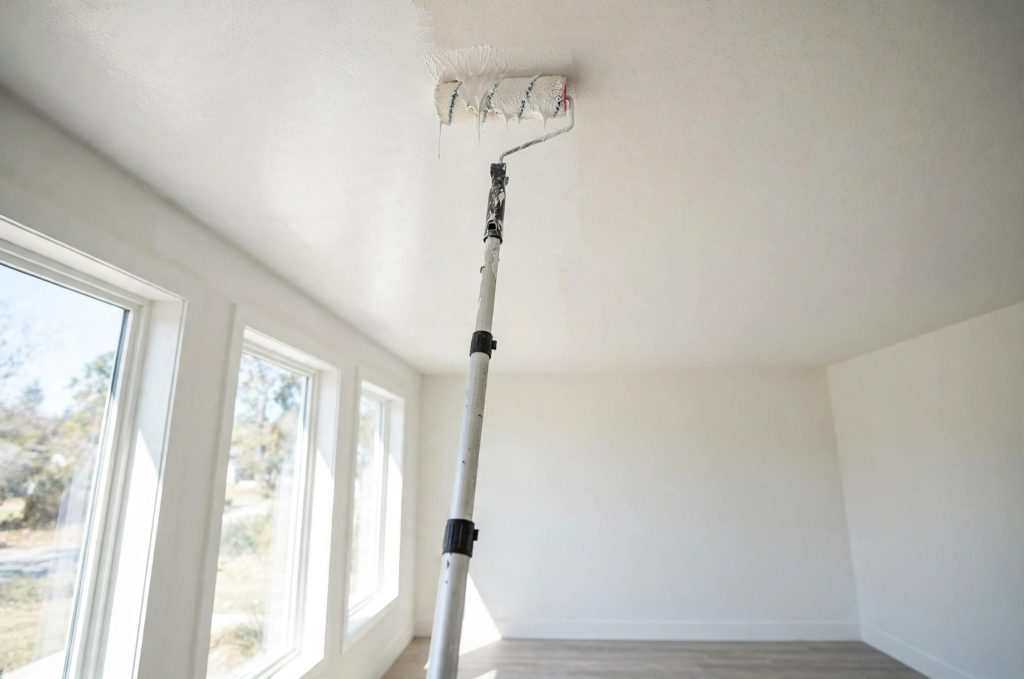

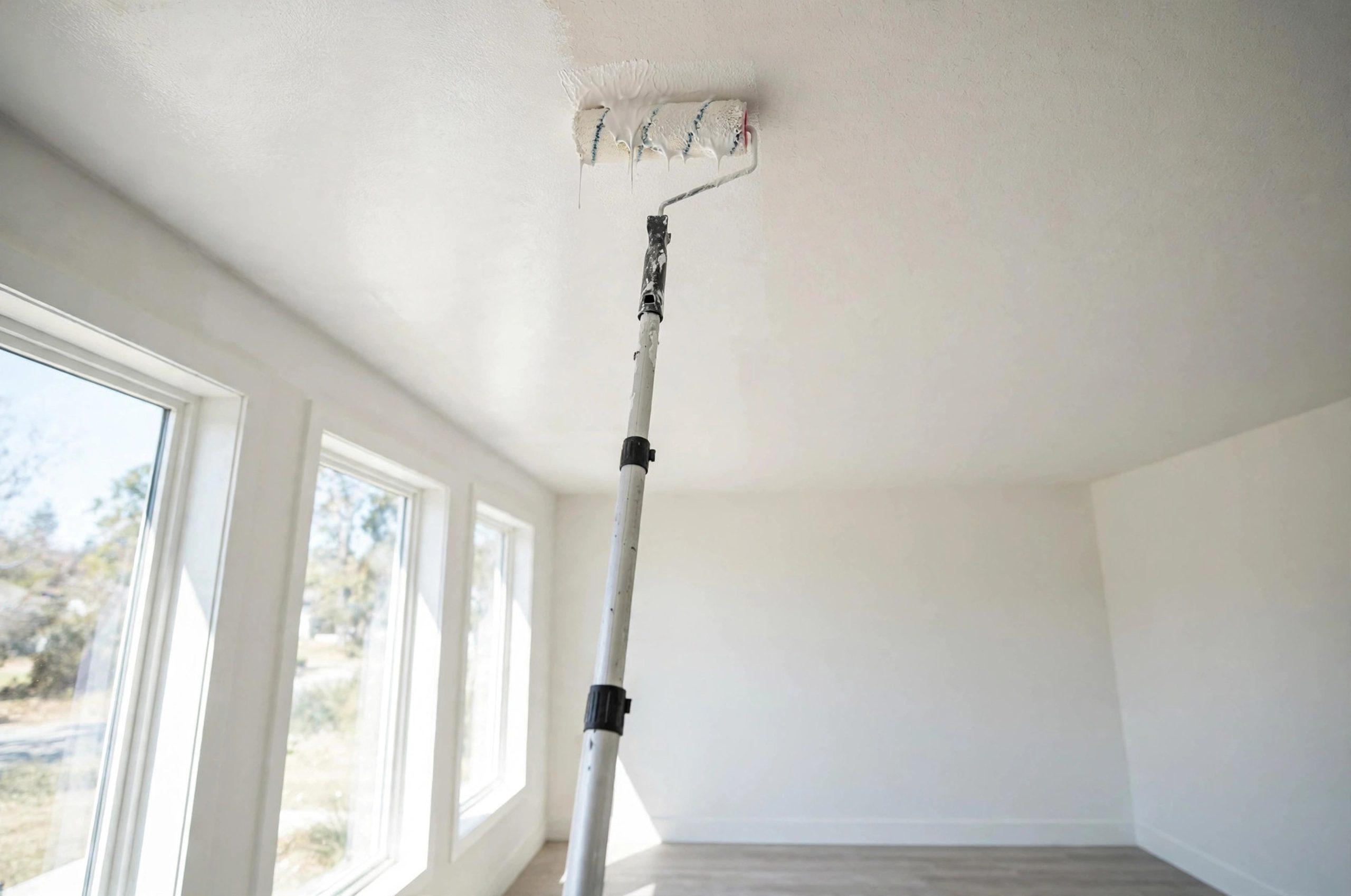
Many homeowners find that paint a ceiling without leaving streaks is easier than they expected once they know the basics.
Streaks have three main causes. The first is a dried edge. Paint that starts to dry before the next section overlaps it leaves a lap mark, a visible ridge where wet paint met dry. The second is uneven roller pressure or a roller running dry, which lays down thin and thick bands. The third is rolling against the light, so every tiny ridge casts a shadow.
Engineer Fix explains that streak-free ceiling painting comes down to keeping a wet edge, using quality materials, and not overloading the roller. Get those three right and the ceiling practically paints itself.
Pick the Right Paint
Many homeowners find that paint a ceiling without leaving streaks is easier than they expected once they know the basics.
The key to paint a ceiling without leaving streaks is choosing the right approach for your space and budget.
Use a paint made for ceilings, or at least a flat interior paint. Ceiling paint is formulated to spatter less and dry to a low-sheen finish that hides flaws. Flat finishes reflect the least light, which is exactly what you want overhead. Randall's guide to ceiling paint problems recommends flat or dedicated ceiling paint because the low sheen hides minor surface flaws far better than higher sheens.
Avoid eggshell or satin on ceilings unless you have a specific reason. Every roller mark shows more as sheen rises. If the ceiling has stains or water marks, seal them first with a stain-blocking primer. Absolute Painters advises fixing the moisture source, priming stains, and using two even coats for a uniform ceiling.
Choose the Right Roller
The key to paint a ceiling without leaving streaks is choosing the right approach for your space and budget.
With a little planning, paint a ceiling without leaving streaks can fit even a busy schedule.
The roller matters more than most people think. A cheap roller cover sheds fibers and lays paint unevenly. Buy a quality cover. For smooth ceilings, use a 3/8-inch nap. For lightly textured ceilings, step up to 1/2-inch. Heavy texture may need 3/4-inch so the paint reaches into the valleys. DIY Builders Hub recommends matching nap length to texture: 3/8-inch for smooth surfaces, 1/2-inch for heavier texture.
Use an extension pole. It keeps your pressure even across the whole ceiling and saves your neck and arms. Uneven pressure from a tired arm is a classic source of streaks. A pole lets the roller's weight do the work. Pair it with a sturdy roller frame that does not flex.
Prep the Room
With a little planning, paint a ceiling without leaving streaks can fit even a busy schedule.
Before you start, it helps to understand how paint a ceiling without leaving streaks works in real homes.
Move furniture out or to the center and cover it. Cover the floor with drop cloths. Remove vent covers and light fixture shades if you can. Tape the tops of the walls where they meet the ceiling, or plan to cut in carefully. Dust the ceiling with a dry mop or a soft broom. Paint over dust and cobwebs and they become permanent texture.
Lighting is part of prep. Set up a bright work light aimed across the ceiling at a low angle. Raking light shows thin spots and roller marks while the paint is still wet and fixable. Engineer Fix's roller guide suggests using a temporary work light aimed across the ceiling to spot uneven coverage while the paint is still workable.
Cut In First
Before you start, it helps to understand how paint a ceiling without leaving streaks works in real homes.
A good plan for paint a ceiling without leaving streaks saves time, money, and frustration.
Cut in the perimeter with an angled brush before you roll. Paint a 3-to-4-inch band where the ceiling meets the walls and around any fixtures. Work in sections: cut in one area, then roll it right away. If the cut-in band dries before you roll up to it, you get a visible border called picture framing. Engineer Fix warns that letting cut-in paint dry before rolling creates a permanent texture difference around the room's edge.
Keep the brush work thin. Thick cut-in bands show through even under rolled paint.
The Rolling Technique
A good plan for paint a ceiling without leaving streaks saves time, money, and frustration.
This is where streaks are won or lost. Load the roller evenly. Dip it, then roll off the excess on the tray's ramp. The cover should be full but not dripping.
Work in small sections, about 3 to 4 feet square. Roll a W or M pattern to spread the paint, then fill it in with straight, parallel strokes. Do not lift the roller mid-section. Keep the pressure light and steady. Randall's ceiling tips advise working in small sections, keeping a wet edge, and finishing each area before the paint starts to dry.
Overlap each new section into the previous one while the edge is still wet. That wet edge is everything. If the edge dries, rolling over it lifts the half-dry film and leaves a lap mark. On hot or dry days, work in smaller sections so you stay ahead of the drying.
Roll Toward the Light
For most people, paint a ceiling without leaving streaks comes down to a few smart choices.
Plan your final passes to run parallel to the main light source, usually the biggest window. Light shining across roller ridges makes them visible. Light running along them hides them. Engineer Fix's streak repair guide notes that rolling the final coat so strokes run with the light keeps minor ridges from casting shadows.
This means thinking about direction before you start. In a room with windows on one wall, your final smoothing strokes should run from the window wall toward the opposite wall, not side to side.
Keep a Wet Edge Across the Room
If you are new to paint a ceiling without leaving streaks, start with the simplest option and build from there.
The wet edge is the line between painted and unpainted ceiling. Your job is to never let it dry before you reach it with fresh paint. Move steadily across the room in rows. Do not stop for a phone call mid-ceiling. Do not go back over a section that has started to set. If you miss a thin spot, note it and catch it on the second coat.
In warm rooms, drying speeds up. Close heating vents or turn the heat down while you paint. Some painters mist the air lightly to slow drying. Do not thin the paint beyond what the can allows, though. Thinned paint covers poorly and can streak worse.
Plan your path before you open the can. Start in the corner farthest from the door and work toward the exit so you never have to reach over wet paint. Keep the paint tray close and the extension pole adjusted to a comfortable length. Stopping to hunt for tools mid-ceiling breaks your rhythm, and rhythm is what keeps the wet edge alive. A steady pace across the room beats speed in one spot and dawdling in the next.
Two Coats, Properly Timed
When it comes to paint a ceiling without leaving streaks, getting the details right makes all the difference.
One coat is rarely enough on a ceiling. Plan for two. Let the first coat dry fully according to the can, usually several hours. Then apply the second coat the same way: cut in, roll in sections, keep the wet edge, finish toward the light. Absolute Painters notes that a second coat is almost always necessary for full, even coverage.
For the second coat, some painters roll in the opposite direction from the first. The crosshatch pattern evens out any directional texture from the first pass. The Family Handyman's painting tips recommend applying the second coat in the opposite direction to sharply reduce lap marks.
Fixing Streaks After They Dry
Many homeowners find that paint a ceiling without leaving streaks is easier than they expected once they know the basics.
If the ceiling dried with streaks, do not try to touch up the marks. Spot fixes on ceilings almost always show. The fix is to re-roll the entire ceiling with the same paint and sheen. Sand any ridges lightly first, wipe off the dust, and roll the whole surface in proper sections with a wet edge.
If streaks keep appearing in the same places, the problem may be the surface, not your technique. Uneven drywall, unprimed patches, or old stains telegraph through paint. A coat of primer over the whole ceiling before repainting evens out absorption and gives the topcoat a uniform base.
Mistakes That Cause Streaks
Rolling too large a section at once. Letting the cut-in dry before rolling. Pressing too hard on the roller. Using a worn-out or cheap roller cover. Painting in a hot room with the heat blasting. Rolling against the window light. Going back over half-dry paint. Skipping the second coat.
Every one of these is a choice, not luck. Choose well and the ceiling stays invisible, which is exactly its job.
For more painting know-how around the house, see our guides to ceiling fan dusters for keeping that fresh ceiling clean, and nursery ceiling fans with lights if you are finishing a kid's room. That is all it takes to paint a ceiling without leaving streaks with confidence.
References
Absolute Painters. (n.d.). How to paint a ceiling. https://absolutepainters.com/how-to-paint-a-ceiling/
DIY Builders Hub. (n.d.). How to paint ceilings without streaks and achieve a smooth professional finish. https://diybuildershub.org/how-to-paint-ceilings-without-streaks-and-achieve-a-smooth-professional-finish/
Engineer Fix. (n.d.). How to paint a ceiling with a roller. https://engineerfix.com/how-to-paint-a-ceiling-with-a-roller/
Engineer Fix. (n.d.). How to fix paint lines and streaks on a ceiling. https://engineerfix.com/how-to-fix-paint-lines-and-streaks-on-a-ceiling/
Engineer Fix. (n.d.). How to paint a ceiling without streaks. https://engineerfix.com/how-to-paint-a-ceiling-without-streaks-2/
Family Handyman. (n.d.). 10 interior house painting tips: Painting techniques for the perfect paint job. https://www.familyhandyman.com/list/10-interior-house-painting-tips-painting-techniques-for-the-perfect-paint-job/?srsltid=AfmBOooKxXAHV9i23kKkAOE3dretl0rWOlBbFIia21Wwhxb_74y2DL5v
Randall's. (n.d.). How to fix common ceiling paint problems like streaks and spots. https://randalls.ca/blogs/faq/how-to-fix-common-ceiling-paint-problems-like-streaks-and-spots
Randall's. (n.d.). Tips for painting ceilings without mess or streaks. https://randalls.ca/blogs/faq/tips-for-painting-ceilings-without-mess-or-streaks
Was this guide helpful?

About My Garden US
The My Garden US editorial team writes practical, in-depth home and garden guides for American homeowners — tested advice, no fluff.
You May Also Like

Best Paint for Metal Fence USA: A Practical Guide for Homeowners
January 10, 2026 17 views
Chalk Paint for Furniture: Where to Buy USA
June 30, 2026 12 views
What House Painting Cost in Texas Reviews Can Tell You Before You Hire
May 7, 2026 17 views