A patio heater turns a chilly deck into an outdoor living room. On a small deck, though, the margin for error shrinks. The heater sits closer to railings, furniture, walls, and people. Every safety rule matters more when space is tight. Here is what to know about patio heater safety tips before you start.
Table of Contents
Table of Contents
This guide covers how to pick the right heater type for a small deck, where to put it, how much clearance it needs, and the fuel and electric safety habits that prevent fires and carbon monoxide trouble.
Patio Heater Safety Tips: Pick the Right Heater for a Small Deck
When it comes to patio heater safety tips, getting the details right makes all the difference.
Many homeowners find that patio heater safety tips is easier than they expected once they know the basics.
Not every heater suits a tight space. The three main types each have trade-offs.
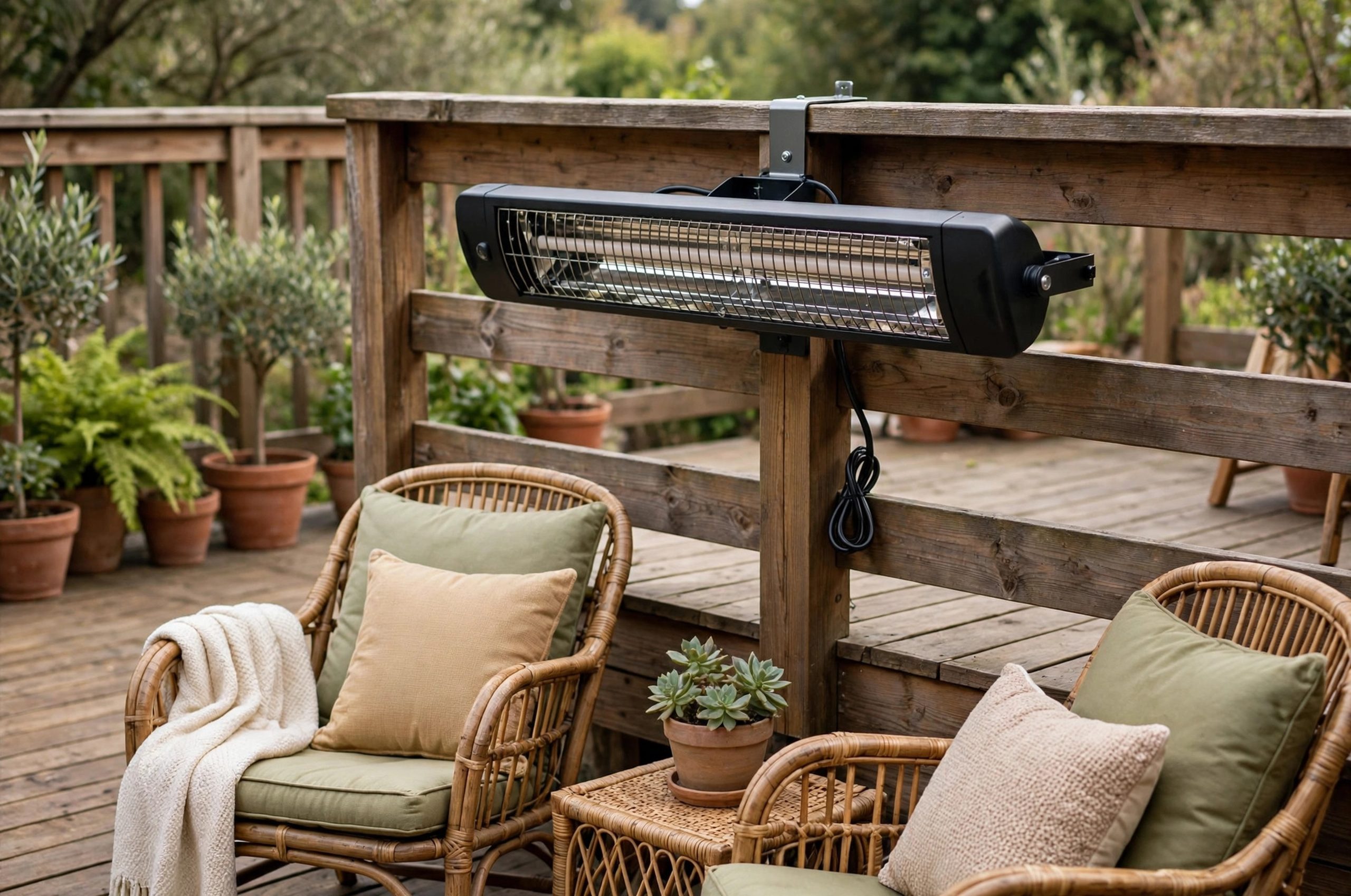
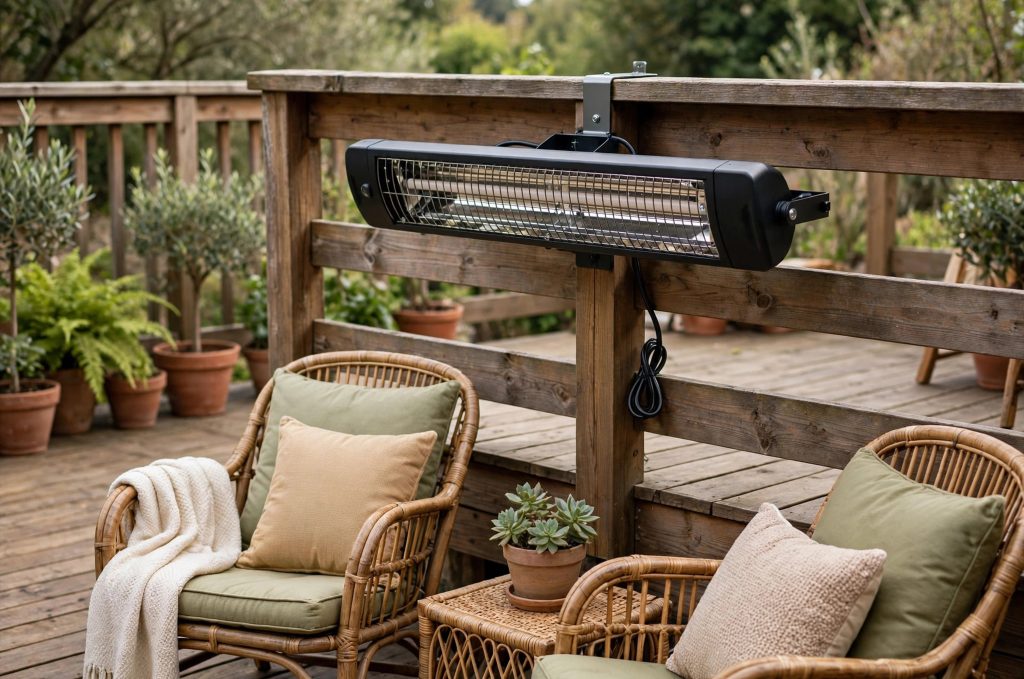
Electric infrared heaters are the safest choice for small decks. They have no flame, no fuel tank, and no combustion exhaust. Wall-mounted or ceiling-mounted models take up zero floor space, which is gold on a small deck. Homes and Gardens notes that electric models project heat outward with little danger to surrounding areas, making them ideal for covered or compact decks. Look for a unit rated for outdoor use and plug it into a GFCI-protected outlet.
Propane standing heaters put out the most heat. They are also the riskiest on a small deck. The tall mushroom style needs serious clearance in every direction, and the base must be weighted so it cannot tip. They work on small decks only if you have the clearance, which many small decks do not.
Tabletop propane heaters are a middle ground. They sit on a sturdy table, heat the people right around it, and are easier to keep clear of railings and walls. They still burn fuel, so ventilation and clearance rules apply.
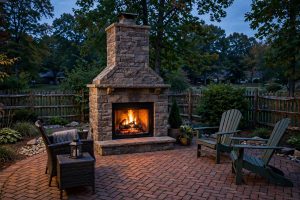
Fire pits and chimineas are not heaters in the safety sense. They are open flame. On a small wooden deck, most fire codes and common sense say no. If you want flame ambiance, see our guide to propane fire pits and keep them on stone or concrete, well away from the house.
For most small decks, an electric infrared heater is the answer. No flame, no tank, no fumes, and it mounts out of the way.
Clearance: The Number One Rule
Many homeowners find that patio heater safety tips is easier than they expected once they know the basics.
The key to patio heater safety tips is choosing the right approach for your space and budget.
Clearance means empty space between the heater and anything that can burn. On a small deck, this is the hardest rule to follow and the most important.
The three-foot rule. Keep at least three feet of clear space around a portable heater in every direction. That includes railings, walls, furniture, cushions, plants, and anything hanging. One safety guide puts the recommended clearance at three feet around the outside of the heater.
Look up. Overhead clearance matters as much as side clearance. Awnings, pergola beams, umbrellas, and low roofs need distance from the heat. Manufacturer manuals vary, but one patio heater manual calls for at least 27 inches of clearance in all directions from anything combustible. Check your own model's label and follow the bigger number.
The NFPA guidance. The National Fire Protection Association's outdoor heater fact sheet adds placement rules for commercial and residential settings, including distance from doorways and exits. Heater safety overviews echo the same basics for home use: two to three feet of clearance per most manufacturers, heaters kept out of foot traffic, and propane units strictly outdoors. The principle is the same at home: heat needs open space around it.
Measure your deck honestly. If your deck is ten by ten and the furniture fills most of it, a standing propane heater may not fit safely. That is not a failure. It is information. Switch to a wall-mounted electric unit and enjoy the warmth without the risk.
Placement on a Small Deck
The key to patio heater safety tips is choosing the right approach for your space and budget.
With a little planning, patio heater safety tips can fit even a busy schedule.
Where the heater sits decides how safe it is.
Put it on level ground. A heater on a slope or a wobbly deck board can tip. Tipping is how fires start. Set portable heaters on the flattest, most solid part of the deck. Weight the base if the model allows it.
Keep it out of traffic paths. On a small deck, the walkway from the door to the stairs is prime real estate. Do not put the heater where people brush past it carrying food and drinks. Tuck it in a corner with clear space around it.
Away from the house wall. Heat and siding do not mix. Keep combustion heaters well away from the house, and never tuck one into a corner where heat reflects off two walls.
Never under a low ceiling. Gas heaters under a covered deck need generous overhead clearance and real ventilation. Deck heater guides recommend electric infrared for covered decks specifically because there is no flame and no exhaust to trap.
Anchor against wind. A gust that knocks over a heater on a small deck can push it into a railing, a chair, or a person. Weight the base, and in windy spots, consider strapping the unit.
Propane Safety
With a little planning, patio heater safety tips can fit even a busy schedule.
Before you start, it helps to understand how patio heater safety tips works in real homes.
If you go with propane, the fuel needs as much respect as the flame.
Check for leaks. Before the first use each season, brush soapy water on every hose connection and the regulator. Bubbles mean a leak. Fix it before you light anything. Never check for leaks with a flame.
Store tanks upright and outside. Spare propane tanks live outdoors, upright, away from the house and away from heat. Never store a tank in the garage, basement, or under the deck.
Transport carefully. Keep tanks upright in the car, drive straight home, and do not leave a tank baking in a hot trunk.
Know the carbon monoxide risk. Propane heaters produce carbon monoxide. Outdoors with good airflow, it disperses. In an enclosed or covered space, it can build up. Never use a propane patio heater in an enclosed porch, a tent, or a garage. Fire service guidance is blunt: outdoor heaters are for well-ventilated outdoor areas only, and faulty heaters used in enclosed spaces can release poisonous gas.
Shut it down right. Turn the tank valve off first, then the heater control. This burns the gas out of the line.
Electric Heater Safety
Before you start, it helps to understand how patio heater safety tips works in real homes.
A good plan for patio heater safety tips saves time, money, and frustration.
Electric heaters are simpler, but they still demand care.
Outdoor rating only. The heater must be listed for outdoor or wet-location use. An indoor space heater on a damp deck is an electrocution risk.
GFCI protection. Plug into a GFCI outlet. If the deck outlet is not GFCI, have an electrician swap it. This is cheap insurance.
No light-duty extension cords. If you must use a cord, it should be a heavy-gauge outdoor-rated cord, as short as possible, and never run under rugs or through doorways. Better yet, have an outlet installed where you need it.
Keep it dry. Even outdoor-rated heaters should not sit in standing water. Mount wall units under an eave or overhang when you can.
Habits That Keep Everyone Safe
A good plan for patio heater safety tips saves time, money, and frustration.
For most people, patio heater safety tips comes down to a few smart choices.
Never leave it unattended. Turn the heater off when you go inside, even for a few minutes. Most heater fires start when nobody is watching.
Keep kids and pets clear. The three-foot zone is also a kid-and-pet zone. Heaters are fascinating to toddlers and dogs. Set the boundary and hold it.
Let it cool before you move it. Heater surfaces stay hot long after the flame is out. Wait at least half an hour before touching any part of the unit. On a small deck where space is tight, that cooling time matters because people pass close by.
Keep a fire extinguisher handy. A small ABC extinguisher by the deck door costs little and covers grill, heater, and fire pit emergencies.
Read your manual. Every model has its own clearances and quirks. The manual is short. Read it once and you will know more than most heater owners.
When a Small Deck Says No
For most people, patio heater safety tips comes down to a few smart choices.
Sometimes the honest answer is that a combustion heater does not fit your deck safely. That is fine. A wall-mounted electric infrared heater gives real warmth with none of the fuel worries. A couple of warm blankets and a wind-blocking screen add comfort without adding risk.
Check local rules too. Some cities and HOAs restrict propane heaters on decks, especially in multi-family buildings. Heater buying guides note that HOA rules, leases, and local fire codes can override everything else, so check before you buy. A quick call to the fire marshal's office or a look at your lease beats a fine or a forced removal.
For gear picks, see our roundup of top-rated electric patio heaters. If you also grill on that small deck, our guide to the best outdoor grill for small decks covers right-sized cooking gear, and garage heater reviews help if your workshop needs warmth too. Once you try it, patio heater safety tips gets easier each time.
References
If you are new to patio heater safety tips, start with the simplest option and build from there.
- Alfresco Heating. (n.d.). Patio comfort natural gas owners manual: Safety precautions. https://alfresco-heating.com/content/product-pdfs/patio-comfort-npc05-manual.pdf
- Bali Outdoors. (n.d.). Patio heater buying and safety guide. https://www.balioutdoors.com/blogs/outdoor-heating/propane-costs-climate-outdoor-heating-guide
- Country Fire Authority Victoria. (n.d.). Gas safety: Heater safety rules. https://www.cfa.vic.gov.au/ArticleDocuments/550/gas_safety_staff.pdf
- Friedlander Group. (n.d.). Outdoor heaters: Safety tips. https://www.friedlandergroup.com/blog/patio-heater-safety
- Homes and Gardens. (n.d.). Can you use a patio heater on a deck? https://www.homesandgardens.com/gardens/can-you-use-a-patio-heater-on-a-deck
- Lexa V Brew. (n.d.). Best patio heaters for decks. https://lexavebrew.com/best-patio-heaters-for-decks/
- National Fire Protection Association. (n.d.). Outdoor heater safety fact sheet. https://www.nfpa.org/-/media/Files/Code-or-topic-fact-sheets/NFPA_1_Outdoor_Heaters_Fact_Sheet.ashx
- Sydney Heaters. (n.d.). Your safety guide to using your outdoor heater. https://www.sydneyheaters.com.au/outdoor-heating-your-safety-guide-to-using-your-outdoor-heater/
When it comes to patio heater safety tips, getting the details right makes all the difference.
Many homeowners find that patio heater safety tips is easier than they expected once they know the basics.
Was this guide helpful?

About My Garden US
The My Garden US editorial team writes practical, in-depth home and garden guides for American homeowners — tested advice, no fluff.
You May Also Like
Metal Patio Furniture Rust Prevention Tips
March 7, 2026 23 views
Patio Umbrella for High Wind Areas: A Buyer's Guide
January 6, 2026 16 views
How to Remove Rust Stains From Outdoor Metal Furniture
October 25, 2026 13 views