Why the Right Hat Matters
A gardener spends long hours under the open sky. The sun beats down on the head, the neck, and the ears. These are places where skin damage builds up quietly over the years. A plain cap shades only the eyes and the forehead. The ears and the neck stay exposed. That is why the best garden hat with uv protection is worth the small cost. It shields the whole head and face area while you weed, plant, and water.
Doctors have warned for many years about too much sun. Sunburns hurt in the short term. Long term, strong rays raise the risk of skin problems that show up decades later. Gardeners are among the people most at risk because their work keeps them outdoors for hours at a time.
Comfort matters as much as safety. A good hat keeps you cool. A wide brim shades your eyes so you squint less.
What to Look for in a Garden Hat: Best Garden Hat with Uv Protection
UV Protection Rating
The most important feature is the protection rating. Look for a UPF rating, which stands for ultraviolet protection factor. A hat rated UPF 50 blocks about 98 percent of the sun’s rays. This is the rating most experts recommend. Some hats claim “UPF 30” or “UPF 50 plus.” The higher the number, the stronger the block. Do not trust a hat that makes no claim at all. The weave of the fabric decides how much light gets through. Tight weaves are best.
Many quality hats are tested by outside labs, and the rating is printed on a tag inside the crown. The tag may also name the standard used for the test. This is a good sign. It means the maker stands behind the claim. Sites that review garden gear, such as the garden section at The Spruce, often explain how these ratings work and why they matter for outdoor tools.
Brim Size and Shape
A wide brim gives the best shade. Three inches of brim is a solid minimum. Four inches or more shades the neck and ears as well. A brim that slopes downward in front cuts glare from low sun. Some hats have a brim that is wide all the way around, like a classic safari or outback style. Others dip lower in back to cover the neck. Think about the work you do. If you bend over beds all day, a brim that flops too far forward will block your view. If you stand and prune, a broad even brim works well.
Stiff brims hold their shape in wind. Soft brims can be folded and packed. There is a trade-off here. A stiff brim keeps shade where you want it, but it can catch the wind and pull the hat off. A soft brim moves with the air but may droop over your eyes. Many gardeners prefer a middle ground: a brim with a light wire or a flexible edge that holds its curve.
Fabric and Breathability
Cotton is soft and familiar. It breathes well and feels good against the skin. But cotton holds sweat, and a wet hat gets heavy. Canvas and duck cloth are tougher and stand up to rough use. Straw is the classic garden choice. It is light and cool, and air moves through the weave. Straw does not carry a UPF rating on its own in most cases, though lined straw hats can block rays well.
Modern synthetic fabrics do a strong job. Nylon and polyester hats often carry true UPF 50 ratings. They dry fast, resist mildew, and hold their shape. A sweatband review from Family Handyman notes that a good inner band makes a real difference on hot days, since it keeps sweat out of the eyes during long jobs.
Fit, Sizing, and Adjustability
A hat that does not fit is a hat you will not wear. Measure around your head just above the ears. Compare that number to the maker’s size chart. Many garden hats come in small, medium, large, and extra large. Some use a drawstring or an elastic band inside the crown so one size fits a range of heads. A chin cord or a neck strap keeps the hat on in wind. Look for a cord that adjusts with a small toggle. Toggles are easier to use with dirty hands than knots.
Check the depth of the crown too. If you wear your hair up, allow room for it. Try the hat on if you can. Shake your head gently. The hat should stay put without a death grip on your skull.
Color and Style
Light colors reflect heat. Khaki, sand, natural straw, and light gray keep the head cooler than black or navy. This is not a small matter in July. A dark hat can feel like a lid on a pot. That said, some gardeners choose darker colors because they hide soil stains. If you pick a dark hat, make sure the UPF rating is strong and the vents are generous.
Style is personal, but it affects use. Pick the style you will actually reach for each morning. The best hat is the one you wear.
Types of Garden Hats with UV Protection
Straw Hats
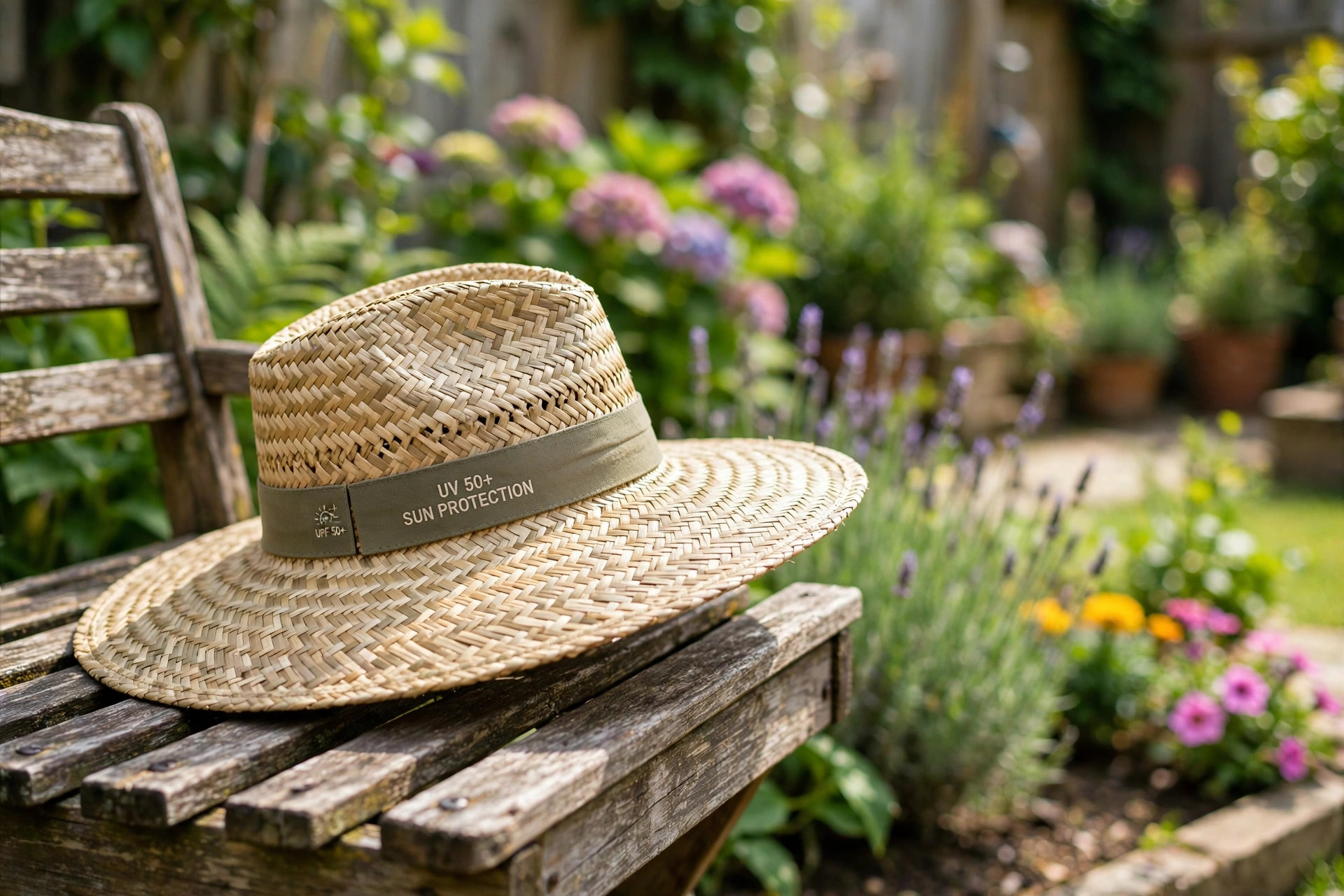
Straw hats are the old standby. They are light, cool, and cheap enough to replace each season. Paper straw and raffia are common materials. Many straw hats now come with a fabric liner under the crown, which adds real sun protection where the scalp needs it most. Without a liner, the sun can peek through the weave. Check before you buy. Straw is not waterproof, so do not leave it out in the rain. A wet straw hat dries stiff and may crack.
Canvas and Cotton Hats
Canvas hats are the workhorses. They take abuse, wash well, and last for years. The treatment may wash out over time, so read the care label. Makers known for tough garden gear, such as Fiskars, build tools that hold up to daily outdoor work.
Synthetic and Nylon Hats
Nylon and polyester hats are the high-tech option. They dry in minutes, float if dropped in the pond, and hold certified UPF 50 ratings. Mesh crowns add airflow.
Bucket Hats
Bucket hats have a downward-sloping brim and a soft crown. They are simple, light, and easy to pack. The brim is usually two to three inches, so they give less neck coverage than wide-brim styles. They suit quick jobs: deadheading flowers, pulling a few weeds, watering the pots. Many bucket hats are reversible, with two colors to choose from. They are a fine second hat, though most gardeners will want a wider brim for full days.
Safari and Outback Hats
Safari hats have a wide, even brim and a tall crown, often with vents and a chin cord. Outback hats have a shaped brim that dips in front and back. Both give excellent coverage and look at home in a big garden. They handle wind well thanks to the cord. They cost more than a simple straw hat, but they last longer and protect better. For gardeners who spend four or more hours a day outside, this style is worth the money.
How to Choose the Best Garden Hat with UV Protection
Start with your climate. Hot, dry regions call for maximum airflow: straw or vented nylon, light color, wide brim. Humid regions call for fast-drying fabric and a good sweatband. If you garden mostly in the morning and evening, a medium brim may be enough. If you work through midday, go wide.
Next, think about your tasks. Pruning and harvesting need clear vision, so avoid brims that flop. Digging and hauling need a secure fit, so get a chin cord. Sitting at a potting bench needs comfort more than coverage, so fit comes first. One hat can serve all jobs, but be honest about which job you do most.
Then set your budget. A decent straw hat costs little. A rated canvas hat costs a moderate amount. A premium safari hat with certified UPF 50 costs more but may last five years. Divide the price by the number of summers you expect from it, as the buying guides at Bob Vila suggest for outdoor gear.
Finally, pair the hat with the rest of your gear. A good pair of garden gloves for thorn protection guards your hands while the hat guards your head. A sturdy garden kneeler with handles saves your knees during long planting sessions. A garden apron with deep pockets keeps tools close so you bend less. Sun safety works best as a full system, not a single item.
Cost and Price Guide
Prices for garden hats fall into clear bands. Budget straw hats run from about five to fifteen dollars. They protect reasonably if they have a liner, and they are easy to replace. Mid-range canvas and cotton hats run from about fifteen to thirty-five dollars. Many carry real UPF ratings and last several seasons. Premium rated hats, in nylon or treated canvas with certified UPF 50, run from about thirty-five to seventy dollars.
Watch for hidden costs. A hat with a weak chin cord may need a replacement cord. A hat with no sweatband may need an aftermarket liner. A cheap hat that blows away in the first storm costs you twice. Spend a little more up front for a secure fit and a proven rating, and the hat pays you back in comfort.
Sales follow the seasons. Buy at the end of summer for the best deals on this year’s stock. Big stores like Home Depot and Lowe’s mark down outdoor gear in late summer, and spring brings the new colors and styles at full price. If you buy online, check the return policy first. A hat that fits poorly is money wasted, no matter how good the rating.
Care and Upkeep
A little care adds years to a hat. Shake off loose dirt after each use. Brush straw gently with a soft brush; never soak it. Spot-clean canvas and cotton with mild soap and cool water, then air dry away from direct sun. Machine washing can ruin the shape and wash out UPF treatments, so hand wash when the label allows it.
Dry the hat fully before storing it. A damp hat grows mildew, and mildew smells bad and weakens fabric. Store hats on a shelf or a peg, not crushed under tools. Keep the brim flat so it holds its shape. If the hat has a chin cord, coil it loosely instead of wrapping it tight around the crown. Replace the sweatband when it wears thin. A fresh band costs little and makes an old hat feel new.
Check the UPF tag once a year. Treatments fade with washing and sun exposure. If the fabric looks thin or the weave has stretched, the protection has likely dropped. When in doubt, retire the hat to light-duty use and buy a new one for long days. Your skin is worth more than the price of a hat.
Safety Tips for Working in the Sun
A hat is one part of sun safety. Wear sunscreen on the face, ears, neck, and hands, even under the brim. Reflected light bounces up from soil, water, and pale mulch, so shade from above is not total. Reapply sunscreen every two hours, or sooner if you sweat heavily. Gardening makes you sweat, so plan for it.
Drink water before you feel thirsty. Keep a bottle in the shade and sip often. Take breaks in full shade every hour on hot days. Watch for the signs of heat trouble: headache, dizziness, nausea, or a stop in sweating. These are warnings, not inconveniences. Move to a cool place and rest. Gardeners work alone outdoors more than most people, so tell someone where you will be on very hot days.
Time your work when you can. Early morning and late afternoon give kinder light and cooler air. The sun is strongest between ten in the morning and four in the afternoon. Heavy jobs like digging fit the cooler hours. Light jobs like deadheading can fill the bright middle of the day, with the hat on and the water bottle close. Guidance from Consumer Reports on sun protection products can help you build a full routine beyond the hat itself.
Frequently Asked Questions
What UPF rating should a garden hat have?
Look for UPF 50. This rating blocks about 98 percent of ultraviolet rays. UPF 30 is acceptable but lets through more than twice as much. A hat with no rating is a gamble. When the maker prints the rating on a tag and names the test standard, you can trust the number.
Is a straw hat enough sun protection?
A plain open-weave straw hat is not enough on its own. Light passes through the gaps. A straw hat with a fabric liner under the crown does much better, and a tight, even weave helps too. If you love straw, choose a lined model and check the weave against a lamp before you buy.
How wide should the brim be?
Three inches is the minimum for real protection. Four inches or more covers the ears and the back of the neck. Wider is better for long days, but very wide brims catch wind and block your view when you bend over. Match the brim to your work and your weather.
Can I wash my garden hat?
It depends on the material. Canvas and cotton hats usually take a gentle hand wash with mild soap. Straw hats should only be brushed and spot-cleaned. Most makers warn against machine washing because it ruins the shape and strips UPF treatments. Read the care label and follow it. Air dry every hat away from direct sun.
How long does UV protection last in a hat?
Fabric alone keeps its protection as long as the weave stays tight. Chemical UPF treatments fade with washing, sweat, and sun, often within a few seasons of hard use. Inspect the hat each spring. If the fabric is thin, stretched, or sun-bleached, replace the hat. A seed and garden supplier like Burpee often notes that garden gear, like garden plants, has a season and a lifespan.
Do I still need sunscreen if I wear a hat?
Yes. A hat shades from above, but rays reflect off soil, water, and light surfaces. The face, ears, neck, and hands still need sunscreen. Think of the hat as the roof and the sunscreen as the walls. You need both for a complete shelter.
A Final Word
The best garden hat with uv protection is the one that fits well, carries a real UPF 50 rating, and suits the work you do. It does not need to be costly. It needs to be worn. Pick a wide brim, a light color, and a secure fit, then make the hat part of your morning routine, like the gloves and the boots. Season after season, that simple habit will pay you back in comfort and in health. For more on outfitting the whole gardener, browse the garden tools guides at Gardener’s Supply and the practical project advice at Family Handyman. Your garden will thank you, and so will your skin.
References
Bob Vila. (n.d.). Home improvement advice. https://www.bobvila.com Burpee. (n.d.). Seeds, plants, and gardening supplies. https://www.burpee.com Consumer Reports. (n.d.). Product reviews and ratings. https://www.consumerreports.org Family Handyman. (n.d.). DIY home repair and maintenance. https://www.familyhandyman.com Fiskars. (n.d.). Garden and cutting tools. https://www.fiskars.com Gardener’s Supply Company. (n.d.). Gardening tools and supplies. https://www.gardeners.com Lowe’s. (n.d.). Home improvement products. https://www.lowes.com The Home Depot. (n.d.). Home improvement products. https://www.homedepot.com The Spruce. (n.d.). Home and garden advice. https://www.thespruce.com
Was this guide helpful?

About Sarah Mitchell
The My Garden US editorial team writes practical, in-depth home and garden guides for American homeowners — tested advice, no fluff.