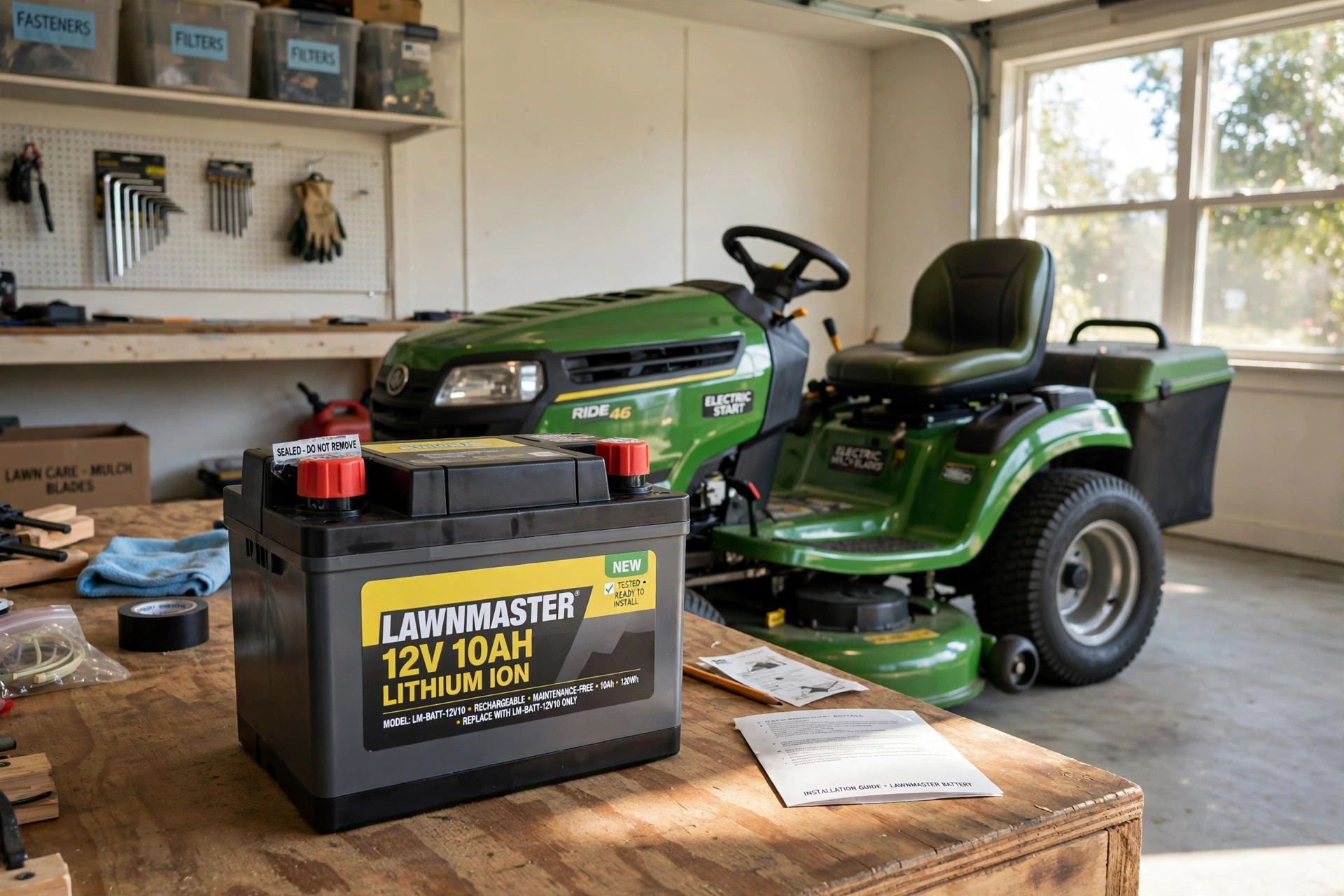

Nothing is more frustrating than a mower that will not start. You turn the key, or you press the start button, and you hear nothing. Or you hear a slow click that tells you the engine is trying but failing. In most cases, the problem is simple. The battery is dead. When that happens, most homeowners type one phrase into a search box: lawnmower battery replacement near me. This guide walks you through everything you need to know. You will learn how to tell if your battery is really the problem. You will learn what type of battery to buy. You will learn where to find help close to home. And you will learn how to keep your new battery running strong for years.
Why a Good Battery Matters
A lawn mower battery does one main job. It gives the engine the burst of power it needs to start. Once the engine is running, it charges itself through the alternator. But without that first burst, the mower is useless. A weak battery shows warning signs first. The mower may turn over slowly. It may need several tries to start. Wise owners replace the battery before it fails in the middle of a hot Saturday.
A fresh battery also protects the rest of the machine. A weak battery strains the starter motor, which can burn out. That repair costs far more than a battery. Most lawnmower batteries cost between thirty and one hundred dollars. A starter motor can cost three times that, plus labor.
Riding mowers depend on batteries more than push mowers. A riding lawn mower for a one acre lot uses a 12-volt battery much like a small car battery. If that battery dies, the mower will not move. Battery-powered mowers, on the other hand, use removable lithium packs. Those packs wear out too. They need replacement every three to five years, depending on use.
Types of Lawnmower Batteries: Lawnmower Battery Replacement near Me
Before you shop, it helps to know what kinds of batteries are out there. Most gas mowers with electric start use lead-acid batteries. These come in two main forms.
Standard flooded lead-acid batteries are the old reliable type. They are filled with liquid acid. They are the least expensive option. Their weak point is upkeep. You may need to check the water level and add distilled water from time to time.
Sealed lead-acid batteries, often called AGM or maintenance-free batteries, are sealed at the factory. You never add water. They hold a charge longer in storage. They cost a bit more, but many owners find the extra cost worth it for the lack of fuss.
Lithium-ion packs are the newest type. They power cordless electric mowers and some robot mowers for half acre yards. They are light. They charge fast. They hold their charge for months on the shelf. They cost the most. When a lithium pack wears out, you must buy the exact brand and model that fits your mower. There is no generic substitute.
Check your owner manual before you buy. It lists the group size, the voltage, and the cold cranking amps your mower needs. Cold cranking amps measure the power the battery can give on a cold morning. A bigger engine needs a higher number. Buying a battery that is too weak is a waste of money. Buying one that is far too strong can also cause problems, because the charger may not handle it.
How to Tell If Your Battery Needs Replacement
Not every starting problem is the battery. You can save money by testing before you buy. Here is a simple checklist.
First, look at the terminals. Corrosion builds up on the metal posts. It looks like white or green crust. Heavy corrosion blocks the flow of power. Clean the terminals with a wire brush and a mix of baking soda and water. Then try to start the mower.
Second, check the battery age. A sticker on the battery shows the month and year it was made. Most lawnmower batteries last three to four years. If yours is older, replacement is the smart move.
Third, test the voltage with a simple meter. A healthy 12-volt battery reads about 12.6 volts when the mower is off. If it reads under 12 volts, charge it and test again. If it still reads low after a full charge, it is done. Most auto parts stores test batteries free of charge.
Fourth, watch for swelling or cracks in the case. A swollen battery is a danger sign. Do not try to charge it. Replace it at once and recycle the old one.
A common search after this test is “lawn mower battery not charging.” If the battery holds no charge even after hours on the charger, the cells are worn out. Replacement is the answer.
Finding Lawnmower Battery Replacement Near Me
Now comes the main question. Where do you go? The good news is that you have many choices, and most of them are close to home.
Auto parts stores are the first stop for many people. Stores in every town sell lawn and garden batteries. They test your old battery for free. They help you pick the right size. They often install it at no charge if you bring the mower or the old battery. Many of these stores also take your old battery for recycling, which you should always do. Lead-acid batteries are harmful waste and should never go in the trash.
Home improvement stores are another easy option. Their garden departments stock batteries for riding mowers and push mowers. Prices are competitive. On busy spring weekends, call ahead to make sure the battery you need is in stock.
Small engine repair shops are worth a call. A top rated string trimmer for thick weeds and a riding mower often come from the same shop. These mechanics know batteries well. They can test your charging system too, to make sure the mower itself is not killing new batteries.
Dealers are best for unusual batteries. If you own a less common brand or an older model, the dealer for that brand can order the exact battery. Toro and John Deere dealers keep parts lists for their machines going back many years.
Online shopping has one big drawback for this task. Batteries are heavy. Shipping is slow and costly. A local shop gives you the battery today. It tests the old one. It recycles it. For a part this heavy and this simple, local is usually better.
When you call around, ask three questions. What group size do you carry for my mower model? What is the warranty length? Do you install and recycle the old battery? The answers tell you a lot about the shop.
Cost and Price: What to Expect
Lawnmower battery prices are easy to plan for. A standard flooded lead-acid battery for a riding mower runs about thirty to sixty dollars. A sealed AGM battery runs about sixty to one hundred dollars. Lithium packs for cordless mowers range from eighty to two hundred dollars, depending on brand and capacity.
Installation is often free when you buy at the store. Some shops charge a small fee, usually ten to twenty dollars, if you bring the mower in. A few auto parts stores will swap the battery in the parking lot while you wait.
Warranties matter more than most people think. A cheap battery with a three-month warranty can be worse than a mid-priced battery with a two-year warranty. Ask about the warranty before you pay. Keep the receipt.
You can save money with a core charge credit. When you buy a lead-acid battery, the store adds a small deposit called a core charge. When you bring back the old battery, you get that money back. Always bring the old battery with you.
Do not be tempted by a used battery. Used batteries are a gamble. A new battery with a solid warranty is always the safer buy.
Do It Yourself: Replacing the Battery at Home
Replacing a lawnmower battery is a job most owners can do in fifteen minutes. You need only a wrench, a wire brush, and gloves. Wear safety glasses too. Battery acid can burn skin and eyes.
Park the mower on flat ground. Turn it off and remove the key. Find the battery. On most riding mowers, it sits under the seat or under the hood. Disconnect the negative cable first. It is marked with a minus sign and is usually black. Then disconnect the positive cable, marked with a plus sign and usually red. Removing the negative cable first prevents sparks.
Lift out the old battery. Note how it sits. Take a photo with your phone so you can put the new one back the same way. Clean the tray and the cable ends with the wire brush. Set the new battery in place. Connect the positive cable first this time, then the negative. Tighten the bolts snugly.
Try to start the mower. It should turn over with strong, quick cranking. If it does not, double-check that the cables are tight and on the right posts. If it still does not start, the problem may be the starter or the charging system, and a repair shop is the next step.
Care and Upkeep: Making the New Battery Last
A little care adds years to a battery. Start with clean terminals. Corrosion is the number one killer of lawnmower batteries. Check the terminals twice a year.
Keep the battery charged. A battery that sits unused slowly loses power. In winter, remove the battery from the mower and store it indoors. Connect a trickle charger or battery maintainer. These small devices keep the battery at full charge without overcharging it.
Check the water level if you have a flooded battery. The liquid should cover the plates inside. Add distilled water only, never tap water.
Run the mower often during the season. Long sits are hard on batteries. If you must store the mower for weeks, disconnect the negative cable.
Watch the charging system. If your new battery keeps dying, the mower may not be charging it. A shop can test the charging system in minutes. Fixing a bad wire or a worn belt is cheap. Replacing batteries every year is not.
Safety Tips Every Owner Should Know
Batteries hold acid and give off gas. Always wear gloves and eye protection when you handle a battery. Work in a place with fresh air. Never smoke near a battery.
Keep sparks away from the terminals. When you connect cables, the positive goes on first. When you disconnect, the negative comes off first.
If acid touches your skin, wash it off at once with plenty of water. If it gets in your eyes, rinse with water for fifteen minutes and call for medical help. Keep a box of baking soda nearby. It neutralizes spilled acid.
Store batteries upright. Keep them away from children and pets. Old batteries should go straight to recycling.
For brand-specific guidance, the maker of your engine often publishes battery and starting tips. Briggs and Stratton offers support pages that cover battery care for many common mower engines. Reading your engine manual once is time well spent.
Frequently Asked Questions
How much does a lawnmower battery replacement near me usually cost? Most replacements cost between thirty and one hundred dollars for the battery itself. Standard lead-acid batteries sit at the low end. Sealed AGM batteries sit at the high end. Lithium packs for cordless mowers cost more. Many stores install the battery free when you buy it there.
How long does a lawnmower battery last? A lead-acid lawnmower battery lasts about three to four years with normal care. Lithium packs last three to five years. Heat, cold, and long storage without charging shorten the life. A battery maintainer in winter adds a year or more.
Can I use a car battery in my riding mower? It is not a good idea. Car batteries are larger and give far more power than the mower needs. They may not fit the tray. They can strain the mower’s charging system. Buy the group size your manual calls for.
What size battery does my riding mower need? Most riding mowers use a 12-volt battery, often group size U1. The cold cranking amps usually run from 200 to 350. Check the owner manual or the label on the old battery. When in doubt, call the dealer with your model number.
Why does my new battery keep dying? The mower may not be charging it. A worn drive belt, a loose wire, or a bad voltage regulator can stop the charging system. Corroded terminals can also block charging. Have a repair shop test the charging system before you buy another battery.
Where can I recycle my old lawnmower battery? Almost any store that sells batteries takes old ones. Auto parts stores and home improvement stores accept them. Your town may also hold hazardous waste collection days. Recycling is often free, and you may get a core charge refund.
A Short Final Word
A dead battery is one of the simplest mower problems you will ever face. It is also one of the cheapest to fix. Test before you buy. Clean the terminals. Match the size your manual calls for. Buy from a shop near you that tests, installs, and recycles. Then give the new battery a little care each season. Clean terminals, a full charge, and a warm winter home will keep it strong for years. When you search for lawnmower battery replacement near me, you are looking for more than a part. You are looking for a mower that starts on the first turn, every time. That is a small pleasure, and it is well worth the price of a battery.
References
Briggs & Stratton. (n.d.). Engines and outdoor power equipment support. https://www.briggsandstratton.com Deere & Company. (n.d.). Lawn care and agricultural equipment. https://www.deere.com Toro. (n.d.). Lawn mowers and landscape equipment. https://www.toro.com
Was this guide helpful?

About James Carter
The My Garden US editorial team writes practical, in-depth home and garden guides for American homeowners — tested advice, no fluff.
You May Also Like

The Best Push Lawn Sweeper for Leaves: A Plain Guide
January 1, 2026 1 views
Best Handheld Spreader for Small Lawns: A Practical Buying Guide
April 1, 2026 0 views
Cheap Pine Straw Mulch Delivery Near Me
May 13, 2026 0 views