
A Yard That Feeds Itself
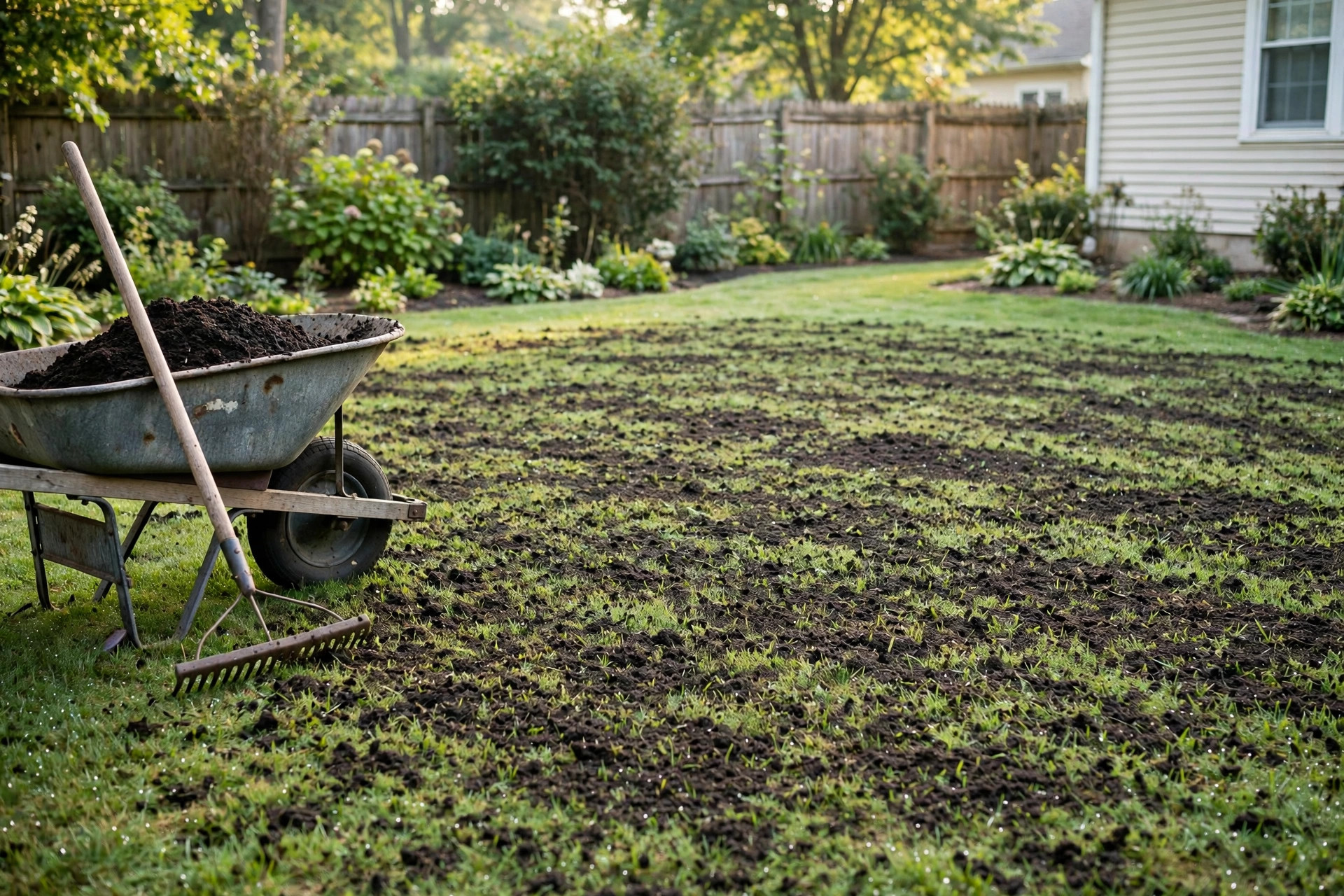
Few lawn habits pay back like compost topdressing. A thin blanket of compost, spread over the grass once or twice a year, feeds the soil, builds dark organic matter, and helps turf grow dense and green. The best compost topdressing for lawns reviews often reach the same conclusion: homeowners who topdress regularly spend less on fertilizer over time and see fewer bare patches. This guide walks through why topdressing works, what kinds of compost to buy, how much to spread, what it costs, and how to keep the lawn safe for kids and pets.
Why Topdressing Matters: Best Compost Topdressing for Lawns Reviews
Grass grows from the soil down. Feed the soil, and the grass follows. That is the plain logic behind compost topdressing. Most American lawns sit on tired soil that has been cut, watered, and walked on for years. The soil loses its humus. It packs down. Water runs off instead of soaking in. Compost reverses this slow decline.
Compost topdressing adds living organic matter to the surface of the lawn. Rain and worms carry it down into the root zone. Studies of turfgrass management going back many years show that organic topdressing improves soil structure, holds moisture in dry spells, and helps roots grow deeper. Deeper roots mean grass that stands up better to heat, drought, and foot traffic.
There is another gain that reviews point to again and again. Compost topdressing helps smooth out thin spots. When you spread compost along with grass seed, the tiny seeds settle into a moist bed and sprout faster. Lawn care guides often pair topdressing with overseeding lawn in fall step by step for this reason. The two practices work well as a team.
Topdressing also cuts waste. Grass clippings left on the lawn already feed it a little. A layer of compost finishes the job without the runoff that comes from heavy doses of synthetic fertilizer. Fewer chemicals wash into storm drains. That is a small but real gain for local streams.
What to Look for When You Choose
Not every bag labeled compost is worth spreading on a lawn. The best compost topdressing for lawns reviews judge products on the same simple points. Keep these in mind before you buy.
Finished and screened
Compost should be dark, crumbly, and smell like forest floor. It should not smell sour or sharp. Good compost for topdressing is screened to a fine texture, often called one-half inch or quarter inch minus. Fine material sifts down between grass blades. Coarse chunks sit on top, look rough, and can smother the turf.
Free of weed seed and trash
Low-grade compost made from fresh yard waste can carry weed seed. The heat of a proper compost pile kills most seeds, but sloppy piles do not reach that heat. Ask the supplier how long the pile was cured and whether the compost was tested. Certified products from established makers usually pass such tests.
Salt and pH in balance
Some composts, especially those made from manure, carry salts that can burn grass if laid on thick. A good supplier can show a lab sheet with salt and pH numbers. For most lawns, aim for compost with moderate salt and a pH near neutral.
Right particle size
For topdressing, fine beats coarse. Material around a quarter inch falls into the turf canopy and disappears from view within a week or two. If you can only find coarse compost, run it through a simple soil sifter made of hardware cloth over a frame.
Types of Compost for Topdressing
The best compost topdressing for lawns reviews usually compare four main types. Each has its place.
Yard waste compost
Made from leaves, grass clippings, and chipped brush, yard waste compost is the workhorse of municipal composting programs. It is cheap, easy to find in bulk, and mild enough for most lawns. Its nutrient levels run low to medium, which is fine for a yearly topdressing. Quality varies from town to town, so check for trash bits and fine texture before a big order.
Manure-based compost
Composted cow, horse, or chicken manure carries more nitrogen than yard waste compost. It feeds the lawn faster and darker green. The trade is a higher salt load and a stronger smell for the first day or two. Spread it thin, no more than a quarter inch, and water it in. Good suppliers age manure compost fully so it will not burn.
Mushroom compost
Mushroom compost is the leftover growing medium from mushroom farms. It is rich in organic matter and usually sold at a low price near growing regions. It can be a bit alkaline and salty, so it suits lawns that test slightly acid more than those that are already alkaline. Mix it with plain topsoil or use it as part of a blend if you worry about salt.
Blended lawn topdressing mixes
Many garden centers sell bagged blends made for lawns, often a mix of compost, peat or bark fines, and sand. These screen very fine and spread smoothly through a drop spreader. They cost more per cubic yard than bulk compost, but they save labor for a homeowner doing a small lawn by hand.
How Much to Buy and Spread
A quarter inch of compost over a lawn is the standard yearly dose. Go thicker and you risk smothering the grass. Go much thinner and the benefit fades.
How much does a quarter inch take? For every one thousand square feet of lawn, you need about three quarters of a cubic yard, roughly twenty bags at one cubic foot each, or one heaped wheelbarrow per two hundred square feet. A five thousand square foot lawn takes close to four cubic yards. Measure your lawn first with a simple pace count so you do not order twice what you need.
Timing matters as much as rate. Fall is the best season in most states. Grass grows roots hard in autumn, and compost feeds that growth through winter. Early fall topdressing also pairs well with overseeding. Spring works too, but keep the layer thin so it does not block sunlight from new growth.
Spread compost on a dry day when the grass is short. Mow a notch lower than usual, then rake up heavy thatch first if the lawn feels spongy. A lawn dethatcher rental prices near me search will show what the local rental shop charges for a day. For spreading itself, a shovel and a leaf rake work for small lawns. A drop spreader or a wheelbarrow with a shovel flick works for larger ones. Some homeowners hire a lawn service with a powered topdressing machine for yards over a half acre. After spreading, rake the compost lightly into the canopy and water it in. You should still see most of the grass blades poking through.
Cost and Price Guide
Prices move with region and season, but a few rules hold across the country.
Bulk compost from a municipal site or landscape supply yard usually runs twenty-five to sixty dollars per cubic yard, plus delivery. Delivery fees often run fifty to one hundred dollars for a small load, so ordering with a neighbor cuts the per-yard cost. Bagged compost at garden centers costs four to eight dollars per cubic foot, which works out to well over one hundred dollars per cubic yard. Bags make sense for small lawns or patch repair. Bulk wins for whole yards.
Professional topdressing service runs higher. Lawn companies charge by the thousand square feet, commonly sixty to one hundred fifty dollars per thousand depending on material and region. For a five thousand square foot lawn, expect three hundred to seven hundred fifty dollars for a one-time visit.
One way to hold costs down is to pair topdressing with other fall work. A single rental weekend can cover dethatching, overseeding, and topdressing together. Reviews from homeowners often note that this one-two-three punch gives the most visible change for the money. And since compost raises soil organic matter year over year, many people find they can cut back on bagged fertilizer after two or three seasons of steady topdressing.
For equipment and product comparisons, independent testing groups such as Consumer Reports publish reviews of lawn gear and soil products that can help you judge value before you buy.
Care and Upkeep After Spreading
Compost does its work quietly, but a little follow-up care helps it along.
Water the lawn well within a day of spreading. Moisture settles the compost into the canopy and starts the feeding process. For the next week, water lightly and often if the weather is dry. The goal is to keep the compost layer damp, not soaked.
Mow normally but do not bag the clippings. Let them fall back onto the lawn. They add a small dose of nitrogen and keep the compost company. Sharpen your mower blade before the fall topdressing season. A clean cut heals faster than a ragged tear, and healthy tips take up nutrients better.
Test your soil every two or three years. A simple lab test, often sold through the state extension service, tells you the pH and the main nutrient levels. If the test shows the pH is off, a lawn lime application rate per square foot guide will help you correct it. Lime and compost work well together: lime fixes acidity while compost feeds the biology that makes nutrients available.
Watch for weeds in the weeks after topdressing. A thick lawn crowds weeds out, but any bare soil left behind invites them. That is another reason to overseed with the topdressing. Seed plus compost fills bare ground before weeds get a foothold.
Safety for Family, Pets, and Water
Compost is one of the safest lawn treatments you can use, but a few cautions still apply.
Keep children and pets off the lawn until the compost is watered in and the surface is dry. This is mostly about dust and mess rather than poison, but it is good practice all the same. Store bagged compost out of reach of dogs. Some dogs will eat anything, and manure-based products can upset a stomach.
Wear gloves and a dust mask when handling dry compost. Compost dust can irritate lungs, especially on windy days. Wash hands after the job.
Mind the street and the storm drain. Do not pile compost on the driveway or sidewalk where rain can wash it into the gutter. Excess organic matter in streams feeds algae and harms fish. Spread only what the lawn can take, sweep up spills, and keep a buffer near ditches and ponds.
On equipment safety, the makers of walk-behind and riding machines publish operator guidance that is worth reading before any rental. Sources such as Toro and Deere post manuals and safety notes for the spreaders and mowers many homeowners use during topdressing season.
Frequently Asked Questions
Can I topdress my lawn with compost in summer?
You can, but fall is better. Summer heat stresses grass, and a compost layer can trap heat on the surface if it is too thick. If you must topdress in summer, use a very thin layer, water it in deeply, and pick a cool stretch of days.
Will compost topdressing burn my grass?
Finished compost almost never burns when spread at a quarter inch or less. The risk comes from fresh manure or from laying compost on too thick. If the material smells sharp or feels hot in the bag, let it cure longer or pick another product.
How long before I see results?
Most homeowners notice thicker color within three to six weeks in growing weather. The deeper soil changes build over seasons. Two or three years of yearly topdressing changes soil structure in ways you can feel underfoot: softer, darker, and quicker to drain after rain.
Do I still need fertilizer after topdressing?
Compost feeds slowly, which is its strength and its limit. Most lawns still benefit from one light feeding a year after the compost habit is established. Soil testing tells you what is truly needed. Many reviewers report cutting their fertilizer use in half once topdressing becomes routine.
Can I spread compost over bare spots only?
Yes. Spot topdressing works fine for patch repair. Spread a half inch over the bare area, sow seed, rake it in lightly, and keep it moist until the seed sprouts. It is a cheap fix for dog spots and worn paths.
Is bagged compost as good as bulk?
Bagged compost is usually screened finer and tested more often, which suits small lawns. Bulk compost is the same basic material at a lower price, but quality varies by supplier. For either one, check that it is dark, crumbly, and free of strong odors before you commit.
A Short Final Word
The best compost topdressing for lawns reviews keep coming back to a simple point. Feed the soil and the grass takes care of itself. Choose finished, fine-screened compost from a maker you trust. Spread a quarter inch in fall. Water it in. Do it again next year. Few lawn projects cost so little and return so much green for the effort.
References
Consumer Reports. (n.d.). Product reviews and ratings. https://www.consumerreports.org Toro. (n.d.). Lawn care equipment and support. https://www.toro.com Deere. (n.d.). Lawn and garden equipment. https://www.deere.com
Was this guide helpful?

About Sarah Mitchell
The My Garden US editorial team writes practical, in-depth home and garden guides for American homeowners — tested advice, no fluff.
You May Also Like
The Best Dandelion Killer That Wont Kill Grass
February 4, 2026 0 views
Lawn Grub Treatment Schedule by Zone: A Year-Round Plan
September 17, 2026 0 views
Lawn Pest Control Service Near Me: What Every Homeowner Should Know
March 13, 2026 0 views