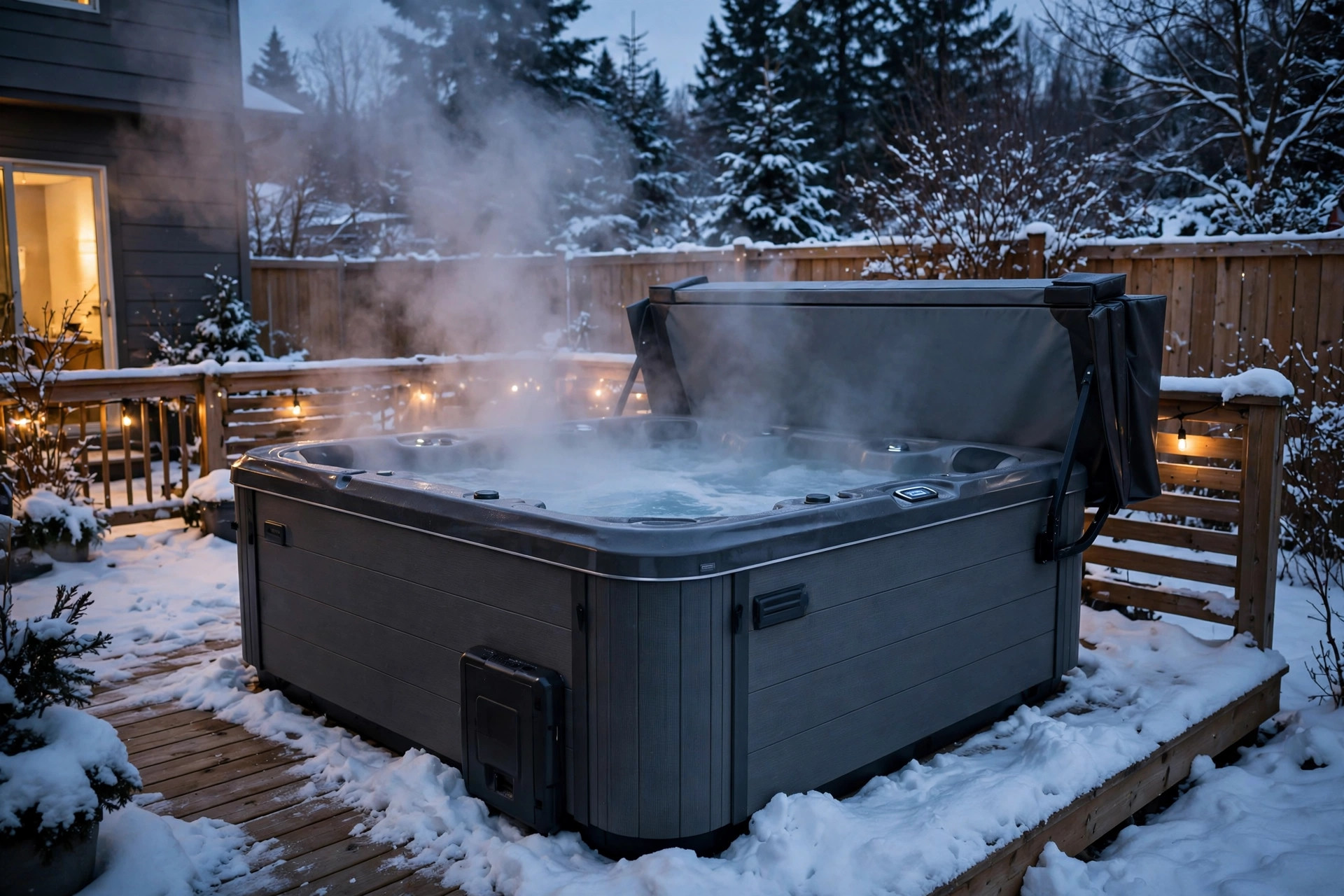

A hot tub in a cold climate is not the same as a hot tub in a warm one. When the air drops below freezing, an ordinary spa loses heat fast, costs a fortune to run, and may even freeze from the inside. The best hot tub for cold climates is built for this fight. It holds heat when the wind blows, starts up after a power cut, and keeps your water at 104 degrees while snow piles on the cover.
This guide explains what matters. It covers shells, insulation, heaters, pumps, covers, and power use. It also covers cost, care, and safety. By the end, you will know how to pick a spa that can take a real winter.
Why It Matters
In a mild climate, nearly any hot tub will do. Heat escapes slowly when the air is 70 degrees. In a cold climate, the gap between the water and the air is huge. The water is hot. The air is far below zero. Heat rushes out through every weak point: the cover, the cabinet, the plumbing, the shell.
A weak spa in cold weather shows it fast. The heater runs all the time. Your electric bill climbs. If the power fails in a storm, the pipes can freeze and crack. Repairs cost hundreds, sometimes thousands, of dollars.
A spa built for cold climates changes this. Full-foam insulation locks heat around the shell and pipes. A tight locking cover seals the top. A strong heater recovers fast. The result is lower running costs and fewer repairs. For buyers who want a hot tub for small backyard spaces in cold towns, good insulation also means the spa can sit closer to the house without losing heat to long pipe runs.
How to Choose: What to Look For: Best Hot Tub for Cold Climates
Insulation
Insulation is the first and most important feature. There are three common types.
Full foam fills the entire cabinet with spray foam around the shell and pipes. This is the standard for cold weather. It keeps heat in and also supports the plumbing, so pipes do not shake loose over time. When full foam is done well, it is the best choice for freezing climates.
Partial foam puts foam on the shell only, or in patches. It leaves air gaps where heat escapes. This type suits mild climates better.
Perimeter insulation lines the inside walls of the cabinet but leaves the space around the shell open. Warm air from the motors is trapped inside and helps heat the plumbing. This works well when it is done right, but it depends on the motors running to stay warm.
For real cold, full foam is the safest pick. Reviews and test data shared by Consumer Reports and the guides at This Old House often stress that insulation is what sets winter-ready spas apart from fair-weather ones.
The Heater
Most home spas use a 5.5-kilowatt electric heater. In a cold climate, look for one of that size or larger. A weak heater will run all day and still lose ground during a long soak in freezing air.
Heat recovery speed matters too. After you lift the cover, the spa starts losing heat fast. A strong heater brings the water back up quickly once the cover goes back on. Ask the dealer about the heater rating and how long the spa takes to warm from 80 to 104 degrees in winter air.
Pumps and Plumbing
Cold-weather spas need pumps that move enough water and plumbing that is protected. Look for large-diameter pipes. They move water fast and are less likely to freeze when the pump cycles. Some spas have a freeze-protection mode. This mode turns the pumps on by itself when the air temperature falls near freezing. It keeps water moving so it cannot sit and freeze in the lines.
Check where the pipes run. Short, direct runs lose less heat than long, twisting ones. Full foam around the pipes adds a second layer of safety.
The Cover
The cover is where most heat escapes. A cheap cover lets warm air rise straight out. A good cold-climate cover is thick in the middle and tapers toward the edges so rain and meltwater run off. Look for a tight seal with no gaps at the rim. A cover lifter makes daily use easy and stops you from dragging the cover on the ground, which ruins the seal. See our notes on the best hot tub cover lifter reviews for options that hold up in snow.
A floating thermal blanket under the main cover adds another layer. It floats on the water and cuts heat loss through the surface. It also slows evaporation, which keeps your chemical use down.
The Base
The bottom of the spa matters in cold weather. Cold ground pulls heat down through the floor of the tub. A solid, sealed base keeps ground moisture and frost away from the shell. Many dealers set spas on a concrete pad or on crushed stone with pavers. Either works. What you want to avoid is bare soil or a wooden deck with open air under the tub, since cold wind under the spa will steal heat from below.
Types and Options
Portable Plug-and-Play Spas
These plug into a standard outlet. They are cheap and easy to set up. They are a poor pick for cold climates. The small 120-volt heater cannot keep up in freezing weather. The thin cabinet and light cover leak heat. A plug-and-play spa in a cold winter will run nonstop and still feel lukewarm.
Hardwired 220-Volt Spas
These need an electrician and a dedicated circuit. They cost more up front. For cold climates, this is the right class. The bigger heater, thicker insulation, and stronger pumps are all built for winter. If you live where the temperature drops below 20 degrees for weeks at a time, a hardwired spa is the practical choice.
Inflatable Hot Tubs
Inflatable spas are the cheapest option. They are made of vinyl and heated with a small unit. In cold air they lose heat almost as fast as the heater can add it. Many makers warn against using them below 40 degrees. An inflatable tub is fine for summer. It is not the answer for a cold-climate winter.
Swim Spas
Swim spas hold a lot of water, which holds heat longer. But they cost more to heat and need a big electrical service. For most buyers, a standard hardwired hot tub is the better value.
Used Spas
A used spa can be a bargain. In a cold climate, check it with care. Old foam insulation can sag or soak up water, which kills its value. Old covers often leak heat. Ask to see the spa running and full of hot water. Watch how fast it heats and whether steam pours out around the cover edges. A used spa with fresh foam and a new cover can be a smart buy. One with tired insulation will cost you in winter power bills.
Cost and Price
A cold-climate hot tub costs more than a fair-weather one. Expect the following ranges in the United States.
– Basic hardwired spa: 4,000 to 7,000 dollars. Decent insulation. Works in moderate cold. – Mid-range winter-ready spa: 7,000 to 12,000 dollars. Full foam, strong heater, good cover. The sweet spot for most cold-climate buyers. – High-end spa: 12,000 to 20,000 dollars or more. Top insulation, smart controls, salt or mineral systems, thick covers.
Running costs matter too. In winter, a well-insulated spa in a cold state may add 30 to 60 dollars a month to your electric bill. A poorly insulated one can add 100 dollars or more. The difference pays for better insulation fast.
Other costs: an electrician may charge 500 to 1,500 dollars to run a 220-volt line. A concrete pad runs 300 to 1,000 dollars. A cover lifter costs 100 to 300 dollars. Dealer delivery and setup may be free or cost a few hundred dollars. Guides at The Spruce and Bob Vila carry current price breakdowns for spas and site work, and the buying advice at Leslie’s is a useful check before you sign a quote.
A spa dropped on the lawn in January is no joke.
Care and Upkeep
Cold weather changes how you care for a spa. A few habits keep a winter spa happy.
Keep the water hot and steady. Do not turn the heat down between soaks to save money. Reheating cold water costs more energy than holding a steady temperature. Set it at your soak temperature and leave it.
Check the cover often. Brush snow off after every storm. Snow is heavy. It can crack a cover or bend the lifter. Look for sagging in the middle. A sagging cover collects meltwater, which then freezes and adds weight.
Test the water weekly. Cold does not stop bacteria. Test pH, sanitizer, and alkalinity each week with a hot tub chemicals starter kit. Shock the water after heavy use. The team at Swim University keeps clear step-by-step water care guides that suit beginners, and Hot Spring and Bullfrog Spas both publish owner manuals with winter care checklists for their own models.
Watch the filter. Clean the filter every two to four weeks in winter. A dirty filter makes the pump work harder and cuts heat flow. Keep a spare filter so you can swap in a clean one right away.
Protect against power loss. This is the big winter risk. If the power goes out and stays out, the water in the pipes can freeze. Know where your drain valve is. Keep a plan: if the outage will last more than a day in deep cold, you may need to drain the spa. Some owners keep a small generator just for the spa pump. Talk to your dealer about freeze-protection settings before winter hits.
Service the heater and pumps each fall. A short service visit before the first freeze is cheap insurance. The tech checks seals, tests the heater, and makes sure the freeze-protection mode works.
Safety
Hot water and freezing air make a risky mix. Take safety seriously.
– Lock the cover. A locking cover keeps children and pets out. The U.S. Consumer Product Safety Commission warns that spas and pools are drowning hazards for small children. A locked, latched cover is not optional. – Limit soak time. In hot water, blood pressure drops. Soak 15 to 20 minutes at a time. Get out if you feel dizzy or too warm. – Avoid alcohol. Alcohol and hot water are a bad pair. They lower your judgment and your blood pressure at the same time. – Mind the cold air. Going from 104-degree water into zero-degree air shocks the body. Keep a robe and dry shoes by the tub. Wet decks freeze fast and turn to ice. – Check the temperature. Keep the water at or below 104 degrees. Test with a thermometer, not just the control panel. Pregnant women, young children, and people with heart trouble should talk to a doctor before using a hot tub. – Keep chemicals locked up. Store sanitizer and shock in a dry, locked spot away from the spa. Cold garages are fine if the products stay dry.
Retailers like The Home Depot stock locking covers, steps with rails, and non-slip mats that make a winter spa safer to enter and leave.
Frequently Asked Questions
Can I use a hot tub when it is below freezing outside?
Yes. That is exactly what winter-ready spas are made for. Keep the water at your soak temperature, keep the cover on when you are not in the tub, and brush snow off the cover after storms. The soak itself is often the best part of a winter spa.
How much does it cost to run a hot tub in winter?
A well-insulated 220-volt spa in a cold state typically adds 30 to 60 dollars a month to the electric bill in winter. A poorly insulated spa can cost twice that. Full foam insulation, a tight cover, and a steady temperature setting keep costs down.
Will my hot tub freeze if the power goes out?
It can. If the pumps stop in deep cold, water sitting in the pipes can freeze and crack them. Most modern spas have a freeze-protection mode, but it needs power to work. In a long outage, you may need to drain the spa. Ask your dealer for the exact steps for your model before winter.
Should I turn the heat down when I am not using the tub?
No. Hold a steady temperature. Letting the water cool and reheating it uses more energy than keeping it hot. This is true all year, but it matters most in winter when the gap between water and air is largest.
Is an inflatable hot tub okay for cold climates?
Not for real winter. Inflatable spas have small heaters and thin walls. Below about 40 degrees, most cannot hold heat. Makers often void the warranty for winter use. A hardwired insulated spa is the right tool for cold weather.
How long does a hot tub cover last in snow country?
About three to five years with good care. Snow weight, ice, and UV all wear covers down. Brush off snow, keep the cover clean, and use a cover lifter so you are not dragging it. Replace the cover when it sags or waterlogs. A worn cover can double your heat loss.
A Short Final Word
The best hot tub for cold climates is not the fanciest one. It is the one built for winter: full-foam insulation, a strong 220-volt heater, protected plumbing, a thick locking cover, and a freeze-protection mode. Buy that, set it on a solid base, and keep the water steady. Do that much and you will soak in comfort while the snow falls, year after year.
References
Bob Vila. (n.d.). Home improvement advice. https://www.bobvila.com Bullfrog Spas. (n.d.). Hot tubs and spas. https://www.bullfrogspas.com Consumer Reports. (n.d.). Product reviews and ratings. https://www.consumerreports.org Hot Spring Spas. (n.d.). Hot tubs and spas. https://www.hotspring.com Leslie’s Pool Supplies. (n.d.). Pool supplies and equipment. https://www.lesliespool.com Swim University. (n.d.). Pool and hot tub care guides. https://www.swimuniversity.com The Home Depot. (n.d.). Home improvement products. https://www.homedepot.com The Spruce. (n.d.). Home and garden advice. https://www.thespruce.com This Old House. (n.d.). Home renovation guidance. https://www.thisoldhouse.com U.S. Consumer Product Safety Commission. (n.d.). Product safety information. https://www.cpsc.gov
Was this guide helpful?

About Robert Taylor
The My Garden US editorial team writes practical, in-depth home and garden guides for American homeowners — tested advice, no fluff.
You May Also Like
Salt Water Pool Conversion Cost Guide
January 14, 2026 0 views
How to Remove Stains From Pool Plaster: A Complete Guide
March 9, 2026 1 views
Salt Water Pool Algae Treatment Guide: Clear Green Water for Good
May 8, 2026 0 views