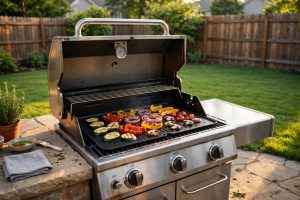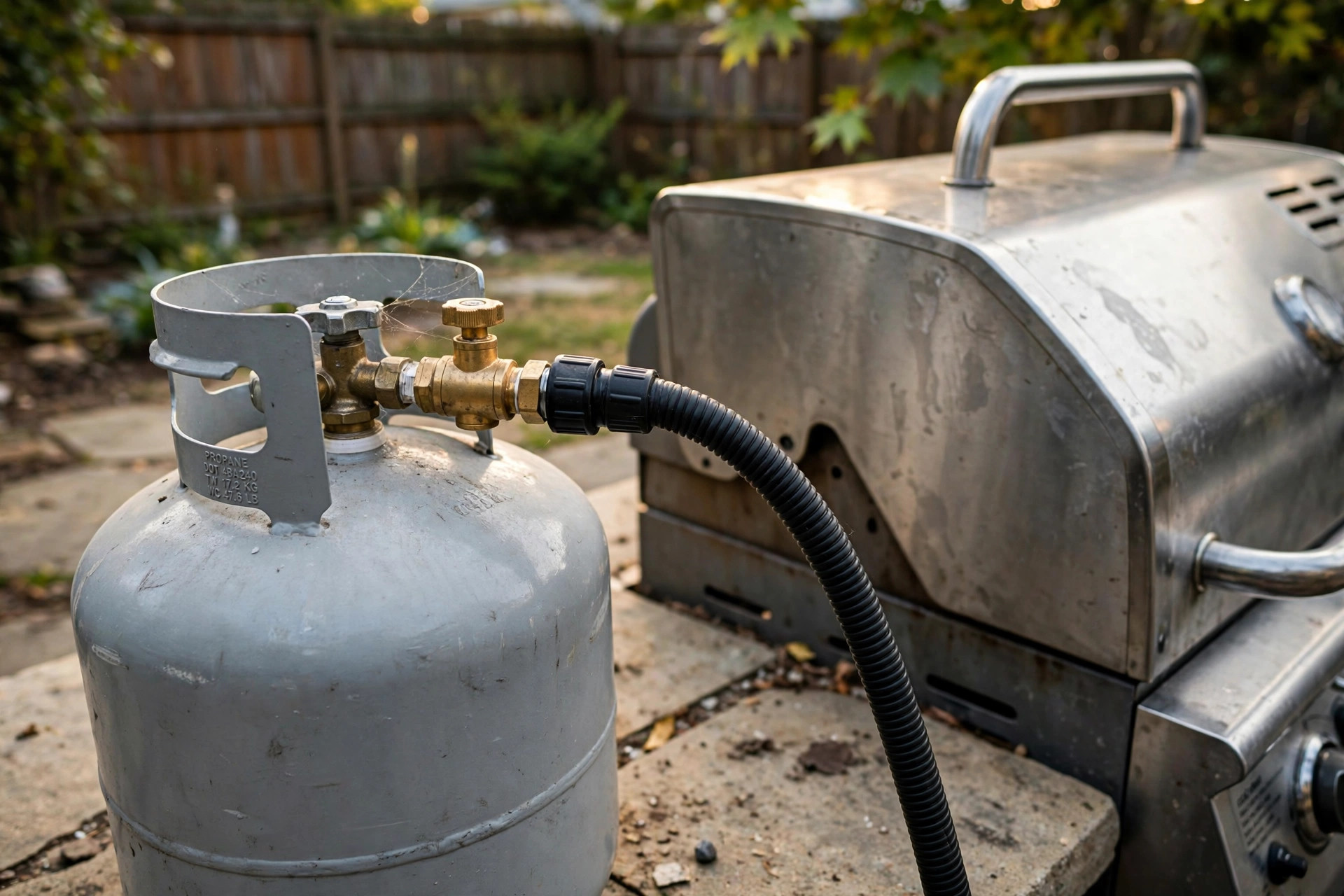

A grill that will not heat up can ruin a cookout. You turn the knobs. The burners light. But the flames stay low and weak. The burgers cook too slowly. The chicken dries out before it browns. This common problem often comes from one small part. It is the gas regulator. The good news is that a fix takes only a few minutes. These gas grill regulator reset instructions will walk you through the whole process in plain steps.
Why a Reset Matters
The regulator controls the flow of gas from the propane tank to the grill. It reduces the high pressure inside the tank to a safe, steady level. Modern regulators also contain a safety device called an excess flow valve. This valve shuts down or limits gas flow when it senses a sudden surge. A surge can happen when you open the tank valve too fast. It can also happen when a burner knob is left on while the tank is connected.
When the excess flow valve trips, the grill receives only a trickle of gas. The flames drop to almost nothing. The grill may take three times as long to heat. Many owners think the grill is broken or the tank is empty. In most cases, the grill is fine. The safety valve simply needs to be reset.
A reset is free. It takes five minutes. It requires no tools. Every gas grill owner should know how to do it. It is one of the simplest skills in all of outdoor cooking.
What the Regulator Does: Gas Grill Regulator Reset Instructions
The regulator sits between the propane tank and the grill hose. It has two jobs. First, it lowers the tank pressure to a level the burners can use. A full propane tank holds pressure near 150 pounds per square inch. The grill needs only about one half of one pound per square inch. The regulator makes that drop possible.
Second, it guards against sudden leaks. If the hose breaks or a valve opens too fast, the excess flow valve reacts. It snaps shut or narrows the gas path. This keeps a small problem from becoming a dangerous one. The valve then stays in its safety mode until someone resets it. That is why a grill can work fine one weekend and act weak the next.
Regulators wear out with time. Sun, rain, and heat take their toll. A typical regulator lasts five to ten years. Guides from Weber and Char-Broil both note that worn parts cause many grill problems. The team at Broil King also lists regulator care among basic grill upkeep. A reset costs nothing, so it is always the first step before buying parts.
Signs You Need a Reset
Watch for these clear signs. They point to a tripped safety valve rather than a dead grill.
– The flames are low on all burners, even with knobs on high. – The grill takes much longer to reach normal cooking heat. – The flame height does not change when you turn a knob. – The grill worked fine last time, and the tank still has gas. – The problem started right after a fresh tank was connected.
One point matters most. If all burners are weak at the same time, the cause is almost always the regulator or the tank connection. A single weak burner usually means a clogged burner tube instead. If you suspect clogged burners, read our guide on how to clean gas grill burners properly before you touch the regulator.
Safety First
Propane is safe when handled with respect. Work outside or in open air. Never reset a regulator in a closed garage or shed. Keep the grill away from walls, fences, and dry brush. Give the grill at least three feet of clear space on all sides.
Do not smoke while you work. Keep matches and lighters away until the reset is done. If you smell strong gas at any point, stop. Turn the tank valve off. Move away from the grill. Let the air clear for several minutes before you continue.
Check the hose for cracks, cuts, or soft spots before you start. If the hose is damaged, do not use the grill. Replace the hose and regulator as a set. Outdoor cooking brands such as Traeger and Napoleon both warn that a damaged hose is a leak risk. The reset steps below assume the hose and tank valve are in sound shape.
Gas Grill Regulator Reset Instructions, Step by Step
Follow these steps in order. Do not skip ahead. The process works because it lets the excess flow valve open again on its own.
Step 1: Turn Off Every Burner
Turn all burner knobs on the grill to the OFF position. Make sure the side burner, if your grill has one, is also off. This step matters. Any open valve keeps the safety device engaged.
Step 2: Close the Propane Tank Valve
Go to the tank. Turn the main valve clockwise until it stops. Hand-tight is enough. Do not force it. The gas line between the tank and the grill still holds some pressure at this point.
Step 3: Disconnect the Regulator
Unscrew the regulator coupling from the tank valve. Most couplings have a large hand wheel or a quick-connect collar. Turn it counter-clockwise until it comes free. You will hear a short hiss as the last bit of trapped gas escapes. This is normal.
Step 4: Wait Thirty Seconds
Set the regulator aside and wait. Thirty seconds is enough. This pause lets the excess flow valve inside the regulator return to its open position. Do not tap or shake the regulator. Let it settle on its own. Some owners wait a full minute. That is fine too.
Step 5: Reconnect the Regulator
Thread the coupling back onto the tank valve. Turn it clockwise and tighten it firmly by hand. Do not use a wrench. The seal is made to seat by hand. A connection that is too tight can damage the brass threads. Once it is snug, the coupling should not wobble.
Step 6: Open the Tank Valve Very Slowly
This is the most important step. Turn the tank valve counter-clockwise to open it, but do it very slowly. Take a full three seconds to open it one quarter turn. A slow turn lets gas enter the hose gently. A fast turn sends a surge. A surge trips the safety valve again, and you must start over.
Step 7: Wait, Then Light the Grill
Wait about one minute after opening the tank. This lets the gas pressure settle through the line. Now open the grill lid. Turn one burner knob to the start or light position. Press the igniter. The burner should light with a healthy flame.
Step 8: Test the Heat
Watch the flame. A normal flame is mostly blue with small yellow tips. It should rise evenly along the burner tube. Turn the knob from high to low and back. The flame should respond at once. If it does, close the lid and let the grill heat for ten minutes. Check that it reaches its usual temperature. The reset is done.
How to Reset a Gas Grill Regulator When the First Try Fails
Sometimes one pass is not enough. If the flames stay low after the steps above, repeat the process once more. Pay close attention to Step 6. Most repeat failures come from opening the tank valve too fast.
If the second attempt also fails, look at other causes. A low propane level can mimic a regulator fault. Lift the tank. A tank that feels very light is likely near empty. Many tanks hold a gauge on the valve. Check it.
Also inspect the burner tubes for spider webs or grease plugs. Insects often build nests inside the tubes during the off season. A blocked tube starves its burner of gas. Blocked tubes are common after winter storage. Our article on how to winterize gas grill for storage covers ways to prevent this.
If the tank is full and the tubes are clear, the regulator itself may be worn out. Regulators do not last forever. Five years of sun and weather is a hard life for a small brass part.
When a Reset Is Not Enough
A reset fixes a tripped safety valve. It does not fix a broken regulator. Watch for these signs of a regulator that needs replacement rather than another reset.
– The flames stay low no matter how many times you reset. – You hear gas flowing but the burners will not light at all. – The flame is yellow and lazy even on a full tank. – The regulator shows rust, cracks, or a sticky coupling. – The grill is more than five years old and never had the regulator changed.
Grilling science sites like AmazingRibs explain that a steady blue flame is the sign of correct gas pressure. Guides at The Spruce Eats add that yellow flames often point to pressure or air-mix problems. Independent testers at Consumer Reports rank grills on heat evenness, which starts with proper gas flow.
If your regulator shows the signs above, replace it. A new regulator costs little. Most universal models fit standard propane tanks. Our gas grill regulator replacement guide walks through the swap in full. You can find replacement regulators at Home Depot and most grill dealers. The crew at Big Green Egg also stocks parts for their own cookers.
Cost and Price
A reset costs nothing but five minutes of your time. That is its main appeal. It is the cheapest repair in all of grilling.
A replacement regulator, if one is needed, is also cheap. Basic models sell for ten to twenty dollars. Premium models with gauges or longer hoses run twenty to forty dollars. A full hose-and-regulator set costs about the same. Most owners can install a new regulator in ten minutes with no tools.
Compare that with a service call. A repair visit can cost seventy-five dollars or more. It makes sense to try the reset first. It makes sense to try a new regulator second. Both are simple. Both save money.
Care and Upkeep
A little care keeps the regulator working for years. Follow these habits.
Keep the tank valve closed when the grill is not in use. This protects the regulator from constant pressure. It also saves gas from small leaks.
Cover the grill between uses. A good cover shields the regulator and hose from sun and rain. Ultraviolet light breaks down rubber hoses over time. Moisture feeds rust on metal parts.
Open the tank valve slowly every time you grill. Make this a habit. A slow hand avoids tripping the safety valve. Many owners trip the valve simply because they turn the tank on in a hurry.
Inspect the hose twice a year. Look for cracks, bulges, and dry spots. Bend the hose gently and watch for surface splits. Replace the hose at the first sign of wear.
Store the tank upright and outside. Never store a propane tank in a garage or basement. Keep spare tanks in shade, away from the house. A cool, upright tank gives steady pressure and a longer regulator life.
Frequently Asked Questions
Why does my gas grill have low flame on all burners?
Low flame on all burners at once usually means the regulator safety valve has tripped. It happens when the tank valve is opened too fast or a burner is left on during connection. Follow the reset steps above. In most cases, the flames return to full strength.
How often should I reset a gas grill regulator?
You should not need to reset on a schedule. A healthy regulator trips only when it senses a surge. If you find yourself resetting every week, something else is wrong. Check for a worn regulator, a low tank, or a leak in the line.
Can a bad regulator cause a gas leak?
A regulator itself rarely leaks. Leaks usually come from loose connections or cracked hoses. Always check connections with soapy water after any reset or part change. Brush the solution on each joint. Bubbles mean gas is escaping. Tighten the joint and test again.
How long does a gas grill regulator last?
Most last five to ten years. Heat, sun, and moisture shorten the life. If your regulator is older than five years and resets no longer help, replace it. A new one is cheap and installs in minutes.
Is it safe to reset the regulator myself?
Yes. The steps above are safe for any owner. Work in open air. Keep the tank valve closed while you disconnect and reconnect. Open the valve slowly. If you smell strong gas at any point, stop and let the area clear.
Should I reset the regulator after changing the propane tank?
Yes. A fresh tank is the most common trigger for a tripped safety valve. Every new tank connection should be opened slowly. If the flames are low after a tank swap, run the reset before you assume anything is broken.
A Final Word
A weak grill is often a simple grill. The regulator does its safety job a little too well, and the whole cooker suffers. Now you know the fix. Turn everything off. Disconnect. Wait. Reconnect. Open the tank with a slow hand. Test the flame. The process takes five minutes and costs nothing.
Keep these gas grill regulator reset instructions near your grill or saved on your phone. The next time the flames run low, you will know exactly what to do. Your steaks will thank you.
References
AmazingRibs.com. (n.d.). Barbecue and grilling science. https://www.amazingribs.com Big Green Egg. (n.d.). Kamado grills and outdoor cooking. https://www.biggreenegg.com Broil King. (n.d.). Gas and charcoal grills. https://www.broilkingbbq.com Char-Broil. (n.d.). Gas and charcoal grills. https://www.charbroil.com Consumer Reports. (n.d.). Product reviews and ratings. https://www.consumerreports.org Napoleon. (n.d.). Fireplaces, grills, and heating products. https://www.napoleon.com The Home Depot. (n.d.). Home improvement products. https://www.homedepot.com The Spruce Eats. (n.d.). Recipes and cooking guides. https://www.thespruceeats.com Traeger. (n.d.). Wood pellet grills. https://www.traeger.com Weber. (n.d.). Grills and outdoor cooking. https://www.weber.com
Was this guide helpful?

About Robert Taylor
The My Garden US editorial team writes practical, in-depth home and garden guides for American homeowners — tested advice, no fluff.
You May Also Like
How to Grill Hot Dogs Like Restaurant Cooks Do
February 23, 2026 0 views
Best Grill Thermometer for Thick Steaks
February 27, 2026 0 views
Outdoor Pizza Oven for Beginners Reviews: What First-Time Buyers Should Know
February 25, 2026 0 views