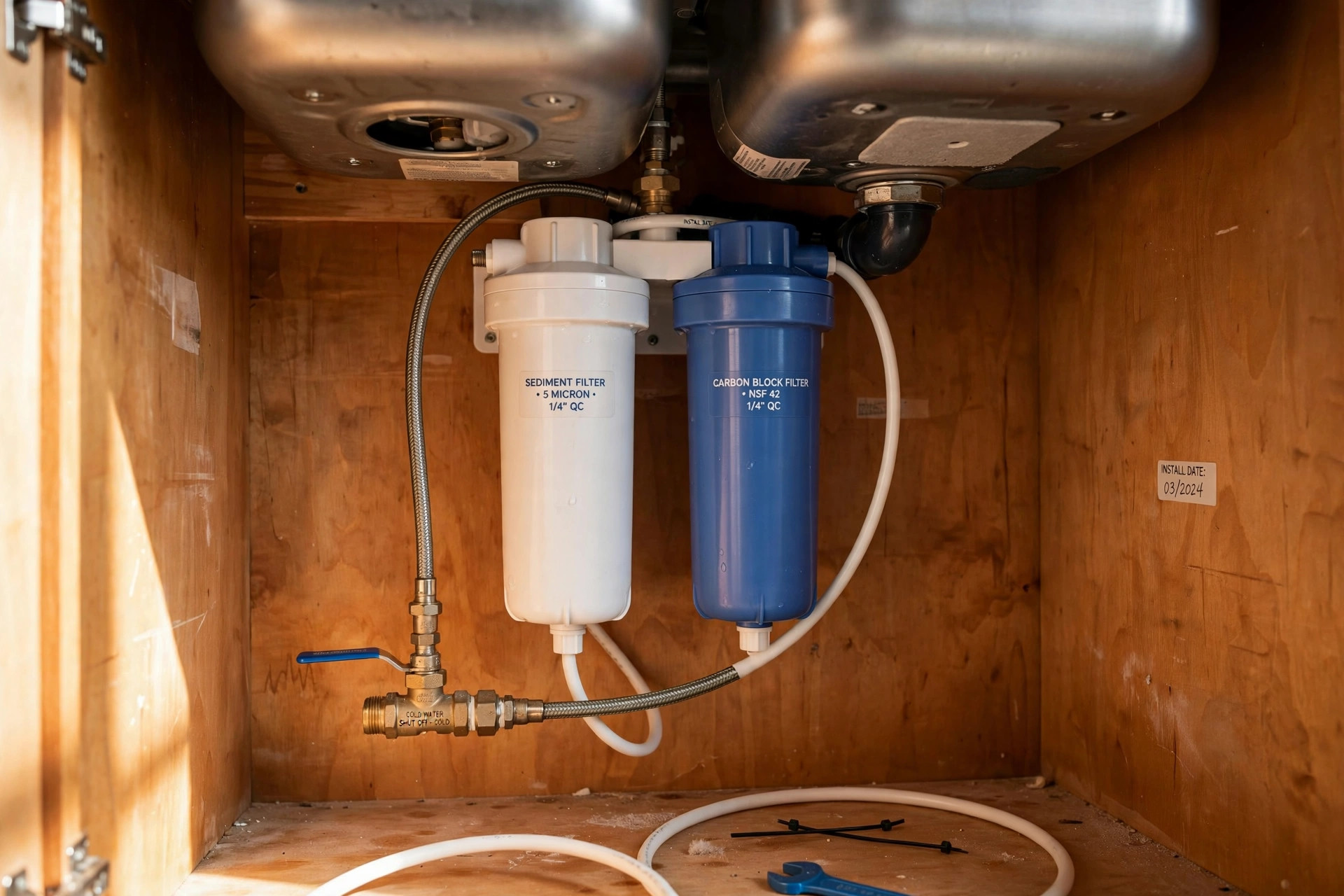
Clean tap water is something most people take for granted until it is gone. A glass fills with water that smells of chlorine, or leaves a film on the kettle, and the question follows at once: is this water safe, and can it taste better? For many families, the answer is an under sink filters california homes usa style system, a compact water filter that fits beneath the kitchen sink and feeds one clean tap. California, with its hard municipal supplies, old pipes, and careful water rules, gives these devices more to do than most states.
This guide explains under sink water filters in plain terms. It covers why they matter, what kinds exist, how to choose one, what they cost, how to keep them up, and how to use them safely.
Why Under Sink Filters Matter
Water that reaches a California home has already traveled far. It may come from mountain snowpack, a distant reservoir, or a local well. On the way it picks up minerals, treatment chemicals, and sometimes traces of older plumbing. Most of it is safe to drink by law, but safe and pleasant are not the same thing. Chlorine protects against germs, yet it leaves a smell and a sharp taste. Hard water leaves spots on glassware and scale in the coffee maker. In some neighborhoods, old service lines add small amounts of lead or copper.
An under sink filter addresses these problems at one point only: the cold water line under the kitchen sink. That is the water people drink and use for cooking, so treating just that line saves money and space. A whole house system treats every shower and hose bib, which costs far more. A pitcher filter costs little, but it fills slowly and holds only a quart or two. The under sink unit sits in the middle ground. It gives a steady stream of filtered water from a small dedicated faucet, and it lasts between six months and a year before the cartridges need a change.
The United States Environmental Protection Agency publishes drinking water rules that every public system must follow. A home filter does not replace that duty. It adds a layer of control where the family actually drinks.
What to Look For When You Choose: Under Sink Filters California Homes Usa
Buying a filter is simpler when you know what the water needs. The best first step is a water report. California cities mail an annual consumer confidence report to water customers, and many post it online. It lists what the local system found in the water during the past year. A test from a state certified lab goes further. It measures hardness, chlorine, metals, and nitrates in the water at your own tap. One test, taken from the kitchen cold tap in the morning, gives a clear baseline.
Once the report is in hand, match the filter to the problem. A chlorine and taste problem calls for a carbon filter. Hard water calls for a softening cartridge or a reverse osmosis unit. Concerns about lead or cysts call for a filter certified to remove them. Shopping blind is the most common mistake. A homeowner buys the cheapest cartridge on the shelf, installs it, and wonders why the water tastes the same.
Check certification next. Independent groups test filters against public standards and print a seal on the box when the unit passes. Two marks to look for are NSF/ANSI 42 for taste and odor, and NSF/ANSI 53 for health effects. Consumer Reports regularly tests home water filters and publishes plain language ratings, which can help narrow a short list. A filter that carries real certification is worth more than a filter that carries bold claims.
Fit is the third question. Under sink cabinets in older California homes are often cramped, and a garbage disposal takes half the space. Measure the cabinet before you buy. Tall filter housings need room for cartridge removal, usually three to five inches below the housing. Note where the cold water shutoff sits and whether the sink has a spare hole for a dedicated faucet. A granite or composite counter may need a special bit to drill the faucet hole.
Key Points on the Checklist
– Read the local water report before you shop. – Match the filter type to the actual problem in the water. – Buy a unit certified to NSF/ANSI 42 and, where needed, NSF/ANSI 53. – Measure the under sink cabinet and count spare faucet holes. – Plan where the old cartridges will go for recycling or disposal.
Types of Under Sink Filters
Four common designs cover most kitchen needs. Each has a clear job.
Carbon block filters are the most common. A dense block of activated carbon pulls chlorine, bad taste, odor, and many chemicals from the water as it passes through. They keep the minerals that give water its character, so the water still tastes like water. A single cartridge usually lasts six to twelve months. Carbon filters are the right choice for most city water that is safe but tastes of treatment.
Granular carbon filters use loose carbon granules in a housing. They cost less and flow faster, but they are less thorough than a solid block. Many simple systems use granular carbon as a first stage.
Reverse osmosis systems push water through a thin membrane at pressure. The membrane holds back dissolved solids, including sodium, fluoride, lead, nitrates, and most minerals. These units often add a carbon pre filter and a carbon post filter, so the box holds three or four cartridges and a small storage tank. Reverse osmosis makes the purest water of the four types. It also wastes some water down the drain during the process, and it strips minerals, which gives the water a flat taste that some people dislike.
Specialty cartridges target one problem. Examples include lead reduction cartridges, scale inhibitors for hard water, and ultraviolet lamps that kill bacteria for homes on wells.
Cost and Price
An under sink filter system costs less than most kitchen upgrades. Prices fall into clear bands. A simple single cartridge carbon system costs between forty and one hundred fifty dollars at a home center such as The Home Depot or Lowe’s. A two stage or three stage carbon system costs between one hundred fifty and three hundred fifty dollars. A full reverse osmosis system with a tank costs between two hundred and six hundred dollars, with premium brands higher.
Cartridges are the ongoing cost. A carbon cartridge costs fifteen to fifty dollars and lasts six to twelve months. A reverse osmosis membrane lasts two to three years and costs thirty to eighty dollars to replace. Against bottled water, the math favors the filter: one or two cartridges a year costs far less than store jugs.
Installation adds to the bill only if you hire help. A plumber in California typically charges one hundred to three hundred dollars to install an under sink unit and drill a faucet hole. Many homeowners do the work themselves in an hour with basic tools. The parts needed are a saddle valve or a tee fitting, plastic tubing, and a wrench.
Installation: How It Goes
A standard under sink filter installs in five plain steps. First, shut off the cold water under the sink and open the faucet to drain the line. Second, mount the filter bracket to the cabinet wall with screws. Third, cut the cold water line and fit a tee or saddle valve to feed the filter, keeping the flow direction as the arrow on the housing shows. Fourth, run the tubing from the filter to the dedicated faucet at the sink deck. Fifth, turn the water back on, flush several gallons through the new cartridge, and check every joint for leaks.
Anyone unsure about cutting a water line should call a plumber. A small leak under a cabinet can do large damage before it is found.
Renters need written permission before drilling a countertop or cutting a pipe. Many landlords agree to a simple single cartridge unit because it adds value to the kitchen. Keep the original aerator and fittings so the sink can be restored when the lease ends.
Care and Upkeep
A filter is only as good as its cartridges. Mark the change date on a card taped inside the cabinet door. Most carbon cartridges last six to twelve months or a set number of gallons, whichever comes first. A household of four that cooks daily reaches the gallon limit well before the year is out. When the water flow slows or the taste returns, the cartridge is spent.
Sanitize the housing at each change. A short soak in a mild bleach solution, followed by a thorough rinse, keeps the housing from growing a film. O rings dry out over time, so keep a spare set. A thin coat of food grade silicone grease on the ring keeps the seal tight.
Watch the pressure. A sudden drop across the house points to a clogged pre filter. A slow drip at the housing threads points to a tired O ring. Neither is costly to fix when caught early. Twice a year, run a hand along every joint and fitting to check for dampness. Cabinets hide slow leaks well, and wood swells fast.
Safety
Filtered water is safe to drink when the system is sized, installed, and kept up. The dangers are small and plain. The main one is a false sense of safety: a filter certified for taste does not remove lead or bacteria, so read the certification label, not the front of the box. The second is stale cartridges. A carbon filter that sits unchanged for two years can harbor bacteria, so change it on schedule even if the water still tastes fine.
Backflow is a real but rare hazard. A reverse osmosis drain line must have an air gap so drain water cannot siphon back into the clean line. Installations from a licensed plumber include this by rule. Keep chemicals and paint out of the filter cabinet.
The United States Consumer Product Safety Commission tracks household product hazards, and plumbing supply leaks are a steady source of home water damage claims. A battery powered leak sensor under the sink costs little and sounds an alarm at the first drop.
How Under Sink Filters Fit the Rest of the Kitchen
A filter is one part of a working kitchen. It pairs well with other thoughtful upgrades. A deep single basin sink makes filling pots easier, and shoppers comparing basins often start with an undermount stainless sinks buying guide. Cold filtered water also feeds the ice maker, so families that upgrade the refrigerator at the same time may want a french door refrigerators buying guide to compare models with built in dispensers. Even small choices add up; a dishwasher third rack buying guide helps households that wash extra glassware by hand less and trust the machine more.
For how to pieces and product comparisons, long running home publications are useful. This Old House has covered kitchen plumbing projects for decades, Bob Vila keeps a deep library of buyer guides, and The Spruce explains home care in plain language. Major appliance makers publish water filter guidance too: GE Appliances, Bosch, and Whirlpool all maintain owner resources for the filtration built into their refrigerators and dishwashers. The ENERGY STAR program offers broader advice on efficient home water use.
Frequently Asked Questions
Do I need an under sink filter if my city water is already treated? Treated water is safe by law, but treatment leaves chlorine taste and odor, and pipes can add metals on the way to the tap. A filter improves taste and adds a layer of protection.
Which is better, reverse osmosis or carbon? Carbon is better for most city water. It removes chlorine, taste, and odor, keeps healthy minerals, wastes no water, and costs less. Reverse osmosis is better when the water has high dissolved solids, sodium, nitrates, or lead concerns. Many families start with carbon and move to reverse osmosis only if a test shows they need it.
How long does installation take? A single cartridge unit takes about an hour for a handy homeowner. A reverse osmosis system takes two to three hours because of the tank and drain hookup. Add time if the countertop needs a new faucet hole. A plumber can finish either job in one visit.
Can renters install an under sink filter? Yes, with the landlord’s written permission. Choose a system that needs no permanent changes, or plan to restore the sink at move out. Keep all original parts in a labeled bag. Some renters use a countertop filter instead to avoid any plumbing changes.
How do I know when to change the cartridge? Follow the maker’s schedule, usually six to twelve months or a set gallon count. Slow flow and returning taste are the practical signs.
Is filtered water safe for babies and pets? Yes. Filtered cold tap water is fine for formula, cooking, and pet bowls. For well water, test for bacteria yearly no matter what filter is in place. If a boil notice is in effect, boil the water even after filtering, unless the filter is certified for cyst removal.
A Final Word
An under sink filter is a modest machine that does one job well. It takes the water a California home already pays for and makes it cleaner, better tasting, and more pleasant to cook with. The purchase is small, the upkeep is simple, and the payoff arrives every time a glass is filled. Start with the water report, buy a certified unit that fits the cabinet, change the cartridges on time, and the filter will serve the kitchen quietly for years.
References
Bob Vila. (n.d.). Home improvement advice. https://www.bobvila.com Bosch. (n.d.). Home appliances. https://www.bosch-home.com Consumer Reports. (n.d.). Product reviews and ratings. https://www.consumerreports.org ENERGY STAR. (n.d.). Energy efficient products. https://www.energystar.gov GE Appliances. (n.d.). Kitchen and home appliances. https://www.geappliances.com Lowe’s. (n.d.). Home improvement products. https://www.lowes.com The Home Depot. (n.d.). Home improvement products. https://www.homedepot.com The Spruce. (n.d.). Home and garden advice. https://www.thespruce.com This Old House. (n.d.). Home renovation guidance. https://www.thisoldhouse.com U.S. Consumer Product Safety Commission. (n.d.). Product safety information. https://www.cpsc.gov U.S. Environmental Protection Agency. (n.d.). Protecting human health and the environment. https://www.epa.gov Whirlpool. (n.d.). Home appliances. https://www.whirlpool.com
Was this guide helpful?

About Lisa Anderson
The My Garden US editorial team writes practical, in-depth home and garden guides for American homeowners — tested advice, no fluff.