
Spring comes early in the catalogs. By February, gardeners in cold states are already planning, and one of the first supplies they need is a tray. If you have asked yourself about seed starting trays where to buy usa, you can find them in almost every corner of the country.
Why Seed Starting Trays Matter
A seed needs three things to sprout: warmth, water, and air. A good seed starting tray gives it all three in small measure. Each cell holds a pocket of soil. The walls keep the pocket from drying out too fast. The holes in the bottom let extra water drain away, which keeps the young roots from rotting. When the seedling is strong enough, you can lift the whole cell out and move it to a larger pot or to the garden bed.
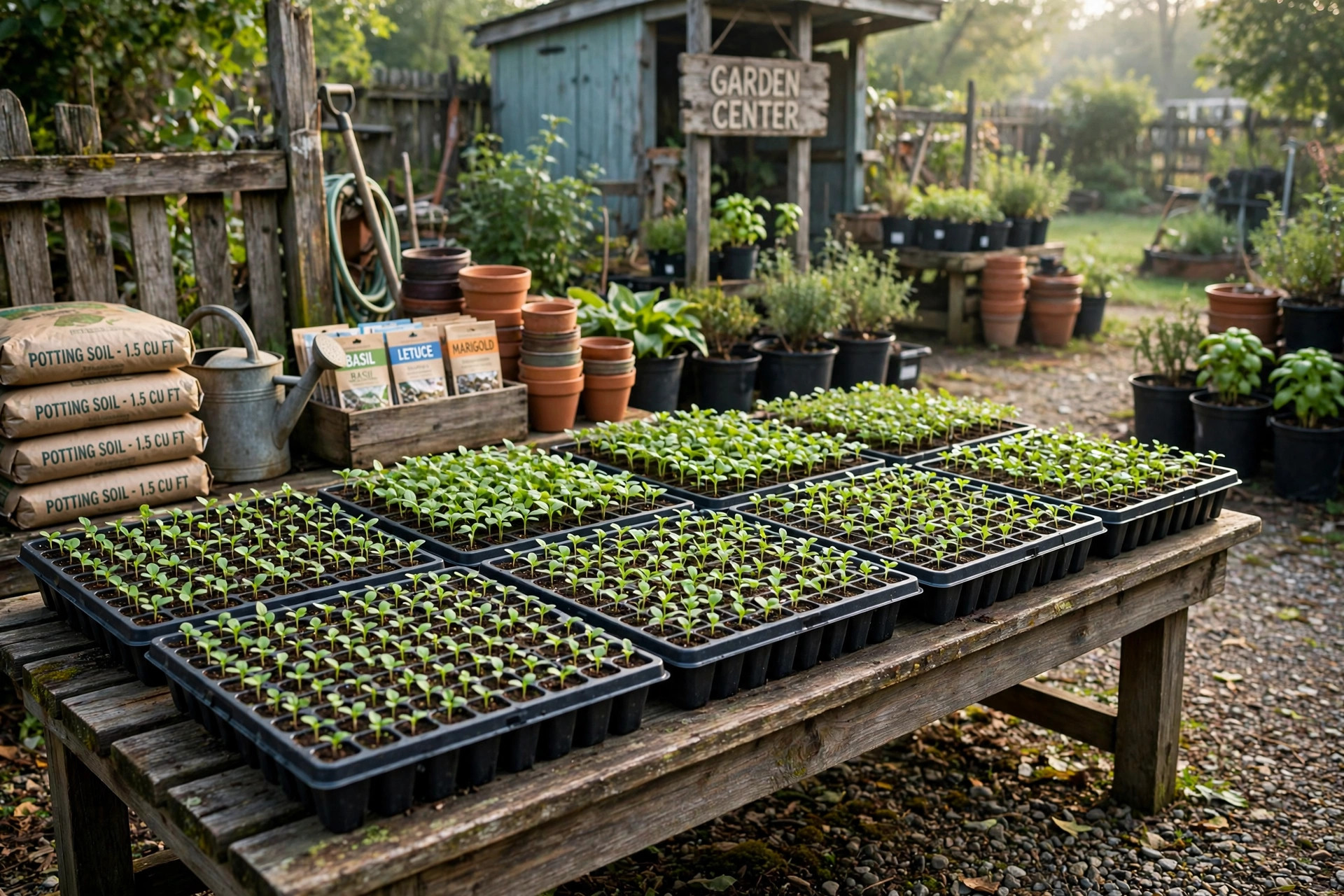
Gardeners who start seeds indoors get a head start of four to eight weeks on the season. In the North, that means ripe tomatoes in August instead of September. In the South, it means cool-season crops can go in before the heat arrives. Without a tray, many growers sow in cups or cans. That works, but trays save space. A single standard tray holds seventy-two cells in the space of one boot box.
Trays also keep things tidy. Soil stays in the cells instead of on the table. Watering is simple: pour water into the solid tray below and the soil wicks it up. For a beginner, a tray is the simplest and cheapest way to learn the craft of starting plants from seed.
What to Look for When You Shop: Seed Starting Trays Where to Buy Usa
Not all trays are made alike. Before you buy, check four points: material, cell size, depth, and whether a dome is included.
Material is the first point. Most trays are thin black plastic. These are cheap and light, and they last one or two seasons. Thicker trays, often called heavy duty or permanent trays, cost more but can last ten years or more. Some growers prefer trays made from recycled plastic. A few brands now sell trays made from rice hulls or pressed fiber that break down in the soil. These are kind to the earth, though they dry out faster and must be watered with care.
Cell size is the second point. Small cells, about one inch across, suit herbs and flowers. Medium cells, about one and a half inches, suit peppers, tomatoes, and most vegetables. Large cells, two inches or more, suit squash, melons, and other fast growers with big roots. Match the cell to the plant. A tiny cell starves a tomato seedling. A large cell wastes soil and space for a basil seedling.
Depth is the third point. Deeper cells hold more soil and dry out more slowly. They suit plants that stay in the tray for six weeks or more. Shallow cells suit quick crops like lettuce that move out in three weeks.
The fourth point is the dome. Many kits come with a clear plastic cover that sits on top of the tray. The dome holds in warmth and moisture, which speeds germination. Once the seeds sprout, you lift the dome off so air can move and the stems grow strong. If you plan to start seeds in a cool room, a kit with a dome is worth the extra dollar or two.
Also look for a solid bottom tray with no holes. It catches water and keeps your table dry. Many kits include one.
Types of Seed Starting Trays
When you shop for seed starting trays where to buy usa, you will meet several common types. Each has its fans.
Standard plastic cell trays. These are the workhorses. A 72-cell tray is the most common size. There are also 36-cell, 50-cell, 98-cell, and 128-cell versions. The thin plastic kind costs two to four dollars. The heavy duty kind costs eight to fifteen dollars but lasts for years.
Trays with domes and bottom trays. These are sold as kits. A typical kit holds 72 cells, a clear dome, and a solid bottom tray. Kits cost eight to fifteen dollars. They are the best choice for a beginner because everything needed is in one box.
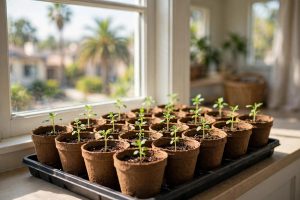
Peat pots and peat pellets. Peat pots are small cups of pressed peat. You plant the seed in the cup, and when the seedling is ready, you plant the whole cup in the ground. The roots grow through the peat walls. Peat pellets are flat disks of peat in a thin net. You soak them in water and they swell into small pots. Both kinds cost about five to ten cents per pot. Many gardeners who ask about peat pots seedlings buying guide usa find that these pair well with a standard tray to hold them.
Soil blockers. A soil blocker is a hand tool that presses damp soil mix into firm blocks. The blocks stand on a tray with no pots at all. This method avoids plastic and gives the roots plenty of air. The tool costs twenty to forty dollars, and it suits gardeners who start hundreds of plants each year.
Reusable rigid trays. Some companies sell trays of thick, food-grade plastic or even silicone. They cost fifteen to thirty dollars, but they do not crack and they wash clean in seconds. For a gardener who starts seeds every year, these pay for themselves in two or three seasons.
Where to Buy: Stores Across the USA
The question of seed starting trays where to buy usa has many good answers. Here are the main ones, from the most hands-on to the most convenient.
Local garden centers and nurseries. These are the best place to see trays in person. You can feel the thickness of the plastic, compare cell sizes side by side, and ask the staff which kit suits your crops. Local shops often carry brands that the big chains do not. Prices are fair, and the advice is free. If you also need seed, a local nursery is the natural place to pick up heirloom vegetable seeds buying guide usa packets while you are there.
Big hardware and home stores. Large chains with garden departments stock trays every spring, usually from February through May. The shelves hold the common kits, domes, bottom trays, and heat mats. Prices are low because the stores buy in great volume. The drawback is choice: you will find the popular sizes, but rarely the heavy duty or specialty trays.
Farm and feed supply stores. In farm country, the feed store is a fine place to buy trays. These shops serve market gardeners and small farmers, so they carry the sturdy, long-lasting trays that the big chains skip. Prices per tray drop when you buy a case of ten or more.
Dollar stores and discount shops. In spring, many dollar stores carry simple 72-cell trays and dome kits for one to three dollars. The plastic is thin and may last only one season, but for a small first garden the price is hard to beat.
Online seed and garden companies. Seed houses such as those listed below sell trays alongside their seeds, which makes ordering simple. You can buy in January, well before the local stores stock up, and have the trays on your shelf when sowing time comes. Online shops carry the widest range, from cheap thin trays to the finest heavy duty kinds. Shipping adds to the cost, so compare the total price, not just the sticker price. One more tip: if you order trays from a seed company, add your seed packets to the same order and save a second shipping charge.
Online marketplaces. Large general marketplaces list thousands of tray kits from many sellers. Prices can be low, but quality varies. Read the reviews and check the seller rating before you buy. Look for listings that name the cell count, the plastic thickness, and whether a dome is included.
Cost and Price Guide
Seed starting trays are one of the cheapest garden supplies. A thin 72-cell tray costs two to four dollars at a store. A kit with tray, dome, and bottom tray costs eight to fifteen dollars. Heavy duty trays cost eight to fifteen dollars each and last many years. Peat pots cost five to ten cents each when bought in packs of fifty or more. A soil blocker costs twenty to forty dollars as a one-time purchase.
Think in cost per plant. A 72-cell kit at twelve dollars costs about seventeen cents per seedling space. Used for three seasons, that falls to six cents. A heavy duty tray at twelve dollars used for ten seasons costs less than two cents per cell per year. The cheapest tray is not always the cheapest in the long run. If you plan to garden for years, buy the thicker tray once.
Watch for spring sales. Garden centers often cut prices on seed starting supplies in late March, when the rush of early sowers has passed. End-of-season clearance in May can bring kits down to half price, which is a fine time to stock up for next year.
Care and Upkeep of Your Trays
A tray that is cleaned and stored well will serve you for many seasons. After your seedlings move out, wash each tray in warm soapy water. Scrub off the soil with a stiff brush. Then soak the trays for ten minutes in a mix of one part household bleach to nine parts water. This kills the fungi and bacteria that cause young plants to fail. Rinse well and let the trays dry in the sun.
Store dry trays out of the sun. Sunlight breaks plastic down over time. Stack the trays flat in a shed or garage, with the domes nested inside one another. Keep the bottom trays stacked separately so they do not warp.
Each spring, check old trays before you sow. Throw away any with cracked cells or broken corners. A cracked cell lets soil fall through and dries the seedling out. One bad tray can ruin a whole sowing, so be strict.
Label your trays. A strip of masking tape and a marker will do. Write the plant name and the sowing date on each tray. When you grow ten kinds of seedlings at once, labels keep the garden from becoming a guessing game.
Safety Notes
Seed starting is a safe hobby, but a few cautions are wise. Wash your hands after handling seed starting mix, which can carry dust and microbes. Wear a dust mask when you pour dry mix from the bag, especially in a closed room. Keep the bleach soak away from children and pets, and rinse trays well before you sow.
Heat mats warm the soil and speed germination. Buy mats made for seed starting, and never cover a mat with a flammable cloth. Unplug mats when the seedlings are up and growing.
Some growers worry about peat and the bogs it comes from. If that concerns you, choose trays and mixes made from coconut coir or rice hulls instead. Many fine peat-free choices exist today.
Frequently Asked Questions
When should I buy seed starting trays? Buy them in January or February, before sowing time. Stores stock up in late winter, and the best kits sell out by March in many towns. Online shops sell year-round. If you want full details on kits and sizes, see our seed starting trays buying guide usa page.
How many trays does a beginner need? One or two 72-cell kits are plenty for a first vegetable garden. That gives room for about a hundred seedlings, which fills a good-sized backyard plot. Start small. You can always buy more trays next year.
Can I reuse seed starting trays? Yes. Wash them, soak them in a mild bleach mix, rinse, and dry them. Thin trays last one to three seasons. Heavy duty trays last ten years or more with good care.
Do I need a heat mat and grow light? A grow light matters more. A sunny windowsill is often not bright enough, and seedlings grown in dim light turn tall and weak. A simple shop light hung a few inches above the tray gives strong, stocky plants.
What is the difference between a cell tray and a flat? A flat is a shallow tray with no divisions. Gardeners sow seeds across the whole flat and later move each seedling to its own pot. A cell tray has divided pockets, so each seedling grows in its own space from the start.
Are peat pots better than plastic trays? Each has strengths. Peat pots go straight into the ground, so the roots are never disturbed. Plastic trays cost less per plant and can be reused for years. Many gardeners use both: peat pots for crops that dislike root disturbance, like cucumbers and melons, and plastic trays for everything else.
A Final Word
The search for seed starting trays where to buy usa ends the same way for most gardeners: with a simple kit from a trusted shop, bought early in the season. Whether you choose the local nursery, the big hardware store, or an online seed house, the tray itself is only the beginning. What matters is what you put in it: good seed, fresh mix, warmth, light, and a little patience. Buy your trays now, sow on time, and by the time the last frost passes, you will have strong young plants ready for the garden.
For more background, see Gurney’s Seed & Nursery Co, White Flower Farm, and Monrovia. For more background, see Proven Winners, Gardening Know How, and The Old Farmer’s Almanac. Buying guides are also published by The Spruce and Burpee.
References
Burpee. (n.d.). Seeds, plants, and gardening supplies. https://www.burpee.com Gardening Know How. (n.d.). Gardening guides and plant care. https://www.gardeningknowhow.com Gurney’s Seed & Nursery Co. (n.d.). Seeds, plants, and garden supplies. https://www.gurneys.com Monrovia. (n.d.). Plants for home gardens. https://www.monrovia.com Proven Winners. (n.d.). Plants and gardening inspiration. https://www.provenwinners.com The Old Farmer’s Almanac. (n.d.). Gardening calendars and advice. https://www.almanac.com The Spruce. (n.d.). Home and garden advice. https://www.thespruce.com White Flower Farm. (n.d.). Plants, bulbs, and garden supplies. https://www.whiteflowerfarm.com
Was this guide helpful?

About Michael Thompson
The My Garden US editorial team writes practical, in-depth home and garden guides for American homeowners — tested advice, no fluff.
You May Also Like

Monstera Plants Sale: American Homes Guide
June 2, 2026 0 views
Garlic Bulbs for Planting: USA Online Deals and Growing Guide
April 26, 2026 0 views
Lavender Seed Packets USA Online Deals: What to Know Before You Buy
January 11, 2026 0 views