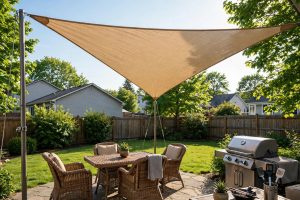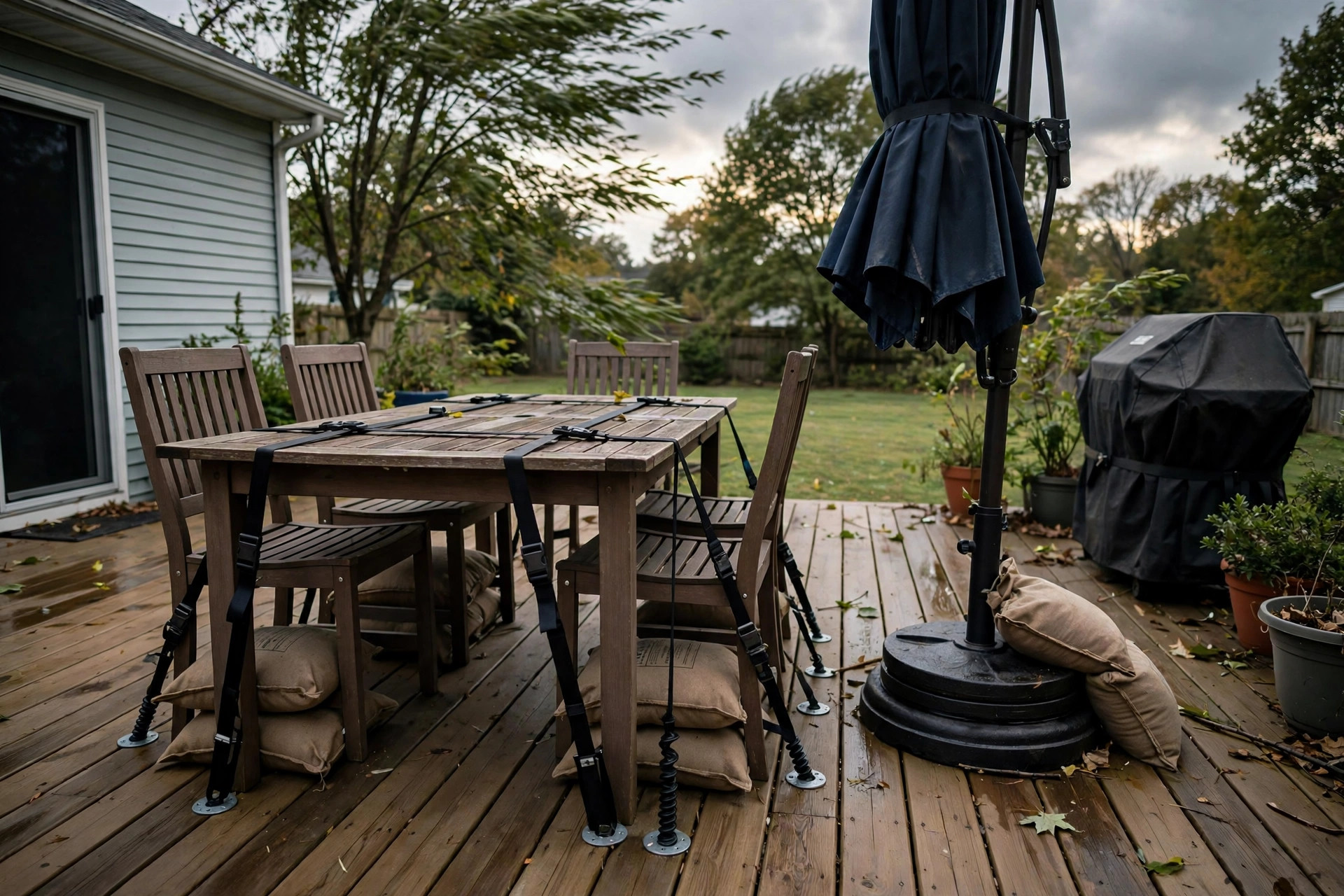

Strong wind can turn a quiet patio into a danger zone. A light chair or umbrella can lift, slide, and crash into walls, windows, or neighbors’ yards. Knowing how to anchor outdoor furniture in wind keeps your patio safe, protects your investment, and gives you peace of mind every time the sky turns gray.
Anchoring does not have to be costly or ugly. Many methods cost little, need no special skill, and stay out of sight. Some take only a few minutes. Others give season-long protection. This guide walks through every option, from simple sandbags to permanent ground anchors, so you can pick what fits your patio, your furniture, and your weather.
Why Anchoring Outdoor Furniture Matters
Wind is the number-one cause of damage to outdoor furniture. A gust of 40 miles per hour can lift an open umbrella and send it flying. Glass-top tables can shatter when blown over. Chairs can crack, scratch, and dent. In a bad storm, unsecured furniture can break a window or injure a person.
Anchoring solves these problems at the root. It keeps each piece where it belongs. It also cuts down on the daily chore of dragging everything into the garage before a storm. When your furniture is anchored, a sudden gust is no longer an emergency.
Anchoring also protects the look of your patio. Pieces that blow around get chipped, scratched, and bent. A dining chair that slams into a concrete wall will show the damage fast. Keeping pieces still keeps them looking new longer, which saves money on repairs and replacement.
There is a safety angle too. In high-wind areas, loose furniture can become flying debris. A secured patio is a safer yard for your family, your pets, and the people who live around you.
Know Your Wind Risk First: How to Anchor Outdoor Furniture in Wind
Before you pick a method, size up your situation. Not every patio needs the same level of protection.
Check your local wind patterns
Some areas face only mild breezes. Others get regular gusts above 50 miles per hour. Coastal homes, hilltops, and open plains see the worst wind. Look at your local weather records, or check your area on the maps at sites like Home Depot and Lowe’s, which often publish regional wind guidance for patio products. If storms hit your town often, choose a stronger method than you think you need.
List your light and bulky pieces
Umbrellas, lightweight chairs, small side tables, and cushions are the worst offenders. Bulky items like large planters and heavy dining sets move less, but they can still slide across a deck. Walk your patio and note which pieces feel easy to tip. Those are your first targets.
Note your patio surface
Grass, soil, gravel, wood decks, and concrete slabs each call for a different approach. Ground anchors work in soil and grass. Weighted bases suit hard slabs. Screws and bolts suit wood decks. Your surface decides your options, so make the call early.
Methods for Anchoring Outdoor Furniture
There are many ways to anchor outdoor furniture in wind. Most use one of three ideas: tie it down, weigh it down, or bolt it down. Here are the most reliable options.
Ground anchors and screw stakes
Screw-in ground anchors twist deep into soil or grass. They look like big metal corkscrews. You loop a strap, cable, or rope from the anchor to the furniture frame. They hold strong in winds up to 60 miles per hour when set deep.
This method suits chairs, tables, and grills on lawns and soil. It does not work on concrete or stone. For best hold, drive the anchor at least 18 inches deep and angle it slightly away from the furniture. Guides like those on Bob Vila show how to set them level and test the hold before a storm.
Tie-down straps and cables
Adjustable straps with buckles or ratchets run from the furniture to a fixed point. A fixed point can be a ground anchor, a deck post, a fence, or a heavy planter. Straps spread the load across the frame, which cuts the risk of bending thin metal.
Straps work best when they cross over seats or under tables at a low angle. Tighten them firm, but not so tight that they warp the frame. Check them each spring, since sun and rain wear nylon and plastic buckles over time.
Furniture weights and sandbags
Weights are the simplest answer. Sandbags, weighted bags, and cast-iron plates sit on or against chair legs and table bases. Many makers sell bags shaped to fit umbrella stands and chair frames.
Weights are easy to move and need no tools. The downside is looks: bags can clash with a styled patio. Many owners hide them behind cushions or under table skirts. For a guide to matching weights with your set, the patio reviews on The Spruce cover size and weight ratings in plain terms.
Weighted umbrella bases
Patio umbrellas deserve special care. An open umbrella acts like a sail. Use a heavy base that weighs at least 50 pounds for a standard 9-foot umbrella, and 75 pounds or more in windy zones. Fillable bases take sand or water; sand is heavier and lasts longer.
Close the umbrella when winds pass 30 miles per hour, even with a heavy base. Tie the canopy shut with its strap. In severe weather, take the umbrella down and lay it flat. No base holds an open umbrella in a true gale.
Bolt-down brackets on decks
On wood decks, L-brackets and lag bolts give a near-permanent fix. Screw one side of the bracket to the deck boards and the other to the furniture leg or frame. This is the strongest home method for decks.
Use stainless steel or coated bolts so they do not rust. Pre-drill holes to keep deck boards from splitting. This method is ideal for a spot you use all season, like a grill station or a fixed dining set. For planning a deck layout that stays safe in wind, HGTV offers patio design ideas that blend anchoring hardware into the look.
Staking small items
Cushions, throw pillows, and small planters blow away first. Stake them or tie them. Cushion ties thread through chair frames. Velcro straps hold pillows to benches. Small planters can sit in larger, heavier pots or ringed stands that resist tipping.
For a full review of wind-proof decor ideas, the seasonal guides at Frontgate show how heavy materials and smart layouts keep a styled patio from blowing apart.
Windbreaks and screens
Reducing wind itself helps everything on the patio. Screens, trellises, and dense shrubs cut gusts before they hit the furniture. A solid fence or privacy wall can drop wind speed by half on the sheltered side.
Place the screen on the side the wind usually comes from. Leave small gaps in slatted screens so wind passes through gently instead of pushing the whole panel over. Windbreaks work well with other methods, not as a replacement.
Storage plans for severe storms
When a named storm or warning is coming, nothing beats moving furniture inside. Stack chairs in the garage, fold tables, and lay umbrellas down. Anchoring handles daily wind; storage handles the worst events. Have a plan and a place ready before storm season starts.
Choosing the Right Method for Each Piece
Match the method to the item:
– Umbrellas: heavy base plus closed canopy; lay flat in storms. – Light chairs: straps to ground anchors, or L-brackets on decks. – Dining tables: straps under the frame; weigh down glass-top models. – Lounges and sofas: heavy sets need little; strap light sectionals. – Cushions and pillows: ties, Velcro straps, or deck boxes for storage. – Grills and fire pits: bolt or strap to the deck; use wind guards. – Planters: heavy pots, or stake stands into soil.
If you are buying new pieces, look for designs that resist wind from the start. Solid frames, low profiles, and heavy materials like teak, cast aluminum, and Polywood lumber need less anchoring than thin plastic sets. Pairing wind-smart buying with the anchoring methods above gives the best result.
Cost and Price
Anchoring outdoor furniture in wind costs far less than replacing it. A set of four screw-in ground anchors runs about 15 to 30 dollars. Tie-down strap kits cost 10 to 25 dollars for a set. Sandbags run a few dollars each, and a good weighted umbrella base costs 40 to 100 dollars.
Bolt-down brackets and stainless lag bolts add another 15 to 30 dollars per project. Professional-grade windbreak screens cost more, from 50 to 300 dollars, but they serve the whole patio for years.
Compare that to the cost of damage. One shattered glass tabletop can cost 150 dollars to replace. A cracked window from a flying chair can cost 400 dollars or more. Anchoring pays for itself the first time a storm hits. Shop the range of tie-down and weight options at IKEA and Wayfair, and compare prices at Article for bundled patio sets that include weighted bases.
Care and Upkeep
Anchoring gear needs small, regular care.
– Inspect straps each season. Look for frayed edges, cracked buckles, and faded nylon. Replace worn straps before storm season. – Check ground anchors yearly. Pull-test each anchor in spring. Soil shifts over winter, and a loose anchor gives little hold. – Clean metal parts. Rinse bolts, brackets, and cables with fresh water, then dry. A light coat of oil keeps threads smooth. – Refresh fillable weights. Sand settles and water leaks. Top off umbrella bases each spring. – Store spare straps dry. Keep extras in a sealed box so they are ready when weather turns.
Five minutes of checks each season keeps the whole system working when it counts.
Safety
Work safely while you anchor.
– Wear gloves when handling screw anchors and cables. Edges can be sharp. – Never anchor to gas lines, loose fences, or rotted deck posts. A weak anchor point is worse than none. – Keep straps clear of walkways so no one trips. – Tighten straps firm, but stop before bending the frame. – Take umbrellas down in severe storms, no matter the base weight. – Keep children and pets away while you drill or bolt.
If winds reach warning levels, bring furniture inside rather than trusting anchors alone. Anchoring is for gusty days and strong storms, not for hurricanes and tornadoes.
FAQ
How do I anchor outdoor furniture in wind on a concrete patio?
Use weighted bases and sandbags, since you cannot drive anchors into concrete. Run tie-down straps from the furniture to heavy planters or fixed posts. For a permanent fix, drill into the slab with masonry bolts and brackets. Keep straps low and tight so pieces cannot lift.
What is the best way to stop patio umbrellas from blowing over?
Use a base of at least 50 pounds, close the canopy when winds top 30 miles per hour, and tie the canopy shut. In storms, lay the umbrella flat on the ground or bring it inside. A heavy base alone will not hold an open umbrella in high wind.
Can I anchor furniture on a wood deck without damage?
Yes. Use L-brackets with lag bolts, pre-drilling each hole to avoid splitting. Stainless steel hardware resists rust. If you rent or want no holes, use heavy weights and straps tied to solid rail posts instead.
How heavy should a patio umbrella base be?
For a 9-foot umbrella in calm areas, 50 pounds is the minimum. In windy areas or for 10- to 11-foot umbrellas, use 75 to 100 pounds. Sand-filled bases beat water-filled ones for weight and long life.
Do I need to anchor heavy furniture too?
Heavy pieces move less, but they can still slide in strong gusts. A quick strap to a fixed point costs little and keeps even heavy sets in place. At minimum, anchor the lightest pieces and store cushions in a deck box before storms.
What should I do with my patio furniture during a hurricane warning?
Bring everything inside or into a garage. Lay large items flat and lock doors and windows. Anchors and weights are not built for hurricane-force winds. When the warning passes, reset the anchors before using the patio again.
A Final Word
Learning how to anchor outdoor furniture in wind is a small job with a big payoff. A few straps, weights, or bolts keep your patio safe through gusty spring days and rough summer storms. Start with your lightest pieces, match the method to your surface, and check the gear each season. Your furniture will last longer, your yard will stay safer, and the next storm warning will not send you running outside in the rain.
For related ideas, see our guides on the best rattan patio set for conservatory and the best hammock chair with stand indoors, and read our outdoor sideboard for patio storage reviews for wind-safe storage ideas.
References
Article. (n.d.). Modern furniture. https://www.article.com Bob Vila. (n.d.). Home improvement advice. https://www.bobvila.com Frontgate. (n.d.). Outdoor furniture and decor. https://www.frontgate.com HGTV. (n.d.). Home and garden ideas. https://www.hgtv.com IKEA. (n.d.). Home furnishings. https://www.ikea.com Lowe’s. (n.d.). Home improvement products. https://www.lowes.com Polywood. (n.d.). Outdoor furniture. https://www.polywood.com The Home Depot. (n.d.). Home improvement products. https://www.homedepot.com The Spruce. (n.d.). Home and garden advice. https://www.thespruce.com Wayfair. (n.d.). Furniture and home goods. https://www.wayfair.com
Was this guide helpful?

About Michael Thompson
The My Garden US editorial team writes practical, in-depth home and garden guides for American homeowners — tested advice, no fluff.
You May Also Like
How to Assemble a Metal Gazebo Kit: A Plain Step-by-Step Guide
July 3, 2026 0 views
Best Outdoor Clock for Patio Wall: How to Choose the Right One
June 24, 2026 0 views
Patio Furniture for Windy Areas: Reviews of the Best Choices
July 13, 2026 0 views