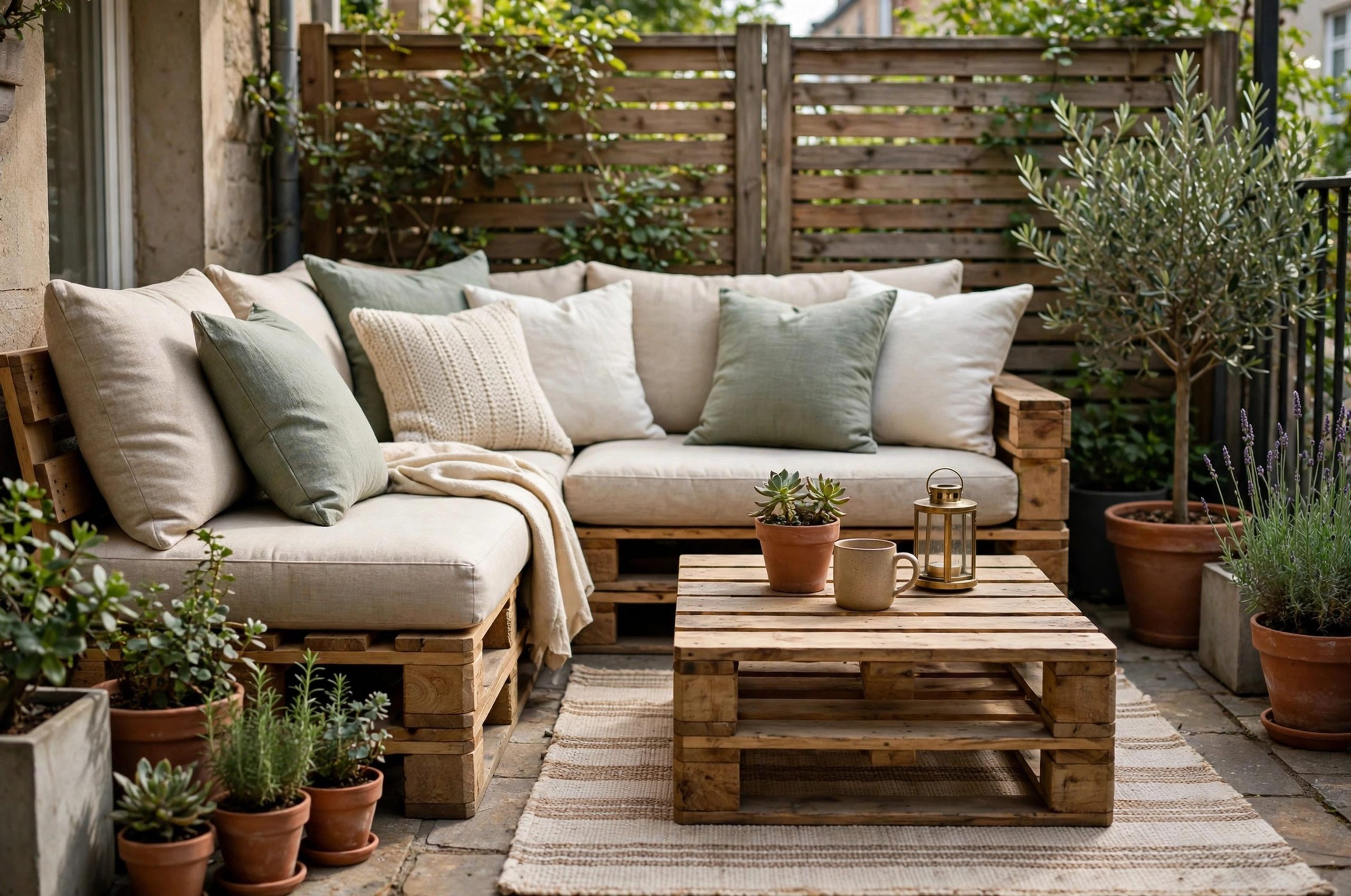
A small patio does not need expensive furniture to look good. It needs furniture that fits. Wooden shipping pallets, the kind stacked behind warehouses and grocery stores, can become sofas, tables, planters, and bars for the cost of a few screws and a weekend's work. They are free or nearly free, they suit small spaces, and they have a rustic look that fits a garden. The rest of this guide covers pallet furniture projects in plain language.
Table of Contents
Table of Contents
Pallet building is one of the friendliest ways into DIY furniture. The wood comes in standard sizes, the projects are forgiving, and mistakes cost nothing because the material was free. But there are two things you must get right: pallet safety and weather protection. This guide covers both, plus the best starter projects for a small patio.
Pallet Furniture Projects: Pallet Safety First: Read the Stamp
When it comes to pallet furniture projects, getting the details right makes all the difference.
Many homeowners find that pallet furniture projects is easier than they expected once they know the basics.
Not every pallet is safe to build with. Pallets are shipping equipment, and some have been treated with chemicals or carried nasty cargo. Before you haul any pallet home, read the stamp burned into the wood.
Look for the IPPC wheat-stalk logo with a two-letter treatment code. HT means heat-treated. The wood was heated to kill pests, with no chemicals involved. KD or KD-HT means kiln-dried, also safe. DB means debarked, which is just a prep step, and it is fine when paired with HT.
Avoid MB. That stands for methyl bromide, a toxic fumigant. MB pallets are rare now, but old ones still circulate. Do not use them for furniture, do not burn them, do not bring them home. Also skip pallets with no stamp at all. Without a stamp, you cannot know the treatment history, so treat them as unsafe.
Beyond the stamp, inspect the pallet. Reject any with chemical spills, strong odd smells, heavy staining, or visible mold. Avoid painted pallets in bright rental-company colors like blue or red. Those belong to pallet rental pools, and taking them is technically theft. Ask first wherever you get pallets. Many businesses are happy to give away plain HT pallets that would otherwise be thrown out.
One more caution from experienced builders: pallet wood is rough packaging lumber, not furniture-grade stock. Wear gloves when handling it. Splinters are the most common pallet injury, and old nails hide in the boards. Pull or hammer flat every nail before you start cutting.
Tools and Materials You Will Need
Many homeowners find that pallet furniture projects is easier than they expected once they know the basics.
The key to pallet furniture projects is choosing the right approach for your space and budget.
You do not need a full workshop. The basics cover nearly every pallet project.
- A pry bar or pallet buster for taking pallets apart
- A hammer and a drill or driver
- A saw: a circular saw or reciprocating saw for cutting
- Sandpaper or an electric sander, medium and fine grit
- A tape measure, a pencil, and a level
- Wood screws in a few lengths, plus wood glue
- Exterior wood stain, paint, or sealant
- Brushes or rollers, gloves, and safety glasses
For outdoor use, choose exterior-rated finishes. Interior paint will peel in one season outside. A good exterior stain or spar urethane protects the wood from rain and sun. Budget for this. The pallets were free, but the finish is what makes the furniture last.
Project 1: The Pallet Coffee Table
The key to pallet furniture projects is choosing the right approach for your space and budget.
With a little planning, pallet furniture projects can fit even a busy schedule.
Start here. A coffee table is the simplest useful thing you can build, and it teaches every skill the bigger projects need.
Pick a pallet in good shape with tight boards. Sand the whole thing, top, sides, and bottom, until no splinters catch your glove. This takes longer than you think. Do not rush it.
For a low table, use the pallet as-is. For a taller one, stack two pallets and screw them together through the blocks. Add four caster wheels to the bottom corners and the table rolls wherever you want it. Casters are the upgrade that makes pallet furniture practical on a small patio. You can roll the table aside when you need floor space.
Finish with stain or paint, then seal it. A piece of glass or a sheet of outdoor plywood on top gives you a smooth surface for drinks. The gaps between the slats below become handy storage for magazines or a throw blanket.
Project 2: The Pallet Sofa
With a little planning, pallet furniture projects can fit even a busy schedule.
Before you start, it helps to understand how pallet furniture projects works in real homes.
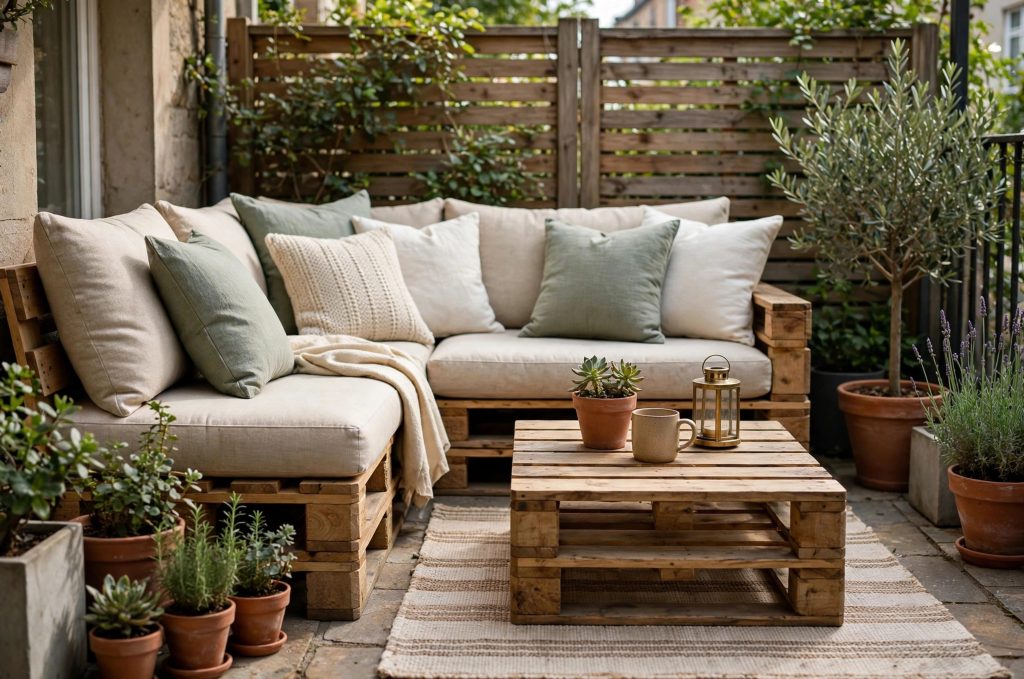
A pallet sofa sounds ambitious, but it is really just stacking. Two or three pallets high makes a seat base at a comfortable height. Screw the stack together so it cannot shift. Stand pallets on edge behind it for a backrest, braced with angled supports, or skip the wooden back and lean big cushions against the wall.
The cushions make or break this project. Bare pallet wood is not comfortable to sit on. Use thick outdoor cushions, old sofa cushions, or custom-cut foam with washable covers. This is where a little money well spent transforms the result. Good cushions on a free frame beat cheap cushions on an expensive frame every time.
On a small patio, keep the sofa to two seats wide. A standard pallet is about forty by forty-eight inches, so a two-pallet-wide sofa seats two comfortably. An L-shape in a corner uses dead space well and seats three or four without eating the middle of the patio.
Add armrests from short pallet sections if you like, or leave the ends open so the sofa feels less bulky. Locking casters under the base let you rearrange for parties and tuck the sofa against the wall when you need room.
Project 3: Planters and Side Tables
Before you start, it helps to understand how pallet furniture projects works in real homes.
A good plan for pallet furniture projects saves time, money, and frustration.
Small projects are perfect for a first build and for filling the gaps around bigger pieces.
A planter box from pallet boards takes an afternoon. Cut boards to length, screw them into a box, line it with landscape fabric, and drill drainage holes. Fill with potting mix and herbs or flowers. A row of pallet planters along the patio edge softens the whole space.
A side table is one pallet cut down, or a few boards screwed into a cube. It holds a drink and a book next to the sofa. Build two and they flank the seating like they were bought as a set.
A vertical planter, made by standing a pallet upright and backing the slats with fabric pockets, turns a blank wall into a garden. It is ideal for small patios where floor space is precious and wall space is free. Plant it with herbs, succulents, or trailing flowers.
Project 4: The Pallet Bar or Serving Station
A good plan for pallet furniture projects saves time, money, and frustration.
For most people, pallet furniture projects comes down to a few smart choices.
If you entertain, a pallet bar earns its keep. Stand two pallets upright in an L or U shape, top them with boards for a counter, and add a lower shelf for bottles. It takes up little floor space and gives the party a focal point.
Keep the design simple. A flat top at counter height, a shelf below, and a foot rail if you are feeling fancy. Stain it dark for a pub look or paint it white for a coastal feel. Add hooks on the side for an ice bucket or a trash bag.
For more on setting up the serving side, our small-deck grill guide covers compact cooking setups that pair well with a pallet bar.
Making It Last Outdoors
For most people, pallet furniture projects comes down to a few smart choices.
If you are new to pallet furniture projects, start with the simplest option and build from there.
Raw pallet wood will gray, crack, and rot if you leave it unfinished. The finish is not optional.
Sand every surface that hands will touch, then apply your finish to all sides, including the bottom and the insides. Water gets in through the parts you cannot see. Two thin coats beat one thick coat. Let each coat dry fully.
Reapply the finish every year or two, or when water stops beading on the surface. A quick sanding and a fresh coat take an afternoon and double the furniture's life.
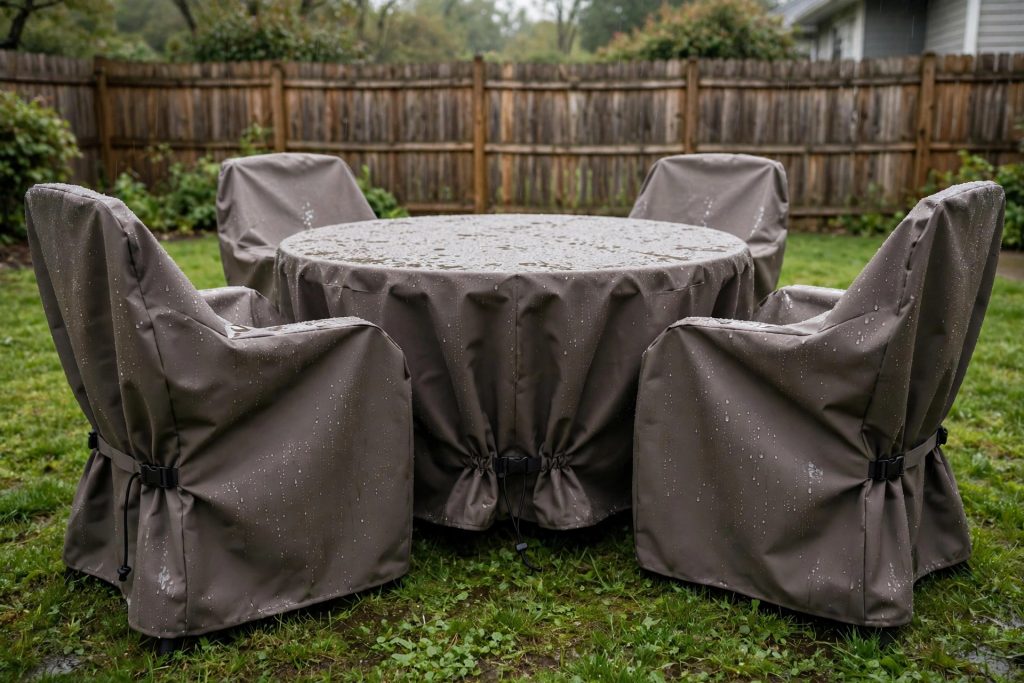
Keep pallet furniture off bare ground. Feet on pavers or a patio surface last far longer than feet sitting in wet grass. In the off-season, cover the pieces or move them under a roof. Even well-sealed wood benefits from a break from winter weather.
Check screws and joints each spring. Wood moves with moisture, and screws loosen. A ten-minute tune-up keeps everything tight.
Designing for a Small Patio
If you are new to pallet furniture projects, start with the simplest option and build from there.
Pallet furniture can overwhelm a tiny patio if you are not careful. A few design rules help.
Build to the space, not to the pallet. Cut pallets down rather than letting standard sizes dictate your layout. A sofa that fits the wall with two inches to spare looks built-in. One that sticks out looks like a construction site.
Keep pieces low and open. Low seating makes a small patio feel bigger. Open designs, like a slatted coffee table rather than a solid box, let light through and feel less heavy.
Stick to one finish. A patio where every pallet piece wears the same stain looks designed. A mix of raw wood, white paint, and dark stain looks like a scrapyard. Pick your finish before you build the first piece.
Leave walking room. On a small patio, every piece should earn its footprint. If you cannot walk comfortably around the furniture, remove something. One good sofa and one table beat a crowded set you cannot move through.
For more small-space seating ideas, see our bistro set guide for small patios and rooftop deck furniture ideas. A patio mirror can also make a tight space feel larger. Keep this guide handy the next time pallet furniture projects comes up.
References
When it comes to pallet furniture projects, getting the details right makes all the difference.
Approaching Home. (n.d.). 8 DIY wood pallet furniture and decor ideas. https://approachinghome.com/diy-wood-pallet-furniture-and-decor-ideas/
Archyde. (n.d.). DIY pallet furniture: Easy & affordable builds. https://www.archyde.com/diy-pallet-furniture-easy-affordable-builds-15/
Archyde. (n.d.). Easy DIY pallet furniture ideas. http://www.archyde.com/easy-diy-pallet-furniture-ideas/
Eco-savvy. (n.d.). Pressure-treated pallets: Are they safe? What you need to know! https://eco-savvy.blog/pressure-treated-pallets-safe-need-know
Repackify. (n.d.). Are pallets treated? Heat treated (HT) pallets, ISPM-15 & the stamp. https://www.repackify.com/blog/heat-treated-pallets-ispm-15-guide
The Woodworking Wonders. (n.d.). 10 affordable DIY pallet furniture ideas for patios & gardens. https://thewoodworkingwonders.com/10-affordable-diy-pallet-furniture-ideas-for-patios-gardens/
Woodworking Advisor. (n.d.). Are pallets treated wood? Reading the HT vs MB stamp. https://woodworkingadvisor.com/are-pallets-treated-wood/
Your Sage Tip. (n.d.). How do you tell if wood pallets are safe for crafting? https://yoursagetip.com/popular-guidelines/how-do-you-tell-if-wood-pallets-are-safe-for-crafting/
Many homeowners find that pallet furniture projects is easier than they expected once they know the basics.
Was this guide helpful?

About My Garden US
The My Garden US editorial team writes practical, in-depth home and garden guides for American homeowners — tested advice, no fluff.
You May Also Like
Best Outdoor Rug for Screened Porch
May 31, 2026 12 views
Patio Furniture for Windy Areas: Reviews of the Best Choices
July 13, 2026 17 views
How to Anchor Outdoor Furniture in Wind: A Practical Guide
January 26, 2026 15 views