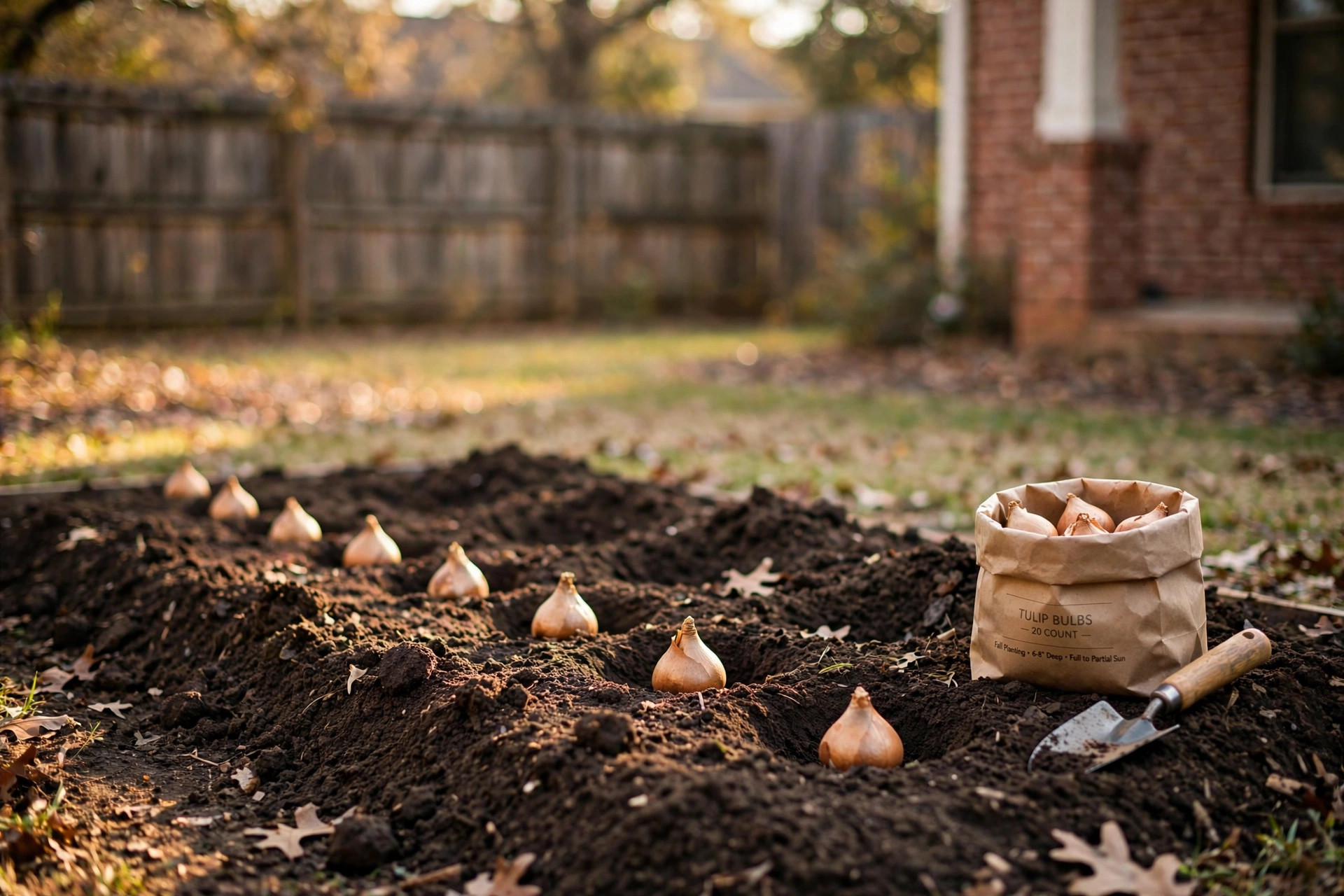
The search for tulip bulbs fall texas homes usa grows every autumn. Texas gardeners want color in spring. They want it without much work. Tulips can give that color. But Texas is not Holland. The winter is short. The spring is warm. The bulbs need special care. This guide shows how to plant tulip bulbs in fall for Texas homes. It covers timing, soil, bulb choice, planting steps, cost, care, and safety. Follow it and you will have a better chance of bright blooms in March.
Why Fall Planting Matters for Tulips in Texas
Tulips are spring flowers. They grow from bulbs. A bulb is a small plant in a tight package. It needs cold to wake up right. This cold time is called chilling. Most tulips need eight to twelve weeks of cold. The cold should be between 35 and 45 degrees.
In the north, the ground gives this cold for free. The bulbs rest in cold soil all winter. In Texas, the winter may not be cold enough. South Texas may never see the right cold at all. North Texas gets some cold, but it may not last long enough. That is why tulip bulbs fall texas homes usa searches often lead to advice about pre-chilling.
Pre-chilling means you put the bulbs in a refrigerator. You do this before planting. The fridge gives steady cold for eight to twelve weeks. It makes up for the warm Texas winter. Without this step, tulips in Texas often fail. They may grow short stems. They may bloom late or not at all. They may never come back a second year.
Fall planting still matters. Even with pre-chilling, the bulbs need time in the ground. Roots grow in the cool fall soil. The roots feed the bulb. Strong roots mean a strong bloom. Plant in fall, enjoy flowers in spring. That is the rhythm that works.
What to Look for When You Buy Tulip Bulbs: Tulip Bulbs Fall Texas Homes Usa
Good bulbs grow into good flowers. Start with firm, heavy bulbs. A firm bulb is full of food for the plant. A soft bulb may be old or sick. The outer skin should be dry and papery. Small tears are fine. Holes and mold are not.
Size and Grade
Bulb size is measured in centimeters. Larger bulbs make larger flowers. Top-size bulbs are about 11 or 12 centimeters around. They cost more. They bloom better. Medium bulbs still work in Texas. They may give a smaller show. For a first try, buy a mix of sizes and see what grows best in your yard.
Where to Buy
Buy from trusted sellers. Big seed and bulb companies sell graded bulbs. Burpee and Park Seed are old names in garden supplies. Gurney’s also ships bulbs across the country. White Flower Farm is known for quality bulbs. Local garden centers in Texas often sell bulbs at the right time. They may also carry types that suit the warm climate. Plant care guides like Gardening Know How and The Spruce explain how to judge bulb quality before you buy.
When Bulbs Arrive
Tulip bulbs go on sale in early fall. In Texas, buy them as late as you can. You want to plant when the soil is cool. That is usually November or December in most of Texas. If you need to pre-chill, buy early and put the bulbs in the fridge right away. Keep them away from fruit. Fruit gives off a gas that can harm the bulbs.
Types of Tulips That Do Well in Texas
Not all tulips like warm winters. Some types do better than others. Here are good choices for Texas homes.
Darwin Hybrid Tulips
Darwin hybrids are strong and tall. They have large, classic cup-shaped blooms. They handle Texas heat better than many old types. Good names include Apeldoorn and Oxford. These are a safe pick for a first planting.
Single Early Tulips
Single early tulips bloom first in the season. They are short and neat. They finish before the Texas heat builds. They are good for borders and front beds. They also suit containers on patios.
Species Tulips
Species tulips are wild types. They are small and tough. They naturalize, which means they may come back year after year. They are good for rock gardens and dry spots. They need less care than large hybrids.
Triumph Tulips
Triumph tulips are a middle choice. They bloom after the early types. They come in many colors. They are strong stemmed and good for cutting. Many growers treat them as one-year flowers in Texas.
Most Texas gardeners treat tulips as annuals. That means they plant fresh bulbs each fall. This is normal in warm climates. A few tough types may return, but most do not. Plan to buy new bulbs each year. It is the price of spring color in a warm state.
When to Plant Tulip Bulbs in Texas
Timing is the key to success. The ground should be cool at planting time. Soil should be near 60 degrees or lower. In North Texas, that is often late November. In Central Texas, early December. In South Texas, mid to late December. Check your soil with a simple thermometer.
The Pre-Chilling Plan
If your bulbs are not pre-chilled, give them cold yourself. Put the bulbs in a paper bag in the refrigerator. Keep the temperature between 35 and 45 degrees. Leave them for eight to twelve weeks. Do not freeze them. Mark the date on the bag. Start chilling in early October to plant in late December. In the warmest parts of Texas, twelve weeks is better than eight.
Some sellers sell bulbs that are already chilled. They cost a little more. They save you time. Read the label before you buy. If the label says pre-chilled, you can plant sooner.
Where the Bulbs Will Live
Tulips like full sun. Pick a spot that gets six hours of sun a day. The soil must drain well. Tulip bulbs rot in wet soil. Texas clay holds water, so many gardeners add compost and coarse sand. Raised beds also work well. If you plant in containers, use a pot at least twelve inches deep. Make sure it has drain holes.
How to Plant Tulip Bulbs Step by Step
Planting tulips is simple work. The steps are the same for Texas homes as for anywhere else. Only the timing and chilling are different.
1. Pick a sunny spot with good drainage. 2. Loosen the soil eight to ten inches deep. 3. Mix in two to four inches of compost. 4. Dig each hole six to eight inches deep. Measure from the bottom of the bulb. 5. Set the bulb with the pointed end up. 6. Space bulbs four to six inches apart. 7. Cover with soil and press gently. 8. Water well after planting. 9. Cover the bed with two inches of mulch. 10. Mark the bed so you do not dig into it later.
In clay soil, plant a little shallower. Add extra compost to the hole. Some Texas gardeners plant on a thin bed of sand. The sand helps water drain away from the bulb. Wet bulbs rot. Dry bulbs sleep well.
For containers, fill the pot with fresh potting mix. Plant the bulbs closer together than in the ground. Three to four inches apart is fine. Water after planting. Keep the pot in a cool spot. Move it into the sun when shoots appear.
Cost and Price of Tulip Bulbs
Tulip bulbs are cheap for the show they give. The price runs from about one to six dollars per bulb in the United States. Bulk bags bring the price down. A bag of twenty-five bulbs often costs less per bulb than a small pack. Shipping adds to the cost if you order online. Buying in fall sales saves money.
Plan for how many you need. A one-foot square of soil holds about nine bulbs. A ten-foot border needs about one hundred bulbs. Many gardeners plant in groups of twelve or more. Small groups can look lost in a big yard. Big drifts of one color look bold and clean.
Containers are cheaper to fill. A twelve-inch pot holds six to eight bulbs. Two or three pots on a front step can give a fine show. Compare your plans with other Texas plant projects. If you like cheap bulk planting, our guide to sunflower seed packs for Texas homes shows how seed packs work for large areas. And if you are already ordering bulbs by mail, see our notes on onion sets planting deals for another fall planting project.
Care and Upkeep Through Winter and Spring
Tulips need little care once they are in the ground. Water is the main job. Fall rain is often enough in Texas. If the fall is dry, water the bed once a week. Stop when the leaves turn yellow after bloom. Yellow leaves are feeding the bulb for next year.
Feed the bulbs at planting time. Use a balanced bulb fertilizer. Follow the label rate. Too much food can burn the roots. A second light feeding in early spring helps the leaves. Do not feed after the flowers fade.
Mulch keeps the soil cool and holds water. Two inches of bark or straw is enough. Keep the mulch a little away from the stems. This stops rot at the base. Remove faded flowers after bloom. Leave the leaves alone. The leaves make food. Cut them only when they turn yellow and fall loose.
Some gardeners lift bulbs after the leaves die. They store them dry until fall. In Texas, lifted bulbs rarely bloom well again. Most people pull the spent bulbs and plant fresh ones in fall. It is simpler and the show is better.
Safety for People, Pets, and Children
Tulip bulbs are not food. They contain compounds that can upset the stomach. Keep bulbs out of reach of small children. The bulbs can look like onions. Teach children not to pick up and taste garden bulbs. If a child eats a bulb, call a poison control center.
Pets can dig up bulbs. Dogs sometimes chew them. This can cause vomiting and drooling. Plant bulbs in spots pets cannot reach, or fence the bed. Cats are less likely to dig, but they may chew leaves. Plant care sites like The Spruce note that tulips are listed as toxic to pets. Keep curious animals away from fresh plantings.
Wear gloves when you handle many bulbs. Some people get skin irritation from the dust on bulb skins. Wash your hands after planting. Store leftover bulbs in a closed paper bag, high on a shelf, away from food.
Frequently Asked Questions
Can tulips grow in Texas at all?
Yes. Many Texas gardeners grow tulips every year. They treat them as annuals. Pre-chilling the bulbs makes the biggest difference. Pick heat-tolerant types. Plant in cool soil. Most will bloom well in spring.
How long do I chill tulip bulbs for Texas?
Eight to twelve weeks at 35 to 45 degrees. The warmest zones do best with twelve weeks. Use a refrigerator, not a freezer. Keep bulbs away from fruit. Fruit gas can damage the flower buds.
What month do I plant tulip bulbs in Texas?
November to December in most of Texas. North Texas plants earlier. South Texas plants later. The soil should be near 60 degrees or cooler. Planting dates from The Old Farmer’s Almanac can help you match your local frost dates.
Do tulip bulbs come back every year in Texas?
Usually not. Texas heat wears them out. A few species tulips may return. Most hybrids are spent after one spring. Plan to buy fresh bulbs each fall. This is standard practice in warm climates.
Can I plant tulip bulbs in pots in Texas?
Yes. Pots work well. Use a deep pot with drain holes. Plant bulbs close together. Keep the pot cool in winter. Water when the top inch of soil is dry. Pots let you move the show to the front step when blooms open.
What soil is best for tulips in Texas?
Loose, well-drained soil with compost. Texas clay needs help. Mix in compost and coarse sand. Raised beds drain well. Containers with potting mix are the easiest fix. Bulbs rot in standing water, so drainage comes first.
A Final Word
The phrase tulip bulbs fall texas homes usa points to a simple truth. Texas gardeners love spring color. Tulips can give it, even in a warm state. Buy firm, heavy bulbs. Chill them if your winter is too warm. Plant in cool soil in November or December. Water, mulch, and leave the leaves alone. Next spring, the beds will light up.
Start small if this is your first try. Plant fifty bulbs in one sunny bed. Note what works in your yard. Then plant more next fall. Year by year, you will learn your soil and your timing. The flowers will reward the care.
If you want living green inside the house through winter, read our guide on pothos plants in bulk for Texas homes. Pothos needs no chilling and no fall planting. It grows in water or soil on a windowsill. It pairs well with the outdoor work of the fall garden.
For general plant knowledge, the USDA National Institute of Food and Agriculture offers research and extension resources for home gardeners. Plant breeders like Monrovia and Proven Winners show new types that may suit warm climates. Home garden guides from Gardening Know How cover planting basics in plain terms.
References
Burpee. (n.d.). Seeds, plants, and gardening supplies. https://www.burpee.com Gardening Know How. (n.d.). Gardening guides and plant care. https://www.gardeningknowhow.com Gurney’s Seed & Nursery Co. (n.d.). Seeds, plants, and garden supplies. https://www.gurneys.com Monrovia. (n.d.). Plants for home gardens. https://www.monrovia.com National Institute of Food and Agriculture. (n.d.). Agricultural research and extension. https://www.nifa.usda.gov Park Seed. (n.d.). Seeds, plants, and gardening supplies. https://www.parkseed.com Proven Winners. (n.d.). Plants and gardening inspiration. https://www.provenwinners.com The Old Farmer’s Almanac. (n.d.). Gardening calendars and advice. https://www.almanac.com The Spruce. (n.d.). Home and garden advice. https://www.thespruce.com White Flower Farm. (n.d.). Plants, bulbs, and garden supplies. https://www.whiteflowerfarm.com
Was this guide helpful?

About Michael Thompson
The My Garden US editorial team writes practical, in-depth home and garden guides for American homeowners — tested advice, no fluff.