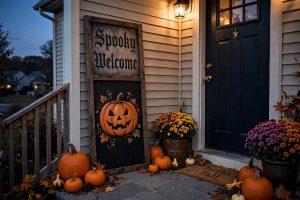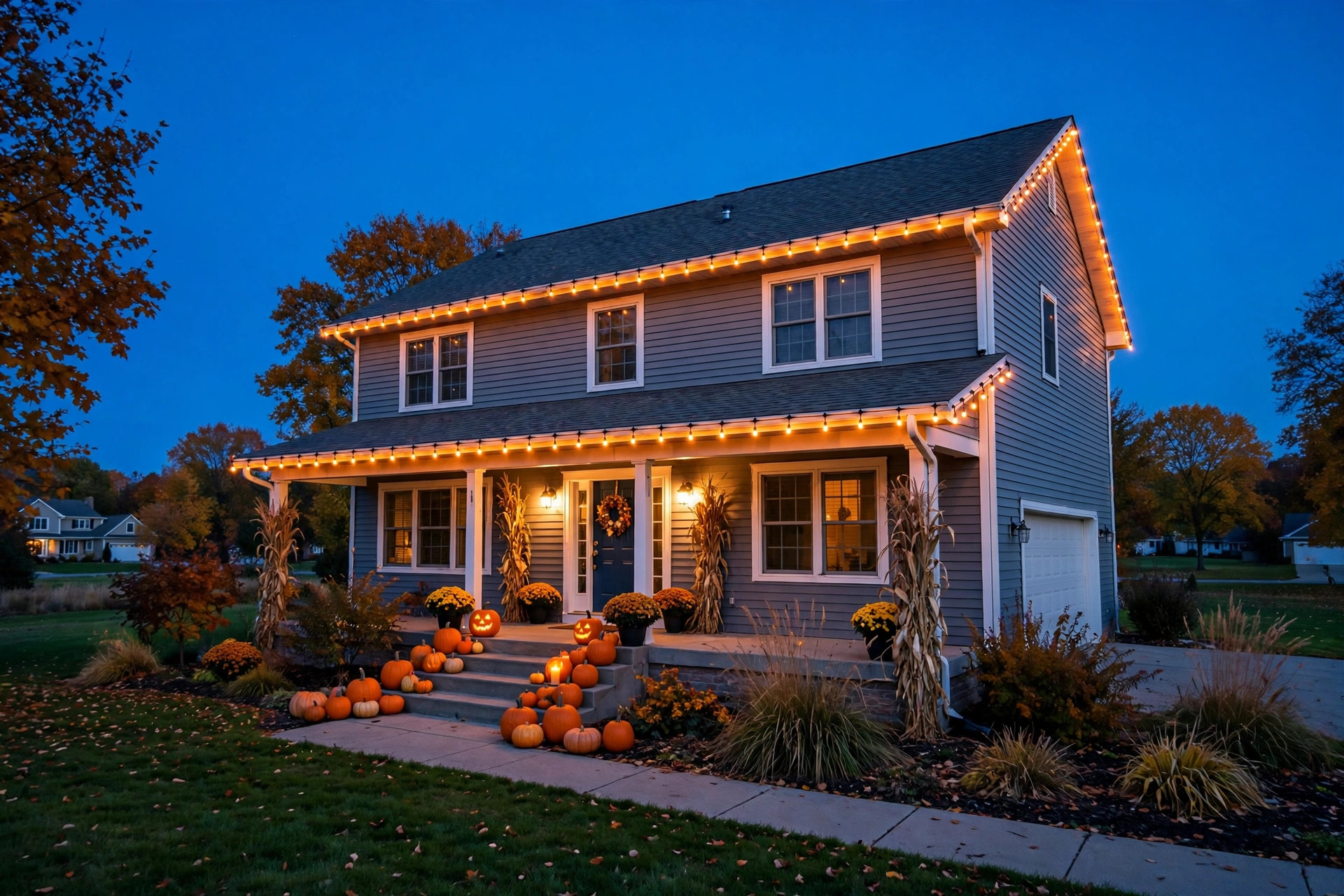

Every October, houses across the country take on a new look after dark. Porches, eaves, and fences glow with orange light, and the street feels ready for trick-or-treat night. Finding the best halloween lights orange for house exterior use is the first step to getting that look right. Orange is the color most people connect with Halloween, and it works on any style of home, from a small ranch to a two-story colonial.
This guide explains what to look for, which types to buy, what they cost, how to care for them, and how to use them safely. No special skill is needed, and most of these lights go up in a single afternoon.
Why Orange Lights Matter at Halloween
Color sets the mood of a holiday display. Green belongs to St. Patrick’s Day. Red and green belong to Christmas. Orange belongs to Halloween. When neighbors drive past a house glowing orange, they know right away that the house is ready for the season.
Orange light has a warm tone that looks friendly, not scary. That matters if small children will visit on Halloween night. A house lit in soft orange feels inviting. The same house lit in red or purple can feel harsh. Many families choose orange as the base color of their display and then add a few purple or green accents if they want a spookier look.
There is a practical reason as well. Orange bulbs cut through fog and evening haze better than blue or green bulbs. On a damp October night, an orange glow stays bright and clear from the street. That helps trick-or-treaters find your door, and it helps drivers see them. Guides from Home Depot’s outdoor lighting section and The Spruce’s Halloween decor advice both note that warm colors read well at night, which is one reason orange has stayed the most popular Halloween color for outdoor lights.
What to Look for When You Choose: Best Halloween Lights Orange for House Exterior
Buying orange Halloween lights for the house exterior is easier when you know what to check before you pay. Use the points below as a simple checklist.
Bulb type
LED bulbs are the smart choice for outdoor Halloween lights. They use far less power than old-style incandescent bulbs, they stay cool to the touch, and they last for many seasons. The Energy Department explains that LEDs use a fraction of the energy of older bulbs, which keeps your power bill low even when lights run all evening. Incandescent orange bulbs still exist and cost less up front, but they burn hotter and fail sooner. For lights that sit near wood trim, dry leaves, or bushes, the cool running of LEDs is a clear safety advantage.
Length and coverage
Measure the space you plan to light before you shop. A string of lights lists its total length and the number of bulbs. For a roofline, measure the eaves with a tape measure and add a few feet of slack. For a porch railing, measure the railing and the posts. Buying two short strings is fine, because most sets let you connect them end to end. Check the package for the maximum number of strings you can join. Exceeding that number can overload the plug.
Weather rating
Any light that hangs outside must be rated for outdoor use. Look for the words “outdoor” or “outdoor rated” on the package. Lights rated for indoor use only can fail in rain, and they can become a shock hazard. Plugs and extension cords used with the display must also be rated for outdoor use.
Color quality
Not all orange lights look the same. Some glow a deep pumpkin orange. Others look pale or almost yellow. LED sets with a listed color temperature near 2000K give a rich, warm orange. If you want every string to match, buy all of your lights at one time from the same brand. Buying one set this year and another set next year often leaves you with two shades that do not quite match. Shopping tips from Michaels’ Halloween lighting guides and Wayfair’s outdoor decor ideas suggest viewing the lights lit in the store or checking review photos so you know the true shade.
Power source
Most outdoor Halloween lights plug into a standard outlet. Solar lights need no outlet at all. Battery lights work for small accents but need new batteries often. If your outlets are far from the display area, a solar set or a good outdoor extension cord solves the problem.
Types of Orange Halloween Lights
Several styles of orange lights suit the outside of a house. Each has its own strengths.
String lights
String lights are the classic choice. A long cord holds many small orange bulbs, and you drape or hang the cord along eaves, railings, and fences. They come in mini lights, C7 bulbs, and C9 bulbs. Mini lights give a soft, even glow. C9 bulbs are larger and brighter, so they show up well from across the street. Many homeowners find that orange halloween string lights for front porch railings give the best value, because one strand covers a lot of space for little money.
Rope lights
Rope lights are tubes of flexible plastic with tiny bulbs sealed inside. You can bend them around porch posts, wind them through railings, or outline windows. The sealed tube keeps rain out, so rope lights handle wet weather well and give a smooth, unbroken line of orange light.
Net lights
Net lights are squares of light-covered mesh that you lay over bushes and shrubs. One net covers a whole bush in minutes. They are the fastest way to add orange glow to landscaping.
Solar lights
Solar lights charge by day and turn on at dusk by themselves. You place them along walkways, around garden beds, or near the porch. They use no electricity from the house. Their light is softer than plug-in lights, and they need direct sun during the day to charge fully. On cloudy days they may run for fewer hours. For homes with few outdoor outlets, solar sets are a simple answer.
Spotlights and flood lights
Spotlights throw a strong beam of orange light onto one spot: a tree, a ghost decoration, or the front of the house itself. They are the best way to light large objects or to wash a whole wall in color. Many spotlights let you change colors, so you can switch from orange to purple with a button.
Cost and Price
Orange Halloween lights are one of the cheapest holiday decorations. A basic 50-count string of orange LED mini lights usually costs between 8 and 15 dollars. A 100-count string costs between 12 and 25 dollars. C9 bulb sets cost more, often 20 to 40 dollars for a 25-count string, but each bulb is larger and brighter.
Rope lights cost about 15 to 35 dollars for a common 18-foot length. Net lights run 10 to 25 dollars for a 4-by-6-foot net. Solar path light sets of four or six usually cost 20 to 45 dollars. Spotlights range from 15 dollars for a simple stake light to 50 dollars or more for a brighter, color-changing model.
A full house display does not need to cost much. Many families spend 40 to 80 dollars to light a roofline and porch, and the lights last for several years. LEDs keep the running cost low: a long string of LED lights can run for weeks and add less than a dollar to the power bill. Price comparisons from Lowe’s seasonal lighting pages and Bob Vila’s outdoor lighting guides confirm that LED sets cost more at the register but cost far less to run than old incandescent sets.
Buy lights early in the season for the best choice. Stores stock the most styles and colors in September and early October. By the last week of October, the most popular orange sets are often gone.
Care and Upkeep
Orange Halloween lights need little care, but a few habits will make them last longer.
Store lights after the season ends. Wind each string around a piece of cardboard or a cord reel instead of stuffing it in a box. Tangled cords break wires and crack sockets. Keep them in a dry place, away from heat. A garage shelf or a plastic bin works well.
Test every string before you hang it. Plug it in and check each bulb. Most LED sets have replaceable bulbs, so swap out any dead ones. Many plugs have a small door that holds a spare fuse; check the package instructions for how to replace it.
Clean lights once a year. Dust and dirt dim the bulbs. Wipe them with a soft, damp cloth after you take them down. Let them dry fully before you pack them away.
Check the cord for damage each season. Look for cuts, cracks, or bare wire. Throw away any string with damaged wiring. A cheap replacement costs far less than a fire.
Safety
Safety matters more than style with outdoor lights. Follow these rules.
Use only lights and cords rated for outdoor use. Indoor lights can short out in rain. Keep all plugs off the ground and dry. Use a plastic cover or a weatherproof box for any plug connection that sits outside.
Plug lights into an outlet with a GFCI, which is the kind of outlet with a test and reset button. GFCIs cut power fast if water gets into the circuit, and they prevent most outdoor shocks. If your outdoor outlet does not have one, use a portable GFCI adapter or call an electrician. The Consumer Product Safety Commission warns every year about holiday light hazards, and its guidance stresses outdoor-rated equipment and GFCI protection.
Do not overload outlets or extension cords. Read the package for the maximum watts, and stay under it. Connect no more strings end to end than the maker allows. Keep lights away from dry leaves, straw, and corn stalks, which burn fast. Place light strings so they do not touch them, and aim spotlights away from walkways so visitors are not blinded.
Use a stable ladder when hanging roofline lights. Have someone hold it. Hang lights with plastic clips made for the job, not staples or nails, which damage wires and siding. Take lights down after the season so weather does not wear them out.
Turn lights off when you go to bed or when you leave the house. A simple outdoor timer does this for you. Timers also make the house look lived-in, which is a nice side benefit.
Frequently Asked Questions
How many strings of lights do I need for a house roofline? Measure the eaves you plan to cover and divide by the string length. For a typical single-story home, the front roofline runs 40 to 60 feet, so two 25-foot strings or one 50-foot string is enough. Add a little extra for corners and slack.
Are orange LED Halloween lights cheaper to run than incandescent ones? Yes, by a wide margin. A string of 100 LED mini lights may use only 5 to 10 watts. The same number of incandescent bulbs can use 40 to 60 watts. Over a month of evening use, the LED set costs only a few cents to run.
Can I leave orange Halloween lights up through Thanksgiving? Many families do. Orange blends well with fall harvest and Thanksgiving themes. Just check the lights for damage before the weather turns colder, and make sure timers still work as daylight hours shrink.
Do solar Halloween lights work in cloudy weather? They work, but for fewer hours. Solar lights store power in a small battery, and they need direct sun to charge fully. On gray days, place the panel where it gets the most light, and expect a shorter glow at night. Reviews on HGTV’s outdoor decor ideas and Country Living’s seasonal styling tips often note that solar path lights perform best in yards with open southern exposure.
What is the best way to hang lights along a roofline? Use plastic gutter or shingle clips made for holiday lights. They snap on without tools and hold the cord in place. Space clips every 12 to 18 inches. Work from one end to the other, and do not pull the cord tight. Leave a little slack so wind does not strain the wires.
Should I mix orange lights with other Halloween colors? Orange looks good alone, and it pairs well with purple for a classic Halloween look. Green adds a spooky feel near bushes and trees. White lights work as an accent along the porch. Keep one color in charge, usually orange, and use the others in small amounts so the display stays balanced.
A Final Word
The best halloween lights orange for house exterior use are LED, outdoor-rated, and sized to fit your space. Start with string lights along the roofline or porch, add a few nets or solar path lights for the yard, and finish with a spotlight on your favorite decoration. Buy early, measure first, and keep safety in mind. Done well, an orange glow turns any house into a warm welcome on the spookiest night of the year.
Related ideas for the season include best halloween inflatables for front yard decor for a bold daytime display, best halloween outdoor decorations scary yard for a haunted look, and outdoor christmas lights for house roofline usa when you are ready to switch seasons.
References
Bob Vila. (n.d.). Home improvement advice. https://www.bobvila.com Country Living. (n.d.). Country home and lifestyle. https://www.countryliving.com HGTV. (n.d.). Home and garden ideas. https://www.hgtv.com Lowe’s. (n.d.). Home improvement products. https://www.lowes.com Michaels. (n.d.). Arts and crafts supplies. https://www.michaels.com The Home Depot. (n.d.). Home improvement products. https://www.homedepot.com The Spruce. (n.d.). Home and garden advice. https://www.thespruce.com U.S. Consumer Product Safety Commission. (n.d.). Product safety information. https://www.cpsc.gov U.S. Department of Energy. (n.d.). Energy efficiency and renewable energy. https://www.energy.gov Wayfair. (n.d.). Furniture and home goods. https://www.wayfair.com
Was this guide helpful?

About Lisa Anderson
The My Garden US editorial team writes practical, in-depth home and garden guides for American homeowners — tested advice, no fluff.
You May Also Like
Best Halloween Tombstones for Front Yard Haunt
July 21, 2026 0 views
Christmas Tree Storage Box for Ornaments Organized: A Practical Guide
April 8, 2026 0 views
Christmas Light Clips for Gutters and Shingles USA: A Complete Guide
August 7, 2026 0 views