
Every December, families across America look at their front lawns and plan a holiday scene. The best christmas yard art for outdoor display turns a plain stretch of grass into a warm winter picture that drivers slow down to see. Yard art is not the same as a string of lights or a wreath on the door. It stands on its own. It holds its shape in wind and snow. It gives the whole display a clear point of focus that can be seen from the street.
This guide walks through the choices in plain terms. It covers the main kinds of yard art, how to pick the right pieces for your home, what they cost, how to keep them in good shape, and how to set them up with care.
Why Christmas Yard Art Matters
A holiday display does more than decorate. It marks the season for the whole street. Well placed yard art tells guests where to walk and where to park. It also gives children something to look at and remember. Many families build their displays over years, adding one piece each season until the yard tells a full story.
Good yard art also protects your other decorations. A strong wooden figure or a metal frame can anchor lights and garlands in wind. Pieces made for the outdoors carry weather ratings that indoor items do not have. When you buy pieces rated for outdoor use, you spend less time fixing damage after every storm. Home improvement guides from The Spruce often note that outdoor-rated pieces last far longer than indoor items moved outside for the season.
Main Types of Christmas Yard Art: Best Christmas Yard Art for Outdoor Display
Yard art comes in many forms. Each kind has its own look, its own price, and its own demands for care and storage.
Wooden Cutouts and Flat Figures
Wooden cutouts are the oldest form of holiday yard art. They are flat shapes cut from plywood or board, painted with holiday scenes: Santa in a sleigh, carolers, a nativity scene, or a snowman family. They stand on stakes driven into the ground.
These figures suit a classic American look. They cost less than most other kinds. Many craft stores sell paint-it-yourself kits, which you can find at places like Michaels. A cutout made from exterior-grade plywood and sealed with outdoor paint can last many seasons. The weak point is the base. Stakes rot first, so check them each year and replace any that feel soft.
Inflatable Figures
Inflatable figures are large, light, and easy to store. A fan inside keeps them full of air, so they rise each evening and fold flat into a small bag when the season ends. Santa, snowmen, reindeer, and penguins are common shapes.
They give great size for the price. A six-foot Santa often costs less than a two-foot wooden figure. The trade is durability. Wind throws them around, so they must be tied down with every stake and tether that comes in the box. The fan also uses power all night, which adds to the electric bill. Look for models with lights built in so they glow from within.
Metal and Wire Silhouettes
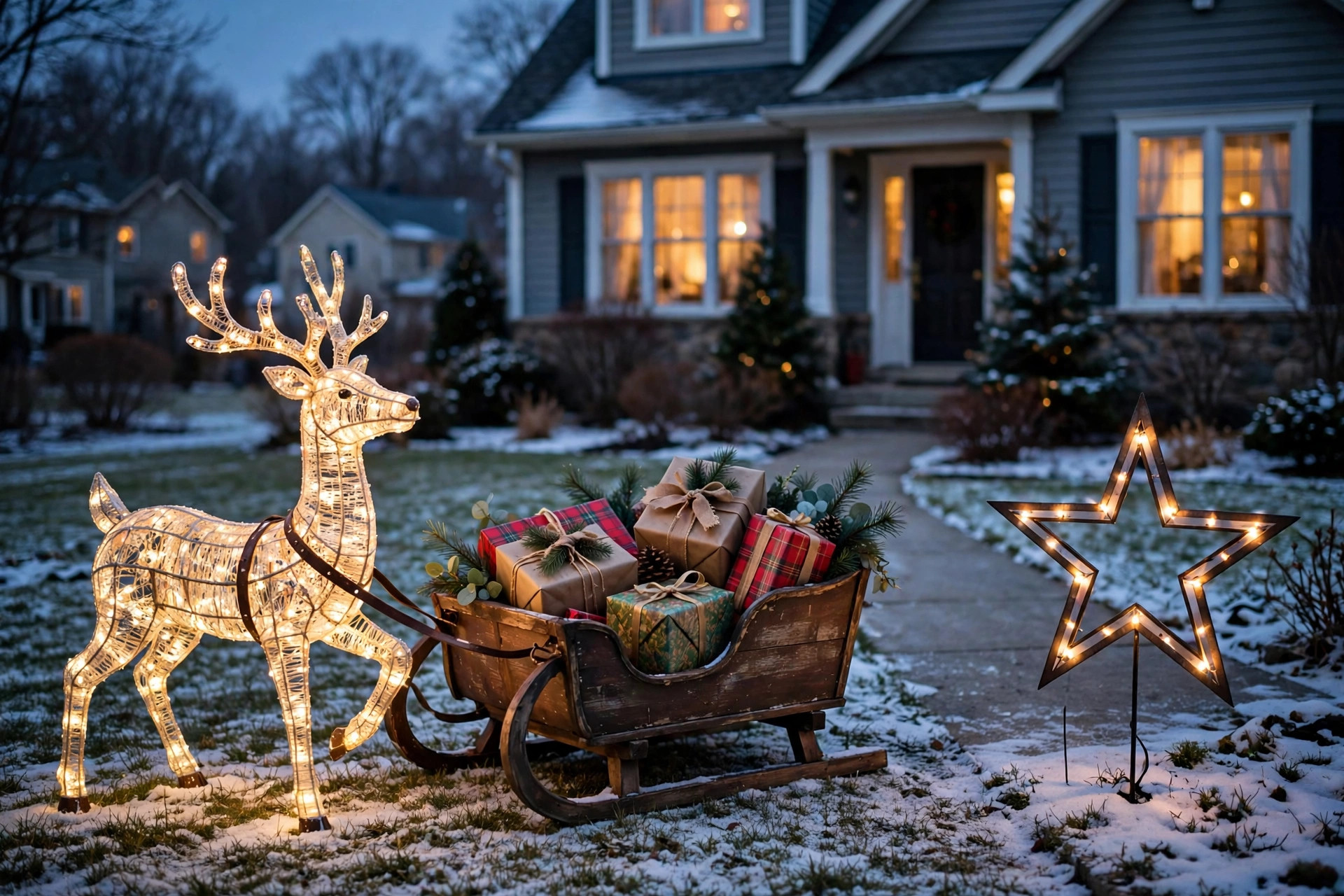
Metal silhouettes are flat or three-dimensional frames shaped like deer, stars, trees, or angels. Many carry small lights along the frame so the outline glows after dark. They handle weather well and fold nearly flat for storage.
These pieces suit modern homes and small yards because they look neat by day and bright by night. Check the welds before you buy. A strong frame should feel stiff, not springy. Rust is the main enemy, so pick powder-coated steel or aluminum and touch up any chip in the paint before the first rain.
Lighted Signs and Stake Figures
Lighted stake figures are small scenes on plastic or acrylic panels pushed into the lawn on stakes. Words like “JOY” or “NOEL” and shapes like candles or bells are common. They are cheap, light, and simple to place.
They work best as fill pieces around larger art. A big reindeer set gains depth when small lighted candles line the walk behind it. Make sure each panel is rated for wet weather and that the stakes are long enough to hold in soft ground.
Three-Dimensional Sculptures
Resin, fiberglass, and molded plastic figures form the high end of yard art. A life-size Santa, a team of reindeer, or a full sleigh scene can cost hundreds of dollars but will stand for a decade or more. These pieces carry fine paint detail and look real from the street.
Weight is both a strength and a problem. Heavy figures do not blow over, but they need a level base and two people to move. Retailers such as Wayfair and Home Depot carry many of these larger sets, and their listings often show the true size with a person standing beside the figure.
How to Choose the Right Pieces
Start with a plan for the whole yard. Measure the space you want to fill and note where the power outlets sit. A display that fits the lot looks planned. A display that overflows the lot looks crowded.
Think about scale. One large figure reads better from the street than ten tiny ones. If your house sits far back from the road, pick pieces at least four feet tall. If the yard is small, choose two or three medium pieces and leave open space between them.
Match the style to your home. A brick colonial suits classic wooden cutouts and warm white lights. A modern ranch suits metal silhouettes and cool white lights. Holiday design features on HGTV show how one consistent style ties a yard together better than a mix of every theme at once.
Check the weather rating on every piece that uses power. Look for “outdoor rated” on the tag and on the cord. Lowe’s and other hardware stores sell outdoor extension cords in many lengths, which matter more than most buyers expect. A cord that runs too far loses power and can overheat.
Plan for storage before you buy. Inflatable figures fold into a bag. Wooden cutouts stack against a garage wall. Large sculptures need floor space in a shed or garage all year. Measure your storage first so January does not bring a surprise.
Cost and Price Ranges
Prices vary widely, but a few ranges hold true in most American stores.
Small lighted stake figures and plastic panels run from about ten to forty dollars each. They are the cheapest way to add color to a yard.
Wooden cutouts run from about thirty to one hundred fifty dollars, depending on size and paint quality. Do-it-yourself kits cost less and let you match colors to your home.
Inflatable figures run from about forty to two hundred dollars. Larger and licensed characters cost more. The fan and built-in lights add to the price.
Metal silhouettes run from about fifty to three hundred dollars. Hand-welded pieces cost more than factory frames but often last longer.
Large resin and fiberglass sculptures run from about one hundred to over a thousand dollars. These are the pieces that define a display for years.
Set a budget for the whole display, not for each piece. Ten small items can cost more than one fine large figure and look less striking from the road. Product testing notes from Consumer Reports remind buyers that price alone does not prove durability, so read reviews about weather performance before you commit.
Care and Upkeep Through the Season
Outdoor art needs little care, but a few habits keep it looking fine.
Wipe figures clean before you set them out. Dust and spider webs from storage show up under lights. A damp cloth handles most plastic and metal. Wooden pieces may need a fresh coat of sealer on bare spots.
Check every light and cord before installation. Replace burned bulbs with the same type and wattage. Throw away any cord with cracked insulation. Never splice two damaged cords together.
After storms, walk the display. Right any figure that leaned. Tighten tethers. Clear snow from around bases so meltwater does not soak wooden stakes.
At season’s end, dry everything before storage. Fold inflatables loosely so creases do not crack the fabric. Wrap wooden edges in old blankets to protect the paint. Coil cords without sharp bends. These small steps, covered in many Family Handyman maintenance guides, add years to the life of your pieces.
Safety for Your Yard and Family
Holiday displays are fun, but they need respect for power and weather.
Anchor every piece against wind. Use all the stakes and tethers that came in the box, and add more for tall figures. A loose inflatable can sail into the street and startle drivers.
Keep cords off walkways. Run them along the edge of the lawn and tape crossings flat. Use only outdoor-rated cords and plugs, and keep connections off the ground in weatherproof boxes.
Do not overload outlets. Add up the wattage of every lighted piece on one circuit and stay well under the limit. LED pieces draw far less power than old incandescent bulbs, which is one more reason to choose them.
Keep art away from heat. Do not place wooden or plastic figures near a fire pit or a grill, and keep real candles out of the display entirely.
The U.S. Consumer Product Safety Commission publishes holiday decoration safety guidance each year. Its main points are simple: check for damage, follow the maker’s instructions, and turn displays off before you sleep or leave the house. Timers make this easy and also save power.
Frequently Asked Questions
When should I put out Christmas yard art?
Most families set out yard art the weekend after Thanksgiving. This gives four full weeks of display before Christmas. Putting pieces out earlier risks more weather damage. Leaving them up long past New Year can wear out motors and fade paint.
How do I keep inflatable figures from blowing away?
Use every stake and tether in the box. For soft or sandy soil, add longer landscape staples. In heavy wind areas, tie the figure to a buried sandbag or a fence post. Bring large inflatables inside during storms with high wind warnings.
Can I leave yard art out in rain and snow?
Pieces rated for outdoor use are built for rain and snow. Shake snow off inflatables so the fan does not strain. Keep electrical connections dry and off the ground. Wooden figures do best under an eave or with a fresh coat of sealer each year.
What is the cheapest way to build a good display?
Start with one strong centerpiece, such as a wooden sleigh or a lighted reindeer set, and add small lighted stake figures around it each year. DIY wooden cutouts are the lowest-cost path to large pieces. Inspiration for classic looks is easy to find in Country Living holiday features, which often show simple yards that shine with just a few well-placed pieces.
How long does Christmas yard art last?
It depends on the material and the care it gets. Cheap plastic panels may last two or three seasons. Good wooden cutouts last five to ten years with fresh paint. Metal frames and quality resin sculptures often last ten years or more. Store everything dry and out of sunlight to get the longest life.
Should I mix yard art with a village display?
Many families pair outdoor art with indoor holiday villages for a full seasonal theme. If you enjoy miniature scenes, our guides to best christmas village accessories for display setup and christmas village display platform for collection usa can help you plan the indoor side. For fall-to-winter transitions, fall pinecone decor for bowl and table centerpiece offers ideas that bridge the seasons.
A Short Final Word
The best christmas yard art for outdoor display is not the most expensive piece in the store. It is the piece that fits your yard, suits your home, stands up to your weather, and still looks fine in January when you put it away. Buy outdoor-rated pieces. Anchor them well. Care for them between seasons. Your yard will repay the effort with a warm welcome every night of December.
References
Consumer Reports. (n.d.). Product reviews and ratings. https://www.consumerreports.org Country Living. (n.d.). Country home and lifestyle. https://www.countryliving.com Family Handyman. (n.d.). DIY home repair and maintenance. https://www.familyhandyman.com HGTV. (n.d.). Home and garden ideas. https://www.hgtv.com Lowe’s. (n.d.). Home improvement products. https://www.lowes.com Michaels. (n.d.). Arts and crafts supplies. https://www.michaels.com The Home Depot. (n.d.). Home improvement products. https://www.homedepot.com The Spruce. (n.d.). Home and garden advice. https://www.thespruce.com U.S. Consumer Product Safety Commission. (n.d.). Product safety information. https://www.cpsc.gov Wayfair. (n.d.). Furniture and home goods. https://www.wayfair.com
Was this guide helpful?

About Michael Thompson
The My Garden US editorial team writes practical, in-depth home and garden guides for American homeowners — tested advice, no fluff.
You May Also Like

Fall Throw Pillows for Couch: A Guide to Warm Autumn Decor
September 12, 2026 0 views
Valentines Wreath for Front Door Heart Decor: A Plain Guide
May 2, 2026 0 views
Thanksgiving Wreath for Front Door Autumn Style
March 14, 2026 0 views