
Why a Projector May Beat Strings of Lights
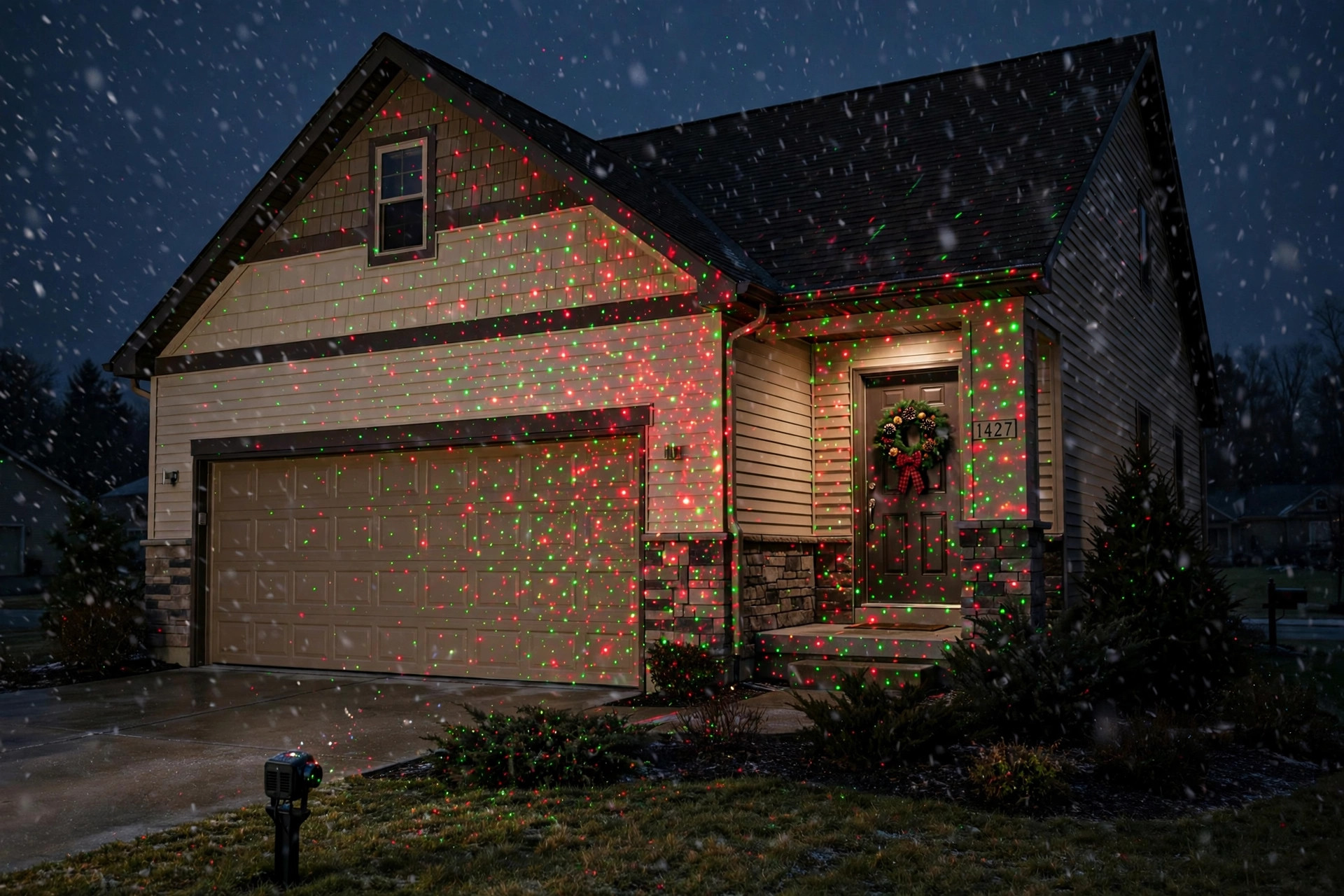
A Christmas light projector throws light across your whole house from one small box. You stake it in the yard, point it at the wall, and plug it in. In minutes, the front of your home glows with hundreds of dots or falling snow. For many families, the best christmas lights projector for house exterior display means less ladder work and less tangled wire than old string lights.
String lights still have charm. Yet they take hours to hang. You climb ladders in cold weather. You test each strand. A bulb burns out, and a whole section goes dark. A projector cuts that work down to almost nothing. One unit can cover a garage door, a wide porch wall, or a full two-story front.
Renters like projectors too. You do not need to clip wires to gutters or drill hooks into trim. You place the projector on a small stake in the lawn. When the season ends, you pull it out and store it. The house stays untouched.
Projectors also please neighbors. The light patterns look neat from the street. Many towns now prefer them because they create little mess and no damage to roofs. If you have a tall roofline that is hard to reach, a projector is often the safer choice. For those who still love classic strings, our guide to outdoor Christmas lights for house roofline setups can help with that project.
There is another reason people switch. Cost. A set of quality LED string lights for a large house can run over one hundred dollars, and you may replace them every few years. One good projector often costs less and lasts many seasons. The savings grow when you factor in your time.
What to Look for When You Choose: Best Christmas Lights Projector for House Exterior
Not all projectors are equal. Some are bright and sharp. Others fade to a dull blur by the second week of December. A few points below will help you judge.
Brightness and Range
Brightness is measured in watts or lumens. A small projector of five watts may cover a single garage door at fifteen feet. A stronger unit of ten watts or more can reach thirty feet and light a full two-story wall. Measure the distance from your planned spot to the house before you shop. Match the range on the box to that distance. A weak projector set too far back will look washed out.
Pattern Style
Most projectors offer red, green, and white light. Cheaper units show only moving dots. Better units add snowflakes, stars, or falling snow. Some let you switch patterns with a remote. Think about what you want to see from the street. Dots look classic and simple. Snowfall looks lively and full. A unit that offers both gives you the most choice.
Remote Control and Timer
A remote lets you change patterns and colors from your warm kitchen. Look for a timer too. A timer turns the show on at dusk and off at bedtime. This saves power and keeps neighbors happy at midnight. Many models now have both features as standard.
Weather Rating
Your projector will sit outside in rain, frost, and wind. Check for an IP65 rating or better. That code means the case resists dust and water jets. Anything lower may fail in a wet December. Also look for a sturdy ground stake. A thin plastic stake can snap in frozen soil.
Power Cord Length
Projectors need an outdoor outlet. Many include a short cord of only ten feet. If your outlet is far from the lawn, you will need a weather-rated extension cord. Check the cord length on the box before you buy. Major home stores like Home Depot list cord length in their product specs, which makes this easy to verify.
Types of Christmas Light Projectors
Projectors come in three main types. Each works in a slightly different way. Knowing the difference helps you buy with confidence.
Laser Projectors
Laser projectors are the most common. A small laser shines through a lens and scatters into thousands of dots. They are bright, cheap, and use very little power. Most entry-level units are lasers. Their weakness is pattern variety. They mostly show dots and stars. The dots may look sharp on a flat wall and soft on rough brick.
LED Projectors
LED projectors use a light bulb and a printed slide. The slide holds the image, such as a Santa, a snowflake, or a message like “Merry Christmas.” They throw clear, colorful scenes. They are best for a smaller area, like a front door or a porch wall. They are not as bright over long distances. If you want a big clear picture, look here. Home guides like The Spruce often review the newest LED models each fall.
Motion and Snowfall Projectors
Motion projectors combine a laser base with moving lenses. They create falling snow, drifting stars, or waving patterns. These look the most alive. They cost more than basic lasers. They also draw more power. For a full-yard show, one motion projector can replace many static units.
Some shoppers mix types. They use a laser projector for the wide house wall and a small LED projector for a clear snowflake on the garage door. This mix gives both size and detail. Decorating ideas from HGTV show how layered light looks richer than a single flat pattern.
Cost and Price: What You Should Expect
Prices vary with brightness and features. A basic laser projector with dots only may cost between fifteen and thirty dollars. These are fine for a small ranch house or a porch wall.
A mid-range unit with a remote, a timer, and two or three patterns often costs between thirty and sixty dollars. This is the sweet spot for most buyers. You get solid brightness, decent weather protection, and enough features to keep the show fresh through the season.
Premium models with motion effects, music links, or wide-range lasers can run sixty to one hundred and fifty dollars. These suit large homes or buyers who want the brightest display on the block. Craft and decor stores such as Michaels and big-box retailers like Walmart both stock units across this full range each November.
Watch for bundle deals. Some stores sell two-pack sets at a small discount. Two units let you cover both sides of a wide house. Just make sure you have enough outlets and extension cords.
Do not forget the extras. A heavy-duty outdoor timer costs about ten dollars if your projector lacks one. A weather-rated extension cord costs ten to twenty dollars. These small items add up. Add them to your budget before you check out.
As a rule, spending more buys more brightness and more patterns. It does not always buy more life. Even cheap units can last several seasons if you store them well. Even costly units fail fast if you leave them out in spring rain. Care matters as much as price.
Care and Upkeep Through the Season
A projector needs little care, but a few steps will keep it shining bright.
Clean the lens once a week. Dust and mist can film over the glass and dim the pattern. Wipe the lens gently with a soft, dry cloth. Never use window cleaner on a warm lens. Let the unit cool first.
Check the stake after wind or heavy rain. The projector can tilt in soft soil. A tilted unit throws a crooked pattern on the wall. Push the stake back into place and adjust the angle. Some owners set the stake in a small pot of sand for extra hold on windy streets.
Bring the unit in during harsh storms. An IP65 rating handles normal rain. It does not promise survival in an ice storm or a foot of wet snow. If the forecast looks rough, unplug the unit and bring it inside for the night. This one habit can double its life.
At season end, clean the lens again. Wrap the cord loosely. Do not kink it. Store the projector in its box in a dry place like a garage shelf or a closet. Avoid hot attics, which can warp the plastic over time. Online retailers such as Wayfair include storage tips in their product manuals, and it pays to read them.
Check your outlet too. Outdoor outlets should have a cover that closes over the plug. If yours is cracked or loose, replace it before the season. A dry connection is a safe connection. For general seasonal decorating plans beyond lights, see our ideas for Fourth of July decorations for porch and yard, which share many of the same outdoor care steps.
Safety Tips Every Owner Should Know
Light projectors are safer than climbing ladders with string lights, but they still carry some risk. Keep these rules in mind.
Keep lasers away from eyes. Never point a projector at a window where people may stare into it from close range. Most home projectors use low-power lasers that are rated safe at a distance, but close, direct eye contact can still cause harm. The Consumer Product Safety Commission publishes plain guidance on holiday light safety each year.
Use only outdoor-rated cords. An indoor extension cord can crack in cold weather and expose wires. Look for the outdoor rating printed on the cord jacket. Keep all plugs off the ground and out of puddles.
Do not overload the circuit. One projector draws little power. Three projectors, two inflatables, and a set of string lights on one outlet may be too much. Spread the load across two outlets if you can. If a breaker trips, unplug something. Do not just reset it and add more.
Point the light at your house, not at the road. A bright projector aimed at the street can distract drivers. Angle the beam so it stays on your wall and lawn. This is also kinder to neighbors. Decorating advice from Country Living notes that the best displays keep light on the property.
Teach children to leave the unit alone. The projector looks like a fun gadget. The lens and cord are not toys. Set a simple rule: no touching without an adult.
For spring planning, many of these same yard safety habits apply when you hang a spring wreath for front door floral welcome or set out new planters.
Frequently Asked Questions
How far should the projector sit from the house?
Most boxes list a range, often fifteen to thirty feet. Measure first. Set the projector at the distance the box recommends. Too close makes the pattern small and harsh. Too far makes it wide and dim. A little testing on the first night will find the sweet spot.
Will a projector work on dark or brick walls?
Yes, but the pattern will look softer. Dark paint and rough brick absorb light. White or light-colored siding shows the sharpest result. If your house is dark, choose a brighter unit and set it closer. One strong projector beats two weak ones on a dark wall.
Can I use a Christmas projector in rain or snow?
Yes, if it is rated for outdoor use. Look for IP65 or better. Light rain and falling snow are fine. Bring the unit inside during heavy storms, deep snow, or ice. Water can pool in the stake socket and freeze the tilt joint.
Do projectors use a lot of electricity?
No. Most laser projectors draw between five and fifteen watts. That is less than one old string of mini lights. Running a projector for six hours a night all December may add only a dollar or two to your power bill. LED slide projectors draw a bit more, but still far less than old incandescent strings.
Will the pattern shine through my windows?
Only if you aim it there. Aim the projector at solid walls, not at glass. Light that enters windows can annoy people trying to sleep. Most units tilt and swivel, so you can aim the pattern just below the window line.
When should I buy for the best price?
Late October and early November bring the widest choice. Prices drop after Christmas, but stock sells out fast. If you want a specific model, buy before December. Retailers like Lowe’s and fabric-and-craft shops like Joann restock early and often run pre-season sales.
A Short Final Word
The best Christmas lights projector for house exterior use is the one that fits your home, your budget, and your patience. Measure your distance. Pick a weatherproof case. Choose the pattern that makes you smile from the sidewalk. Then stake it in the lawn and enjoy the season. You will spend less time on a ladder and more time with your family. That is the real prize of holiday decorating.
References
Country Living. (n.d.). Country home and lifestyle. https://www.countryliving.com HGTV. (n.d.). Home and garden ideas. https://www.hgtv.com JOANN. (n.d.). Fabric and craft supplies. https://www.joann.com Lowe’s. (n.d.). Home improvement products. https://www.lowes.com Michaels. (n.d.). Arts and crafts supplies. https://www.michaels.com The Home Depot. (n.d.). Home improvement products. https://www.homedepot.com The Spruce. (n.d.). Home and garden advice. https://www.thespruce.com U.S. Consumer Product Safety Commission. (n.d.). Product safety information. https://www.cpsc.gov Walmart. (n.d.). Everyday low prices. https://www.walmart.com Wayfair. (n.d.). Furniture and home goods. https://www.wayfair.com
Was this guide helpful?

About Michael Thompson
The My Garden US editorial team writes practical, in-depth home and garden guides for American homeowners — tested advice, no fluff.
You May Also Like
Fall Candle Holders for Dining Table Centerpiece: A Simple Guide
May 24, 2026 0 views
The Best Outdoor Halloween Projector for House Wall: A Complete Guide
February 26, 2026 0 views
Best Halloween Costumes Decorations for Party Home: A Full Guide
September 15, 2026 0 views