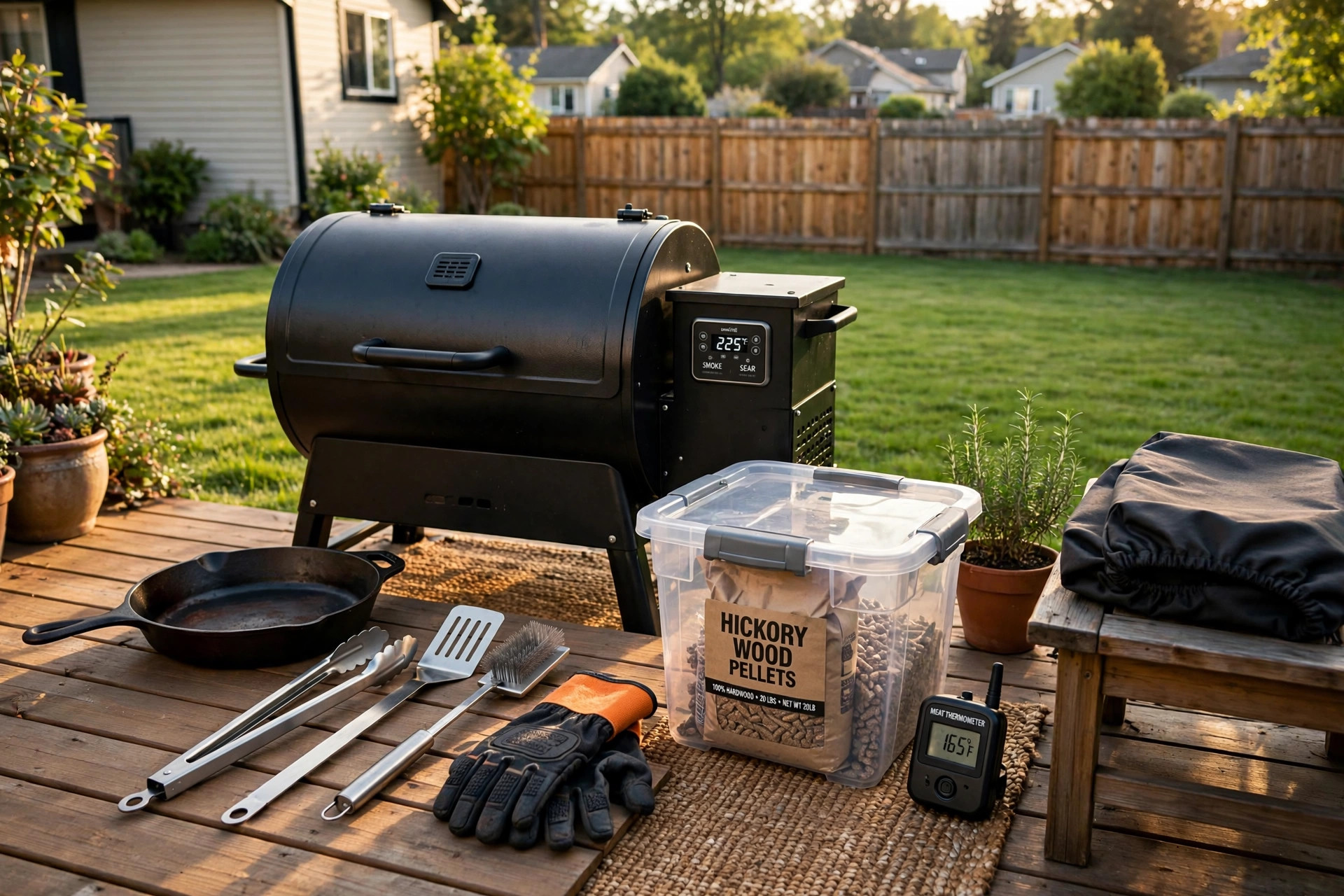

The best pellet grill accessories must have list starts with a simple truth. A pellet grill does fine work on its own. But the right tools make every cook easier, safer, and more tasty. The grill gives you steady heat and real wood smoke. The accessories give you control. They protect your hands, guard your food, and keep the machine in good shape year after year.
Many new owners ask what to buy first. Stores sell many add-ons. Some help a lot. Some only take up space in the garage. This guide sorts them out. It covers the extras that earn their place on the side shelf. It also shows what to look for, what to skip, and how each tool fits into a normal cook.
Why Accessories Matter for Pellet Grill Owners
A pellet grill runs on wood pellets and a small electric fan. It holds heat well and adds a gentle smoke flavor. That ease is why so many people love it. Still, the grill alone leaves gaps. The factory thermometer can read off by twenty degrees or more. The thin drip pan can let grease build up. The stock pellets hopper holds only so much fuel.
The best pellet grill accessories must have close these gaps. A good wireless thermometer tells you the real heat inside the meat. A cover keeps rain off the paint and the electronics. A drip liner saves ten minutes of scrubbing after every cook. Each item seems small. Together they change how the grill feels to use. Less worry. Less mess. Better results.
Related long-tail phrases that cooks search for include must have pellet grill extras, essential pellet smoker tools, and best pellet grill add-ons for beginners. All three point to the same idea. Build your kit step by step. Start with the basics that protect food and hands. Add the fun extras later.
What to Look for When Choosing Accessories: Best Pellet Grill Accessories Must Have
Fit With Your Grill Model
Pellet grills come in many sizes. A drip tray made for one brand may not fit another. Always check the maker and model number before you buy. The safe route is to buy parts from the grill maker when they exist. For general tools like tongs, brushes, and gloves, the brand of your grill does not matter.
Build Quality
Heat and weather wear tools down fast. Look for stainless steel in tools that touch fire. Look for thick silicone or leather in gloves. For covers, check the denier rating on the fabric. A heavy canvas or thick polyester cover lasts many seasons. Thin vinyl splits in one summer.
Safety Ratings
Any tool that touches hot food or hot metal should list a heat rating. Gloves should show a maximum temperature in plain numbers. Thermometers should show their range and probe rating. If a seller will not say how hot the tool can take, buy a different one.
Price Against Use
A good rule helps. Tools you touch every cook, like a thermometer and tongs, deserve a bit more money. Tools you use twice a year, like a rotisserie kit, can be cheaper. Price lists at large home centers show what fair prices look like. Guides at Home Depot and Consumer Reports often compare brands side by side.
The Must-Have List: Top Accessories for Your Pellet Grill
A Wireless Meat Thermometer
Ask pitmasters what they buy first and most will name this. The thermometer built into the grill lid sits far from the food. It reads the air near the lid, not the meat on the grate. A wireless probe sits inside the meat and sends the true number to your phone or a small receiver.
Look for at least two probes. One reads the meat. The other reads the grate temperature. Many cooks set alerts for both. When the brisket hits its stall, they know. When the fire runs too hot, they know that too. This one tool stops more ruined dinners than any other item on the list. A good best bbq thermometer wireless for grilling guide can help you compare models.
Heat-Resistant Grill Gloves
Pellet grills stay hot for a long time. Moving a cast iron pan or a full chicken takes steady hands. Regular oven mitts are too short and too loose. Long grill gloves reach past the wrist. They grip hot grates and hot pans without slipping.
Neoprene and silicone-coated gloves give the best grip. Leather welders gloves work well and cost less. Buy a pair rated above five hundred degrees Fahrenheit. Keep a dry spare pair in a bin near the grill. Wet gloves do not protect hands.
A Heavy-Duty Grill Cover
Rain and sun are hard on pellet grills. Water can reach the control panel and the auger tube. Wet pellets swell and jam the feed system. A thick cover stops most of this damage.
Look for vents in the cover so moisture can escape. Look for straps or a drawstring at the bottom so wind cannot lift it. Cover the grill after it cools. That habit alone adds years to the life of the machine. Good covers appear in reviews at Weber and Traeger, where owners share what held up in bad weather.
Drip Pan Liners and Bucket Liners
Grease is the messy part of pellet cooking. The grill drips fat into a pan and a small bucket. Without liners, you scrape and soak these parts after every cook. Disposable liners slide in and out. You throw them away and start clean.
Buy liners made for your exact model. The wrong size can block airflow or leave gaps. Keep a stack in the hopper storage or a nearby cabinet. This small item makes the best pellet grill accessories must have list because it saves real time every week.
A Cast Iron Skillet or Griddle Insert
Pellet grills cook low and slow with ease. Searing is harder. Most models top out near five hundred degrees. A heavy cast iron skillet holds heat and gives food a hard crust. Set it on the grate and let it heat for fifteen minutes. Then lay the steak down and hear it sing.
Griddle inserts fit over part of the grate. They turn the grill into a flat top for smash burgers, bacon, and vegetables. Both pieces need seasoning. Both last for decades with basic care. Seasoning advice appears in maker guides and in old barbecue books alike.
Quality Wood Pellets
The grill feeds on pellets. Cheap pellets make more ash and less smoke. They can clog the auger and change the taste of food. Good pellets use one hundred percent hardwood with no fillers. Oak, hickory, apple, and cherry are common choices.
Match the wood to the meat. Hickory suits pork and beef. Apple and cherry suit chicken and turkey. Mesquite is strong and suits bold cuts. Store pellets in a dry sealed bin. Dry pellets burn clean and keep the grill running smooth.
A Pellet Storage Container
Pellets pull moisture from the air. Damp pellets crumble and jam the feed tube. A sealed storage bin with a locking lid solves this. Some bins pour like a watering can, which makes refills easy.
Keep the bin in the garage or under a roof. Never leave pellets in an open bag on the deck. This simple habit prevents many service calls. Guides on pellet grill maintenance tips for beginners stress dry storage as a first step.
A Grill Brush or Scraper
Grease and food stick to grates. A clean grate keeps food from sticking and keeps old flavors off new meals. Brass bristles suit coated grates. Stainless bristles suit raw steel and cast iron. Wooden paddle scrapers shape to the grate bars over time.
Brush the grates while they are warm. Five minutes of work after each cook beats an hour of scrubbing later. Replace the brush head when bristles bend. Loose bristles can fall on food, so check the head before each use.
A Complete Tool Set
Loose tools get lost. A set keeps everything in one place. The best best bbq tool set stainless steel sets include a long spatula, tongs, a fork, and a basting brush. Long handles keep hands away from heat. Stainless steel cleans fast and does not rust.
Add a spray bottle for apple juice or water. A light mist keeps ribs and pork moist during long cooks. Add a pair of kitchen shears for trimming meat. These small tools round out the kit without much cost.
A Smoke Tube for Extra Smoke Flavor
Pellet grills make a mild smoke at low heat. The smoke fades as the heat rises. Some cooks want more. A small stainless tube filled with pellets gives extra smoke on any cook. Fill it, light one end, and lay it on the grate. It adds smoke for three to five hours. Smoke tubes cost little, need no power, and also work in gas grills.
A Grease Management Kit
Some grill makers sell full grease kits: a shaped tray, liners, and a larger bucket. These kits cut fire risk, since grease fires start when fat pools near the heat. A good system moves grease away and holds it safe. Check your model page before you buy third-party kits so the fit leaves no gaps.
A Front Folding Shelf
Side space matters. Carrying a heavy brisket with nowhere to set it down is a bad idea. A folding shelf bolts to the front of many grill models. It holds trays, cutting boards, and resting meat.
If your model has no shelf option, a sturdy side table works. Place it within one step of the grill. Short trips with hot food are safer than long ones.
Cost and Price: What to Expect
A full starter kit of the best pellet grill accessories must have need not cost a fortune. Here is a plain look at fair prices in United States stores.
– Wireless thermometer: twenty-five to one hundred dollars. More probes and better range cost more. – Heat-resistant gloves: fifteen to forty dollars per pair. – Heavy cover: forty to ninety dollars, sized to the grill. – Drip and bucket liners: ten to twenty-five dollars for a multipack. – Cast iron skillet: twenty to sixty dollars, based on size. – Wood pellets: fifteen to twenty-five dollars for a twenty-pound bag. – Pellet storage bin: twenty to fifty dollars. – Grill brush or scraper: ten to thirty dollars. – Tool set: thirty to eighty dollars for stainless steel. – Smoke tube: fifteen to twenty-five dollars.
Buying the whole list at once can pass three hundred dollars. Few people need to. Start with the thermometer, gloves, and cover. Add the rest over a season. Reviews at AmazingRibs and The Spruce Eats often rank these items by value, which helps new buyers spend with care.
Care and Upkeep for Your Accessories
Accessories last longer with simple care. Rinse tongs and spatulas with hot soapy water after each cook. Dry them well before you store them. Keep the thermometer probes clean. Built-up grease on a probe can slow its reading.
Wash the cover with mild soap once a season. Let it dry fully before you put it back on the grill. Store liners in a dry place so they do not warp. Check the smoke tube for rust each year. Replace any tool that wobbles, cracks, or loses its heat rating.
Cast iron needs oil after use. Wipe a thin coat on the warm pan. Store it in a dry spot. Do not soak it for hours. These habits come from old cast iron practice and still work today.
Safety Tips for Pellet Grill Cooking
– Keep the grill at least ten feet from the house, deck rails, and low branches. – Never leave a lit grill fully alone for hours. Check it when you can. – Use a thermometer to check meat doneness. Color alone is not safe proof. – Let the grill cool before you cover it or move it. – Keep a small fire extinguisher near the cooking area. – Empty the grease bucket before each long cook. – Wear gloves when you touch hot parts, even for a second. – Keep children and pets away from the hot grill. – Read the safety notes from your grill maker. Guides from Napoleon and Big Green Egg also stress spacing and cool-down time. – Store pellets far from heat and flame.
Frequently Asked Questions
What is the single best pellet grill accessory to buy first?
A wireless meat thermometer. It removes the guesswork from cooking. It saves more meals than any other tool. Buy it before anything else on the list.
Do I need accessories made by my grill brand?
For fitted parts like drip liners, yes. For general tools like tongs, gloves, and thermometers, no. Those work with any grill. Check sizes on fitted items and buy freely on the rest.
Are smoke tubes safe to use in a pellet grill?
Yes. They are simple stainless tubes filled with wood pellets. They add smoke without changing how the grill runs. Keep them on the grate and away from the firepot for best results.
How often should I replace grill liners?
After each cook for drip pan liners. For bucket liners, empty and replace when full. Do not let grease sit for weeks. Old grease smells bad and can catch fire.
Can I use the same accessories on a gas grill?
Most of them, yes. Thermometers, gloves, brushes, tool sets, smoke tubes, and cast iron work on any grill. Only fitted parts like liners and shelves are model specific.
Do expensive pellets really make a difference?
They make a real difference. Cheap pellets leave more ash and can jam the auger. Good one hundred percent hardwood pellets burn cleaner and taste better. Buy the best you can afford and store them dry.
A Short Final Word
The best pellet grill accessories must have are not fancy. They are the honest tools that make good cooking easy. A true thermometer. Strong gloves. A cover that fits. Clean liners. Good pellets. Each one does its small job well. Together they turn a good grill into a trusted one.
Buy the basics first. Learn your grill. Add the rest as you grow. The fire will teach you the rest in time. Trusted maker pages like Char-Broil and Broil King also keep buying guides that match this same simple order: protect, measure, clean, and cook.
References
AmazingRibs.com. (n.d.). Barbecue and grilling science. https://www.amazingribs.com Big Green Egg. (n.d.). Kamado grills and outdoor cooking. https://www.biggreenegg.com Broil King. (n.d.). Gas and charcoal grills. https://www.broilkingbbq.com Char-Broil. (n.d.). Gas and charcoal grills. https://www.charbroil.com Consumer Reports. (n.d.). Product reviews and ratings. https://www.consumerreports.org Napoleon. (n.d.). Fireplaces, grills, and heating products. https://www.napoleon.com The Home Depot. (n.d.). Home improvement products. https://www.homedepot.com The Spruce Eats. (n.d.). Recipes and cooking guides. https://www.thespruceeats.com Traeger. (n.d.). Wood pellet grills. https://www.traeger.com Weber. (n.d.). Grills and outdoor cooking. https://www.weber.com
Was this guide helpful?

About David Wilson
The My Garden US editorial team writes practical, in-depth home and garden guides for American homeowners — tested advice, no fluff.
You May Also Like

Best BBQ for Small Balcony Reviews: What to Know Before You Buy
September 28, 2026 0 views
How to Grill Scallops Without Overcooking
March 31, 2026 0 views
Best Outdoor Grill for Townhouse Patio: A Complete Buyer’s Guide
April 7, 2026 0 views