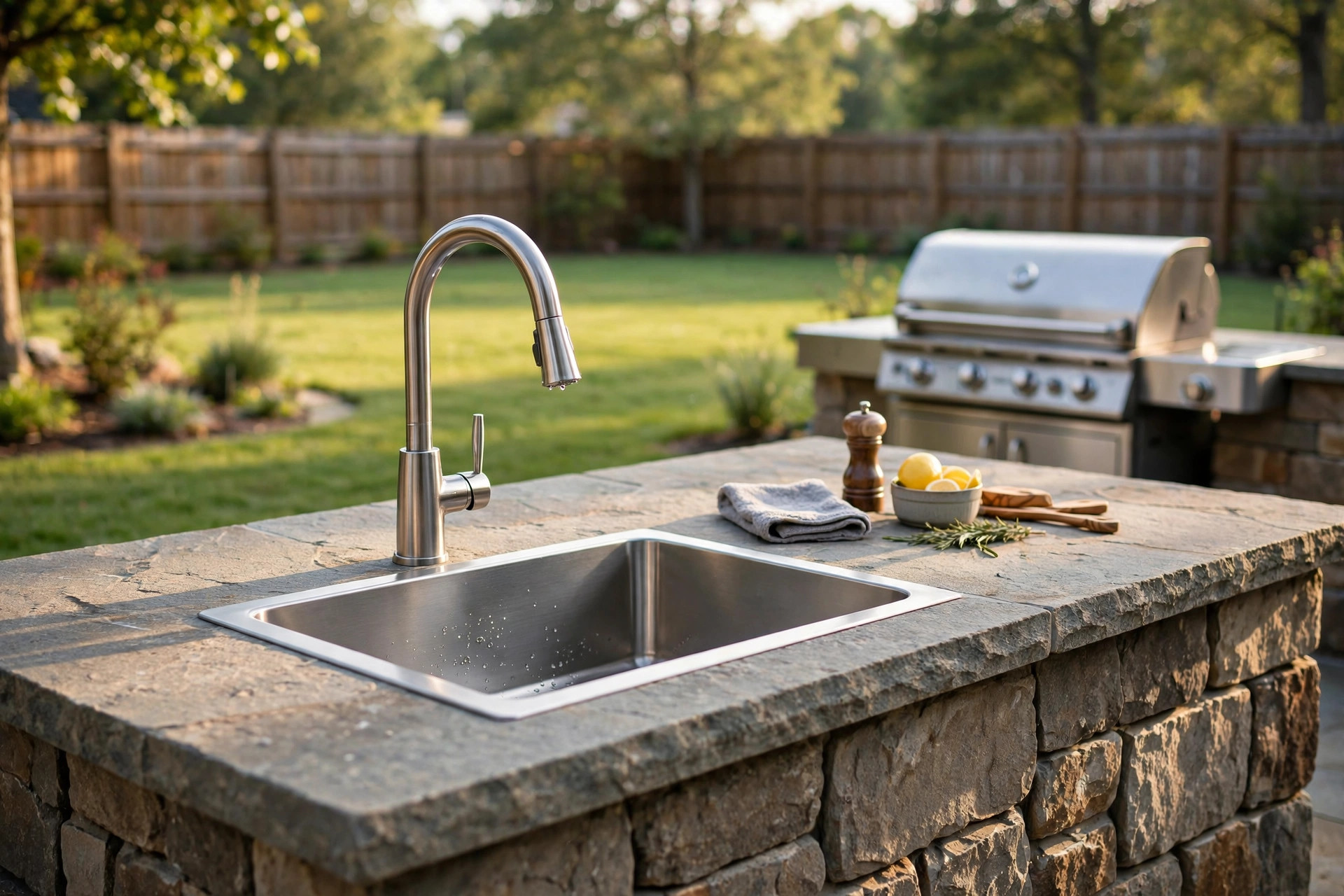

When people plan a backyard cooking space, the grill gets most of the attention. That is a mistake. The sink is the part you will touch a hundred times during one cookout. These outdoor kitchen sink with faucet reviews are written to help you choose that sink with clear eyes. We look at what matters, what does not, and how much a good unit should cost.
A sink keeps the whole cooking flow moving. You rinse vegetables there. You wash your hands there. You fill pots and cool down utensils. Without running water outside, every trip back to the kitchen door breaks your rhythm. It also drags dirt in through the house. A small sink beside the grill changes the entire experience.
Why an Outdoor Kitchen Sink Matters
Most buyers start with the grill. They pick the biggest one they can afford. Then they realize the grill is only half the job. Raw meat, fresh produce, and sticky barbecue sauce all need water close at hand.
An outdoor sink lets you do the full job outside. You can prep food, wash tools, and clean up without leaving the patio. That matters most at parties. When guests are around, the cook does not want to disappear indoors every ten minutes. The sink keeps the cook in the conversation.
There is also a health reason. Hands should be washed after touching raw chicken or fish. If the nearest faucet is inside the house, many people will skip the step. That is how cross contamination happens. A sink a few steps from the grill makes hand washing easy and natural. It is the same habit a restaurant kitchen depends on.
Washing a big roasting pan or a grill grate indoors can be a chore. An outdoor sink often has a deep basin made for large items, with a tall faucet that fills deep stock pots. It is practical work, done where the mess belongs.
Homeowners who read outdoor bar sink for grill station notes often reach the same conclusion. A small bar sink handles drinks. A full outdoor kitchen sink handles real cooking. Most serious cooks want the full sink.
What to Look for in an Outdoor Kitchen Sink with Faucet: Outdoor Kitchen Sink with Faucet Reviews
Not all sinks are built for the outdoors. A kitchen sink from inside the house will rust, crack, or wear out quickly in rain and heat. Look for these points before you buy.
Sink Material
Stainless steel is the most common choice. It resists rust, handles hot and cold water, and cleans with a simple wipe. Look for 304-grade stainless steel. It holds up far better than 201-grade, which can spot and stain over time. A thicker gauge is also better. Sixteen gauge steel feels solid and dents less than thin twenty gauge steel.
Some sinks use stone, concrete, or ceramic. These look beautiful in a rustic outdoor kitchen. They are also heavy. A stone sink needs a strong cabinet base. Concrete must be sealed yearly. Ceramic can crack if a heavy pot drops on it. For most people, stainless steel is the safe and lasting choice.
Faucet Type
The faucet matters as much as the basin. Outdoor faucets should be made from solid brass or stainless steel. Chrome plated plastic is cheaper, but it flakes and corrodes in weather. A single handle faucet is easy to use with wet or greasy hands. A high arc spout gives room to fill tall pots and to wash large trays.
Check the faucet finish. Oil rubbed bronze and matte black look fine at first. Outdoor sun fades them. Brushed nickel or stainless finishes hold their look longer. Also check the water lines. Braided stainless supply lines last far longer than plain rubber ones.
A pull down sprayer is a useful extra. It lets you rinse the basin corners and wash produce in a colander. Make sure the sprayer head is metal, not plastic. Plastic sprayers crack after a few seasons in the sun.
Size and Shape
Measure your cabinet or countertop opening before you shop. Outdoor sinks come in round, square, and rectangular basins. A single deep basin, about ten inches deep, is the most useful for cooking. Double basin sinks give a place to wash on one side and rinse on the other, but they take up more counter space.
Top mount sinks sit on the counter and are easier to install. Undermount sinks attach below the counter for a clean look. Top mount is the better pick if you are installing the sink yourself.
Pay attention to the faucet holes. A single hole deck works for one faucet. A three hole deck lets you add a soap dispenser or an air gap. Decide what you want before you order, because the hole count cannot change later.
Types and Options You Will Find in Stores
Walk through any large home store and you will see several styles of outdoor sinks. Each has strengths and weak points. Knowing them helps you read outdoor kitchen sink with faucet reviews with a sharper eye.
Drop in utility sinks. These are simple, deep, and cheap. They often sell as laundry or garage sinks. They work outside, but the finish is plain. Good for a basic how to build outdoor kitchen on budget project where every dollar counts.
Bar prep sinks. These are small, often round or square, about fifteen inches wide. They fit in a corner of the counter. They are fine for washing a few cups or rinsing limes for drinks. They are too small for serious food prep.
Full outdoor kitchen sinks. These are the real thing. A deep stainless basin, a tall faucet, and sometimes a cutting board that slides across the top. Some come as a sink and faucet set with matching finish. Reviews of full sets are usually more positive, because the faucet and sink are made to fit each other.
Freestanding sink carts. A sink built into a rolling cart suits renters. You roll it out for the cookout and store it after. These usually connect with a garden hose and drain into a bucket. They are handy, but the faucet pressure is often weak.
Cold water only vs. hot and cold. Some outdoor setups only run cold water. That is fine for rinsing and washing. If you want hot water, you need a hot water line or a small point of use heater. Hot water is worth the cost if you cook often. Grease washes off much faster in hot water.
Retailers like those at The Home Depot carry a wide mix of these styles. Browsing their outdoor sink aisle is a good way to see sizes in person before you buy online.
How to Read Outdoor Kitchen Sink with Faucet Reviews
Review sites can help, but they need a careful eye. Many reviews are written days after installation, when the sink is still new. The real test comes after two summers of rain and sun. Look for reviews from owners who have used the sink for a full year or more.
Watch for complaints that repeat. If several reviewers say the faucet drips, the drain leaks, or the steel rusts, believe them. One bad review might be a fluke. Five with the same problem tell a story.
Check the steel gauge and how the reviewer installed the sink. A sink that fails when mounted wrong is not the same as one with a bad design. Reviews that describe the install are the most useful.
Test labs can back up what store reviews say. Consumer Reports runs long term durability tests on faucets and fixtures. Cooking sites like The Spruce Eats and AmazingRibs review outdoor gear with hands on methods.
Brand names carry some weight. Grill makers like Weber, Traeger, Napoleon, Big Green Egg, Char-Broil, and Broil King know outdoor products well. They do not all make sinks, but their outdoor ratings are high. A sink from a company that understands outdoor life is often a safer bet.
Cost and Price: What You Should Expect to Pay
Prices vary a lot. A simple stainless drop in sink with a basic faucet can cost under one hundred fifty dollars. These are fine for light use. The steel is thin. The faucet is basic. Expect to replace it in a few years.
Mid range sets cost between three hundred and six hundred dollars. This is where most buyers land. You get 304 stainless steel, a solid brass faucet, and a decent warranty. For a family that grills every week, this range offers the best value.
High end outdoor sinks cost eight hundred dollars and up. They have thick gauge steel, commercial style faucets, and sound dampening pads on the basin. Some are built into luxury outdoor kitchen islands. If the outdoor kitchen is a showpiece, the price may be worth it.
Do not forget the hidden costs. Plumbing lines, a drain connection, and a shut off valve add up. If you hire a plumber, labor can cost more than the sink itself. Budget for both the sink and the install.
Buyers working through best flat top grill for outdoor kitchen plans often ask where the sink fits in the budget. A fair rule is to spend ten to fifteen percent of the total outdoor kitchen budget on the sink and faucet. The grill is the star. The sink is the workhorse.
Care and Upkeep Through the Seasons
An outdoor sink needs more care than an indoor one. Rain, sun, and temperature swings wear on every part. A little routine keeps it working for years.
Wipe the basin dry after heavy use. Standing water leaves spots on stainless steel. A soft cloth and mild soap are all you need. Skip the bleach and the steel wool. Both scratch the surface and break down the steel’s protective layer.
Oil the faucet handles and moving parts once a season. A drop of food safe silicone grease on the faucet cartridge keeps it turning smooth. Check the supply line connections each spring.
In cold climates, shut off the water line before the first hard freeze. Drain the faucet and the lines. Water left in the pipes will freeze and split them. This one step prevents the most common winter damage.
Clean the drain basket or strainer each week during cooking season. Food scraps rot in the drain and smell bad. Empty the strainer into the trash, not down the drain, to keep grease out of the pipes.
If the steel starts to spot, use a stainless steel cleaner with a soft pad. Rub with the grain of the steel. Rinse well and dry. Most surface rust on 304 stainless is cosmetic and cleans off. Deep rust is a sign of thin or low grade steel, which is a quality problem, not a cleaning problem.
Safety Notes for Outdoor Sinks
Water and electricity do not mix. Keep the sink away from outdoor outlets, grill ignition systems, and electric smoker controls. If the sink must sit near an outlet, use a ground fault circuit interrupter outlet. It cuts power if water gets in.
Hot water can scald. Set a point of use heater to a safe temperature, no higher than one hundred twenty degrees. Children at a cookout may turn any faucet they find. A safe setting prevents burns.
Drain water away from the house foundation. A sink that dumps gray water near the foundation can cause soil erosion and damp basements. Run the drain to a proper waste line or a dry well away from the building.
Gas grill placement matters too. Keep the sink cabinet away from direct grill heat. Hot grease splashes can damage faucet finishes and melt plastic drain parts. A few feet of counter space between the grill and the sink is enough.
Frequently Asked Questions
Can I use a regular kitchen sink outside? A standard indoor sink will work for a while, but it is not made for weather. Thin chrome finishes rust and plastic parts crack in sun. If the sink must live outdoors year round, buy one rated for outdoor use.
Do outdoor kitchen sinks need hot water? No. Cold water handles most outdoor tasks. Hot water helps with grease and deep cleaning. If you only grill a few times a month, cold water is fine. Regular cooks should run a hot line.
What size sink is best for an outdoor kitchen? A single basin about twenty four inches wide and ten inches deep fits most outdoor counters. It swallows large pots and grill grates. Smaller fifteen inch bar sinks are fine for drinks only. Bigger is better if you have the counter space.
How do I stop an outdoor faucet from freezing? Shut off the water supply before winter. Open the faucet and let it drain fully. Disconnect any hoses. In very cold areas, remove the faucet handle and store small parts indoors. A faucet cover helps, but draining is the key step.
Should the sink be near the grill or far from it? Near is better. Place the sink within a few steps of the grill so prep and cleanup flow together. Keep a small gap of counter between them for heat safety. The ideal layout is grill, counter space, then sink.
Are expensive outdoor sinks worth the money? For heavy use, yes. Thick steel, solid brass faucets, and good warranties pay off over ten years of outdoor life. For light use, a mid range set is plenty. The cheapest sinks often need replacing after a few seasons, which costs more in the long run.
A Final Word
A good outdoor kitchen sink is a quiet worker. It does not draw eyes like a big grill. It simply makes every cookout easier, cleaner, and safer. Read outdoor kitchen sink with faucet reviews with care, buy the best steel and faucet you can afford, and install it right.
References
AmazingRibs.com. (n.d.). Barbecue and grilling science. https://www.amazingribs.com Big Green Egg. (n.d.). Kamado grills and outdoor cooking. https://www.biggreenegg.com Broil King. (n.d.). Gas and charcoal grills. https://www.broilkingbbq.com Char-Broil. (n.d.). Gas and charcoal grills. https://www.charbroil.com Consumer Reports. (n.d.). Product reviews and ratings. https://www.consumerreports.org Napoleon. (n.d.). Fireplaces, grills, and heating products. https://www.napoleon.com The Home Depot. (n.d.). Home improvement products. https://www.homedepot.com The Spruce Eats. (n.d.). Recipes and cooking guides. https://www.thespruceeats.com Traeger. (n.d.). Wood pellet grills. https://www.traeger.com Weber. (n.d.). Grills and outdoor cooking. https://www.weber.com
Was this guide helpful?

About David Wilson
The My Garden US editorial team writes practical, in-depth home and garden guides for American homeowners — tested advice, no fluff.
You May Also Like
How to Clean Grease From Gas Grill: A Complete Step-by-Step Guide
June 2, 2026 0 views
How to Grill Pineapple for Dessert: A Simple Step-by-Step Guide
June 1, 2026 0 views
Best Outdoor Trash Can for Grill Area: A Full Buying Guide
April 13, 2026 0 views