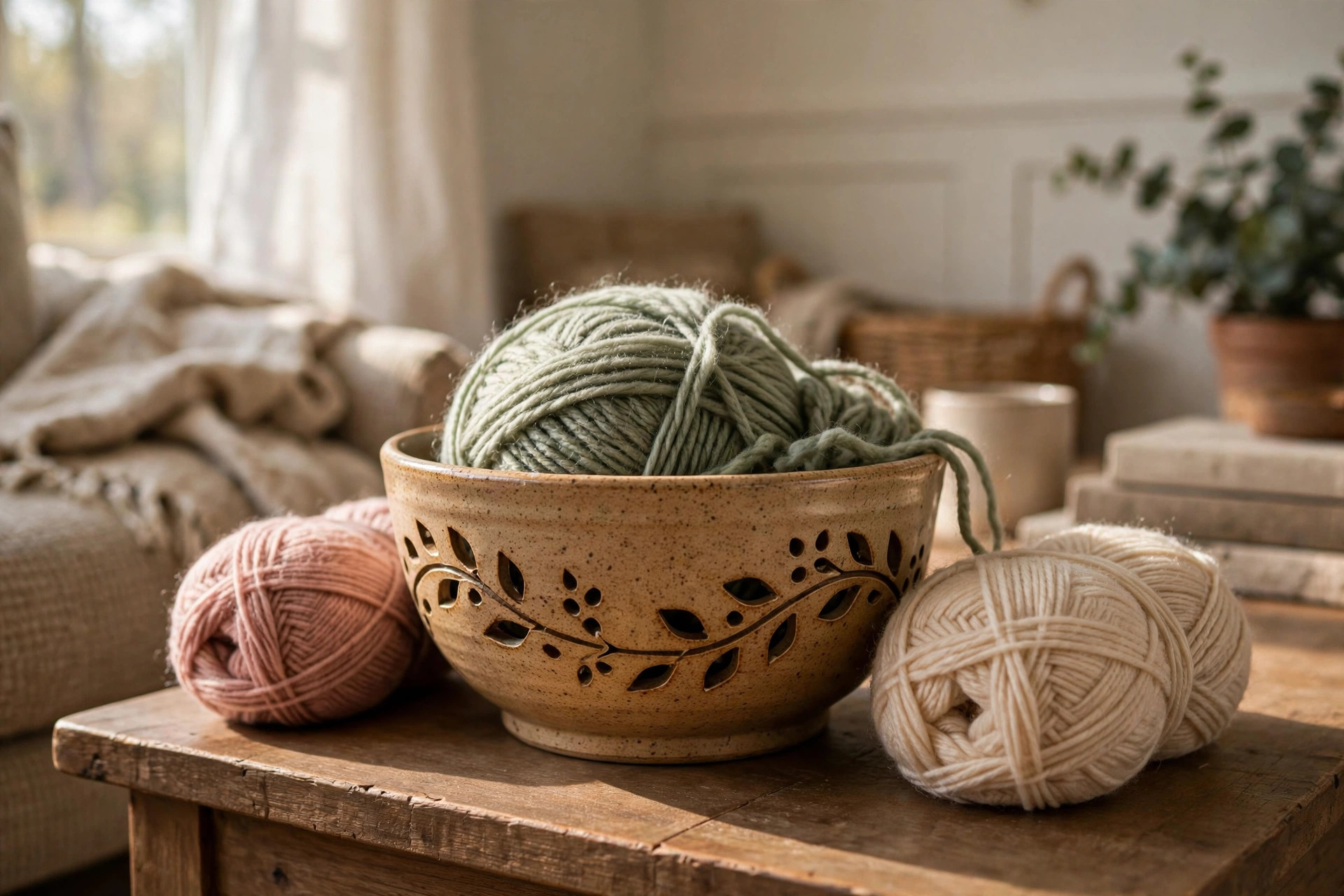

Every knitter and crocheter knows the problem. You sit down to work, and your ball of yarn rolls across the floor. It picks up dust and pet hair. It tangles with the chair leg. You spend more time chasing yarn than making stitches. The best yarn bowl for knitting and crochet solves this small problem in a simple way. It is a bowl with one or two curved slots cut into the side. You place the ball inside. You thread the working strand through the slot. The yarn feeds out smoothly as you pull, and the ball stays put.
This guide will help you choose the right bowl for your craft. We will look at why it matters, what materials are best, what sizes to buy, what prices to expect, and how to care for your bowl. We will also answer the most common questions from new buyers.
Why a Yarn Bowl Matters
A yarn bowl is a small tool, but it changes the way a long project feels. When the ball rolls free, the yarn twists as it unwinds. Twisted yarn can knot. Knots break your rhythm and can ruin the look of fine stitches. A bowl holds the ball still. The strand comes out in a straight, even pull. Your tension stays steady, and your work looks better.
The bowl also keeps yarn clean. Yarn left on the floor gathers lint, dust, and animal hair. Light-colored wool shows every speck. A bowl lifts the yarn off the floor and away from dust. This matters most for gift projects and items you plan to sell. Clean yarn means clean finished work.
Travel is easier with a bowl too. Many crafters take their work to waiting rooms, parks, and family visits. A ball of yarn loose in a tote bag will tangle with everything else inside. A yarn bowl inside the bag keeps the ball in one place. Some bowls even come with lids for travel. The best yarn bowl for knitting and crochet fits your habits, whether you craft at home or on the road.
How to Choose the Best Yarn Bowl for Knitting and Crochet
Material
Most yarn bowls are made of ceramic, wood, or metal. Each material has its own strengths.
Ceramic is the most common choice. Ceramic bowls are heavy, so they do not tip over when you pull the yarn. They come in many colors and glaze patterns. They are easy to wipe clean. Their one weakness is breakage. A ceramic bowl can chip or crack if it falls on a hard floor.
Wood is warm and light. Wooden bowls are less likely to break if dropped. Many are turned from a single piece of hardwood on a lathe. Wood grain makes each bowl one of a kind. Wood does need a little care. It should not soak in water, and it benefits from an occasional rub of food-safe oil. Sites like Dick Blick and craft shops often stock turned-wood bowls for fiber artists.
Metal bowls are rare but useful. They are nearly unbreakable. They are light and easy to pack. They can be noisy on hard tables, so some crafters place a cloth under them. Metal is a good pick for children or for travel bags that get tossed around.
A few bowls are made of plastic or resin. These are the cheapest option. They work well, but they lack the weight and feel of ceramic or wood. They are a fine starter choice if you are not sure you will use a bowl often.
Size
Yarn bowls come in three common sizes. Small bowls, about four to five inches wide, suit lace-weight and fingering yarn. They are compact and fit in a tote bag. Medium bowls, about five to six inches wide, are the most popular. They hold a standard skein of worsted-weight yarn with room to move. Large bowls, six to seven inches or more, suit bulky yarn and large blanket projects. The best yarn bowl for knitting and crochet in a large size can hold a full cake of chunky yarn without crowding it.
Think about the yarn you use most. If you knit socks and shawls, a small or medium bowl is enough. If you crochet blankets and sweaters, choose a large one. Many serious crafters own two sizes. A medium bowl for daily use and a large bowl for big projects covers almost every need. The best yarn for knitting sweaters often comes in large skeins, so a roomy bowl is worth the extra cost.
Slots and Shape
Look closely at the slot. It should be wide enough for thick yarn but curved enough to guide thin yarn without letting it slip out. Some bowls have one slot. Others have two or three. Multiple slots let you work with two or three colors at once. This is a great help for colorwork knitting and striped crochet.
The bowl should also have a stable base. A flat, wide base resists tipping. Some bowls have small feet that grip the table. Avoid bowls with a narrow base. They tip when the ball is nearly gone and the weight shifts.
Weight matters more than most buyers expect. A light bowl will slide across a smooth table as you pull. A heavy bowl stays where you put it. Ceramic and thick wood have the best heft. If you buy a light bowl, set it on a rubber mat or a folded towel.
Types of Yarn Bowls
Classic Ceramic Bowl
The classic shape is a round bowl with a curved J-shaped slot. It is the standard for a reason. It works with almost any yarn weight. It sits steady on a table. It comes in hundreds of glaze colors. This is the safest first purchase. You can find classic ceramic bowls at large craft retailers like JOANN, which stocks fiber arts supplies in many sizes.
Carved Wooden Bowl
Wooden bowls are often hand-turned. They may have a single slot or a set of drilled holes. They are lighter than ceramic and warm to the touch. Hardwoods like maple, cherry, and walnut resist wear. A wooden yarn bowl for crochet works especially well, since crochet hooks and wooden tools feel natural together. Wood bowls cost more than ceramic ones, but they last for years with simple care.
Yarn Bowl With Lid
Some bowls come with a fitted lid. The lid has a small notch for the working strand. You can close the bowl and carry it in a bag without the ball escaping. These are the best choice for travel and for homes with curious cats. A lidded bowl also keeps dust off the yarn between crafting sessions.
Double and Triple Slot Bowls
Multi-strand bowls have two or three slots spaced around the rim. They let you pull two or three colors at the same time without tangling. Knitters who do stranded colorwork and fair isle will love them. Crocheters who make striped blankets will too. The slots must be smooth, since rough edges can snag delicate fibers.
Novelty and Gift Bowls
Makers also produce bowls shaped like animals, flowers, and teacups. These make lovely gifts. They work as well as plain bowls if the slot is well cut. Check the slot before buying. A pretty bowl with a rough slot will fray your yarn. Read reviews from other crafters before you pay a premium for a novelty shape.
Cost and Price Ranges
Yarn bowls are affordable compared to most craft tools. Simple ceramic bowls cost between ten and twenty-five dollars. Handmade ceramic bowls with detailed glazes run twenty-five to fifty dollars. Turned-wood bowls usually cost thirty to seventy dollars, depending on the wood and the size. Metal and plastic bowls are the cheapest, often under fifteen dollars. Lidded travel bowls sit in the middle, around twenty to forty dollars.
Price is not always a sign of quality, but very cheap bowls may have rough slots. Run your finger along the slot before you buy, or read buyer reviews if you shop online. A smooth slot is the mark of a good bowl at any price. Brand-name yarn shops like Lion Brand often carry bowls alongside their yarn lines, which makes it easy to match sizes.
Sets can be a good value. Some sellers offer a bowl with a matching set of stitch markers or a pair of scissors. If you are building a gift basket for a crafter, look for these sets. You might pair a bowl with the best craft scissors for left handed kids if the gift is for a young maker.
Care and Upkeep
Care is simple. For ceramic bowls, wipe the inside with a damp cloth when dust builds up. Do not use harsh cleaners on hand-painted glaze. For wooden bowls, dust with a dry cloth. Once or twice a year, rub in a thin coat of food-safe mineral oil or beeswax. This keeps the wood from drying and cracking. Let the oil soak in overnight, then wipe off the extra.
Keep bowls away from the edge of tables. Ceramic bowls break when they fall. Wooden bowls dent. Store extra bowls on a shelf, not stacked inside each other, since stacking can chip glaze. If a slot develops a rough spot, a small piece of fine sandpaper will smooth ceramic, and a dab of wax will smooth wood.
Wool leaves a fine layer of fiber dust inside any bowl. This is normal. Empty the bowl and wipe it out every few projects. Check the slot for built-up wax or dye from dark yarns. A soft brush clears it out in seconds.
Safety
Yarn bowls are safe, but a few points deserve care. Heavy ceramic bowls can hurt if they fall from a high shelf, so store them low. Keep small bowls away from toddlers, who may try to lift them and drop them. Metal bowls can have sharp edges if they are cheaply made, so check the rim before you buy.
Pets are the main risk. Cats love to bat at a ball of yarn. A heavy bowl with a lid is the best defense. Dogs may chew wooden bowls left on the floor. Keep your craft supplies on a table or in a closed basket when you are not using them. The pet care experts at Ravelry and other fiber communities often share tips for crafting in homes with animals.
If you craft with children, choose an unbreakable bowl. Plastic or metal will survive drops. Teach young crafters to pull gently. A hard yank can tip any bowl and spill the yarn. These small habits keep the craft area calm and safe for everyone.
Frequently Asked Questions
Do I really need a yarn bowl?
You do not need one to knit or crochet. Many crafters work for years without one. But a bowl makes the work easier. It stops tangles, keeps yarn clean, and holds the ball steady. Most people who try one keep using it. It is one of the cheapest upgrades you can make to your craft setup.
What size yarn bowl should I buy?
Buy for the yarn you use most. Small bowls suit fingering and lace yarn. Medium bowls suit worsted-weight yarn, the most common weight. Large bowls suit bulky yarn and blanket projects. If you are unsure, choose medium. A medium bowl handles the widest range of yarns. Home guides like The Spruce also note that medium is the best all-around size for most crafters.
Can I use a yarn bowl for crochet and knitting both?
Yes. The best yarn bowl for knitting and crochet works for both crafts. The slot feeds yarn the same way no matter what tool you hold. Multi-slot bowls are useful for both colorwork knitting and striped crochet. There is no need to buy separate bowls for each craft.
How do I stop yarn from slipping out of the slot?
Use a bowl whose slot matches your yarn weight. Thin yarn in a wide slot will slip. If the slot is too wide, thread the yarn through and then lay a small piece of tape loosely over the top of the slot. Pull gently and steadily instead of yanking. A heavier bowl also helps, since it does not shift as you pull.
Are wooden or ceramic yarn bowls better?
Neither is better for everyone. Ceramic is heavier and steadier on a table. It is also breakable. Wood is lighter, warm, and hard to break, but it needs occasional oiling. Choose ceramic if your bowl will stay in one spot. Choose wood if you carry your work from room to room. Many crafters own one of each.
Where can I buy a good yarn bowl?
Craft stores, yarn shops, and online marketplaces all sell them. Local yarn shops let you feel the weight and check the slot before you buy. Large retailers like Michaels offer more choices and lower prices. Handmade marketplaces offer one-of-a-kind pieces from independent potters and wood turners. For project ideas to use with your new bowl, a diy candle warmer kit for home fragrance crafts pairs well with a cozy evening of stitching. Workshop sites such as Family Handyman, This Old House, and Bob Vila also cover craft room setup and storage ideas.
A Final Word
The best yarn bowl for knitting and crochet is the one that fits your yarn, your space, and your habits. A heavy ceramic bowl suits a dedicated craft corner. A lidded wooden bowl suits a traveler. A multi-slot bowl suits a colorwork lover. Any of them will end the days of chasing runaway balls across the floor. Buy one good bowl, keep the slot smooth, and your stitches will thank you for years to come.
References
Blick Art Materials. (n.d.). Art and craft supplies. https://www.dickblick.com Bob Vila. (n.d.). Home improvement advice. https://www.bobvila.com Family Handyman. (n.d.). DIY home repair and maintenance. https://www.familyhandyman.com JOANN. (n.d.). Fabric and craft supplies. https://www.joann.com Lion Brand Yarn. (n.d.). Yarn and knitting supplies. https://www.lionbrand.com Michaels. (n.d.). Arts and crafts supplies. https://www.michaels.com Ravelry. (n.d.). Knitting and crochet community. https://www.ravelry.com The Spruce. (n.d.). Home and garden advice. https://www.thespruce.com This Old House. (n.d.). Home renovation guidance. https://www.thisoldhouse.com
Was this guide helpful?

About Jennifer Lee
The My Garden US editorial team writes practical, in-depth home and garden guides for American homeowners — tested advice, no fluff.
You May Also Like
Glass Painting Kit for Beginners Suncatchers DIY
June 22, 2026 0 views
Best Paper Cutter for Scrapbooking and Cards: A Practical Guide
August 1, 2026 0 views
A Paint by Numbers Kit for Adults Relaxation: A Simple Path to Calm Evenings
February 28, 2026 0 views