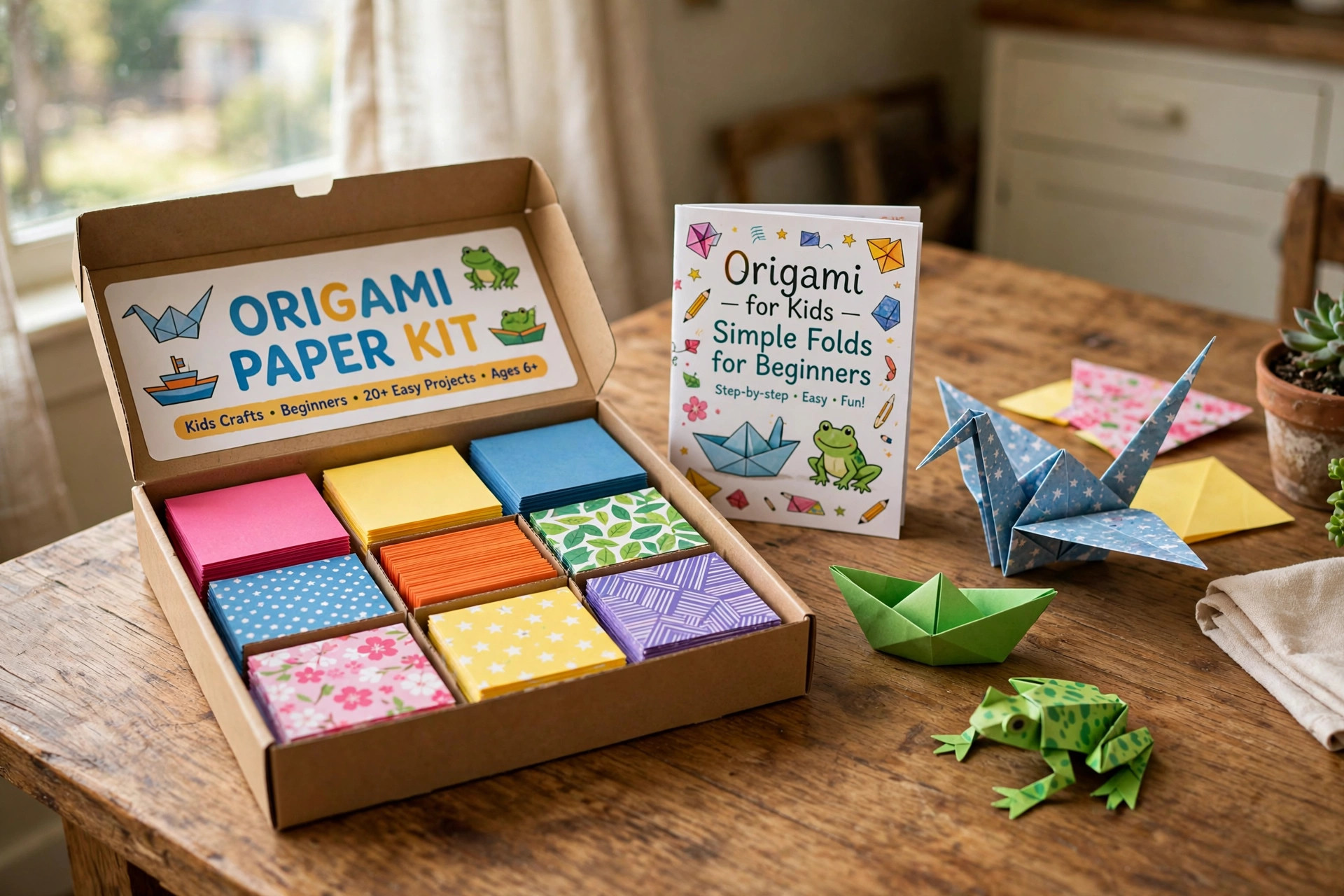

A Simple Start for Young Folders
An origami paper kit for kids crafts beginners takes one of the oldest paper arts in the world and makes it simple for a child to enjoy. Origami began in Japan centuries ago. It is the art of folding a single sheet of paper into shapes such as birds, boats, and flowers. No glue is needed. No scissors are needed. Only paper and two hands.
A good kit puts everything a young beginner needs into one box. It holds square sheets of paper in many colors. It holds an instruction book with clear pictures. Some kits add small tools such as a folding bone or stickers for decorating finished models.
Children between the ages of five and ten make the best use of these kits. Younger children can fold very simple models with help from a parent. Older children can follow the diagrams on their own. A kit removes the guesswork. Parents do not have to cut paper to size or search for instructions.
Why It Matters: Origami Paper Kit for Kids Crafts Beginners
Origami teaches more than paper folding. It teaches patience. A child learns to follow steps in order. If a fold is skipped, the model will not look right. The child learns to slow down and check each step.
It also builds fine motor skill. The small muscles in the fingers grow stronger with each crease. This helps handwriting. It helps buttoning clothes. It helps with other crafts.
Math skills grow too. Folding teaches halves and quarters in a hands-on way. Children see symmetry when a crane’s wings match. They learn geometry words such as square, triangle, and diagonal without opening a textbook.
Origami is also quiet work. It calms restless children. It gives them a screen-free way to spend an afternoon. A finished crane or frog gives a child real pride. That pride comes from work done well.
What to Look For
Not all kits are equal. A poor kit can turn a child away from the craft. Look for these points before you buy.
Paper size. The sheets should measure at least five or six inches on each side. Small paper is hard for small hands. Large paper makes each fold easier to see.
Paper weight. Good origami paper is thin and holds a crease. Plain copy paper is too thick and too slippery. Thin origami paper folds flat and stays folded.
Two-sided paper. The best beginner paper has a different color on each side. This makes it easy to see which side faces up. It also makes finished models look brighter.
Clear instructions. The book should use large diagrams. Each step should show only one fold. Words should be simple. Numbered steps help a child keep her place.
Age marking. Check the age range on the box. A kit made for ages six and up will use simple models. A kit with no age marking may hold models that are too hard.
Number of models. Twenty to fifty models give good value. More models than that can feel like pressure. Fewer than ten models will run out too fast.
Extra paper. Children will make mistakes. They will want to fold the same model twice. A kit with at least 200 sheets lasts far longer than one with 100 sheets.
Types of Kits
Classic Crane and Animal Kits
These are the most common. They teach the crane, the frog, the boat, and the box. They suit first-time folders. The models build on each other, so each one feels a little harder than the last.
Themed Kits
Themed kits follow one idea. Dinosaur kits fold paper into long-neck and sharp-tooth shapes. Space kits fold rockets and stars. Ocean kits fold fish and whales. A child who loves animals will work longer on an animal kit.
Book-Only Kits
Some kits center on a thick instruction book with paper bound inside. These suit children who read well. They travel well in a car or on a plane.
Craft Combo Kits
These mix origami with other crafts. The box may hold paper, glue sticks, and markers. A child can fold a crane and then draw eyes on it. These kits work for children who like to decorate.
Starter Sets With Tools
Some sets add a plastic folding tool that presses creases sharp. Others add stickers, googly eyes, or display stands. These extras are fun, but the paper and the book matter more.
How to Choose for Your Child
Start with your child’s age. A five-year-old needs simple models with few steps. Look for kits marked for ages five to eight. An eight-year-old can handle harder models with more steps.
Think about interest. A child who loves birds will fold a hundred cranes. A child who loves the sea will fold boats and fish. Match the theme to the child.
Check the hand size. Children under six fold better with larger sheets. Some brands sell kits with seven-inch paper for this reason.
Read the review notes on store pages. Parents often note if the paper tears easily or if the diagrams are unclear. These details help more than the box pictures.
Set a small budget. Beginner kits cost little. There is no need to spend more than twenty dollars on a first kit. If the child loves it, buy a larger refill of paper later.
Craft supply stores carry a wide range. Large craft chains such as Michaels and Joann stock beginner kits in their kids’ craft aisles. Art supply shops such as Blick carry quality paper for refills. Home centers such as Home Depot sometimes carry craft kits in their seasonal sections.
Cost and Price
Most beginner kits sell for between eight and twenty dollars. A simple kit with 100 sheets and a small book sits near the lower end. A large kit with 500 sheets, many models, and extra tools sits near the upper end.
Refill paper is cheap. A pack of 500 sheets of good origami paper often costs less than ten dollars. Buy refill paper once your child finishes the kit paper.
Book-only kits can cost a little more. The book is the value. A well-made book with 100 models may cost fifteen to twenty-five dollars.
Watch for sales around holidays. Craft stores cut prices on kids’ kits in December and in the summer months. Buying two kits at sale price keeps one ready as a gift.
Care and Upkeep
Origami paper needs dry air. Store paper flat in the box or in a folder. Do not let it bend. A bent sheet will not fold cleanly.
Keep paper away from water. Damp paper tears and holds no crease. Keep the kit off the floor and away from drinks.
Save the instruction book. Children will want to fold the same models again. A book that is kept flat will last for years.
Teach children to fold on a hard table. A soft bed or couch makes creases weak. A table gives sharp folds.
Organize colors. Some children like to sort sheets by color. This small habit teaches order. It also makes it easy to find the right paper for a model.
Finished models can be kept in a box or strung on a thread. A string of paper cranes makes a nice room decoration. Do not leave models in direct sun. The colors will fade over time.
Safety
Origami is one of the safest crafts for children. There are no sharp tools. There is no heat. There is no glue or paint. Still, a few rules help.
Paper edges can give small cuts. Teach children to handle paper by the flat parts, not the edges. Cuts from origami paper are rare, but they happen.
Keep small parts away from babies. Some kits hold stickers or eyes that a toddler could swallow. Store the kit out of reach of children under three.
Make sure the folding tool, if the kit has one, is plastic. A plastic tool is safe for young children.
Watch choking hazards. Paper itself is not a hazard, but a child should not put folded models in the mouth. The paper can break apart.
For general child product safety, the federal agency site CPSC lists current rules and recalls for toys and craft items.
Using Origami in Learning
Teachers use origami in classrooms across the country. It fits many subjects. A science teacher can fold a model of a molecule. A history teacher can fold hats from different cultures. A math teacher can show fractions with each fold.
Home craft time can join with other activities. After folding, children can paint their models with an acrylic paint set. They can glue them onto cards. They can write stories about their folded animals.
Origami pairs well with reading. Fold a crane, then read the story of Sadako and the thousand cranes. Fold a boat, then read a story about the sea. The paper model makes the story real.
Instruction sites such as WikiHow carry step-by-step origami guides for free. These help when a child finishes the kit book and wants more models.
Tips for Parents and Teachers
Sit with the child for the first few models. Fold your own sheet next to them. Do not fold for them. Let them make the folds.
Praise the effort, not the result. A crooked crane is still a finished crane. Praise builds the will to try the next model.
Work in short sessions. Twenty minutes is enough for young children. Stop before tiredness sets in. Tired fingers make bad folds.
Keep a folder of favorites. When a child folds a model well, write the date on it. A dated folder shows growth over months.
Hold a family folding night. Everyone folds the same model. Compare the results. Laugh at the mistakes. This turns a solo craft into shared time.
For more home project ideas, home guides such as Family Handyman, This Old House, and Bob Vila carry step-by-step plans for family craft and DIY work. Large online sellers such as Amazon carry a broad range of kits with parent reviews. Kids’ art brands such as Crayola also make beginner-friendly craft sets that pair well with origami time.
If your child likes making things with scent and color, a candle making kit is a good next craft step for older beginners.
FAQ
At what age can a child start origami? Most children can start at age five with very simple models. A parent should fold along with them. By age seven or eight, most children can follow a diagram book on their own.
How many sheets of paper does a beginner need? Start with at least 200 sheets. Children will make mistakes. They will refold favorites. A kit with 200 to 500 sheets gives room to learn without running out.
Is origami paper different from normal paper? Yes. Origami paper is thin, square, and holds a crease. It often has a different color on each side. Normal copy paper is thicker and rounder-cornered, which makes folding harder.
What is the easiest first model? The paper hat and the paper boat are the easiest. Each needs only a few folds. The jumping frog is also simple and fun because it moves when pressed.
Can origami help with schoolwork? Yes. It builds fine motor skill, patience, and basic geometry. Teachers use it in math and science lessons. It also gives children practice in following written steps.
How do I store finished models? Keep them in a shallow box or on a shelf. Do not stack heavy things on them. Keep them out of direct sun so the colors stay bright. A string of cranes hung in a room makes a cheerful decoration.
A Final Word
An origami paper kit for kids crafts beginners is a small gift with a long reach. It costs little. It needs no batteries. It asks for nothing but paper and time. In return, it gives a child new skills, quiet focus, and the pride of making something by hand. Choose a kit with large sheets, clear diagrams, and plenty of paper. Sit down and fold the first crane together. The rest will follow.
References
Amazon. (n.d.). Online shopping. https://www.amazon.com Blick Art Materials. (n.d.). Art and craft supplies. https://www.dickblick.com Bob Vila. (n.d.). Home improvement advice. https://www.bobvila.com Crayola. (n.d.). Creative products for families. https://www.crayola.com Family Handyman. (n.d.). DIY home repair and maintenance. https://www.familyhandyman.com JOANN. (n.d.). Fabric and craft supplies. https://www.joann.com Michaels. (n.d.). Arts and crafts supplies. https://www.michaels.com The Home Depot. (n.d.). Home improvement products. https://www.homedepot.com This Old House. (n.d.). Home renovation guidance. https://www.thisoldhouse.com U.S. Consumer Product Safety Commission. (n.d.). Product safety information. https://www.cpsc.gov WikiHow. (n.d.). Step-by-step how-to guides. https://www.wikihow.com
Was this guide helpful?

About Jennifer Lee
The My Garden US editorial team writes practical, in-depth home and garden guides for American homeowners — tested advice, no fluff.
You May Also Like
Best Rotary Cutter for Quilting Fabric Crafts
July 16, 2026 0 views
Finding the Best Craft Desk with Storage for Cricut Machine
May 4, 2026 0 views
Best Craft Scissors for Fabric Cutting Sharp
August 19, 2026 0 views