
A knitting machine for home sweater making can turn many evenings of hand knitting into a single relaxed afternoon. If you enjoy wool sweaters but find hand knitting slow, a machine may be the answer. It lets you knit a whole front, back, or sleeve in a fraction of the time. Many beginners worry that a machine is too complex. In truth, the basic models are simple. You learn to cast on, move a carriage across, and shape pieces in a few practice sessions.
This guide covers how these machines work, which types suit home sweater making, what to look for when you buy, what they cost, and how to keep yours in good shape. It also answers common questions and points you to trusted shops and sources of help.
Why a Knitting Machine Matters for Home Sweater Making
A hand knitted sweater can take forty to sixty hours of work. A knitting machine for home sweater making cuts that to a few hours. The machine forms each row when you push the carriage across the needle bed. Your hands guide the yarn and the machine, but the needles do the looping.
Speed is the first benefit. The second is even stitches. Machine knit fabric looks neat and uniform, much like a shop bought sweater. The third is scale. Once you master the basic steps, you can knit sweaters for the whole family, for gifts, or even for a small home business.
A machine also opens new design options. With punch cards or pattern drums you can add stripes, texture, and simple color patterns. Some models let you knit cable effects and tuck stitches. Home sweater making moves from basic to creative in a short time.
Many crafters combine machine knitting with other hobbies. A finished sweater might hang near a piece of wall art made from a macrame cord kit for wall hanging diy. A tidy craft space, perhaps built around a best craft table with storage for sewing room, keeps yarn and tools in order. Others pair knitting with hand stitch hobbies like a cross stitch kit for beginners adults patterns, since both reward steady, patient hands.
How a Knitting Machine Works: Knitting Machine for Home Sweater Making
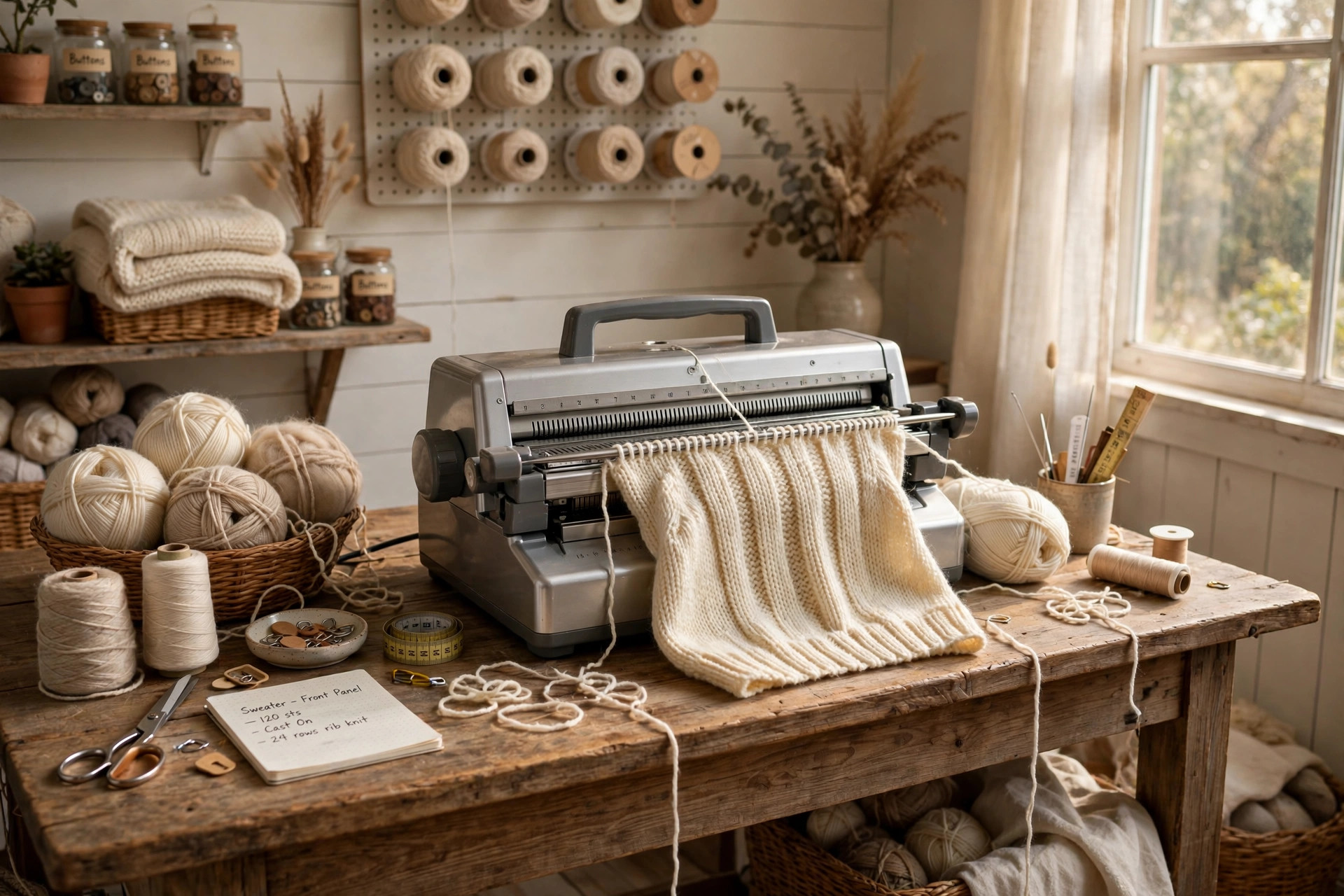
A knitting machine has a bed of fine metal needles. You cast yarn onto these needles, then slide a carriage from one side to the other. The carriage moves the needles and forms one row of loops at each pass. You repeat the pass until the piece reaches the length you need.
Most machines clamp to a table. They weigh little and fold away when not in use. Yarn feeds from a cone or ball on a stand at the back. A tension dial controls how loose or tight the stitches are. That dial is the most important setting to learn.
To shape a sweater, you add or remove needles from work. For a sleeve you start with fewer needles and add more as you knit up. For the neck you bind off center stitches. These steps sound hard, yet they follow the same rules as hand knitting. The machine simply works faster.
Types of Knitting Machines for Home Use
Home knitting machines fall into a few clear groups. Knowing them helps you choose well.
Standard Gauge Machines
Standard gauge machines knit fine yarn. They are the common choice for home sweater making. Most have around two hundred needles and handle fingering and sport weight yarn. Sweaters made on them feel light and drape well. They suit adult sweaters and fine pullovers.
Bulky or Chunky Machines
Bulky machines knit thick yarn. They have fewer needles set farther apart. A sweater knits up very fast, often in an afternoon. The fabric is warm and thick. Many beginners start here because thick yarn is easy to see and fix.
Mid Gauge Machines
Mid gauge machines sit between the other two. They knit worsted weight yarn, the most common yarn in craft stores. If you want one machine for many yarn types, mid gauge is a fair middle ground.
Electronic and Punch Card Machines
Basic machines knit plain stockinette. Punch card machines add pattern stitches through cards you insert. Electronic machines store patterns in memory and can knit complex designs. For a first home sweater making machine, plain or punch card models are enough. You can add a ribber, a second bed that knits ribbed cuffs and hems, once you feel ready.
What to Look for When You Choose
Choosing a knitting machine for home sweater making deserves care. The right machine fits your yarn, your space, and your budget.
First, match the gauge to your yarn. Check what yarn you like to use. If you love worsted yarn, a mid gauge machine makes sense. If you dream of fine fair isle sweaters, look at standard gauge.
Second, test the carriage motion. It should glide smoothly with light pressure. A stiff or rough carriage makes knitting tiring. Used machines may need cleaning and oil before they run well.
Third, check that all parts are present. A machine needs its carriage, a cast on comb, claw weights, transfer tools, and a manual. Missing parts are hard to replace for old models.
Fourth, look at the bed length. A full size bed handles adult sweater widths. Some small hobby machines are too narrow for a full back panel and only suit children or dolls.
Fifth, think about pattern options. A punch card reader adds fun without much cost. Skip electronics on your first machine unless the price is fair.
Sixth, confirm support and manuals. Many helpful guides live at JOANN and Michaels, which both stock yarn and basic machine accessories. Craft supply reviews at BLICK Art Materials can also help you compare tools.
Cost and Price of a Home Knitting Machine
Prices vary widely. New basic machines often cost between one hundred and three hundred dollars. Punch card models run higher, often three hundred to six hundred dollars. Electronic machines can pass one thousand dollars.
Used machines are common and often a fine buy. Many owners sell machines that sat in closets for years. Expect to pay half the new price for a clean used model. Always ask for a test run or a video of the carriage in motion.
Do not forget the extra costs. You will need yarn, which for a sweater runs twenty to sixty dollars. A ribber adds one to two hundred dollars. Claw weights, tools, and a good pair of scissors add a little more. A sturdy table matters too; large retailers such as Walmart and Lowe’s sell folding tables that work well as machine stands.
For the home workshop side, Family Handyman and This Old House offer sound advice on setting up a craft corner with proper light and storage.
Setting Up Your Machine at Home
Pick a firm table at a comfortable height. Clamp the machine bed so it cannot shift. Place the yarn stand behind the bed with the cone feeding freely. Good light helps you see each stitch.
Start with a test swatch. Cast on twenty stitches and knit thirty rows. Wash and dry the swatch, then measure it. This step, called tension testing, tells you how many stitches make an inch. All sweater patterns depend on it. Skipping the swatch is the main cause of sweaters that do not fit.
Keep a notebook by the machine. Write the tension dial setting, yarn name, and stitch count for each project. Next time you knit the same yarn, you can start at once.
Practical home guides at The Spruce and Bob Vila include many small space craft room ideas that suit a knitting setup.
Knitting Your First Sweater
Begin with a simple pullover. It has four flat pieces: front, back, and two sleeves. You knit them flat, then sew them together.
Cast on the front with the stitch count from your swatch math. Knit straight to the armhole, then shape by moving edge stitches inward. Bind off for the neck in the last rows. The back is the same with a higher neck. Sleeves start narrow and widen by adding needles every few rows.
Sewing the pieces takes care and a blunt yarn needle. Use mattress stitch for neat side seams. Steam the seams lightly to flatten them. Try the sweater on before you set the sleeves, so you can adjust the length.
Your second sweater will go twice as fast. Most beginners finish their first in a weekend and later make one in a single day.
Care and Upkeep
A knitting machine lasts decades with basic care. Brush lint from the needle bed after each project. A soft brush and a dry cloth do the job. Never use water on the bed.
Oil the moving parts lightly once or twice a year. Use oil made for sewing or knitting machines. One drop on the carriage rails is enough. Wipe away extra oil so it does not mark yarn.
Check needles for bent tips. A bent needle splits yarn and drops stitches. Needles are cheap and easy to replace. Keep a few spares in your tool box.
Store the machine in its case or under a cover. Dust is the main enemy. Keep it away from damp basements, since steel needles can rust.
Safety Tips
A knitting machine is safe when used with care. Keep small tools and needles away from young children. The needle tips are sharp.
Unplug or cover the machine when not in use if you have pets. Cats love yarn and can pull a whole cone across the room.
Take breaks during long sessions. Pushing the carriage for hours can strain the wrist and shoulder. Stretch every half hour.
Work in a well lit room. Good light helps you spot dropped stitches early, before they run far.
Frequently Asked Questions
Is a knitting machine hard to learn?
No. Most beginners knit their first scarf in an hour and a simple sweater piece in a weekend. The manual and a few practice swatches teach the basics. Used machines often come with books and video links from past owners.
Can I use any yarn with my machine?
No. Each machine gauge suits a yarn weight range. Too thick yarn jams the needles. Too thin yarn slips and drops stitches. Check the machine manual for the suggested range and test every new yarn with a swatch.
How long does a machine knit sweater take?
A plain adult pullover takes three to six hours of knitting, plus sewing time. Patterned sweaters take longer. Hand knitting the same sweater would take weeks.
Do I need a ribber?
A ribber is helpful but not required. It knits the ribbed cuffs, hems, and neckbands that give sweaters a neat finish. You can also hand knit the trims or fold a hem. Many beginners buy the ribber after their third or fourth sweater.
Are used knitting machines worth buying?
Yes, if they are complete and clean. Look for smooth carriage motion and straight needles. Ask the seller to show it knitting a few rows. Machines from the nineteen eighties and nineties are well built and often outlast newer budget models.
Can I sell sweaters I make on a machine?
Yes. Many home crafters sell at local fairs and online shops. Check the rules of your selling site. Price your work to cover yarn, time, and fees. A hand finished, well fitted sweater sells far better than a rushed one.
A Short Final Word
A knitting machine for home sweater making is one of the most rewarding tools a fiber crafter can own. It turns yarn into finished sweaters in hours, not months. Start with a basic model that matches your favorite yarn. Practice on swatches, knit a simple pullover, and keep your machine clean. Soon you will have a closet of sweaters you made yourself, each one neat, warm, and fitted to the person you knit it for. That is a fine reward for a craft that begins with a single row.
References
Blick Art Materials. (n.d.). Art and craft supplies. https://www.dickblick.com Bob Vila. (n.d.). Home improvement advice. https://www.bobvila.com Family Handyman. (n.d.). DIY home repair and maintenance. https://www.familyhandyman.com JOANN. (n.d.). Fabric and craft supplies. https://www.joann.com Lowe’s. (n.d.). Home improvement products. https://www.lowes.com Michaels. (n.d.). Arts and crafts supplies. https://www.michaels.com The Spruce. (n.d.). Home and garden advice. https://www.thespruce.com This Old House. (n.d.). Home renovation guidance. https://www.thisoldhouse.com Walmart. (n.d.). Everyday low prices. https://www.walmart.com
Was this guide helpful?

About Jennifer Lee
The My Garden US editorial team writes practical, in-depth home and garden guides for American homeowners — tested advice, no fluff.
You May Also Like
DIY Lip Scrub Kit for Beauty Gifts Home: How to Build One Yourself
August 5, 2026 0 views
Best Polymer Clay for Jewelry Making Crafts
February 7, 2026 0 views
Best Silicone Molds for Resin Crafts Jewelry: A Plain Guide
June 2, 2026 0 views