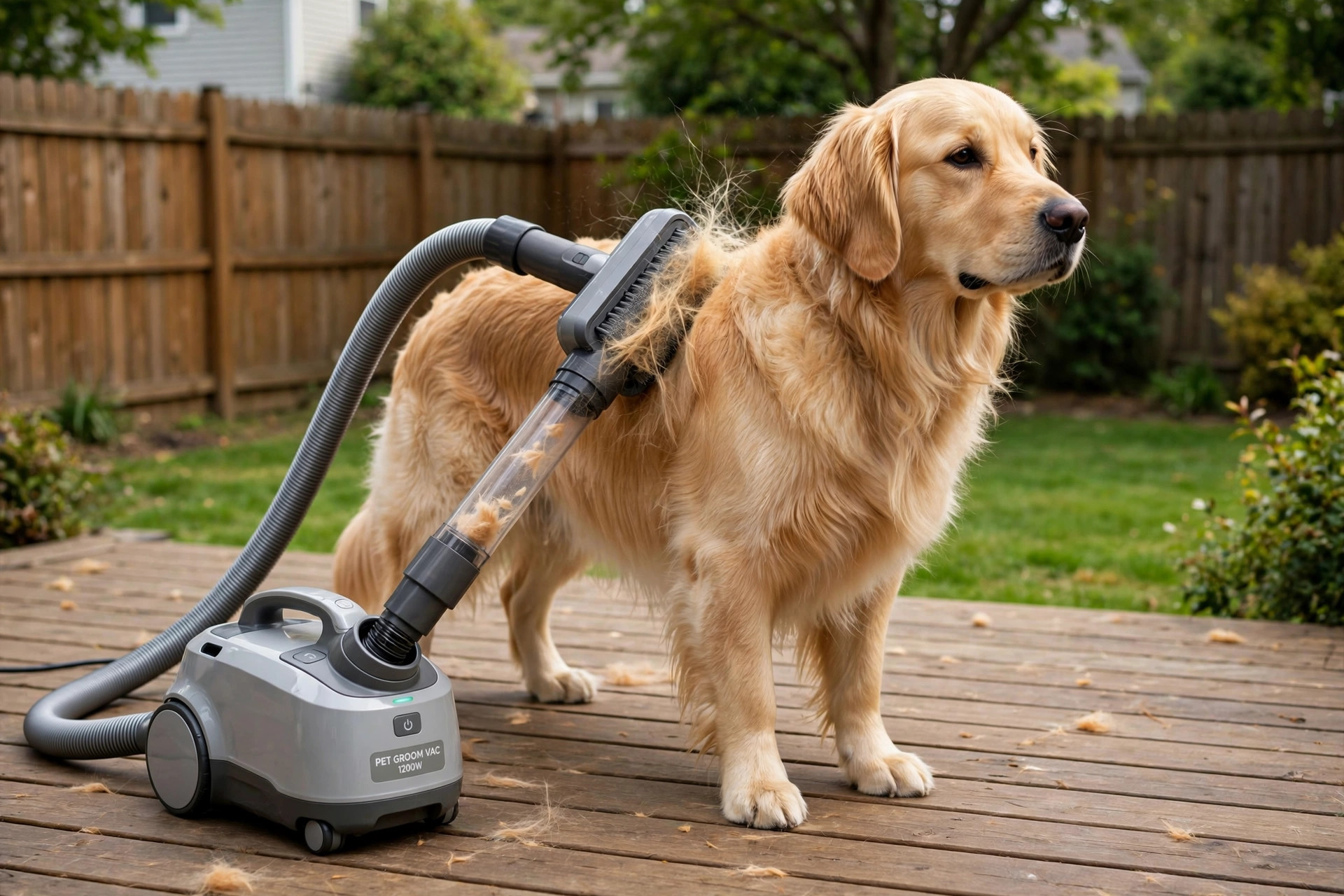

A pet grooming vacuum kit for shedding dogs may be the best answer for owners who sweep the same floor twice a day. Dogs that shed leave hair on rugs, sofas, car seats, and clothing. Brushing helps, but loose hair still flies around the room. This kit changes the process. It connects a brush or comb to a small vacuum. Loose hair goes straight into the canister as you work. The room stays clean. The dog looks better. The job takes less time.
This guide explains how these kits work, who needs one, and what to check before buying. It also covers costs, care, and safety. Every section uses plain words. The advice suits any owner of a shedding breed.
Why It Matters
Shedding is normal. Dogs such as Labradors, huskies, golden retrievers, and German shepherds grow heavy coats and lose hair year round. Twice a year many breeds blow their coats, and piles of undercoat come out in tufts. A standard brush sends this hair into the air. It lands on furniture. It clogs ordinary vacuums. It triggers allergies in sensitive people.
A pet grooming vacuum kit for shedding dogs attacks the problem at the source. The tool traps hair while it leaves the coat. Less hair on the floor means less sweeping and less vacuuming of the whole house. It also means cleaner air. Many owners say they cut their floor vacuuming in half after a few weeks of use. The dog benefits too. Regular brushing keeps the coat free of mats and spreads natural oils, which gives a healthier shine. Details on coat care standards can be found through resources such as the ASPCA, which publishes general pet grooming guidance.
How the Kit Works: Pet Grooming Vacuum Kit for Shedding Dogs
Most kits share the same design. A small canister vacuum sits on the floor or a table. A long flexible hose runs from the canister to a hand tool. The hand tool looks like a brush, a comb, or a de-shedding head. When you brush the dog, the vacuum pulls through the tool head. Loose hair lifts off the coat and travels down the hose into a dust cup.
Some kits include several attachments. A common set holds a de-shedding comb for undercoat, a slicker brush for long hair, a nail grinder, and a clipping head for light trimming. The owner switches heads for each task. Reviews and product comparisons from sites such as Consumer Reports can help explain how vacuum power and noise differ between models.
Who Needs One
Not every dog owner needs this tool. Short-haired dogs that shed little do fine with a rubber glove or a simple comb. The kit suits owners who meet one or more of these tests.
– The dog is a heavy shedder, such as a husky, malamute, or Akita. – Someone in the home has allergies to pet dander. – Hair coats the furniture within a day of vacuuming. – The owner grooms at home and wants faster cleanup. – The dog lives partly outdoors, where dirt mixes with loose hair.
Owners of very small or very nervous dogs should think twice. The noise of the vacuum can frighten some dogs. Nervous dogs may do better with a quiet hand brush. Training tips from the American Kennel Club cover how to introduce new tools to dogs in a calm way.
What to Look For
Suction Power
Suction must be strong enough to lift undercoat from thick fur. Weak suction leaves hair behind and forces the owner to brush the same spot many times. Look for models sold for pet grooming, not plain household dusting kits. Strong suction also keeps hair moving through the hose so it does not clog.
Noise Level
Dogs hear far better than people. A loud vacuum scares many of them. Makers now list noise ratings in decibels. A kit rated near 50 to 60 decibels is much easier on a dog than one rated at 75 or above. Quiet models cost more, but they save training time and stress.
Attachments
Check the number and type of heads. A de-shedding comb is the key tool for shedding dogs. A slicker brush suits long coats. A nail grinder adds value if you already trim nails at home. Some kits also add a crevice tool for cleaning around the grooming area. Buying a kit with the right heads costs less than buying them later.
Hose Length and Reach
A hose of at least five feet lets you work around the dog without moving the canister. Longer hoses give more room but may reduce suction slightly. Lightweight hand tools matter as well, since grooming a large dog takes ten to twenty minutes.
Dust Cup Size
Small cups need emptying often. A cup of one liter or more suits large or very hairy dogs. A clear cup shows when it is full. Washable filters keep running costs down.
Cord or Battery
Most kits plug into a wall outlet. Corded models give steady suction for long sessions. A few battery models exist, but they may lose power partway through a big grooming job. For one large dog, corded is the safer pick.
Types and Options
Canister Kits
The most common type. A compact canister holds the motor and dust cup. It works well in homes with one or more dogs. These kits cost more but handle heavy shedding with ease.
Handheld Kits
Smaller and lighter. The motor sits in the hand unit. These suit small dogs or quick touch-ups. They tire the wrist on large dogs and fill up fast.
Grooming Stations
Some brands sell a stand or table with built-in vacuum. These cost the most and suit breeders or owners of many dogs. A casual owner does not need this level.
Add-On Brush Heads
Some owners already own a shop vacuum. A few makers sell brush heads that fit standard hose ends. This route costs less if the vacuum is quiet enough and the dog tolerates it. Guidance on safe grooming practice for pets appears on sites such as PetMD, a veterinary advice source.
How to Use It
1. Introduce the sound first. Run the vacuum in the same room while the dog eats a treat. Let the dog sniff the tool. Keep the first session short. 2. Start without brushing. Turn on the suction and hold the tool near, not on, the dog. Praise calm behavior. 3. Brush gently. Work in the direction of hair growth. Press lightly on the first pass. Move the tool slowly so suction can catch the loose hair. 4. Follow a pattern. Groom the back and sides first. Save sensitive spots, such as the belly and legs, for last. Keep sessions under twenty minutes at first. 5. Empty the cup. A full cup kills suction. Stop and empty it when the fill line shows full. 6. Finish with a check. Run your hand against the grain to find mats you missed. Reward the dog and end on a good note.
Never force the tool on a scared dog. Short, happy sessions build trust. Most dogs accept the kit within a week or two of calm practice. Breeders and trainers writing for Chewy often stress the same slow introduction method.
Cost and Price
Prices in the United States vary by brand and attachment count.
– Basic handheld kits: about $40 to $70. – Mid-range canister kits: about $80 to $150. This range covers most good models for shedding dogs. – Premium multi-head kits: about $150 to $250, with quieter motors and more attachments. – Replacement filters and heads: about $10 to $30 per year.
Compare this with professional grooming, which can cost $50 to $100 per visit for a large dog. A kit pays for itself in a few months if it replaces even one grooming trip per season. Stores such as The Home Depot carry several pet grooming vacuum models for price comparison.
Running costs are low. Electricity use is small. Washable filters last many months. The main cost is the purchase itself.
Care and Upkeep
Clean the kit after every use. Hair wraps around brush heads, so pull it free before it mats the bristles. Empty the dust cup each time. Wash the cup and filter with mild soap when the maker allows it, and let them dry fully before the next use.
Check the hose for clogs. A thick clump of undercoat can block the tube. Push it through with the handle of a wooden spoon. Store the kit in a dry place. Keep the heads in a bag so the bristles stay straight.
Replace filters on schedule. A worn filter lets dust pass back into the air. Most makers sell filter packs cheaply. Clean the brush heads once a month with warm water and a drop of dish soap. General cleaning advice for homes with pets also appears on The Spruce.
Safety
Use common sense and keep the dog’s comfort first.
– Keep suction away from eyes, ears, and nose. Hold the tool on fur only. – Watch skin. Thin-skinned dogs and old dogs bruise easily. Light pressure is enough. – Never use on wet skin wounds or hot spots. Cover sores and groom around them. – Check heat. Some motors warm the airflow. Test the air on your wrist before touching the dog. – Supervise always. Do not leave the running kit near an unattended dog. – Cord safety. Keep the power cord out of the dog’s reach. Chewing a cord is a shock hazard.
If the dog shows signs of pain, stop at once. Red skin, flinching, or crying means the tool is too rough or the dog needs a vet. Health guidance from The Spruce Pets notes that skin problems under a thick coat often hide until grooming reveals them.
The Effect on Allergies
Many buyers hope the kit will fix pet allergies. It helps, but it is not a cure. The kit catches loose hair and some dander before it spreads. Less airborne hair means fewer symptoms for mild allergy sufferers. But dander still reaches the air from skin, bedding, and the dog’s mouth.
Allergy-prone homes should combine the kit with other steps: wash the dog’s bedding weekly, use a HEPA air purifier, and keep the bedroom pet-free. Housekeeping routines from Good Housekeeping give practical steps for low-allergen homes. Anyone with strong allergies should talk to a doctor before relying on any grooming tool.
Shedding Versus Health Problems
Normal shedding looks even across the body. Hair comes out in small amounts with light brushing. Warning signs differ: bald patches, red or flaky skin, constant scratching, or a sudden rise in hair loss. These signs point to diet problems, parasites, stress, or disease.
A grooming vacuum kit helps normal shedding. It does not fix medical hair loss. If your dog’s coat changes fast, see a vet first. Regular brushing also helps you spot lumps, ticks, and skin wounds early. The ASPCA advises owners to treat grooming time as a health check.
Pairing With Other Pet Gear
A shedding dog affects more than the living room. Hair lands in the car, on outdoor beds, and across the yard. Owners who manage the whole picture get better results.
– Protect the car with a dog car seat cover for back seat protection so hair never reaches the upholstery. – Give the dog a dog ramp for suv and high bed access to spare joints on daily trips. – Set up a best outdoor dog kennel for large breeds usa for safe outdoor time with less indoor mess.
Home project ideas from Family Handyman can also help with building tidy outdoor pet areas.
FAQ
How often should I use a pet grooming vacuum kit on a shedding dog?
Two to three times a week suits most heavy shedders. During spring and fall coat blows, daily use may help. Short sessions beat long ones. Stop when the brush comes up clean.
Will it hurt my dog?
No, when used right. Use light pressure and keep the tool moving. The brush should glide, not scrape. If the dog flinches, ease up or stop.
Can it replace professional grooming?
For shedding control, yes. It does not replace haircuts for breeds that need them, such as poodles or shih tzus. It also does not replace nail trims and ear cleaning unless the kit includes those heads.
Is it good for cats?
Some kits work on cats, but most cats dislike the noise more than dogs do. A quiet model and slow training help. Never force a cat. Many cats do better with a simple hand brush.
How loud are these kits?
Most run between 55 and 75 decibels. Quiet models near 55 decibels sound like a normal talk. Loud ones near 75 sound like a shower running. Choose the quietest model you can afford if your dog startles easily.
What if my dog is scared of it?
Start over slowly. Run the vacuum far away during meals. Move it closer over days. Let the dog touch the tool while it is off. Most dogs adjust in one to three weeks. Some never do, and that is fine; a hand brush still works.
A Final Word
A pet grooming vacuum kit for shedding dogs is a simple idea done well. It brushes the dog and catches the hair in one motion. Less hair on the floor, less time spent cleaning, and a dog with a healthier coat. Pick a model with good suction, low noise, and the right heads for your dog’s coat. Train the dog with patience. Keep the kit clean. The result is a calmer grooming routine for both ends of the leash.
References
American Kennel Club. (n.d.). Dog care and training resources. https://www.akc.org ASPCA. (n.d.). Pet care and animal welfare resources. https://www.aspca.org Chewy. (n.d.). Pet supplies. https://www.chewy.com Consumer Reports. (n.d.). Product reviews and ratings. https://www.consumerreports.org Family Handyman. (n.d.). DIY home repair and maintenance. https://www.familyhandyman.com Good Housekeeping. (n.d.). Product reviews and home advice. https://www.goodhousekeeping.com PetMD. (n.d.). Pet health information. https://www.petmd.com The Home Depot. (n.d.). Home improvement products. https://www.homedepot.com The Spruce. (n.d.). Home and garden advice. https://www.thespruce.com The Spruce Pets. (n.d.). Pet care guides and product reviews. https://www.thesprucepets.com
Was this guide helpful?

About Sarah Mitchell
The My Garden US editorial team writes practical, in-depth home and garden guides for American homeowners — tested advice, no fluff.
You May Also Like

The Best Dog Life Vest for Kayaking and Boating: A Complete Guide
March 27, 2026 0 views
Pet Fence Indoor Freestanding for Living Room: A Complete Guide
September 18, 2026 0 views
Indoor Rabbit Cage Large for House Bunnies: A Complete Guide
June 12, 2026 0 views