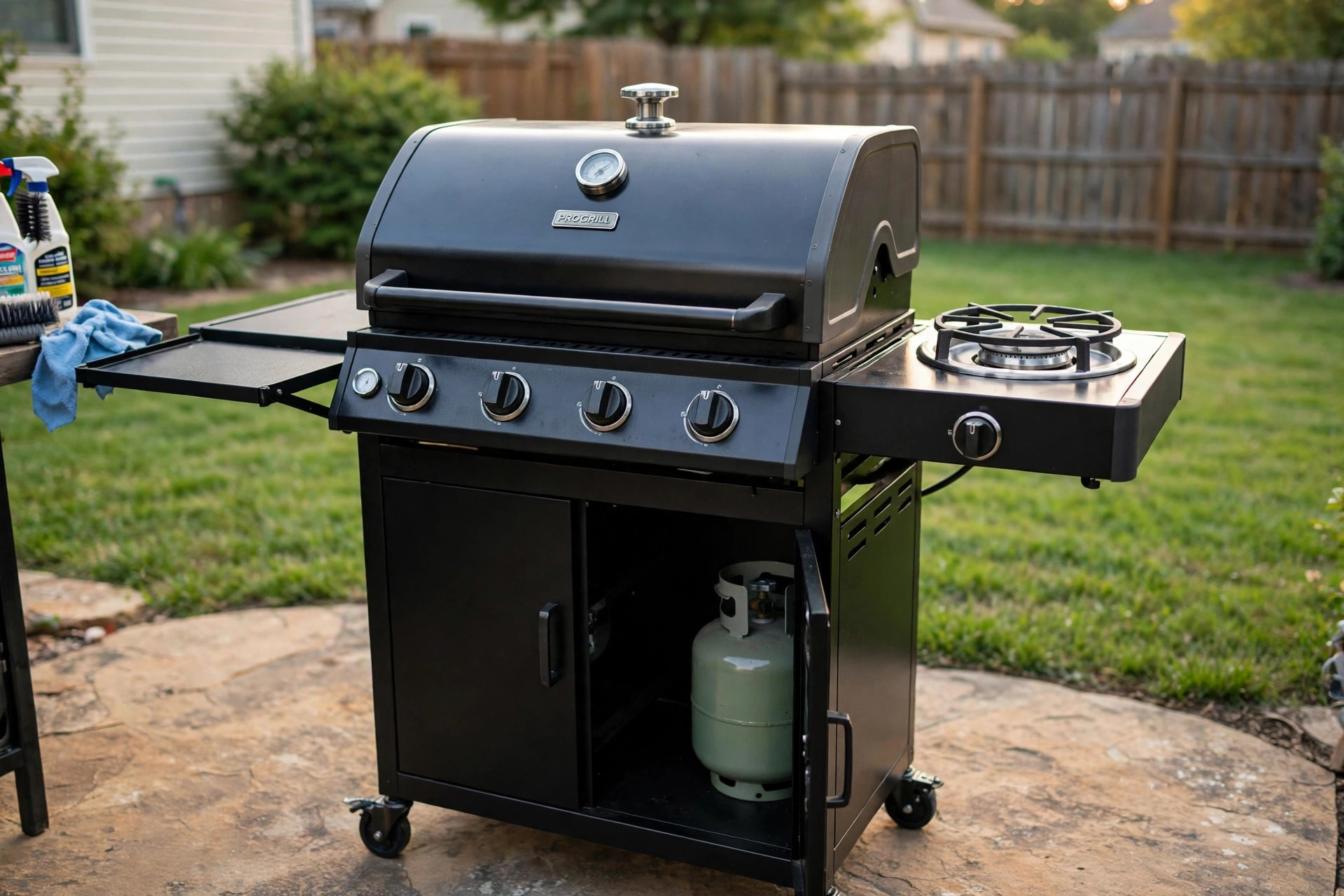
A good grill can change the way you cook at home. A cart makes the grill easy to move and store. A side burner turns the cart into a full outdoor kitchen. If you want to find the best grill cart with side burner for your patio or yard, it helps to know what to look for before you shop. This guide walks you through the key features, the main types, the price ranges, and the simple care steps that keep a grill cart working well for many years.
Why a Grill Cart with a Side Burner Matters
A grill cart holds your gas grill off the ground and gives it a stable frame. Most carts come with side shelves for tools and plates. Many also have wheels, so you can roll the grill where you need it. When you add a side burner, the cart becomes much more useful. You can boil corn, heat beans, or make sauce while the main burners cook burgers and chicken.
This setup saves you trips to the kitchen. You can keep your whole meal outside on warm days. It also helps when you cook for a group. The main grill handles the meat while the side burner warms the sides. A good gas grill cart with side burner lets one cook manage a full menu alone.
Many grill owners say the side burner is the feature they use most after the main grill. It works like a stove burner on your home range. It heats fast and shuts off fast. For a busy family cookout, that extra burner can be the difference between a calm meal and a rushed one.
What to Look for When You Shop: Best Grill Cart with Side Burner
Cooking Power
Check the total BTU rating of the main burners. Most home gas grills run between 30,000 and 60,000 BTUs. The side burner usually adds another 8,000 to 15,000 BTUs. More power means faster heat and better searing. Very high heat is not always needed, but weak burners can be a problem on cold or windy days.
Look at the size of the main cooking grate too. A small cart grill may offer about 400 square inches of cooking space. A large one may offer 700 or more. Think about how many people you cook for on a normal night. For a family of four, about 450 square inches is often enough.
The Side Burner Itself
Not all side burners are equal. Some are simple round burners with a lid. Some are sealed burners that are easy to wipe clean. A sealed burner keeps grease from dripping into the gas line. That small detail can save you a service call.
Check how the burner lights. A push-button igniter is easy and safe. Some grills use a rotary knob that sparks the flame. Try the igniter in the store if you can. The best grill brands put care into this part of the design, and you can learn a lot from reading their product pages, such as those at Weber or Char-Broil.
Cart Build and Materials
The cart should feel solid when you push it. Stainless steel resists rust and cleans well. Powder-coated steel costs less but can chip over time. Look at the welds and joints. They should be smooth and tight.
Wheels matter more than most people think. Two fixed wheels and two locking casters are common. Locking casters keep the grill still while you cook. On uneven ground, larger wheels roll better than small ones.
Storage and Work Space
A good cart gives you room to work. Side shelves should fold or lock in place. An enclosed cabinet keeps the propane tank out of sight and protects it from weather. Some carts add hooks for tools and a holder for a paper towel roll. These small extras make cooking easier.
Measure your patio before you shop. A cart with both side shelves down may be much wider than you expect. Leave room behind the grill for the lid to open. Leave space on the sides so you can reach the side burner without strain.
Also look at the ignition system as a whole. Each main burner should light on the first try, and the side burner should light just as well. A grill that needs three tries to light will frustrate you every week. Good makers test their igniters for thousands of cycles, and the warranty often covers ignition parts for several years.
Main Types of Grill Carts with Side Burners
Standard Gas Cart Grills
These are the most common type. A gas grill sits on a four-leg or cabinet cart. The side burner sits on one side shelf. Most run on a 20-pound propane tank stored inside the cabinet. Brands like Napoleon and Broil King sell well-built models in this style.
Wide-Body Carts
Wide carts offer more cooking space and more shelf room. They often have three or four main burners plus the side burner. They cost more and weigh more. They suit cooks who grill often and host large groups.
Compact Carts
Compact carts fit small patios and balconies. They usually have two main burners and one side burner. The cooking area is smaller, but the grill is light and easy to roll into storage. If you are just starting out, a small cart can be a smart first buy. You can read our guide on the best gas grill under 500 for beginners to see how compact models compare.
Specialty and Kamado Carts
Some carts are built to hold ceramic kamado grills. These are not gas grills, but they offer deep heat and smoke flavor. They cost more and need more care. If you are curious about this style, see our roundup of the best kamado grill for the money.
Cost and Price: What to Expect
Grill carts with side burners come in three broad price bands.
Under $400. Basic carts with two or three burners. Steel is often painted rather than stainless. The side burner may be simple. These grills work well for light use, one or two nights a week. Retailers like Home Depot carry many models in this range.
$400 to $900. The sweet spot for most buyers. You get thicker steel, better igniters, sealed side burners, and locking casters. Grills in this band often last ten years or more with care. This is where many shoppers find the best balance of price and quality.
Over $900. Premium carts with heavy stainless steel, high BTU output, and fine controls. Some add infrared searing zones or rotisserie kits. These are built for serious cooks and long service life.
Remember that a grill is only part of the cost. You will need propane refills, a grill cover, tools, and cleaning supplies. Plan for about $100 to $150 in first-year extras.
Care and Upkeep
Simple care adds years to a grill cart. Wipe the outside with warm soapy water once a month. Brush the main grates while they are still warm after each cook. Empty the grease tray before it fills up.
The side burner needs care too. Food boils over on side burners more than on main grates. Wipe the burner cap after each use. Check the burner holes for clogs once a season. A blocked burner can burn unevenly or fail to light.
Cover the grill when it rains. A fitted cover costs less than most repair parts. Store the propane tank upright in the cabinet or in a dry spot. Our full guide on how to clean gas grill burners properly covers burner care in more detail.
Once a year, check the gas hose and fittings. Look for cracks, soft spots, or loose joints. If you smell gas when the tank is connected, turn everything off and have the grill checked by a professional. A yearly once-over in spring is a good habit.
In winter, a grill cart stored outside needs a little extra care. Keep the cover on and brush snow off the top so meltwater does not seep under it. If you live where winters are hard, you may roll the cart into a garage or shed. Just remember to take the propane tank out first and store it upright outdoors in a dry spot. Never keep a propane tank in a closed room.
Safety Tips for Grill Carts with Side Burners
Keep the grill at least three feet from the house, fence, and any low roof. Heat can scorch siding and melt vinyl. Never grill in a garage or under a tent. Gas needs open air to burn safely.
Place the cart on level ground and lock the casters before you light the grill. A rolling grill is a burn risk. Keep children and pets away from the cart while it is hot. The side burner stays hot for several minutes after you turn it off.
Check that the side burner lid is closed when not in use. Keep paper, cloth, and plastic tools away from the side burner. Grease fires start fast and spread fast. Keep a box of baking soda or a fire extinguisher rated for grease fires near your grill area.
Frequently Asked Questions
What is a side burner used for?
A side burner works like a stove burner on your kitchen range. You can boil water, heat sauce, warm beans, or fry food in a pan while the main grill cooks. It gives you a second cooking zone without leaving your grill area.
Do I really need a side burner on my grill cart?
You do not need one, but many cooks find it very useful. If you often cook full meals outside, the side burner saves time and trips to the kitchen. If you only grill meat and eat sides cold, you may not use it much.
How much propane does a side burner use?
A typical side burner uses about 10,000 to 12,000 BTUs per hour. A 20-pound propane tank holds about 430,000 BTUs. That means a side burner alone could run for more than 35 hours on one tank. In normal use with the main grill, a tank lasts through many cookouts.
Can a grill cart with a side burner be converted to natural gas?
Many gas grills offer a natural gas conversion kit. Check the model you plan to buy before you shop for the kit. Not all grills can be converted safely. If your home has a gas line on the patio, a conversion kit can save you the cost of propane refills. Ask the maker or a licensed gas fitter for advice.
What is the best material for a grill cart?
Stainless steel lasts longest and resists rust. Thick powder-coated steel is a good lower-cost choice. Avoid thin metal that flexes when you push the cart. The best cart feels heavy and solid in the store.
How long should a grill cart with a side burner last?
A well-made cart grill can last ten to fifteen years with regular care. Cheaper models may last five to seven years. Covers, cleaning, and proper storage matter more than price alone. For ideas on cooking methods that put your grill to good use, the recipe and guide sites at The Spruce Eats and AmazingRibs are worth a look. Pellet grill fans may also want to compare options at Traeger and Big Green Egg before they buy.
A Short Final Word
The best grill cart with side burner is the one that fits your space, your budget, and the way you cook. Measure your patio. Decide how many people you feed. Pick a cart with solid steel, a sealed side burner, and locking wheels. Keep it covered and clean, and it will serve your family well for many summers to come.
References
AmazingRibs.com. (n.d.). Barbecue and grilling science. https://www.amazingribs.com Big Green Egg. (n.d.). Kamado grills and outdoor cooking. https://www.biggreenegg.com Broil King. (n.d.). Gas and charcoal grills. https://www.broilkingbbq.com Char-Broil. (n.d.). Gas and charcoal grills. https://www.charbroil.com Napoleon. (n.d.). Fireplaces, grills, and heating products. https://www.napoleon.com The Home Depot. (n.d.). Home improvement products. https://www.homedepot.com The Spruce Eats. (n.d.). Recipes and cooking guides. https://www.thespruceeats.com Traeger. (n.d.). Wood pellet grills. https://www.traeger.com Weber. (n.d.). Grills and outdoor cooking. https://www.weber.com
Was this guide helpful?

About Lisa Anderson
The My Garden US editorial team writes practical, in-depth home and garden guides for American homeowners — tested advice, no fluff.